REVIEW · NEW YORK CITY
Central Park Horse Carriage Ride
Book on Viator →Operated by Central Park Horse Carriages INC · Bookable on Viator
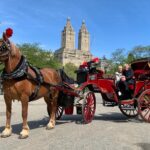
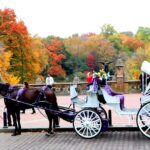
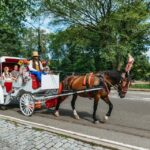
Horse hooves in Central Park beat the subway. I like the private carriage setup for up to four people because it keeps things calmer and more personal, and I like the driver-style landmark storytelling that helps you spot details you’d miss on foot. One drawback to keep in mind: the experience depends heavily on the operator showing up on time and sticking to the photo stops—so arrive at the meeting point early and don’t assume the pickup is obvious.
In about 55 minutes, you’ll move through a bunch of the park’s best-known corners without getting the walking fatigue. You get a mobile ticket, a warm blanket, and guided photo stops along the way—small stuff that adds up when you’re trying to see Central Park efficiently.
If you want a quick, classic Central Park “greatest hits” ride, this can be a good fit. If you’re the type who hates last-minute uncertainty, do your homework and keep your expectations realistic.
In This Review
- Key things to notice before you go
- Why a 55-minute horse carriage covers so much
- Meeting at 1428 6th Ave without losing your mind
- Cop Cot and Wollman Rink: classic southern park landmarks
- Chess pavilion, the carousel, and Central Park Zoo stops
- Literary Walk, Balto, SummerStage, and Pilgrim Hill
- Conservatory Water and model boating views
- Bethesda Terrace, Bethesda Fountain views, and that mid-park magic
- The Mall’s elm canopy and the Loeb Boathouse waterfront
- Cherry Hill and Bow Bridge: spring photos and film-famous romance
- Daniel Webster to Strawberry Fields: from politics to peace
- The Dakota stop: why one building draws so much attention
- Sheep Meadow, Tavern on the Green, and Pinebank Arch finishing touches
- Included comforts that actually help: blankets and photo stops
- Private-group perks, and why that’s worth seeking
- Who should book this horse carriage ride?
- Should you book this Central Park horse carriage ride?
- FAQ
- How long is the Central Park horse carriage ride?
- Is the tour offered in English?
- Is this a private tour?
- Where does the ride start and end?
- What’s included in the ride?
- What is not included?
- Is a mobile ticket used?
- Are service animals allowed?
- Does weather affect the experience?
- What’s the cancellation window?
Key things to notice before you go
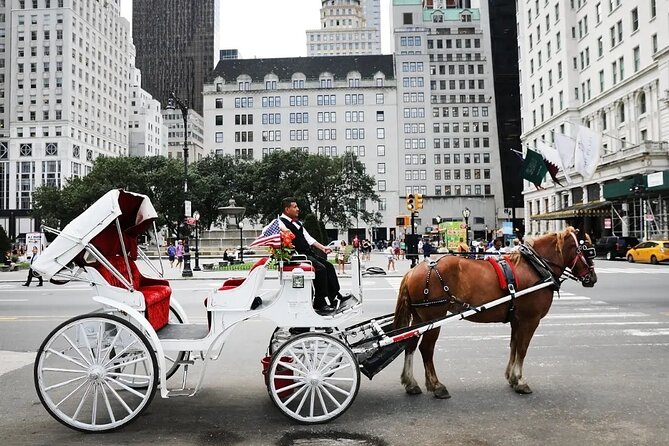
- Private carriage for up to four means you’re not sharing your ride with strangers.
- Warm blanket included takes the edge off chilly mornings and evenings.
- Guided storytelling + photo stops focus on landmarks people usually walk past.
- A route built around the southern-to-mid park highlights helps you cover more ground fast.
- Good weather matters since this experience is weather-dependent.
- Operator punctuality is crucial, based on real-world experiences people reported.
Why a 55-minute horse carriage covers so much
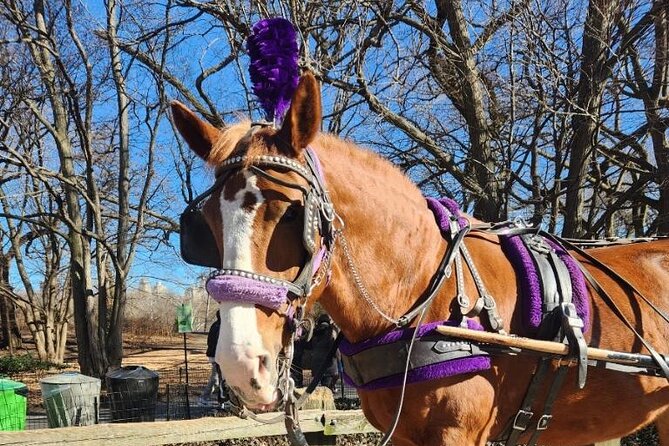
Central Park is big. Even if you love walking, it’s easy to burn energy on the wrong loops and still miss the views people come for. This ride is built for efficiency: you get a guided, sit-down way to hit major sights in roughly 55 minutes.
You’re not just watching horses move. You’re getting the park’s “why should I care?” version. The driver commentary is the part that often makes the difference between seeing a landmark and actually understanding what you’re looking at—like why certain spots are famous, or what the landscape is trying to frame.
This is also a nice option when you’re traveling with mixed energy levels. One person wants photos. Another just wants to rest. The carriage does both, and the pace stays gentle.
You can also read our reviews of more tours and experiences in New York City
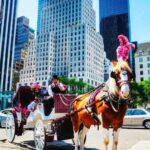
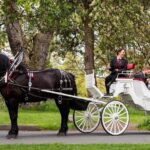
Meeting at 1428 6th Ave without losing your mind
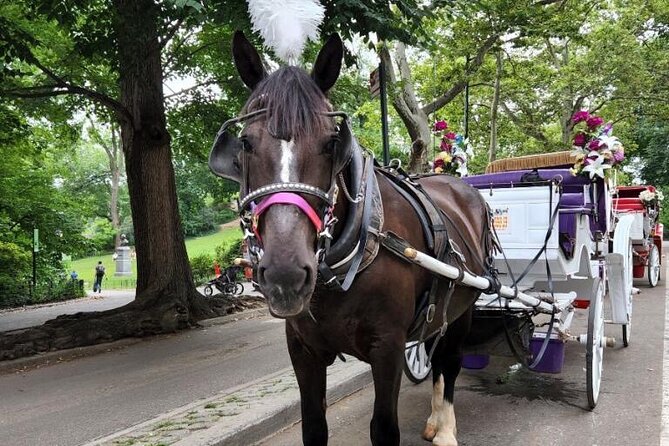
Your start point is 1428 6th Ave, New York, NY 10019. The end is back at the meeting spot. That makes planning simpler than rides that dump you somewhere across town.
Still, the most common frustration with carriage experiences is basic timing and finding the right team. The good news: prebooking and a mobile ticket can reduce confusion. Bring your ticket info up on your phone, show it quickly, and plan to arrive a bit early.
If you’re doing this around sunset or in cold weather, come prepared for wait time. Your warm blanket helps once you’re seated, but you’ll still want to be comfortable before you start.
Cop Cot and Wollman Rink: classic southern park landmarks
Early on, you’ll be in the southern stretch of Central Park, near 59th Street and 6th Avenue. Two stops set the tone.
Cop Cot is one of the oldest and largest wooden structures in the park, sitting on a small hill near the southern area. It’s the kind of detail that feels “too specific” to notice unless someone points it out. The name comes from Old English meaning little cottage on the crest of a hill—an origin story that makes the structure more than just a photo background.
Then comes Wollman Rink, one of the park’s best-known skating spots. It opened in 1949 as a gift from philanthropist Kate Wollman in memory of her family, and it’s become a winter tradition for locals and visitors. Even if you’re not going in the rink season, it’s a recognizable landmark that anchors the route.
Photo note: these early stops can help you orient yourself. When you know where you are in the park, the later viewpoints make more sense.
Chess pavilion, the carousel, and Central Park Zoo stops
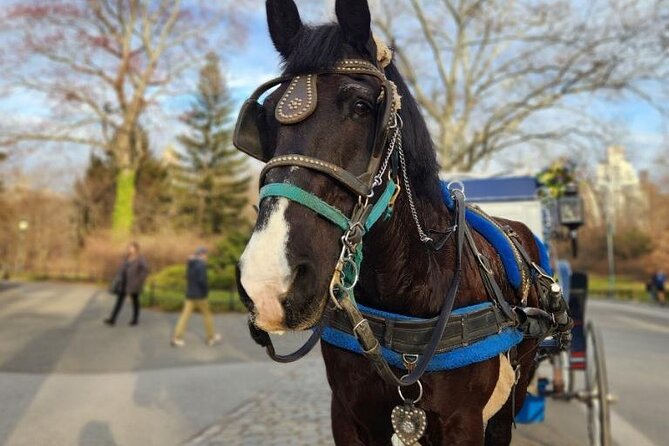
One of the smartest parts of this kind of route is that it mixes “iconic” with “fun.” Central Park isn’t only fountains and bridges—it has playful corners too.
You’ll pass or stop at a chess and board games pavilion, a laid-back spot where people actually sit down and play. It’s a different vibe from the usual tourist grind, and it’s a quick way to see how the park works as a community space.
Next is the carousel, a classic Central Park attraction that dates back to 1871, with the current carousel built in 1951. The horses are hand-carved wooden pieces, intricately painted and decorated. If you’ve seen vintage carousels in other cities, you’ll recognize the craft here—but in Central Park, it lands with extra meaning because it’s still a living part of the park’s everyday life.
Then you’ll hit Central Park Zoo, which covers about 6.5 acres. It’s not the huge kind of zoo you’d spend a full day in, but it’s a meaningful stop for a quick look and an educational angle focused on wildlife conservation.
Time reality check: these stops are typically brief, so think of them as photo-and-look pauses rather than a full attraction visit.
Literary Walk, Balto, SummerStage, and Pilgrim Hill
As the route moves through the southern-to-mid park highlights, it picks up stories that make Central Park feel layered.
The Literary Walk area includes a statue honoring a major English playwright and poet—someone widely regarded as one of the greatest writers in the English language. Even if you don’t linger, it helps you see Central Park as a place that borrows from culture and literature, not just nature.
You’ll also stop at the Balto statue. The story is dramatic: in 1925, an outbreak of diphtheria in Nome required rapid delivery of antitoxin serum. Balto and sled dogs traveled nearly 700 miles through treacherous conditions to deliver it and save lives. It’s the kind of tale that turns a statue into a real moment in American history.
SummerStage, founded in 1986, is another stop that signals Central Park’s role as a stage for the arts. It aims to bring high-quality performances to the public while fostering community engagement. Even if you’re visiting outside the season, knowing it exists makes the park feel active year-round.
Then there’s Pilgrim Hill, named in connection with a statue of a pilgrim that was placed there in the 19th century (the statue is no longer present). That kind of naming detail is easy to miss on your own, but it’s great trivia—and trivia is half the fun.



Conservatory Water and model boating views
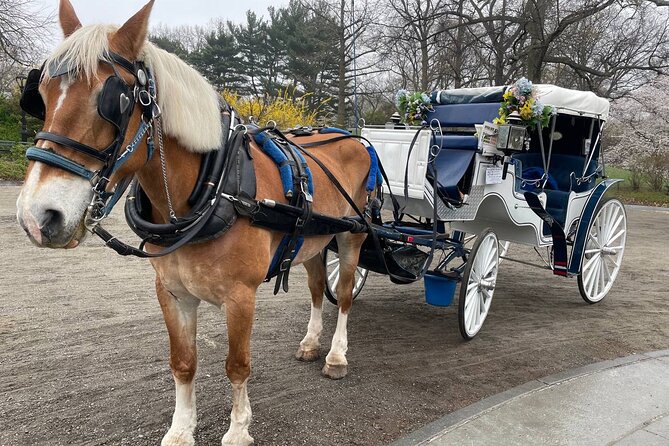
Conservatory Water is a peaceful pond-like area surrounded by trees and benches, and you’ll often spot wildlife such as ducks. It’s a breather in the middle of all the “big names” stops.
A standout here is model boating. In warmer months, visitors can rent small model sailboats and sail them on the pond. The area can also host model boat races and enthusiasts with their own boats.
If you’re visiting in off-season weather, you might not see the same boating activity, but the pond itself still works as a calm scenic stop—especially if you’ve been cold and want a moment that feels slower.
Bethesda Terrace, Bethesda Fountain views, and that mid-park magic
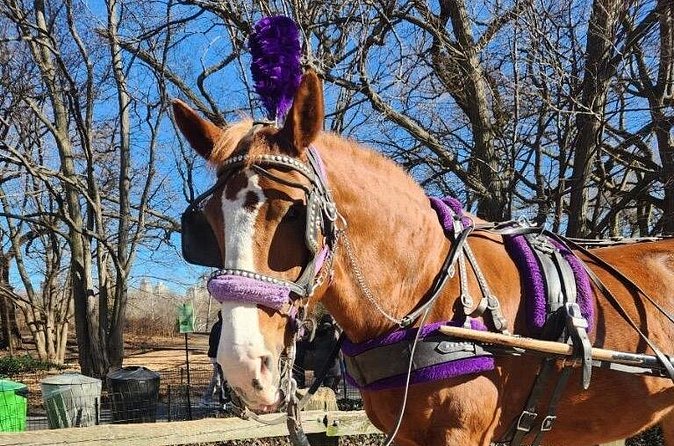
One of the most iconic segments of Central Park sits near the midpoint of the eastern side: Bethesda Terrace. Your carriage route includes this area for a longer stop (about 10 minutes).
Bethesda Terrace is known for stunning architecture and views over Bethesda Fountain. It’s also historically been a gathering place for events and performances since the park opened. In plain terms: this is where Central Park feels like a designed showpiece, not just a patch of trees.
Why it’s worth slowing down: the terrace gives you a sense of scale. You see the park’s layout more clearly, and you understand why people photograph this spot from angles that look almost impossible when you’re walking around.
If it’s crowded, don’t fight for perfect camera angles. Use the time for a few solid shots and for just looking at how the fountain sits in the landscape.
The Mall’s elm canopy and the Loeb Boathouse waterfront
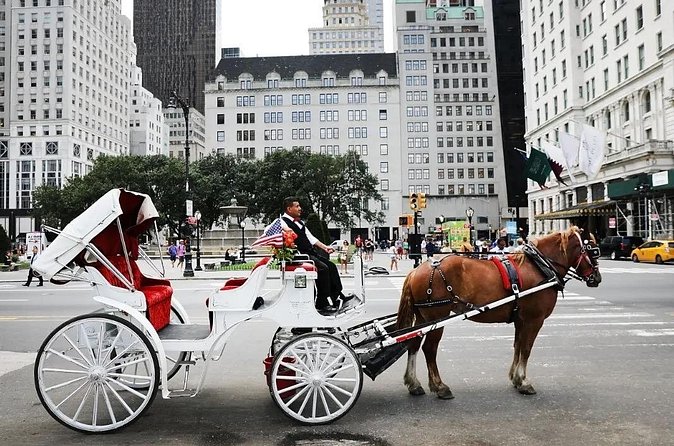
After Bethesda Terrace, the route moves into The Mall, a wide straight path lined with American elm trees that create a shaded canopy overhead. This isn’t just scenery. It’s an experience of straight-line clarity in a place that otherwise feels full of curves and surprises.
Then you’ll reach Loeb Boathouse, which includes a full-service restaurant and café with indoor and outdoor seating overlooking the water. Even if you don’t plan a meal, this is a helpful stop because it connects you with the water-and-promenade side of the park.
In value terms, these stops are about perspectives. You get both the “walkway frame” feeling from The Mall and the “pond life” feeling from the boathouse area.
Cherry Hill and Bow Bridge: spring photos and film-famous romance
Two of Central Park’s most camera-friendly sights show up around the mid-to-late portion of the ride.
Cherry Hill is famous for cherry blossom trees in spring. If your trip lands during bloom time, the area can be a top photo stop. The key benefit here is timing: even without perfect weather, you’re walking into one of the park’s most recognizable seasonal scenes.
Next is Bow Bridge, one of Central Park’s cultural icons. It has appeared in many films and photographs, and it’s known for its romantic setting. This is a great place for couples photos, but also for solo travelers who just want a classic New York view with drama.
If you want the best results, take a minute to choose your angle rather than rushing. The carriage time is limited, so quick decisions help.
Daniel Webster to Strawberry Fields: from politics to peace
You’ll also pass the area around Daniel Webster, a major American political figure known for advocating federalism and a strong national government. He served as a U.S. Senator from Massachusetts and held cabinet positions, including Secretary of State. This is another example of how Central Park blends politics, people, and parkland into one landscape.
Then comes the emotional center of the route: Strawberry Fields and the Imagine Mosaic. This memorial is designed as a quiet zone for reflection and remembrance, with trees, flowers, and benches built for a calmer mood away from busier parts of the park.
The centerpiece is the Imagine Mosaic, designed by Italian artisans as a tribute to John Lennon’s song Imagine. Visitors often leave tokens such as flowers and candles. It’s one of those places where the art is the reminder, but the feeling is what sticks.
The Dakota stop: why one building draws so much attention
Next up is The Dakota, the residence of musician John Lennon and Yoko Ono. Lennon lived there from 1973 until his death in 1980. He was fatally shot outside the building’s entrance on December 8, 1980 by Mark David Chapman. Yoko Ono still resides at the Dakota and has been involved in preserving Lennon’s legacy, including her role connected to Strawberry Fields.
This stop can feel heavy compared to the rest of the park’s playfulness. But it’s also part of why Central Park is uniquely New York: it holds entertainment, art, and major real-world moments side by side.
Practical tip: keep your expectations respectful. You’ll be taking photos in a sensitive area, so move calmly and keep your viewing time focused.
Sheep Meadow, Tavern on the Green, and Pinebank Arch finishing touches
Near the end of the ride, you’ll reach some of the park’s wide-open and architectural highlights.
Sheep Meadow is a huge open lawn of about 15 acres, famous for picnics, sunbathing, and relaxing. It’s a classic “you’re in the park now” feeling—space that makes the city noise fade in your head.
Then there’s Tavern on the Green at the western edge of the park on 67th Street. It’s an iconic restaurant with history dating back to the 19th century, placed right where people can still feel the park around them while dining.
Finally, you’ll see Pinebank Arch, one of Central Park’s charming cast-iron bridges near 62nd Street and West Drive. It’s among the few surviving cast-iron bridges in the park and is known for its elegant historic design.
These last stops work well because they give you a “what you saw” wrap-up: open lawn, dining landmark, and architectural bridge—three different ways to experience Central Park.
Included comforts that actually help: blankets and photo stops
The experience includes a guided tour, photo stops, and a nice and warm blanket. This matters more than it sounds. Photo stops give you permission to pause for the shots you want. The blanket helps you stay comfortable through the parts that are slower or waiting—especially if the weather is cool.
Also, the tour is offered in English, and it’s built for most travelers to participate. If you’re traveling with a service animal, service animals are allowed.
The “skip the line” note is helpful in spirit, too. It suggests you’re meant to avoid some of the usual start-of-attraction friction, though your exact experience still depends on timing on the day.
Private-group perks, and why that’s worth seeking
This is a private tour/activity where only your group participates. In practice, that can make your ride feel like a mini personal tour rather than a crowded bus experience.
Private also helps with pacing. If you want a bit more time at Bethesda Terrace or Strawberry Fields, you can often benefit from a flexible driver approach. If you’re traveling with someone who needs extra help—like mobility support—that same driver ability can make a big difference, since the pace stays gentle and the stops are planned.
Who should book this horse carriage ride?
Book it if you want:
- A classic Central Park route with guided storytelling
- Efficient sightseeing in under an hour
- A calm, low-effort way to cover major landmarks
- A warm blanket and planned photo pauses
Skip it (or at least think twice) if:
- You’re very strict about timing and hate any uncertainty around pickup
- You want a long, in-depth exploration of multiple attractions on foot (this ride is timed)
Should you book this Central Park horse carriage ride?
For most people, this is a smart way to see Central Park’s best-known sights without burning a day on walking. The mix of photo stops—Bethesda Terrace, Bow Bridge, Strawberry Fields, The Dakota, plus scenic park space—hits a sweet spot between iconic and memorable.
My main caution is operational reliability. Since some experiences have gone wrong with missed pickups, incorrect carriage changes, or routes not matching the planned stops, your best strategy is simple: arrive early at 1428 6th Ave, keep your phone and mobile ticket ready, and be ready to adapt if the operator is late or hard to find.
If you want a classic experience that feels personal, and you’re okay with the day’s weather and timing being part of the deal, I’d book it.
FAQ
How long is the Central Park horse carriage ride?
The ride is listed at about 55 minutes.
Is the tour offered in English?
Yes, the experience is offered in English.
Is this a private tour?
Yes. It’s a private tour/activity, meaning only your group participates.
Where does the ride start and end?
It starts at 1428 6th Ave, New York, NY 10019 and ends back at the meeting point.
What’s included in the ride?
Included features are guided tour, photo stops, and a nice and warm blanket.
What is not included?
Tips are not included.
Is a mobile ticket used?
Yes, it includes a mobile ticket.
Are service animals allowed?
Yes, service animals are allowed.
Does weather affect the experience?
Yes. The experience requires good weather. If it’s canceled due to poor weather, you’ll be offered a different date or a full refund.
What’s the cancellation window?
You can cancel for a full refund if you cancel at least 24 hours in advance of the experience’s start time.