Broadway can feel less like a product. This 3-hour theatre night mixes discounted show tickets with a guide who shares venue history before you take your seat. Then you’ll talk through what you just saw over food or drinks nearby, all with a small group.
I especially like the insider context. Hearing the story of the theatre and a few sharp Broadway/off-Broadway facts makes the performance feel clearer, not random. And I also like the social tone: when the group is small, you actually talk—before and after the show.
One thing to consider: the ticket price includes the show, but refreshments aren’t included. You’ll likely want to budget for coffee, tea, or drinks during the discussion.
In This Review
- Key reasons this Broadway night feels different
- A 3-hour Broadway plan that starts right at 6:45
- How $40 tickets translate into real value
- Inside the theatre: venue context that changes how you watch
- The show: what the guide’s access means for your seat-time
- After the curtain: discussing the play over coffee or drinks
- Small group size (max 6) makes the talk feel personal
- Practical tips for planning your evening in the Theatre District
- Who this suits best (and who may want a different style)
- Booking timing and what to expect before you go
- Should you book Drama and Discourse in New York Theatre?
- FAQ
- What time does the experience start, and how long is it?
- How much does it cost?
- Are show tickets included in the price?
- Is dinner included?
- What language is the tour offered in?
- How many people are in the group?
- What if the experience is canceled due to weather or my plans change?
Key reasons this Broadway night feels different
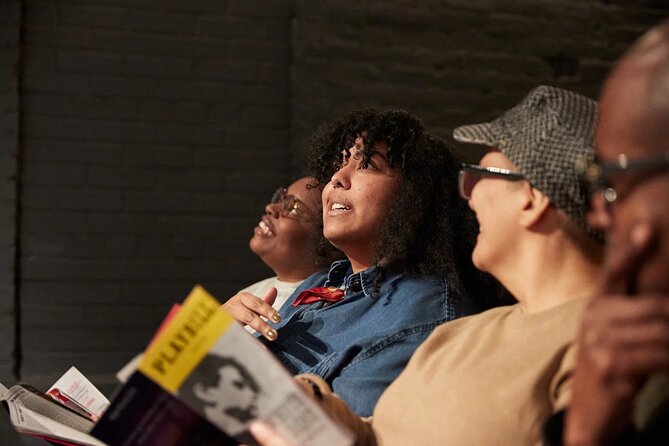
- Small group size (max 6) keeps the conversations human and easy
- Discounted, pre-booked tickets help you save and avoid box-office lines
- Venue history first gives you a richer lens while the curtain rises
- Show-focused discussion turns the night into more than just watching
- Guide-led recommendations can help you map your next Broadway plan
A 3-hour Broadway plan that starts right at 6:45

This experience is designed for an evening that doesn’t sprawl all day. You meet at the Theater District, starting at 6:45 pm, and it runs about 3 hours total before returning to the meeting area. That timing is great if you want culture without sacrificing your whole night.
The meeting point is in the Theatre District area, near public transportation, which matters a lot in New York. You won’t want to gamble on wandering around when the group is small and you’ll need to be there on time. If you’re using transit, give yourself a little buffer for walking and ticket checks.
Another practical detail: you get a mobile ticket. That’s convenient, but also make sure your phone is charged and your ticket is accessible before you arrive. In a city where lines happen fast, being ready at the meeting point keeps the start smooth.
You can also read our reviews of more tours and experiences in New York City.



How $40 tickets translate into real value
At $40 per person, this isn’t priced like a pricey, full-day theatre package. It’s built around a simple idea: you get access to show tickets at a discount that retail doesn’t offer.
The program notes the discounted ticket price is typically 20% to 50% off compared to what you’d pay on the regular market. On top of that, tickets are pre-booked, so you can skip the lines you’d normally face at the box office. For many people, that’s the real value: less waiting, more time inside the theatre.
Now, let’s talk fairness. Because you’re buying a guided theatre experience, the show isn’t presented like a choose-your-own-adventure where you can pick any title you want that night. You’re participating in the specific show the guide has access to for that session. If you’re hoping for one very specific production, you may want to check whether the timing that works for you aligns with the show you’re most interested in.
Inside the theatre: venue context that changes how you watch
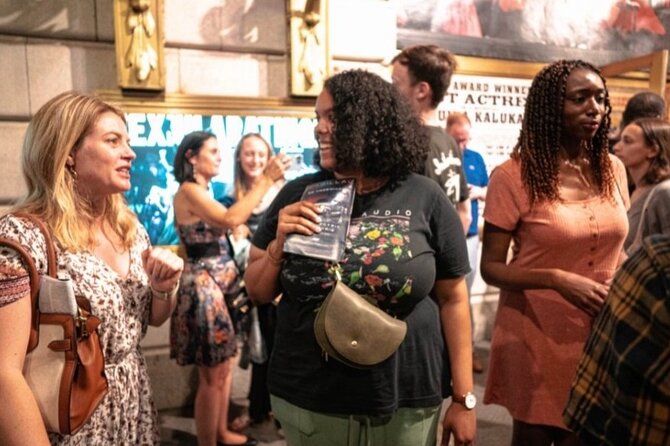
The first shift happens before the curtain. You meet outside the theatre, and your guide shares the history of the venue along with fun facts about Broadway and off-Broadway. It’s not just trivia. It gives you a set of lenses for what you’re about to see.
Here’s the practical magic: when you understand a venue’s background, the theatre feels less like a stage where random things happen and more like a place with identity. You may notice details you’d otherwise miss—how the production seems to fit the space, the pacing choices, or why certain shows feel like they belong to particular eras.
My favorite part of this kind of setup is how it turns first-time viewing into something active. You go in ready to pay attention, not just consume. And if you’ve seen a lot of theatre already, you’ll still pick up something—because the theatre district is packed with small stories.
The show: what the guide’s access means for your seat-time
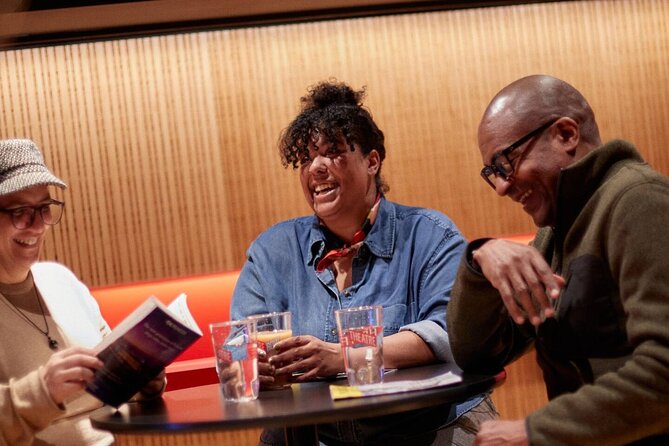
The experience includes admission tickets, and your guide attends the show with you as an insider. That matters because it turns the evening into a shared experience, not a solo outing where you watch, shrug, and move on.
The ticket discount is the centerpiece here. Even if you’ve done Broadway before, saving money on the actual show ticket can change what you’re willing to do next—like seeing another production later in your trip. And since the tickets are pre-booked, you don’t lose time chasing availability in the last minute.
One more thing: the tour runs for about 3 hours, so the show is the core event, with time set aside for conversation. That rhythm helps keep things from feeling rushed. You’ll be able to settle in, watch the performance, and then talk while it’s still fresh in your mind.
After the curtain: discussing the play over coffee or drinks
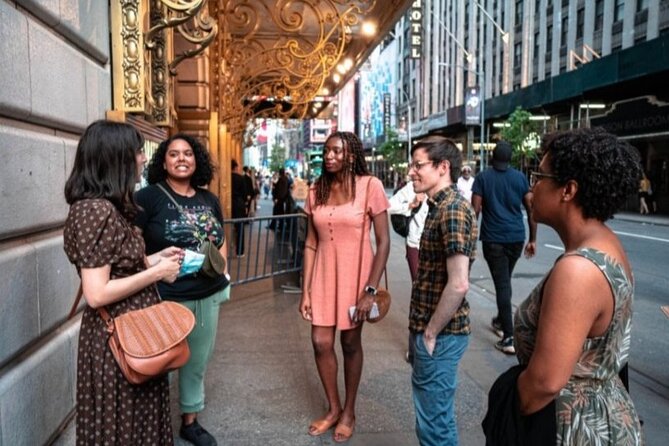
Here’s where this program earns its name. After the show, you sit down to discuss what you saw over food, coffee/tea, or drinks available at a nearby eatery. The program is explicit that refreshments are not included, so you’re paying for the discussion snacks separately.
Still, the trade-off is worth it. A group conversation right after a performance helps you process the story while details are vivid. You also get to hear another angle—how someone else read the acting choices, pacing, or themes. This is the difference between entertainment and experience.
In one recent run, the guide was Mandy, and she acted like a real conversation facilitator. She was communicative and friendly from booking through meeting up, and she helped the group think differently about the show while staying open to different viewpoints. That’s a rare mix. A good theatre discussion isn’t about being loud or trying to win; it’s about noticing.
If you want to make this part enjoyable, plan a little budget for at least a coffee or a drink. It keeps the post-show hang relaxed and gives you something to hold onto while you talk.





Small group size (max 6) makes the talk feel personal
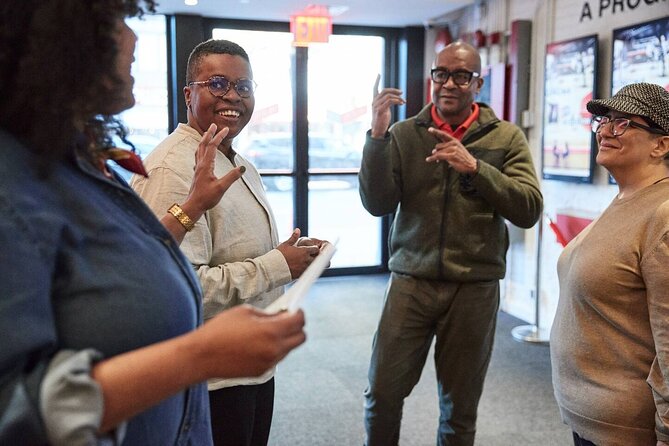
This is an intimate outing with a maximum group size of six. That single detail changes everything about the experience.
In a small group, you’re more likely to hear what others say. You don’t have to shout. You also feel safer being honest about what you did or didn’t connect with. Theatre is personal. One person loves the ending and another person is scratching their head. In a small group, that tension becomes discussion instead of awkward silence.
The highlight list points to meeting likeminded people who share an interest in the arts. I agree with that vibe. The group format encourages civility and curiosity, not random chatter. If you’ve ever been to a crowded attraction where everyone is just trying to finish and move on, this feels like the opposite.
Practical tips for planning your evening in the Theatre District
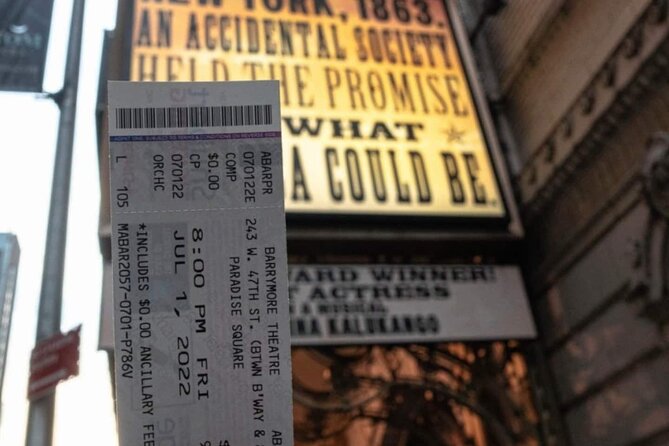
Theatre District evenings are easy to mess up with poor timing. This experience starts at 6:45 pm, so plan your route with walking time in mind.
A few practical points that can save you stress:
- Bring layers. Evening temperatures can change quickly, especially when you’re meeting outside first.
- Keep your phone charged for the mobile ticket moment.
- Aim to arrive a few minutes early. With only six people max, late arrivals affect everyone.
The experience is offered in English, and it’s described as suitable for most people. Also, service animals are allowed. That’s helpful if you’re traveling with an animal and want a straightforward, predictable environment.
Weather can also play a role. The program indicates it requires good weather, and if it’s canceled due to poor weather, you’ll be offered a different date or a full refund. Since the meeting starts in the Theatre District, it’s smart to have a plan for rain or cold.
Who this suits best (and who may want a different style)
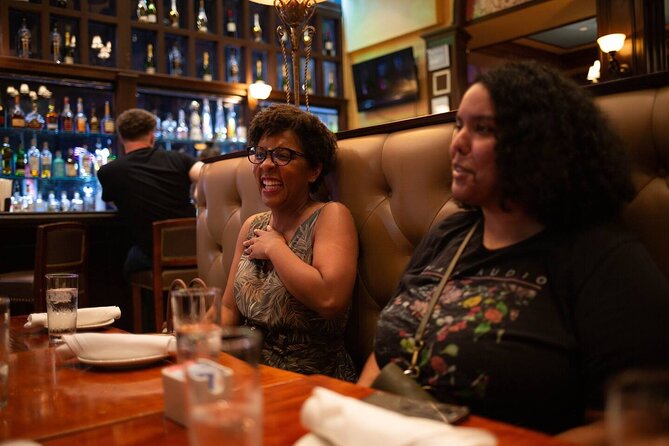
This is ideal if you want theatre in a way that feels interactive. You’ll probably love it if:
- You enjoy not just watching, but also learning how a production fits into Broadway’s world
- You like structured conversation after a show, instead of talking only in your head on the walk back
- You’re traveling solo or with a small group and want an easy way to meet arts-minded people
It may be less ideal if:
- You’re only interested in watching with zero discussion
- You’re on a tight food budget and don’t want to add spending for drinks after the show
- You’re very specific about which show you want, since the experience is tied to the show the guide has access to for that session
If you’re flexible and open-minded, this format tends to reward you.
Booking timing and what to expect before you go
This experience is often booked in advance. The average booking window is 11 days, which suggests the discounted ticket access can fill up. If your travel dates are firm, it’s worth securing the plan sooner rather than later.
Confirmation is received at booking, and the ticket is mobile. That’s helpful because you don’t need to print anything.
One last practical note: if you’re planning multiple shows, this kind of evening can act like a starter program. After the show, guides often share options for what to see next, and that can help you build a sensible theatre schedule without guessing.
Should you book Drama and Discourse in New York Theatre?
If you want Broadway as more than a ticket scan, I think you should. The combination of discounted pre-booked tickets, venue context before the show, and a guided conversation after makes the whole night feel purposeful. The max six-person group keeps it from turning into a lecture or a forced chat.
The main trade-off is budget. The show is included, but refreshments aren’t, so plan for coffee, tea, or drinks during the discussion. And remember, you’re getting a curated show experience tied to the night’s availability and insider access.
If that sounds like your idea of a great New York evening—watch a play, learn a little theatre culture, then talk about it with real people—this is a strong yes.
FAQ
What time does the experience start, and how long is it?
It starts at 6:45 pm and lasts about 3 hours.
How much does it cost?
The price is $40.00 per person.
Are show tickets included in the price?
Yes. Tickets are included.
Is dinner included?
No. Dinner is not included, and refreshments for the post-show discussion (coffee/tea/drinks and food available) are not included in the ticket price.
What language is the tour offered in?
The experience is offered in English.
How many people are in the group?
The group size is limited to a maximum of six.
What if the experience is canceled due to weather or my plans change?
If it’s canceled due to poor weather, you’ll be offered a different date or a full refund. If you cancel, you can cancel up to 24 hours in advance for a full refund; within 24 hours, the amount you paid will not be refunded.