REVIEW · NEW YORK CITY
Lower Manhattan: From Financial Power to Enduring Hope
Book on Viator →Operated by CityShuffles · Bookable on Viator
Wall Street power meets human hope. This Lower Manhattan tour is a compact 2.5-hour walk that links financial icons to human stories, with a licensed guide (Jon) who keeps it clear and moving. I like how the route mixes Wall Street landmarks with 9/11 remembrance and old New York street history, all without dragging.
You’ll mainly do quick stops, often around 5 minutes each, so the pace feels steady. If you want long pauses for museums, this might not be your style.
In This Review
- CityShuffles Lower Manhattan Walk: Wall Street Icons With Real Weight
- Price and What You Actually Get for $39
- Charging Bull and Bowling Green: The Start of the Wall Street Myth
- The National Museum of the American Indian Exterior and Samuel Chester French
- Fraunces Tavern Museum and the Old Dutch Traces You Can Still Spot
- Queen Elizabeth II Garden: Hanover Square and September 11 Memorial Meaning
- Delmonico’s and John Wick Film Locations in Real NYC Streets
- Wall Street’s Tallest-Short-Lived Moment, Trump’s 90s Purchase, and 1920 Bombing Context
- House of Morgan: JP Morgan’s First Bank and the Gotham Stock Exchange Connection
- Walking Pace, Weather Reality, and How to Prepare
- Who This Tour Fits Best
- Should You Book Lower Manhattan: From Financial Power to Enduring Hope?
- FAQ
- How long is the Lower Manhattan walking tour?
- What does it cost?
- Is the tour guided or self-guided?
- Where does the tour start and end?
- Are there admission fees at the stops?
- Do I receive a mobile ticket?
- Can I cancel for free?
CityShuffles Lower Manhattan Walk: Wall Street Icons With Real Weight
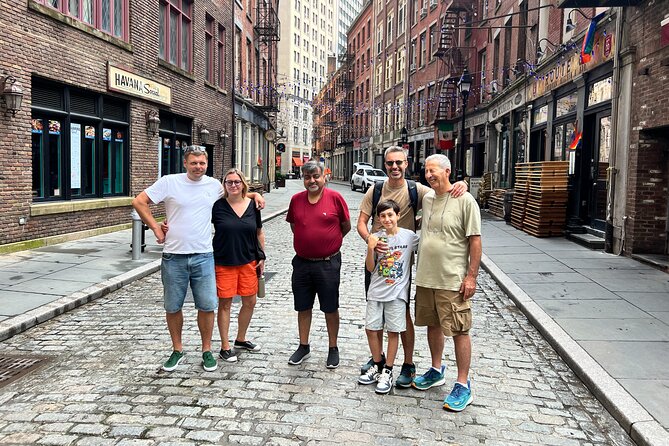
This is the kind of Lower Manhattan tour that helps you understand the city in layers. You start at Charging Bull, then work through the streets and buildings that shaped finance, the Revolution era, Dutch New Amsterdam remnants, and later global events tied to September 11.
The best part is the “from-to” feeling. You’re not just looking at famous façades. You’re walking from power symbols toward enduring hope, with the guide pointing out why each location matters.
Price and What You Actually Get for $39
$39 for about 2 hours 30 minutes is a fair price for a guided route like this, especially in a city where standalone attractions can add up fast. The tour also includes a licensed professional guide, and every stop on the schedule is listed as admission free.
Here’s what that means for you in practical terms:
- You’re paying mainly for expert storytelling and safe navigation, not entry fees.
- You can pack the rest of your day with museums or a long meal, since this doesn’t swallow your budget.
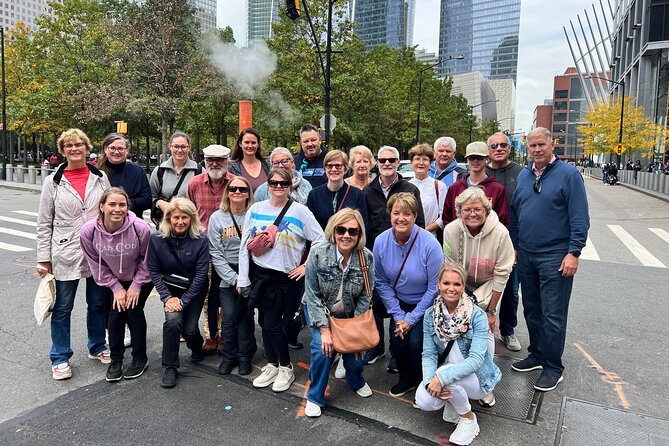
Group size is kept to a maximum of 25, which helps the guide manage questions and traffic flow without turning it into a chaotic herd.
You can also read our reviews of more tours and experiences in New York City.



Charging Bull and Bowling Green: The Start of the Wall Street Myth
Stop 1 is Charging Bull (Wall Street Bull). You’ll learn the history behind the bull itself, and you’ll get the bigger idea behind it: how New York turns money, confidence, and risk into public symbols. It’s the kind of place where photos are easy, but the story is the payoff.
Stop 2 is Bowling Green, described as the oldest park and the oldest fence in NYC. This is where I like to recalibrate expectations. You’ll see a small, historic space that anchors how Lower Manhattan has been lived-in for centuries, not just “invested in” by tourists and bankers.
Tip for you: if the streets are crowded, the guide’s timing helps you avoid standing around. You’ll get in, learn, and move before the next wave.
The National Museum of the American Indian Exterior and Samuel Chester French
Stop 3 is the National Museum of the American Indian. You’ll focus on what you can see out front: a statue by Samuel Chester French displayed outside the former US Custom House.
Even if you’re not stepping inside during this tour, this stop is valuable because it trains your eye. Federal buildings like the former Custom House weren’t neutral backdrops. They were where commerce, paperwork, and movement met the city’s growing identity. The French statue becomes a way to connect art and public space to the museum’s mission.
If you care about how meaning gets placed into a streetscape, you’ll enjoy this moment.
Fraunces Tavern Museum and the Old Dutch Traces You Can Still Spot
Stop 4 is Fraunces Tavern Museum, noted as a site many consider to be among the oldest taverns in NYC, and a place frequented by George Washington. Taverns were not just bars. They were meeting rooms for politics and deals, and that’s what makes this stop feel tangible.
Stop 5 is the Remnant of Lovelace Tavern, Old NY: New Amsterdam. This is where you start seeing the Dutch layer clearly. It’s a relic-level stop, but that’s exactly why it’s worth it. Lower Manhattan’s modern power is built on earlier footprints, and this kind of visible remnant is a shortcut to understanding that.
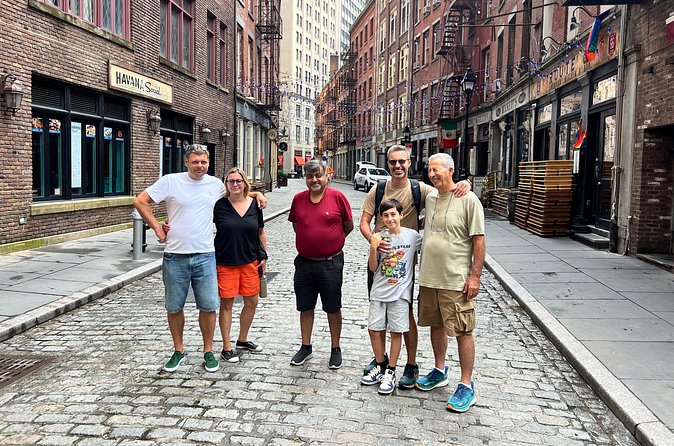
Stop 6 is Stone Street, highlighted for its historic buildings of Lower Manhattan. When you combine the tavern stops with Stone Street, you get a more complete picture of the city before Wall Street fully dominated the narrative.
Small drawback to plan for: these are mostly exterior views and short readings. If you like deep museum time, you’ll need extra time later.
Queen Elizabeth II Garden: Hanover Square and September 11 Memorial Meaning
Stop 7 is the Queen Elizabeth II Garden. You’ll see Hanover Square and a memorial dedicated to British individuals who died on September 11th.
This matters because it widens the lens. September 11 is often told as an American story, and that’s important. But the memorial here reminds you the event’s impact wasn’t contained by borders. It also gives the tour emotional variety—moving from finance talk to grief and remembrance in a grounded way.
Even on a busy walking route, this is one of the moments where you’re likely to slow down mentally, even if you keep moving physically.




Delmonico’s and John Wick Film Locations in Real NYC Streets
Stop 8 is Delmonico’s, where you’ll see the building used as the interior for the John Wick film series. Stop 9 brings you to Wall Street Court, including the New York Cocoa Exchange and a location tied to the John Wick Continental Hotel interior.
Movie stops are fun, but they can also be practical. They help you recognize how the city’s architecture gets reused for storytelling. You’ll walk away with a better sense of how Lower Manhattan’s spaces look on screen—and what’s actually behind the cinematic effect.
The guide also ties these stops to the city’s commercial past, especially around exchange culture. That connection makes it more than just a film-photo scavenger hunt.
Photo note: outside shots tend to work best on these stops. Indoors, you’re at the mercy of what’s open on the day.
Wall Street’s Tallest-Short-Lived Moment, Trump’s 90s Purchase, and 1920 Bombing Context
Stop 10 is Wall Street, where you’ll see the building that briefly became the tallest in the world and was purchased by Donald Trump in the 90s. Even if you’re not a tower fanatic, this is a helpful lesson in how hype, ambition, and branding show up in the built environment.
Stop 11 is also on Wall Street. Here you’ll see two big historical threads: the site of the 1920 bombing and remnants of the old Dutch wall that gave Wall street its name.
This is where the tour grows serious fast. You’re standing at the physical edges of events that shaped security, identity, and how people remember the city. And you’re also seeing the older geography that existed long before modern finance took over the story.
House of Morgan: JP Morgan’s First Bank and the Gotham Stock Exchange Connection
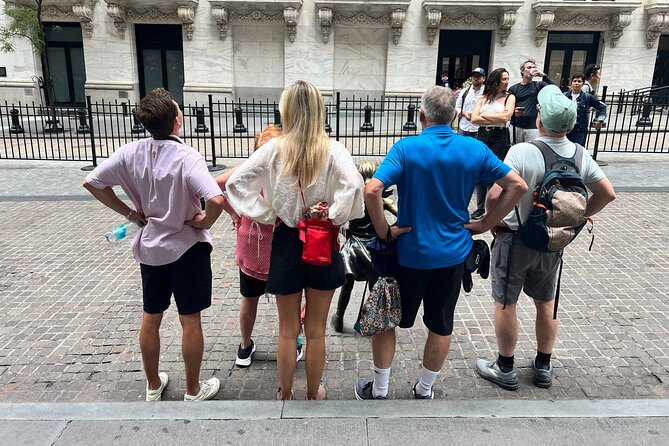
Stop 12 is House of Morgan. The tour highlights JP Morgan’s first bank location, plus a pop-culture link to The Dark Knight Rises, where the site is referenced as the Gotham Stock Exchange.
Then you get one of the most intriguing points on the schedule: you’ll learn why JP Morgan made his building so tiny. That’s the kind of detail that sticks because it turns a skyline element into a human decision—rules, space, and power all meeting in brick and shadow.
Even if you’re not a finance history person, you’ll still get something out of this stop. It explains how influence works in the real world: not just through money, but through design choices and constraints.
Walking Pace, Weather Reality, and How to Prepare
This tour is about 2 hours 30 minutes total, and the schedule shows multiple stops clocking in around 5 minutes each. That means you should plan on being on your feet, listening, and moving.
A few practical things to help you enjoy it:
- Wear shoes you trust. Lower Manhattan streets add up fast.
- Bring layers. Even short outdoor stretches can feel cold or windy, especially near the waterfront end of the route.
- If you want coffee, don’t assume it’s guaranteed. The tour info says there may be an opportunity for a coffee break depending on the guide’s route.
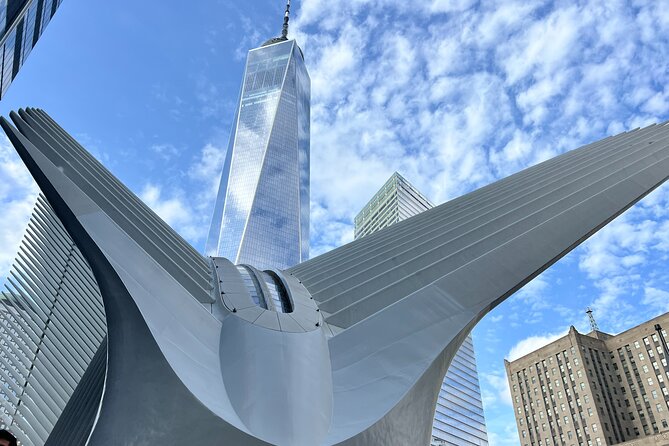
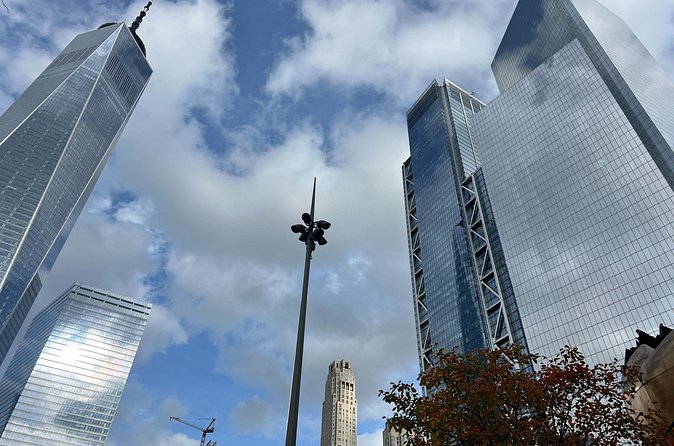
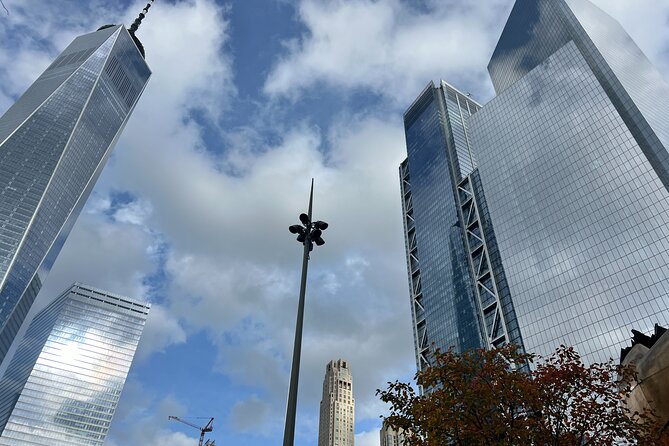
The good news: the route is built as a steady sequence, and there’s an end point at the Oculus World Trade Center area. That’s a strong “last chapter” finish because it’s a recognizable space to regroup, take photos, and plan the rest of your day.
Also note: the tour runs in English and is near public transportation, which makes it easier to stitch into a wider NYC plan.
Who This Tour Fits Best
I’d point you toward this tour if you want:
- A guided walk that connects Wall Street landmarks to the stories behind them.
- A mix of architecture, old New York remnants, and film locations.
- September 11 history told with care and context, not as a drive-by moment.
You might skip it if you want long, sit-down museum time, or if you’re looking for a route that stays mostly in one single neighborhood vibe without shifts from finance to memorials.
Should You Book Lower Manhattan: From Financial Power to Enduring Hope?
Yes, if you want the best kind of value in NYC: expert guidance, a tight route, and major Lower Manhattan highlights in one outing. The price is reasonable for a licensed guide, and the stops are listed as admission free, so you’re paying for interpretation more than entry fees.
Book it especially if you like a guide who can answer questions and make the city feel connected. If you can handle a steady pace with short stops, you’ll come away with Lower Manhattan that feels less like a list of sights and more like a story you can walk through.
FAQ
How long is the Lower Manhattan walking tour?
The tour duration is approximately 2 hours 30 minutes.
What does it cost?
It costs $39.00 per person.
Is the tour guided or self-guided?
It includes a licensed professional guide, and it’s offered in English.
Where does the tour start and end?
It starts at Charging Bull/Bowling Green and ends at the Oculus World Trade Center area (either just outside or inside).
Are there admission fees at the stops?
The scheduled stops are listed as admission ticket free.
Do I receive a mobile ticket?
Yes, the tour includes a mobile ticket.
Can I cancel for free?
Yes. Free cancellation is available up to 24 hours in advance for a full refund. If you cancel less than 24 hours before the start time, the amount paid is not refunded.