REVIEW · NEW YORK CITY
Manhattan Secret Societies Quest Experience in New York
Book on Viator →Operated by Questo · Bookable on Viator
A secret clue can turn Midtown into a game. The Manhattan Secret Societies Quest is a self-guided scavenger hunt that sends you past famous spots and offbeat corners, using a mobile app you can run offline. I like that it is flexible enough to fit your pace, and I also like that it keeps you looking closely at real buildings instead of just snapping photos. One caution: some stops are indoors or have limited hours, and the route can take longer than the 1 hour 15 minute estimate if you actually pause to explore.
You start at 89 E 42nd St and finish at 768 5th Ave near The Pond, with the app guiding you to the end point. There is no physical guide, so you are the interpreter—mostly in a good way, because you get to decide when to move on. If you want a classic guided talk at every stop, you may feel short-changed.
In This Review
- Key Things to Know Before You Play
- Midtown Manhattan, Turned Into a Puzzle Walk
- Price and Value: What $6.01 Buys You
- Logistics That Matter: Start on E 42nd, End by The Pond
- Grand Central Terminal: Look Up, Read the Signs, Answer the Clue
- New York Public Library Grounds: Astor, Lenox, and Tilden Foundations
- Tannen’s Magic Shop: New York’s Oldest Magic Store
- Herald Square: Broadway and Sixth Avenue’s Big Corner
- Reservoir Square to Bryant Park: A City’s Waterline Story
- Belasco Theatre and Broadway’s Theater Machinery
- Radio City Music Hall and Rockefeller Center Art Deco
- St. Patrick’s Cathedral: A Mid-19th Century Cathedral Plan
- 6 1/2 Avenue: Midtown’s Fraction Street Shortcut
- The Plaza Hotel on Central Park South: An Iconic Address
- Palladium Mambo Origins and City Center’s Theater-Life Turn
- Pulitzer Fountain and the Grand Army Plaza Finish Line Feeling
- How to Make This Quest Feel Like a Win (Not a Shuffle)
- Who This Suits Best in New York
- Should You Book the Manhattan Secret Societies Quest?
- FAQ
- Do I need an internet connection to play?
- How long is the Manhattan Secret Societies Quest?
- What are the start and end points?
- Is there a physical tour guide with you?
- What language is the experience offered in?
- Can I pause and resume later?
- Is it free for kids?
Key Things to Know Before You Play
- Offline gameplay means you are not stuck hunting for signal in Midtown
- Start anytime, stop anytime so you can dodge crowds or work around your schedule
- Low price, big walking value at $6.01 per person for a 1–3+ hour city puzzle run
- Landmark mix from Grand Central to Radio City and St. Patrick’s Cathedral
- No live guide—you solve it yourself with the mobile app prompts
- Mobile ticket + private group format so your group plays together
Midtown Manhattan, Turned Into a Puzzle Walk
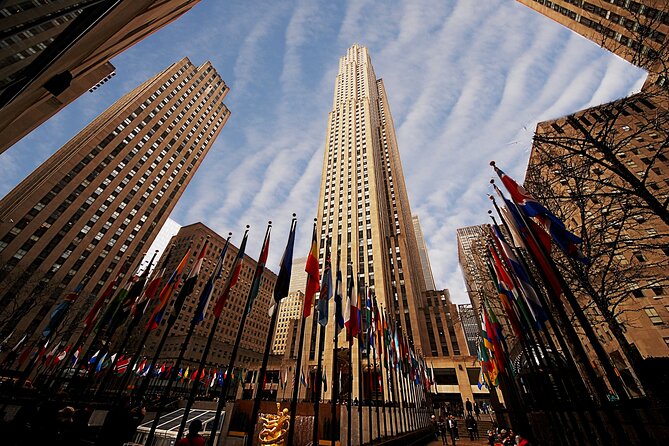
This is the kind of activity that makes sense in New York, where half the fun is moving block to block and noticing what you normally ignore. You do not get a lecturer on a bus. You get a task, you look around, you answer the challenge, and you move to the next location.
The best part is the pacing. The experience is built for real life: you can start at almost any time during the operating window, take a break, and resume later. That matters because Midtown can be chaotic. When you can pause for coffee, photos, or a bathroom break, the game stays fun instead of turning into a sprint.
Another smart detail is offline play. Midtown has plenty of people and plenty of apps fighting for bandwidth. With offline gameplay, you can keep your attention on the streets instead of babysitting your phone data plan.
You can also read our reviews of more tours and experiences in New York City.



Price and Value: What $6.01 Buys You
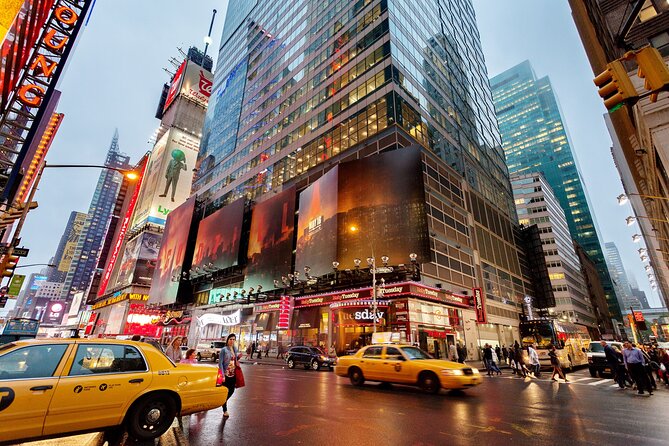
At $6.01 per person, the value is mostly in two things: time on your feet and the quality of the locations you hit. You are not paying for a venue ticket. You are paying for a structure—a reason to walk, look, and connect dots across Midtown.
You also get extras that lower the risk. There are group discounts, and kids are listed as free, which can make this one of the cheaper ways to keep a family engaged in Manhattan. And because it is described as a private tour/activity, your group stays together without blending into a crowd queue for a traditional guided walk.
Yes, $6.01 is not a museum admission. But the way the game is designed—solve clues, go from landmark to landmark—can feel like spending more once you realize you are touring major sites without paying entry fees for each one.
Logistics That Matter: Start on E 42nd, End by The Pond
The starting point is 89 E 42nd St, New York, NY 10017, and the endpoint is 768 5th Ave, New York, NY 10019, near The Pond. The app directs you to the endpoint, and you can take a bus home afterward or keep exploring.
Why this matters: Midtown is easiest when you are not zig-zagging across the city all day. This route stays in a tight corridor of Midtown landmarks, which makes it more realistic if you are fitting this between other plans. It is also easier to plan transit if your start and finish are in predictable neighborhoods.
Operating hours are listed as 5:00 AM to 9:00 PM, Monday through Sunday. That gives you options. Early play can feel calmer. Later play can be more atmospheric around theaters and landmarks. You get to decide.
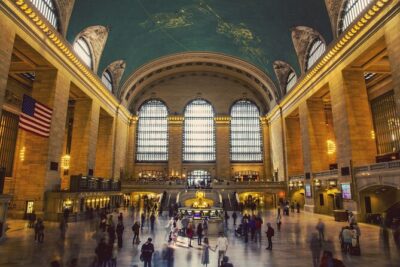
Grand Central Terminal: Look Up, Read the Signs, Answer the Clue
Your first major stop is Grand Central Terminal, opened in 1913 on the site of earlier stations. It was built by and named for the New York Central Railroad, and later served successors to that railroad.
For the game part, you are not handed a single answer on a silver platter. You are meant to look around and find the information that lets you advance. That is the theme here: the app pushes you to notice details on location rather than relying on a map-only route.
Practical tip: Grand Central is active and busy. If you are playing during peak commute times, expect more foot traffic and more visual noise. Take it slow at the clue moment, then keep moving when you have the answer.
New York Public Library Grounds: Astor, Lenox, and Tilden Foundations
Next up is The New York Public Library—specifically described through the Astor, Lenox and Tilden Foundations. The library story runs back to the 19th century, formed from an amalgamation of grass-roots libraries, social libraries of bibliophiles, and support from philanthropy by wealthy Americans.
This stop is a good reminder that Midtown is not only skyline. It is institutions, civic life, and the kind of storytelling you only get when you slow down near the buildings.
For the puzzle, you again look around for the answer and then learn the background of the place. If you like cultural context—why something exists and how it formed—this stop tends to land well.




Tannen’s Magic Shop: New York’s Oldest Magic Store
Then you shift to a different vibe: Tannen’s, identified as the oldest magic store in New York. The starting point here is Louis Tannen, who began it in 1925 as a street stand selling magic. The business quickly grew beyond that initial setup, since the original method was not the easiest or most enjoyable way to sell magic.
This is one of those Midtown contrasts that makes a self-guided hunt more interesting than a checklist tour. You are not only reading about grand institutions—you are learning about a niche shop that became part of the city’s entertainment DNA.
What to plan for: a magic shop is not likely to be like a public plaza you can stroll through anytime. You may need to treat indoor access as time-dependent, even if the game itself can be started at many hours.
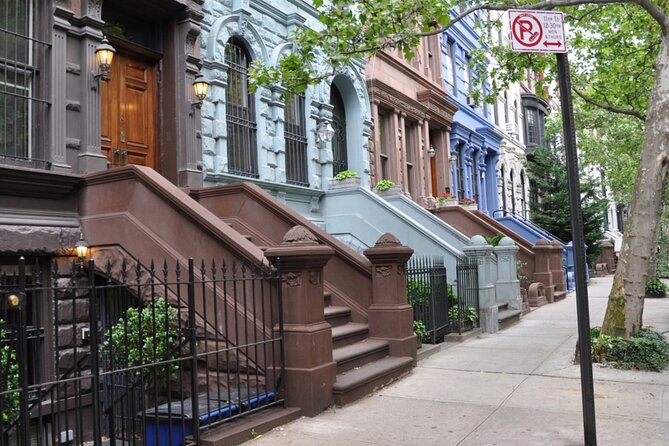
Herald Square: Broadway and Sixth Avenue’s Big Corner
You move to Herald Square, with its origins traced to 1846 when the city acquired the area for the extension of Bloomingdale Road, now Broadway. The name comes from an architecturally distinctive building that once sat at the intersection of Broadway and Sixth Avenue: the New York Herald Building.
This stop feels great if you enjoy New York’s naming logic—how one intersection name can preserve an older city layout. It also fits the secret-societies premise: you are learning the backstory behind a common place.
Game tip: at big intersections, it is easy to get disoriented. If you feel like you are standing in the wrong spot for the clue, stop and reset your orientation before you start scanning.
Reservoir Square to Bryant Park: A City’s Waterline Story
Another clue-worthy transformation: the site between 1839 and 1900 held the Croton Reservoir and Reservoir Square, and it was renamed Bryant Park in 1884 in honor of William Cullen Bryant. The nearby New York Public Library construction, scheduled between 1897 and 1912, coincided with the removal of the reservoir.
I love this kind of lesson because it turns a park and a library into evidence of city change. You are looking at Midtown now, but you are also learning what was literally underneath it and what got replaced.
For the game, you look around to find the answer that advances you. For you, the win is a deeper understanding of why Midtown feels layered: streets and squares are built over former functions.
Belasco Theatre and Broadway’s Theater Machinery
Next is the Belasco Theatre, a Broadway theater that opened in 1907 at 111 West 44th Street. It was originally known as the Stuyvesant Theatre and designed by architect George Keister for impresario David Belasco.
This is where the quest starts to feel like a guide to the invisible engine of Broadway. The buildings may look permanent, but their identities shift with branding, ownership, and the kind of performances that pass through.
As a puzzle stop, it keeps you scanning the details instead of just walking past. And because theaters are frequent meeting points in Midtown, you can use this leg as an anchor for planning your next transit connection.
Radio City Music Hall and Rockefeller Center Art Deco
Your route includes Radio City Music Hall, completed in 1932 as part of Rockefeller Center development. It is described as Art Deco, designed by architect Edward Durell Stone and interior designer Donald Deskey, with Samuel Lionel Rothafel, known as Roxy, serving as a key advisor.
Right after that, the app nudges you through Rockefeller Center’s broader idea. The description ties it to John D. Rockefeller Jr. and his vision of surrounding New Yorkers with art and motifs celebrating the best of the human spirit, and it frames what you will discover as the realization of that vision.
If you like architecture, this is one of the best portions of the route. You get both style and intent: not only what it looks like, but why the place was imagined in the first place.
Practical consideration: Radio City and Rockefeller Center areas can be busy. Keep your clue-solving moment short, then give yourself a bit of space to take in the surrounding architecture before you move on.
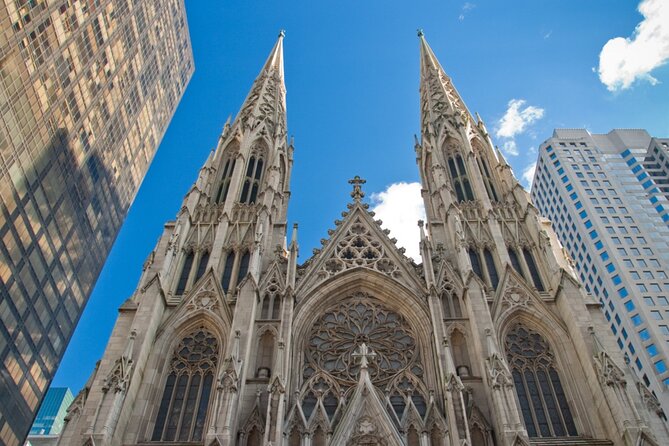
St. Patrick’s Cathedral: A Mid-19th Century Cathedral Plan
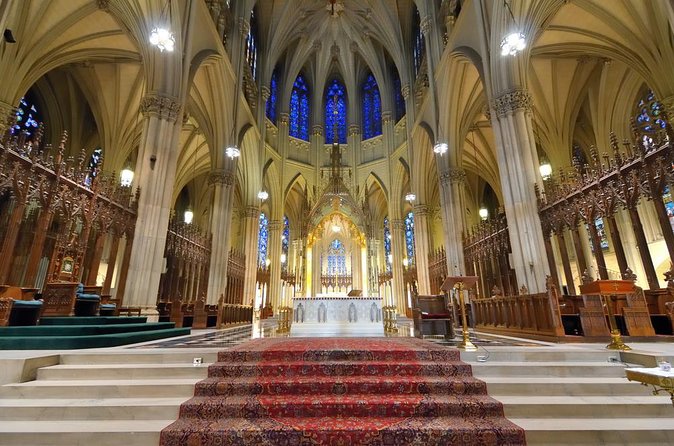
Another major stop is St. Patrick’s Cathedral, with origins traced to the middle of the 19th century, specifically 1853. In that year, John Joseph Hughes, archbishop of the Roman Catholic Archdiocese of New York, announced plans for a larger, modern cathedral to serve a rapidly growing Catholic population in the city.
This stop brings a different tone than the theater-and-magic segments. Instead of entertainment commerce, you get a civic-religious story tied to New York’s growth.
For puzzle play, it is again about looking around and finding the clue that lets you advance. If you enjoy learning the reason behind major landmarks, this one usually feels worth the detour.
6 1/2 Avenue: Midtown’s Fraction Street Shortcut
Then you get a fun one: 6 1/2 Avenue. The description notes it is the only fractioned number street in New York City, with official signposts installed in July 2012 by the Department of Transportation. Before that, it was already known to Midtown workers who used the public spaces between 57th and 51st as a shortcut to avoid walking around 6th or 7th Avenue.
This is a clever clue stop because it feels like a local secret, even if it is now officially marked. The “why it exists” part makes it more than trivia.
If you are the type who loves odd urban details, this is where the quest can feel extra rewarding.
The Plaza Hotel on Central Park South: An Iconic Address
You end up at an experience stop focused on The Plaza Hotel on Central Park South. It debuted on October 1, 1907 and is framed as an icon that hosted world leaders, dignitaries, captains of industry, Broadway legends, and Hollywood royalty.
Even if you never go inside, it is the kind of building you can learn something from just by noticing its stature and location. It also provides a nice contrast to the earlier public spaces like Grand Central and the library grounds.
Game note: since this is a luxury hotel-related landmark, treat it like a place you approach respectfully and from the outside if needed. Your clue-solving can still happen without turning it into a formal visit.
Palladium Mambo Origins and City Center’s Theater-Life Turn
The quest also touches pop-culture history. One stop references the mambo craze beginning in 1948 at the Palladium Ballroom, with Hollywood and Broadway stars showing up and a note that Wednesday nights included a free dance lesson.
Then you get City Center, described as originally built as a Shriners temple. When the Shriners could no longer afford taxes during the Depression, the building became city property. Mayor Fiorello La Guardia then turned it into a theater for music and dance.
These two stops keep the “secret societies” theme in a different direction. Instead of secret rules, you get secret cultural movements—how a single venue can help a dance style spread, and how a building can change purpose when economic times shift.
Pulitzer Fountain and the Grand Army Plaza Finish Line Feeling
Finally, you include Pulitzer Fountain, an outdoor fountain located in Manhattan’s Grand Army Plaza. It is named after newspaper publisher Joseph Pulitzer, who died in 1911 and bequeathed $50,000 for the creation of the fountain.
Fountain stops are great for a self-guided quest because they give you a place to pause. They also add a “this is a real city outing” feeling instead of feeling like you are only moving from one corner to another.
Then, the app guides you to your designated endpoint near The Pond at 768 5th Ave. From there, you can head home or keep exploring.
How to Make This Quest Feel Like a Win (Not a Shuffle)
Because this is self-guided, your best strategy is to play like a local: short looks, quick answers, and then decide if you want extra time at a stop.
A few practical things to keep it smooth:
- Bring comfortable shoes. Midtown walking adds up fast.
- Keep your phone battery up. Offline helps, but your screen and app still run.
- Use the app prompts and hints if you get stuck. When clues are unclear, hints can keep you moving instead of wandering.
- Plan extra time. The posted time is an estimate, and it can stretch if you pause for pictures or if some sites are closed or have limited access at your hour.
If you expect a brisk 75-minute hit of puzzles, you might feel disappointed. If you expect a guided walk with your own brakes, you will likely enjoy it much more.
Who This Suits Best in New York
This quest is a great match for:
- Pairs or small groups who want a shared activity without a host
- Solo travelers who enjoy puzzles and don’t mind figuring things out
- Families with kids, especially because kids are listed as free
- People who like Midtown landmarks but want a reason to look at details
It might not be your best bet if you want:
- A live interpreter explaining every building
- Guaranteed access to shops and indoor sites at all times
- A strict clock experience that stays exactly within the estimate
Should You Book the Manhattan Secret Societies Quest?
If you want a low-cost, self-paced way to tour famous Midtown landmarks while practicing the art of looking closely at what you normally rush past, I think this is a good booking. The price is easy to justify, the offline play reduces stress, and the landmark variety keeps it from feeling repetitive.
Just go in with the right expectations. Treat it like a half-day adventure you can control. If you expect every stop to be open and every clue to be lightning-fast, you may get annoyed. If you treat it like a flexible puzzle walk through Midtown, it can be a memorable way to see New York with fresh eyes.
FAQ
Do I need an internet connection to play?
No. The quest is designed so you can play offline without an internet connection.
How long is the Manhattan Secret Societies Quest?
It is listed as approximately 1 hour 15 minutes, though you may spend more time if you linger at stops or need extra help with clues.
What are the start and end points?
You start at 89 E 42nd St, New York, NY 10017 and the game ends at 768 5th Ave, New York, NY 10019 near The Pond.
Is there a physical tour guide with you?
No. This is a self-guided experience with a mobile app, so there is no physical guide included.
What language is the experience offered in?
The experience is offered in English.
Can I pause and resume later?
Yes. It includes full flexibility, so you can take a break at any time and resume later.
Is it free for kids?
Yes. The experience is listed as free for KIDS.