REVIEW · NEW YORK CITY
New York City Fortune Tour 1-Day Sightseeing Adventure
Book on Viator →Operated by Jupiter Legend Corporation · Bookable on Viator
Wall Street, in fast bites. I liked this expert-led format because you get straight-to-the-point context at major landmarks, not just photo stops, and you cover Lower Manhattan to Midtown without the hassle of planning multiple subways. My main caution: many stops are brief (about 6 minutes), so the schedule moves fast and you’ll need to decide early what you want to enter versus view from outside.
This is also the kind of tour where your experience can hinge on details you control. You’ll ride in a comfortable motor coach with pickup options around Manhattan, Brooklyn, and Queens, but it’s not a hotel-to-hotel service. If you expect pickup at your exact lodging, double-check the named pickup point—some people have had surprises when they planned on hotel pickup that wasn’t part of the product.
In This Review
- Key things I’d watch before you board
- A 6.5-hour power sweep across New York’s money-making map
- Getting on the bus: pickup points, drop-offs, and why Chinatown shows up
- Lower Manhattan: from Broadway ambition to the buildings that changed rules
- Canyon of Heroes (Broadway) and the mood-setting “success strip”
- Woolworth Building and early cash-built power
- 15 Park Row, Porter Building, and St. Paul’s Chapel: vertical vs. surviving history
- Telegraph Building: the technology that sped up Wall Street
- Equitable Building and zoning: the city fights back
- The Wall Street core: Trinity, Federal Hall, the Fed, and the exchange feeling
- Trinity Church: faith, wealth, and prime real estate
- Federal Hall: where political power and finance share DNA
- Bank of New York and the oldest-bank angle
- Federal Reserve Bank of New York (as part of the Wall Street story)
- The NYSE and the visual drama of markets
- Charging Bull: the famous optimism stop
- Customs House: trade revenue and immigration-linked commerce
- Standard Oil Building and Rockefeller’s monopoly era
- Midtown money and media: Rockefeller Center to Times Square
- Cunard Line Headquarters: finance meets travel and immigration
- Rockefeller Center: private enterprise with media power
- Diamond District and International Gem Tower: specialized luxury logistics
- Pulitzer Fountain: influence beyond the spreadsheet
- Grand Army Plaza and the Plaza Hotel: Fifth Avenue prestige
- Times Square: visibility equals power
- Nasdaq MarketSite: the future layer
- Optional add-ons near the end: choosing what you really want to pay for
- Price and value: how a $106 tour can become a bigger bill
- Pacing and comfort: what the short stops feel like in real life
- Language and communication: offered in English, but day-to-day reality can vary
- Who should book the Fortune Tour—and who should skip it
- Should you book this tour?
- FAQ
- How long is the New York City Fortune Tour?
- What is included in the $106 price?
- Where does pickup happen?
- Is there hotel pickup?
- Do I need cash during the tour?
- What optional experiences are available?
- Can I cancel for a full refund?
Key things I’d watch before you board
- Quick-hit itinerary: expect ~6-minute stops at most sights, with a longer optional block near the end
- Pay attention to optional tickets: One World Observatory, Liberty Cruise, and RiseNY cost extra only if you select them
- Cash may be needed: the tour notes cash is required for certain attractions and ticket purchases
- Pickup location is the whole game: Chinatown is central to the plan, and at least one Brooklyn departure is pickup-only
- Comfort with a limit: the max group size is 55, and you’ll be in a professionally maintained vehicle
A 6.5-hour power sweep across New York’s money-making map
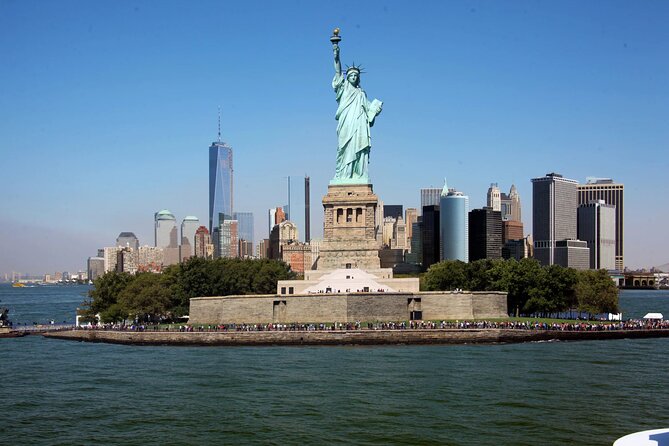
The New York City Fortune Tour is built like a guided “greatest hits” of wealth, commerce, media, and ambition. You’re on the move for roughly 6 hours 30 minutes (the operator also describes it as about 7 hours including travel and traffic), with your guide adding the storyline that connects the buildings.
What makes this work well is the flow. You start in Lower Manhattan where finance became the city’s engine, then push up toward Midtown where media, luxury, and modern trading take over. Even if you only spend a short moment at each stop, the sequence helps you understand why New York grew the way it did.
The pacing is fast by design. If you like lingering and reading plaques, you’ll feel it. If you like getting your bearings fast—then going back later on your own—you’ll probably love this format.
You can also read our reviews of more city tours in New York City


Getting on the bus: pickup points, drop-offs, and why Chinatown shows up
Your first decision is where you’re picked up. The tour offers select pickup and drop-off locations in NYC, and the general plan is that you’re dropped off at your pickup location. The tricky part is that one listed departure is different.
Here are the exact details that matter:
- There’s a specific Brooklyn pickup at 6102 8th Ave, Brooklyn, NY 11220 (TD Bank) for the 07:00 departure, and it says this is pickup only. Drop-off for that timing is Chinatown.
- If you don’t submit a pickup location at least 3 days before departure, the default pickup is 08:00AM at Chinatown, Manhattan — 75 Chrystie St, New York, NY 10002.
- Pickup time may differ from your voucher start time. The guidance is to confirm with the operator after booking, and arrive 5–10 minutes early.
This matters because the tour is not set up like a private driver who can swing by any hotel. In the real world, that difference has caused headaches for people who assumed hotel pickup was included.
My advice: before the day-of, take a screenshot of the pickup address and the time, and set a reminder. On busy NYC mornings, those minutes are the difference between relaxing and sprinting for a bus.
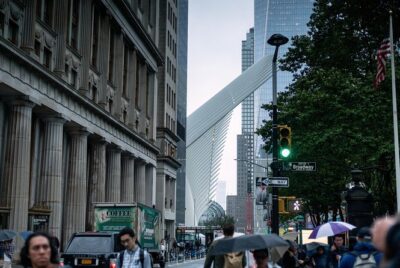
Lower Manhattan: from Broadway ambition to the buildings that changed rules
Your opening stretch is all about the idea that New York doesn’t just build money—it builds identity. The guide’s job here is to show you how finance, technology, and corporate power shaped the skyline and the city’s laws.
Canyon of Heroes (Broadway) and the mood-setting “success strip”
You start on Broadway’s Canyon of Heroes, famous for the ticker-tape vibe and markers honoring big-name achievements. It’s a quick stop (listed at about 6 minutes), but it works as an opening lesson: this isn’t just sightseeing, it’s a theme park of American ambition.
If you’re the kind of person who likes understanding why something is famous, this first stop can set you up for the rest of the day.
Woolworth Building and early cash-built power
Next up is the Woolworth Building, once the tallest building in the world. The standout detail here is the claim that it was funded entirely in cash, which is basically an origin story for New York skyscraper confidence.
You’re there briefly, and the architecture deserves more time than that. Still, it’s a good introduction to how early corporate America wanted to look permanent.
You can also read our reviews of more tours and experiences in New York City




15 Park Row, Porter Building, and St. Paul’s Chapel: vertical vs. surviving history
You’ll pass or stop near several important Lower Manhattan landmarks, including:
- 15 Park Row, noted as the world’s tallest building from 1899 to 1901
- The Porter Building, an early commercial structure where commerce tried to look like a fortress
- St. Paul’s Chapel, one of Manhattan’s oldest surviving churches, which offers a quieter counterpoint to the surrounding finance towers
This mix is smart. In a short tour, it’s easy to end up only seeing power. Including a church that survived centuries helps you keep perspective.
Telegraph Building: the technology that sped up Wall Street
The itinerary also points to the Telegraph Building, linking communication to how financial empires could operate faster. It’s a small stop, but it adds a big idea: money doesn’t move just by willpower. It moves by systems—technology included.
Equitable Building and zoning: the city fights back
One of the more practical New York lessons in the route is the Equitable Building. The idea is that its massive size blocked sunlight enough to push New York toward zoning laws. So even though this is a money-themed tour, it ends up showing the city setting limits on greed and height.
That’s the kind of detail you’ll remember when you later notice how New York skyscrapers step back.
The Wall Street core: Trinity, Federal Hall, the Fed, and the exchange feeling
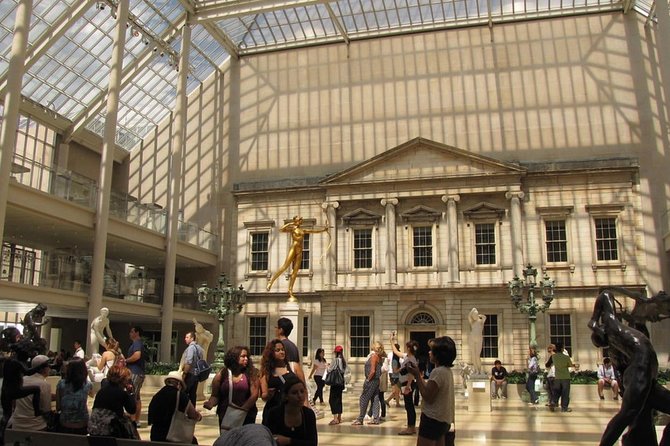
Once you reach the Wall Street zone, the stops become more iconic, and many come with admission included.
Trinity Church: faith, wealth, and prime real estate
Trinity Church is a Gothic landmark right in the Wall Street center. The story ties together faith and wealth, plus the historic graveyard sitting in some of the most valuable land in the city. Again, time is short, but it’s a meaningful pause.
Federal Hall: where political power and finance share DNA
Federal Hall is described as the birthplace of American government, where George Washington was inaugurated as the first U.S. president. What’s useful is the connection to why government and finance grew side by side right here.
Bank of New York and the oldest-bank angle
The route includes the Bank of New York, described as America’s oldest bank and tied to Alexander Hamilton. If you want a single sentence explanation for how the U.S. economy got structured, this stop is pointing you there.
Federal Reserve Bank of New York (as part of the Wall Street story)
The itinerary lists Federal Reserve Bank of New York / Bank of New York as key stops in the “second stop” block. The takeaway is the evolution from early national banking to the modern central-bank system.
The NYSE and the visual drama of markets
You’ll stop at the New York Stock Exchange from the outside view area, with an admission ticket included. Even if you don’t go inside (or if the timing is tight), the building façade is designed to make markets feel like institutions, not apps.
Charging Bull: the famous optimism stop
Then comes Charging Bull, the Wall Street symbol that’s almost always crowded. The tour lists it with admission ticket included. Even though you’re there for a short time, it’s one of those landmarks where you instantly understand the story: confidence, strength, and nonstop ambition.
Customs House: trade revenue and immigration-linked commerce
The tour also includes Customs House, now the National Museum of the American Indian. The “why it mattered” angle is the trade revenue it managed in the past, which gives you a direct link between global exchange and American growth.
Standard Oil Building and Rockefeller’s monopoly era
Next, you’ll hit Standard Oil Building, tied to John D. Rockefeller. The lesson here is corporate power at scale, and how industrial wealth reshaped the nation. For a short stop, it’s still a strong thematic anchor.
Midtown money and media: Rockefeller Center to Times Square
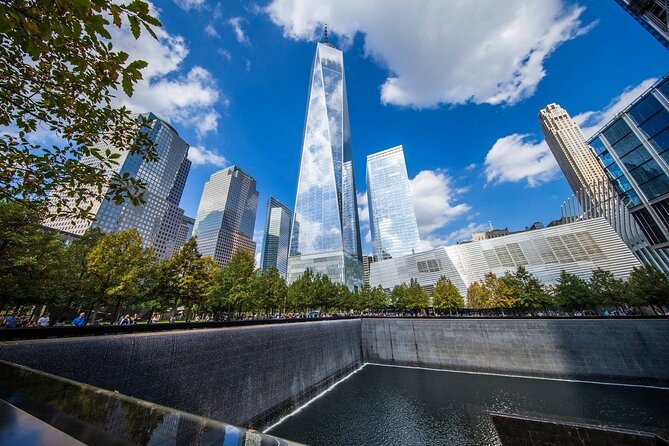
The second half shifts tone. You’re still on a wealth-and-finance tour, but the focus leans toward modern branding, entertainment, luxury, and high-tech trading.
Cunard Line Headquarters: finance meets travel and immigration
A notable stop is the Cunard Line Headquarters, described as the connection point between global travel, immigration, luxury ocean liners, and international commerce. This broadens your understanding of “fortune” beyond Wall Street.
Rockefeller Center: private enterprise with media power
You’ll reach Rockefeller Center, described as a symbol of private enterprise, media power, and cultural influence. This is where New York sells itself to the world—then monetizes attention.
Diamond District and International Gem Tower: specialized luxury logistics
The tour moves into the Diamond District, including the International Gem Tower. The details matter: it’s presented as the world’s largest diamond exchange, moving billions of dollars in gems, with purpose-built security and specialization.
If you’ve ever wondered why certain luxury industries need their own infrastructure, this is the practical answer.
Pulitzer Fountain: influence beyond the spreadsheet
Pulitzer Fountain is included with admission ticket. It connects Joseph Pulitzer’s media influence to public space, which is a helpful reminder that “power” in New York often means controlling information.
Grand Army Plaza and the Plaza Hotel: Fifth Avenue prestige
The tour then heads to Grand Army Plaza and the Plaza Hotel. The focus here is luxury as lifestyle, not just numbers—and it fits the midtown tone.
Times Square: visibility equals power
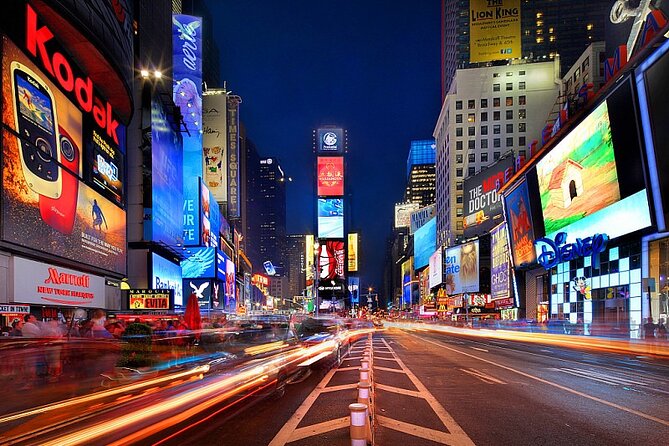
Next is Times Square, called the beating heart of modern media and entertainment. The tour frames its transformation from grit to global billboard, which is a quick way to interpret what you see.
Nasdaq MarketSite: the future layer
Finally, you’ll reach the Nasdaq MarketSite, described as a high-tech trading and innovation hub. This is a good closing loop: you started with communication and early banking, and you end with markets driven by tech and speed.
Optional add-ons near the end: choosing what you really want to pay for
The itinerary includes optional experiences that you can add if you select the ticket option:
- One World Trade Center Observatory (listed as optional, about 1 hour 10 minutes, admission ticket included if selected)
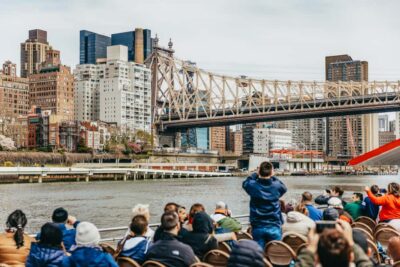
- Liberty Cruise (optional, about 1 hour, admission ticket free in the tour option)
- RiseNY (optional, about 1 hour, admission ticket included if selected)
Because these add-ons can change how long you spend on the bus and how the day feels, I treat them like choices—not freebies.
If you want the best “big view” payoff, One World is the most direct skyline experience. If you want a calmer pace and story from the water, the cruise is a smart contrast to hours of buildings. RiseNY is the “modern show” option that ties finance, culture, music, fashion, and media into a single presentation.
My rule of thumb: pick one optional add-on if you’re on a tight schedule or if you’re also planning to explore on your own afterward.
Price and value: how a $106 tour can become a bigger bill
The listed price is $106.00 per person, and that number is attractive for a guided NYC day. You also get transport in a professionally maintained vehicle, an expert guide, and admission fees for certain listed stops.
But here’s the real value equation:
- A lot of stops are described as free photo/see-from-outside stops (listed as Admission Ticket Free)
- Some stops have admission included
- The major “variable spend” is the optional items: One World Observatory, Liberty Cruise, and RiseNY
The tour also states cash is required during the tour for certain attractions, shops, and tickets. So even if you select the optional tickets, plan for small on-the-ground purchases that aren’t covered.
One more practical thing from real-world friction: some people have had unexpected extra charges when optional items weren’t fully understood or when a guide asked for payment in a way that didn’t match what they expected. You can reduce that risk by confirming your selected options in your booking before the tour starts, and by keeping your proof (mobile ticket details) handy.
If you go in with a clear plan—what you’re selecting, what you’re skipping—this can feel like a fair deal for the amount of territory you cover.
Pacing and comfort: what the short stops feel like in real life
This itinerary is built around short blocks—many stops are listed at about 6 minutes each. That means:
- You’ll get a guide explanation and a moment to look closely
- You likely won’t have time for long bathroom breaks, deep museum browsing, or climbing around unless an included admission stop gives you that window
- If you’re easily frustrated by crowds, some exterior stops (like Charging Bull and Times Square) can feel like sensory overload
The good news is the format helps you learn the city quickly. If you’re visiting for the first time and want to understand the “why” behind landmarks, this tour gives you that foundation fast.
The other good news is the vehicle. The tour says you’ll be in a comfortable professionally maintained motor coach (with the vehicle type based on the number of guests). Also, the max group size is 55, which usually helps keep it organized.
Language and communication: offered in English, but day-to-day reality can vary
The tour is offered in English, and the guide role is central here—your payoff depends on hearing the story. Still, communication can vary day to day, and some real customers have described situations where the guide focused more on another language and only gave brief English explanations.
So I’d plan like this:
- If English is important to you, bring a flexible mindset and accept that some days can be more bilingual than others
- Take photos of signs and façades so you can follow along visually even if a segment is shorter
- Ask the guide for a quick English recap when you can
It’s not about being perfect. It’s about keeping your day smooth.
Who should book the Fortune Tour—and who should skip it
I think this works best if:
- You want a guided overview of New York focused on money, commerce, and influence
- You like structure and don’t want to build a route with multiple neighborhoods
- You want to see a lot quickly, then return later to linger on what clicks
You might want to skip or adjust expectations if:
- You hate rushing and prefer long museum time
- You need hotel pickup convenience
- You’re very sensitive to communication issues and want guaranteed, extensive English narration at every stop
If you’re visiting with limited time, this tour is a practical way to get oriented.
Should you book this tour?
Book it if you want a guided day that connects famous buildings to the power systems behind them, and if you’re willing to accept short stops in exchange for broad coverage. The best outcome happens when you choose your optional add-ons carefully, and you’re confident about your pickup location.
I’d also book it with one extra step: before you go, look over your selected options and confirm whether you plan to do One World Observatory, Liberty Cruise, or RiseNY. Then, on tour day, decide fast what you’ll do at each stop so you don’t end up spending time negotiating the plan in the moment.
If you want, tell me your travel dates and where you plan to be picked up, and I can help you sanity-check the day flow so you’re not surprised by the pickup and optional-ticket timing.
FAQ
How long is the New York City Fortune Tour?
It’s listed as approximately 6 hours 30 minutes, and the tour notes the duration is about 7 hours. Return time can vary due to itinerary timing, traffic, and weather.
What is included in the $106 price?
The tour includes a guided experience, transportation in a professionally maintained vehicle, and the New York City Fortune Tour itself. Some stops have admission tickets included, and gratuities of 15% to 20% are recommended. Optional admissions (One World Observatory, Liberty Cruise, RiseNY) are included only if you select the ticket option.
Where does pickup happen?
Pickup is available in Manhattan, Brooklyn, and Queens. The default pickup (if you don’t provide your pickup location at least 3 days before) is 08:00AM at Chinatown, Manhattan at 75 Chrystie St.
Is there hotel pickup?
The tour provides select pickup and drop-off locations in NYC. The provided info emphasizes named pickup points rather than hotel-to-hotel service, and one listed departure (07:00 in Brooklyn) includes pickup only with drop-off at Chinatown.
Do I need cash during the tour?
Yes. The tour states cash is required during the tour for certain attractions, shops, and tickets, so it’s smart to have enough on hand.
What optional experiences are available?
You can add One World Trade Center Observatory, a Liberty Cruise, and RiseNY. If you select those ticket options, the admissions are included as part of the chosen add-on.
Can I cancel for a full refund?
Yes. There is free cancellation up to 24 hours in advance for a full refund.