REVIEW · NEW YORK CITY
Central Park Pedicab Guided Tours
Book on Viator →Operated by NYC Park Tours™ | Central Park Tours · Bookable on Viator
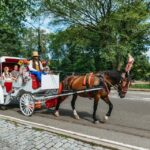
Central Park moves faster on two wheels. A bicycle-powered pedicab lets you relax while a guide steers you past the park’s biggest hits without the walking slog. I love the private, just-your-party setup, especially when you want your pace and attention on what you care about most.
I also like that the experience feels built for real sightseeing, not just a loop: your guide points out details at major landmarks and helps you grab photos at the right spots. The warm blanket inclusion is a lifesaver in cold weather, and it makes the ride feel much more comfortable.
One thing to keep in mind: the tour needs good weather, and a few guests note that guide accents can sometimes slow comprehension. If you’re sensitive to that, bring along patience and a few curiosity questions.
In This Review
- Key Highlights Worth Betting On
- Pedicab Power in a Park That’s Too Big to Do by Foot
- Price and Time: What $38 Buys You (And What It Doesn’t)
- Meeting at 1411 6th Ave: Your Simple Start-to-Finish Plan
- Your Route Through Central Park: The Stops That Make It Click
- 1) The Central Park Core: Gardens, Play, Games, and Famous Fountains
- 2) Wollman Rink: Seasonal Central Park Energy
- 3) Gapstow Bridge and the Pond World
- 4) The Pond (with natural-design context) and Central Park Zoo Area
- 5) SummerStage and Rumsey Playfield: Where Events Became Part of the Park Story
- 6) Model Boat Pond at Conservatory Water
- 7) The Mall Again, but With Real Design Logic
- 8) The Boathouse Zone: Victorian Roots and a Dockside Feel
- 9) Bethesda Terrace: The Tile Story and the Arcade Ceiling
- 10) Cherry Hill Fountain: A Horse Watering Trough Comeback
- 11) The Lake and Rowboat Rentals
- 12) Bow Bridge (Again) and a Heads-Up on Renovations
- 13) The Falconer and Daniel Webster Monument: Art and Argument in Stone
- 14) Strawberry Fields and the Dakota Building
- 15) Sheep Meadow, Tavern on the Green, and the Old Sheepfold Story
- 16) Pinebank Arch and Heckscher Playground: Lacy Ironwork and Big Kid Energy
- 17) The 2-Hour Add-Ons: Alice, Cleopatra’s Needle, Met Area, Reservoir, Belvedere Castle
- Real-World Comfort: Cold Weather, Photo Stops, and Matching Your Pace
- Should You Book This Central Park Pedicab Tour?
- FAQ
- How long is the Central Park pedicab guided tour?
- Is the tour private?
- What does the $38 per person price include?
- Are any admission fees included?
- Where do we meet, and where does the tour end?
- What happens if the weather is bad?
Key Highlights Worth Betting On
- Private pedicab ride: only your group, so you can ask questions and adjust stops.
- Warm blanket included: built for winter Central Park mornings.
- Photo-friendly stops at iconic spots like Bethesda Fountain and Bow Bridge.
- Movie-meets-history commentary: you’ll hear why places like SummerStage and Strawberry Fields became cultural shortcuts.
- Two ride lengths are well-defined (and a longer option exists): 2-hour add-ons reach the Met-area side.
- Guide stars in the details: names like Aj, Sam, Ricky, Peter, Josh, Nick, MJ, and Nik show up repeatedly in standout feedback.
Pedicab Power in a Park That’s Too Big to Do by Foot
Central Park is 843 acres, which is a polite way of saying you can burn your whole day just trying to cover ground. This pedicab approach solves the big problem: you get the sights, plus the stories attached to them, without spending your energy on hills, detours, and mile-long loops.
Your driver doubles as your guide. That matters because Central Park is full of “I’ve seen this in photos” moments, and the best part is learning what you’re actually looking at. In real-world terms, you’re not just getting views. You’re getting context while you move between viewpoints fast.
And yes, it’s eco-friendlier than cars, plus it feels like you’re seeing the park the way it was meant to be enjoyed: on a slow glide, not a sprint.
You can also read our reviews of more guided tours in New York City


Price and Time: What $38 Buys You (And What It Doesn’t)
The price is $38 per person, with durations listed from about 1 to 3 hours. The value here is speed plus guided interpretation. If you’re a first-timer, Central Park can feel like a beautiful blur—this turns that blur into recognizable landmarks in a short window.
Also note what’s included vs not. You get a mobile ticket, the guided pedicab experience, photo help, and the warm blanket (during cold weather). What you don’t get is hotel pickup/drop-off, and gratuities are optional. For museum admission, the info is explicit that the Met Museum is not included.
My practical take: this is a smart buy if you want a high-density Central Park hit list on day one. If you’re already comfortable navigating the park slowly and you don’t care about movie or architectural details, you might not use the guide’s strengths as much.
Meeting at 1411 6th Ave: Your Simple Start-to-Finish Plan
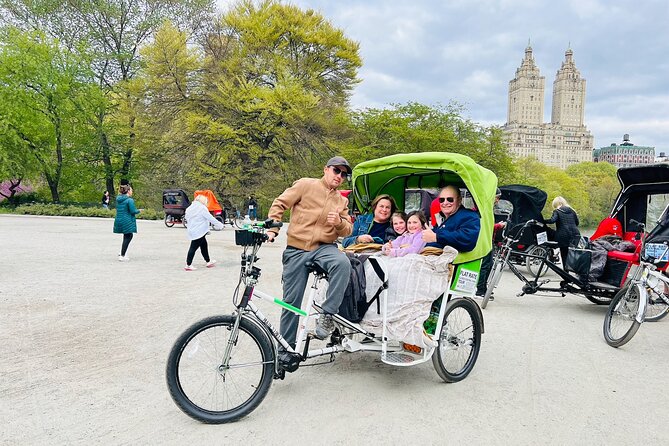
The tour starts at 1411 6th Ave, New York, NY 10019, and ends back at the meeting point. That’s convenient because it reduces decision fatigue. You’re not juggling transit routes mid-ride, and you won’t have to wonder how to get back when you’re tired.
It’s also near public transportation, so you can plan the rest of your day around it without needing a car.
Your Route Through Central Park: The Stops That Make It Click
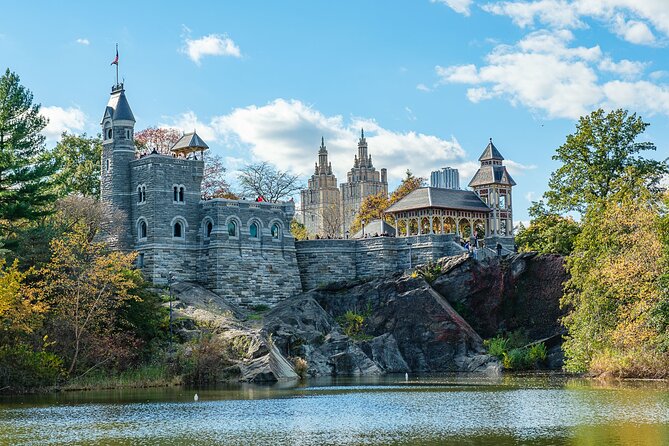
Your itinerary is built around Central Park’s most recognizable icons, plus a pile of pop-culture references that make the stories stick. Even if you don’t care about the movies, the landmarks themselves are the point.
Below is what to expect as the tour moves through the park.
1) The Central Park Core: Gardens, Play, Games, and Famous Fountains
This is where most first-time value lands. You enter the quieter green world and get an hour-long sweep of headline attractions.
- Victorian Garden area + winter ice rink connection: The tour ties this zone to the park’s seasonal ice-skating setup, which is helpful if you’re visiting outside summer.
- Chess & checkers house: You’ll pass a 1952-built game hub. It’s octagonal and meant for visitors of all ages, and the surrounding tables give a sense of how the park blends play with design.
- The oldest carousel in the city: This Carousel is described as crafted in 1908, featuring 57 hand-carved horses and two decorative chariots. Since it’s still in working condition, you’re not just looking at history—you’re seeing something that still functions.
- Dairy house from the Great Depression era: This stop adds depth to Central Park’s role as more than scenery. It’s part of the city’s social and economic story.
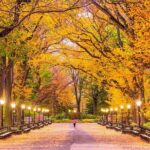
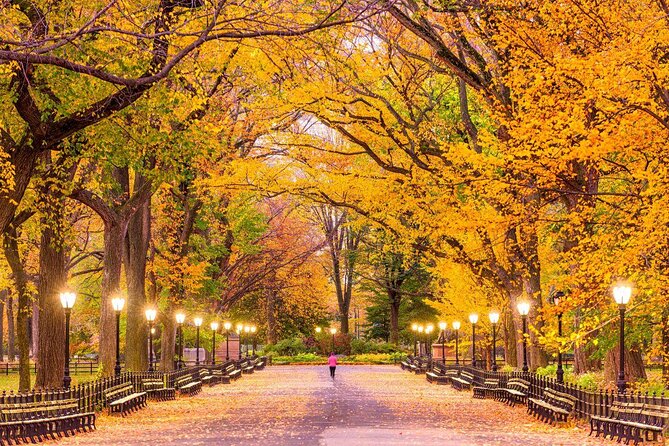
- Central Park Mall + American elm trees: This straight, shaded promenade is a design concept you can feel—made for strolling, sitting, and people-watching.
- Balto statue: A bronze Balto statue installed in 1925 is a standout because it’s both emotional and specific. If you like animal stories, this one lands.
- Upper East Side history + Gossip Girl filming locations: Even if you’re not a TV watcher, hearing what was filmed where helps you read the surrounding neighborhoods.
- SummerStage + Good Morning America connection: This is more than a name-drop. The tour explains how SummerStage connects to the Concert Ground area’s history.
- Remote control boats (Stuart Little): You’ll be near the Model Boat Pond area later, but this early reference helps set up what you’re about to see—watching small boats is surprisingly calming.
- Pilgrim Hill: Expect a scenic viewpoint moment tied to the park’s rolling terrain.
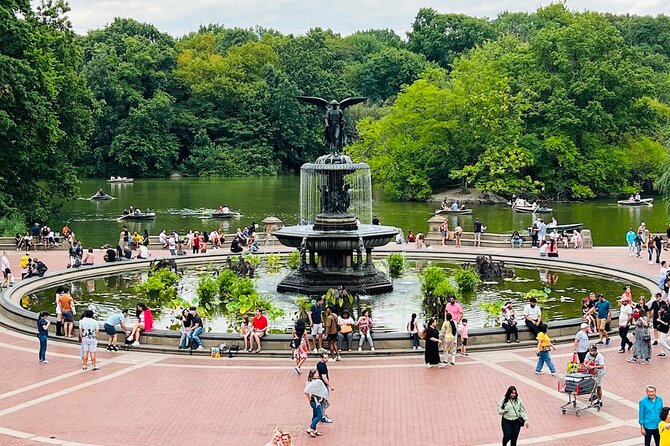
- Bethesda Fountain (Angel of the Waters): This is one of those Central Park moments that feels like a movie set even in real life. The fountain’s statue (Emma Stebbins, unveiled 1873) is central to the story of healing, called the Angel of the Waters.
- Turtle Lake + Boathouse area: You’ll hear about gondolas and the water-and-people vibe.
- Bow Bridge: A famous crossing associated with tons of film and TV. The bridge’s design is tied to Calvert Vaux and Jacob Wrey Mould, completed in 1862.
- Strawberry Fields + Dakota building: The tour names the John Lennon memorial area and the building connected with his life. This stop works because it’s emotional and grounded, not just scenic.
- Sheep Meadow: The tour frames it as a prime relaxation and picnic lawn with a nickname connection: Manhattan Green Beach.
- Bridge from Elf: It’s a fun reference point that helps you spot the exact bridge moment people photograph.
You also get time to move between stops and take photos. One real practical perk: you can pause without losing your entire route. Your guide can keep momentum when you want it and slow down for extra pictures.
Possible drawback to note here: if you’re expecting long time at each place, the one-hour core means you’ll see plenty, but you won’t linger like you would on your own. You’re buying breadth, not deep museum-style time.


2) Wollman Rink: Seasonal Central Park Energy
Next comes Wollman Rink. The big practical thing is timing: it’s a public ice rink open from late October to early April. If you’re in season, this is a great visual contrast to the rest of the park’s calm greenery.
The tour notes it’s free to visit for your stop time, so you’re not paying extra just to see the space.
3) Gapstow Bridge and the Pond World
Then you’ll head to Gapstow Bridge. It’s rustic stone, often covered in vines, and it’s a strong photography spot because it overlooks scenery around the narrow neck of the pond.
The bridge is also tied to multiple movie references, which gives your guide a chance to connect what you see with how filmmakers use it.
4) The Pond (with natural-design context) and Central Park Zoo Area
From there, the tour continues by explaining the pond’s placement in the context of earlier park planning. You get a clearer sense of why this water feels engineered for changing scenery.
After that, you’ll pass toward the Central Park Zoo, described as a 6.5-acre zoo at the southeast corner of Central Park, part of the Wildlife Conservation Society system.
5) SummerStage and Rumsey Playfield: Where Events Became Part of the Park Story
SummerStage appears again here with deeper context about the hill overlooking the Concert Ground. The tour traces the evolution from an earlier restaurant structure (with the name Casino not tied to gambling) to later changes under Robert Moses, and then the shift toward a playground and later SummerStage moving to Rumsey Playfield in 1990.
If you like learning how parks evolve with politics and community priorities, this section adds a lot.
6) Model Boat Pond at Conservatory Water
A quick hop brings you to Conservatory Water, also tied to the Model Boat Pond. This is the part of the tour that can feel surprisingly fun even if you’re not a boat person.
You’ll learn where miniature sailboats and yachts launch, that they’re stored and rented at the Kerbs Boathouse nearby, and that benches around the water make it a natural viewing break. The tour also connects this spot to famous statues, including Alice in Wonderland and a monument to Hans Christian Andersen.
In winter, the water freezes solid enough for ice skating, which means the same space changes personality by season.
7) The Mall Again, but With Real Design Logic
Returning to The Mall emphasizes how American elms shape the promenade experience. The tour frames this as formal gathering space designed by Olmsted and Vaux, and it’s easy to see why it’s a Central Park staple: it’s straight, shaded, and made for lingering.
If you’re traveling with kids or teens, this is also a good place to reset and stop before the next big “wow” moment.
8) The Boathouse Zone: Victorian Roots and a Dockside Feel
The tour includes the boathouse area with its historical background—an earlier Victorian boathouse burned, and the current structure is dated to 1956. The practical idea is that this is where Central Park’s water access becomes part of everyday life.
9) Bethesda Terrace: The Tile Story and the Arcade Ceiling
Next is Bethesda Terrace, with film and TV references plus a detailed look at the arcade ceiling tiles. The info you get here matters because it shows how preservation, cost, and donations affect what you see today.
The tour notes that the Mintons encaustic tiles were removed in the 1980s renovation, then later restored thanks to a private donation, with reinstallation completed in 2007.
10) Cherry Hill Fountain: A Horse Watering Trough Comeback
Then comes Cherry Hill Fountain. This is described as one of the park’s most historical fountains, designed in the 1860s as a watering trough for horses.
It’s not huge, but it’s a great reminder that Central Park’s “beauty stops” often started as infrastructure.
11) The Lake and Rowboat Rentals
You’ll pass The Lake, described as a 20-acre water body connecting areas like the Ramble and Bethesda Terrace. The tour also points out that exploring the Lake by boat is possible via rowboat rentals at Loeb Boathouse.
This stop is less about one single structure and more about the big-picture “Central Park’s water system” feeling.
12) Bow Bridge (Again) and a Heads-Up on Renovations
Then you’ll reach Bow Bridge, with design details and a restoration timeline. The data also notes it was closed again in November 2023 for a two-month renovation.
What that means for you: if you’re going around that period, access and photo angles might differ. It’s worth checking what’s open once you lock your dates.
13) The Falconer and Daniel Webster Monument: Art and Argument in Stone
The tour includes The Falconer and the Daniel Webster monument, which is a big pivot from water and fountains into politics-and-personality.
- The Falconer is tied to George Kemp’s donation in 1875 and the sculptor George Blackall Simonds.
- The Daniel Webster monument includes details about the donor Gordon W. Burnham and Thomas Ball’s sculpting based on a popular statuette.
This portion works because it reminds you Central Park holds serious civic storytelling, not just picturesque scenes.
14) Strawberry Fields and the Dakota Building
Back to Strawberry Fields and the Dakota. The tour frames Strawberry Fields as the John Lennon memorial named for Strawberry Fields Forever, and it explains the origin trail back to Liverpool’s children’s home.
The Dakota’s story is also part of the emotional arc: it became a housing cooperative in 1961, and it historically housed artists and performers. John Lennon’s connection is included since the tour covers the day he was murdered outside the building.
If you’re the kind of traveler who likes to understand why a place matters, this stop has weight.
15) Sheep Meadow, Tavern on the Green, and the Old Sheepfold Story
The route includes Sheep Meadow and then ties it to Tavern on the Green. The tour explains how the building originated as a sheepfold for grazing sheep in 1870, and how those sheep were evicted under Robert Moses in 1934.
Tavern on the Green’s later changes are included too: it closed in 2009, became a visitor center/gift shop run by NYC Parks, and reopened after renovation in 2014.
It’s a clever way to connect a modern restaurant name to the park’s older practical purpose.
16) Pinebank Arch and Heckscher Playground: Lacy Ironwork and Big Kid Energy
Near the end of the main loop, you’ll reach Pinebank Arch. It’s described as lacy ironwork that seems to emerge from rock outcrops, often photographed, with a strong tie to Elf.
Then comes Heckscher Playground, highlighted as the oldest and largest of Central Park’s 22 playgrounds, opened in 1926.
17) The 2-Hour Add-Ons: Alice, Cleopatra’s Needle, Met Area, Reservoir, Belvedere Castle
If you choose a longer ride, the tour explicitly includes extra stops for a 2-hour experience:
- Alice in Wonderland statue: presented as a gift from George Delacorte, honoring his wife Margarita and linked to his love of the book.
- Obelisk also called Cleopatra’s Needle: dedicated in Central Park in 1881, described as the oldest outdoor monument in NYC, placed between the Great Lawn and the Met Museum.
- The Metropolitan Museum of Art (stop time, admission not included): the tour explains the museum’s design origins tied to Calvert Vaux and later architectural expansions. You’ll get close by, but you won’t have museum admission in the package.
- Jacqueline Kennedy Onassis Reservoir: described with construction dates (1858–1862) and water-holding scale, plus gatehouses along the shores.
- Belvedere Castle: highlighted as a folly with exhibit rooms and an observation deck, housing the park’s official weather station since 1919.
These add-ons are for you if you want Central Park’s edges and the museum campus feel, not only the classic mid-park highlights.
Real-World Comfort: Cold Weather, Photo Stops, and Matching Your Pace
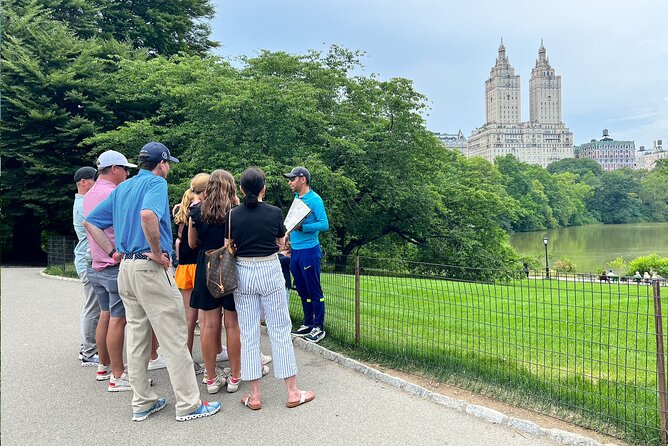
What stood out in the experience feedback is how much the guide’s attitude changes the day. Guides like Aj, Sam, Ricky, Peter, Josh, Nick, MJ, and Nik show up in strong reviews with the same theme: they keep things friendly and fast, and they help you see things you’d miss walking.
Cold weather seems common, and the warm blanket helps a lot. If you’re visiting in winter, this tour is a practical way to still enjoy Central Park without having your trip turn into a survival contest.
Photo opportunities are built into the way the ride works. You stop at famous angles, then you move on before the area gets too crowded for your exact shot. That rhythm is one reason this works better than trying to hop off and navigate yourself.
For timing, I’d plan your day around a short ride window. If you tack on dinner or a museum after, you’ll feel like you got a complete first-day Central Park hit without losing half your afternoon.
Should You Book This Central Park Pedicab Tour?
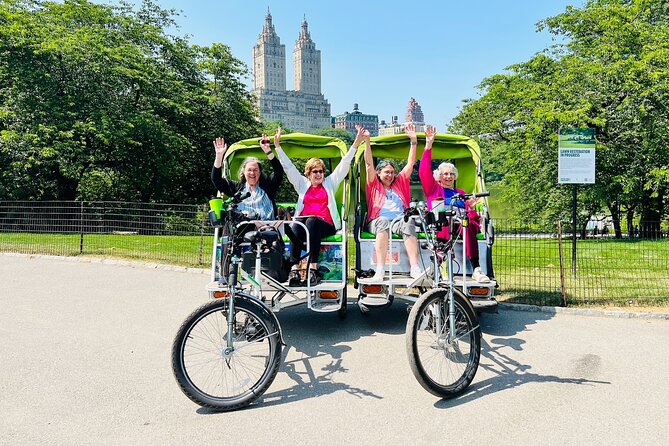
I’d book it if you’re:
- visiting Central Park for the first time and want the high-recognition sights in a short window
- traveling with family or mixed ages who won’t all want the same walking pace
- interested in the story layer, including pop-culture connections and design details
- going in colder months and want comfort upgrades like the warm blanket
I’d hesitate if:
- you want long, slow time at a few places only
- you’re very sensitive to how well you understand an accent during guided commentary
- the weather is questionable, since the tour requires good conditions
If your goal is to get your bearings fast and leave with a real sense of what Central Park is, this is a strong value choice at $38 per person.
FAQ
How long is the Central Park pedicab guided tour?
The tour is listed as lasting about 1 to 3 hours, depending on the duration you choose.
Is the tour private?
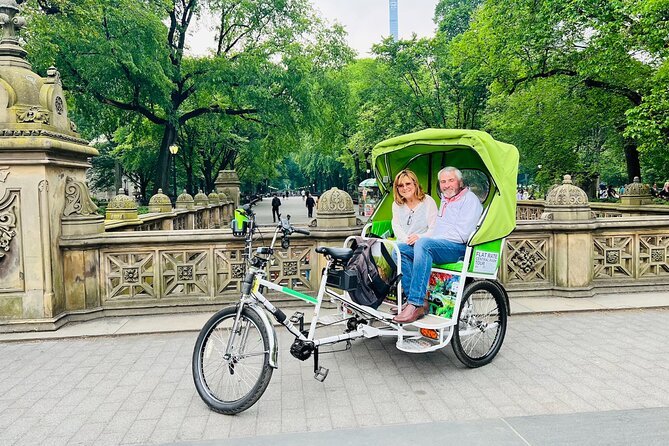
Yes. It’s a private experience, and only your group participates.
What does the $38 per person price include?
The price includes the guided pedicab experience, expert local guides, photo opportunities, a comfortable ride, a warm blanket during cold weather, and warm-weather items covered by taxes and fees. A mobile ticket is also provided.
Are any admission fees included?
The itinerary includes an admission ticket for the hour-long portion, and several stops are described as free. The Metropolitan Museum of Art stop is specifically listed as admission not included.
Where do we meet, and where does the tour end?
You meet at 1411 6th Ave, New York, NY 10019, USA, and the tour ends back at the meeting point.
What happens if the weather is bad?
The experience requires good weather. If it’s canceled due to poor weather, you’ll be offered a different date or a full refund.