REVIEW · NEW YORK CITY
Big Bus NYC: Hop-On Hop-Off Sightseeing Tour by Open-top Bus
Book on Viator →Operated by Big Bus Tours - USA · Bookable on Viator
A bus ride that maps your whole first day. I like the freedom of hop-on hop-off stops so you can linger where you care, and I also like having audio commentary so the city comes with context while you move. The main thing to consider is that stop-finding and audio can be inconsistent, so I’d plan with a little buffer time.
This is one of those NYC deals where you’re paying for transport plus narration, not for a scripted, timed experience. With a base price listed around $44 per person, it can feel like good value if you’re trying to cover a lot quickly across Midtown, Lower Manhattan, the bridge area, and up toward Central Park.
In This Review
- Key Things to Know Before You Ride
- Why Big Bus NYC Works as a First-Time Plan
- Tickets: Picking 24, 48, or 72 Hours Without Regret
- How the Hop-On Hop-Off System Really Feels on the Ground
- Audio: Useful When It’s Working, Frustrating When It Isn’t
- Downtown-to-City Views: What You’ll See as You Ride the Loop
- M&M’S New York (7th Ave & W 48th St)
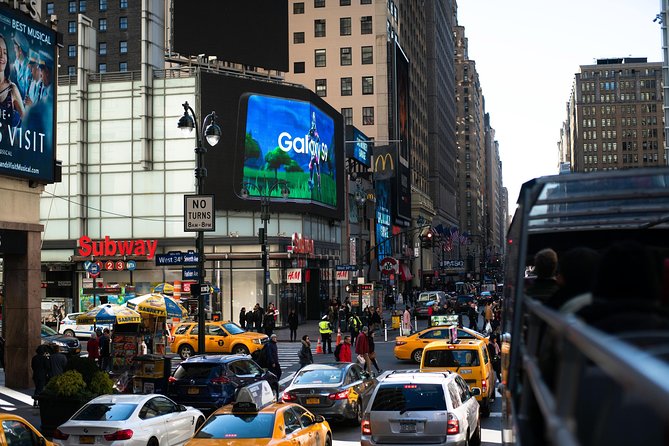
- Times Square (W 42nd St & Broadway)
- Empire State Building / KoreaTown (5th Ave & W 32nd St)
- Flatiron District (5th Ave & W 23rd St, near Eisenbergs Sandwich Shop)
- SoHo (West Broadway & Spring St)
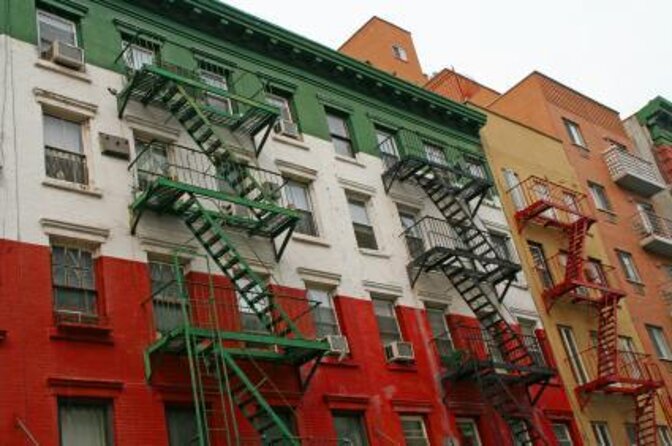
- Chinatown / Little Italy (near 100 Lafayette St, Walker St area)
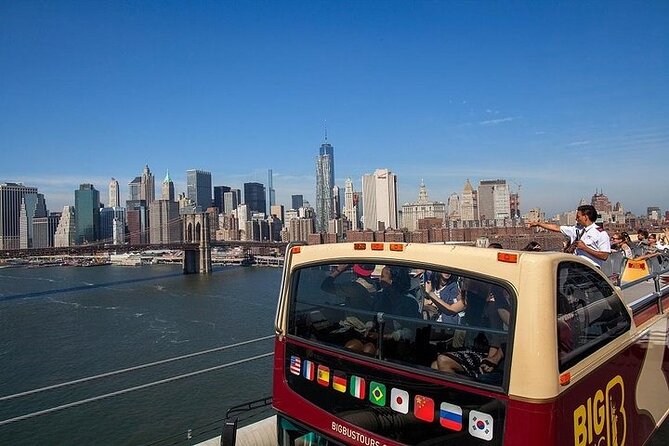
- Brooklyn Bridge area (Park Row & Beekman St)
- Wall Street / Statue of Liberty area (Wall St area)
- Trinity Church (Trinity Place & Cedar St)
- World Trade Center area (Church St & Vesey St area)
- Pier 57 (11th Ave between W 15th & W 16th St, by the NBC building area)
- Hudson Yards (12th Ave & 30th St)
- Circle Line Sightseeing Cruises (12th Ave & W 40th St area)
- Hope Sculpture (7th Ave & W 53rd St, in front of Chase Bank)
- Times Square again (42nd & Broadway, in front of the Knickerbocker Hotel)
- Rockefeller Center (W 49th St & 5th Ave, near Michael Kors)
- The Metropolitan Museum of Art (5th Ave & E 83rd St)
- Central Park Zoo area (5th Ave & E 66th St)
- Columbus Circle (SW corner of Central Park, next to Main Monument)
- Carnegie Hall (7th Ave & W 57th St)
- Uptown Loop Feel: Museums, Central Park, and the Classic Midtown Slice
- Onboard Comfort: Open-Top Views and Real-World Timing
- How often do buses arrive?
- Finding the Right Stop: Blue vs Red Lines and the Common Confusions
- The Value Question: Is $44 Worth It vs Just Taking the Subway
- When the Audio Feels Personal: Drivers Who Make It Better
- Who Should Book This and Who Might Skip It
- Should You Book Big Bus NYC?
- FAQ
- How often does a bus arrive at each stop during the Big Bus New York Hop-On Hop-Off Open Top Tour?
- Do I have to go to a central location to redeem my ticket?
- How long is a full circle ride without getting off?
- What route does a 24-hour ticket include?
- What does a 72-hour ticket add?
- Can I bring pets or food onboard?
Key Things to Know Before You Ride
- Downtown and Uptown loops let you expand your coverage with 24-, 48-, or 72-hour tickets
- Open-top double-decker seating gives you skyline views without fighting for a window seat
- Onboard audio with headphones means you get the story as you pass key sights
- Live bus tracking in the Big Bus app helps you time your hop-on moment better
- Many stops are sightseeing targets, not just transportation nodes so you can actually build a mini plan
Why Big Bus NYC Works as a First-Time Plan
New York rewards curiosity, but it punishes being tired and lost. Big Bus NYC is built for that exact situation: you pick a route, you ride, and you jump off when something grabs you. Then you get back on when you’re ready to roll again.
I also like the overall pacing. A full loop is about 90 minutes, which gives you a feeling for geography fast. And because you have multiple days with longer tickets, you can spread out your exploring instead of cramming everything into one tight schedule.
You can also read our reviews of more tours and experiences in New York City.



Tickets: Picking 24, 48, or 72 Hours Without Regret
Here’s the simple decision rule: choose the shortest ticket that matches how many areas you truly want to see in one trip.
- 24-hour ticket: Downtown route only
- 48-hour ticket: both Downtown and Uptown loops
- 72-hour ticket: adds Brooklyn tours and several self-guided tours
Two practical notes matter. First, multi-day tickets need to be used on consecutive days. Second, the more days you add, the more sense it makes if you plan to actually get off and explore, not just ride once and call it done.
If you’re short on time and want maximum coverage, 48 hours is often the sweet spot. If you’re visiting at a slower pace or you want to add Brooklyn, 72 hours gives you more chances to revisit stops without rushing.
How the Hop-On Hop-Off System Really Feels on the Ground
You redeem your ticket at the stops along the route, using a paper or mobile voucher. The loop concept is straightforward: stay on for the highlights, or hop off when you want to walk around.
What makes or breaks this experience is how smoothly you can manage the “wait, board, listen, repeat” cycle. Big Bus includes live bus tracking in the app, which helps a lot when streets are busy or you’re figuring out where you are relative to the stop.
Audio: Useful When It’s Working, Frustrating When It Isn’t
The narration is audio, delivered via headphones. When it’s working well, it’s one of the best parts of the ride because it gives you a story that matches major landmarks as you pass them.
But audio can be uneven. Some buses have had problems with stop announcements, and there are also reports of audio not matching what you’re looking at, plus cases where headphones weren’t communicated clearly to riders. If you rely on the narration for your sightseeing flow, come with a calm attitude and keep a backup method ready (like using the app or signage for stop names).
Tip: if you notice you’re missing sound, check your headphones setup right away. Don’t assume the problem will fix itself after the next stop.
Downtown-to-City Views: What You’ll See as You Ride the Loop
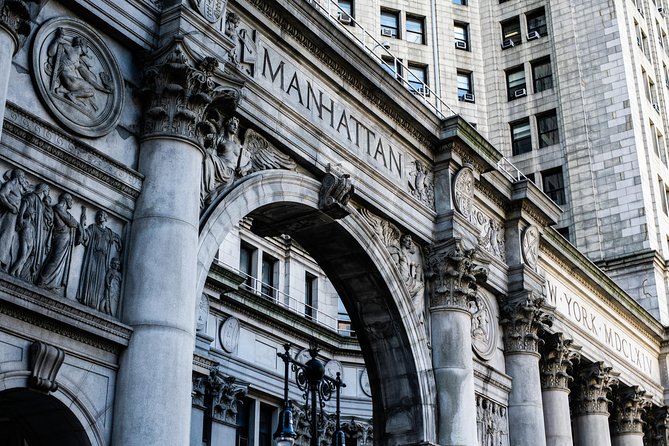
Big Bus NYC covers a lot of territory, and the route is built around recognizable places where it’s easy to step off and explore on foot. The stops you’ll cycle through include major Midtown landmarks, then a long reach into Lower Manhattan, and back up toward central cultural stops.
Below is the stop order you’ll experience across the full set of listed stops, with what each one is good for—and what to expect.





M&M’S New York (7th Ave & W 48th St)
This is a very “first timers” stop. It’s easy to locate, and it’s a good place to board if you want an immediate Midtown start before things get more chaotic.
If you’re traveling with kids, this is the kind of stop that turns the bus from transport into an activity.
Times Square (W 42nd St & Broadway)
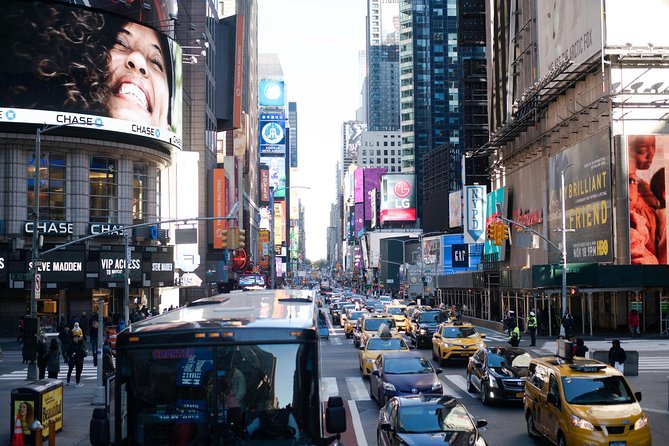
Times Square is loud even from the bus. From the upper deck, you get a fast overview of billboards, cross streets, and the sheer density of Midtown.
The upside of using the bus here is timing: you can hop off briefly, take photos, and get back on without trying to navigate the busiest blocks on foot for too long.
Empire State Building / KoreaTown (5th Ave & W 32nd St)
This area is a strong “look and then decide” stop. The skyline impression is immediate, and the surrounding neighborhood gives you food and walking options if you want to extend your stop.
Consider this a good moment to switch from ride-only sightseeing to on-the-ground strolling.
Flatiron District (5th Ave & W 23rd St, near Eisenbergs Sandwich Shop)
Flatiron is one of those NYC spots that looks great from the street and even better with the city unfolding around it. It’s also a convenient place to get your bearings because it sits at a crossroads of neighborhoods.
This is a great stop when you want to stretch your legs without committing to a long detour.
SoHo (West Broadway & Spring St)
SoHo is a shopping and street-scene zone. From the bus, you’ll get a quick read on the vibe; when you hop off, you’ll likely find plenty of reasons to wander.
If you like browsing architecture and storefronts, SoHo is one of the stops that actually rewards leaving the bus for a while.
Chinatown / Little Italy (near 100 Lafayette St, Walker St area)
This stop is useful because it’s two worlds in one area. Even if you don’t plan a full neighborhood tour, it’s a solid place to grab a snack or do a short walk before moving on.
Just keep your expectations realistic: hopping off for 10 to 20 minutes can scratch the surface, but it won’t replace a true walking exploration.
Brooklyn Bridge area (Park Row & Beekman St)
This is where the bus changes character. The bridge corridor and the river views add a different feel compared with Midtown.
When you’re ready for photos and a slower pace, this is the stop that tends to feel most worth the detour.
Wall Street / Statue of Liberty area (Wall St area)
The big thing to know here is that this stop is not the same as being right at the Statue of Liberty ferry. You may still enjoy the Lower Manhattan view, but if your goal is to reach the ferry area, plan on additional walking and/or transit.
Think of this stop as a convenient Lower Manhattan entry point, not a direct front-door to the statue.
Trinity Church (Trinity Place & Cedar St)
This is one of those places where the architecture and the square feel instantly “real.” It’s a good stop for a photo pause and a short walk around the church area.
If you’re the type who likes to connect landmarks to their neighborhoods, Trinity Church is a strong match.
World Trade Center area (Church St & Vesey St area)
This area is heavy with meaning, and the bus makes it easy to reach it without fighting traffic on your own.
Use it as a flexible stop: hop off for a walk, or stay on if you’re conserving time for other areas.
Pier 57 (11th Ave between W 15th & W 16th St, by the NBC building area)
Pier areas add breathing room after dense blocks. This is a useful stop if you want a change of scenery and a bit of waterfront air.
It’s also a practical place to reset before heading further north.
Hudson Yards (12th Ave & 30th St)
Hudson Yards is a modern contrast within the broader NYC story. From the bus, it’s quick to see; when you hop off, you can choose whether you want to explore the area or just use it as a visual landmark stop.
Circle Line Sightseeing Cruises (12th Ave & W 40th St area)
If you’re also thinking about a harbor cruise, this is a logical stop to connect ideas. Even if you don’t book it right away, being near the pier area gives you context for what you might do next.
Hope Sculpture (7th Ave & W 53rd St, in front of Chase Bank)
This is a stop that feels like a breather before you return to the classic Midtown corridor. It’s also a landmark moment that helps the route feel less like random driving and more like intentional walking access.
Times Square again (42nd & Broadway, in front of the Knickerbocker Hotel)
Coming around for a second pass can be handy. If you didn’t stop earlier, this is your rerun chance for photos or a quick walk.
It’s also a way to orient yourself if you’re using the loop to build a day plan.
Rockefeller Center (W 49th St & 5th Ave, near Michael Kors)
Rockefeller Center is a top stop for people who want iconic architecture without planning a complex route. From the bus, you get instant context, and hopping off makes it easy to match what you see to what you’ve seen on TV and in photos.
The Metropolitan Museum of Art (5th Ave & E 83rd St)
This stop is ideal for museum days. Even if you aren’t buying tickets immediately, it’s a straightforward access point to one of the city’s biggest cultural anchors.
If you’re short on time, this is also a great stop to step out, orient, and decide whether the museum fits your schedule.
Central Park Zoo area (5th Ave & E 66th St)
This stop is useful if Central Park is on your list and you want a direct link into the park ecosystem. The zoo area gives you a clear reason to explore rather than just walk randomly.
Columbus Circle (SW corner of Central Park, next to Main Monument)
Columbus Circle is a hub. You can treat it like a transfer point to reach different parts of Central Park and surrounding neighborhoods.
From the bus, it’s easy to see why it’s a crossroads.
Carnegie Hall (7th Ave & W 57th St)
Carnegie Hall is one of those landmarks that feels special even if you’re just walking by. The bus stop makes it simple to check it off and consider whether you want to add a performance later in your trip.
Uptown Loop Feel: Museums, Central Park, and the Classic Midtown Slice
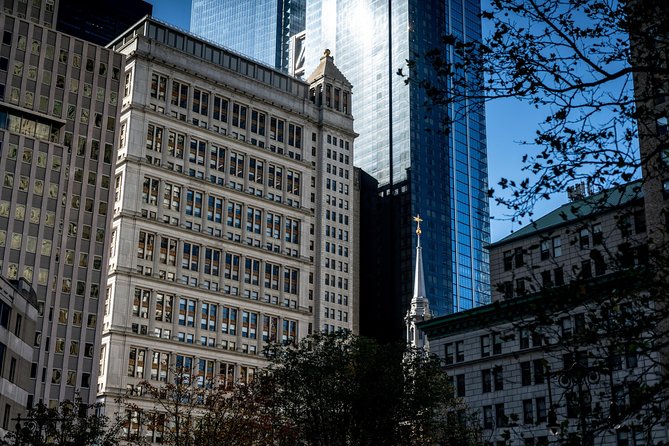
On the upper portion of the route, the vibe shifts back to the Midtown and museum corridor feel. You get repeated chances to hop off near major landmarks, which makes it easier to structure your day around a few big targets instead of trying to cover everything by foot.
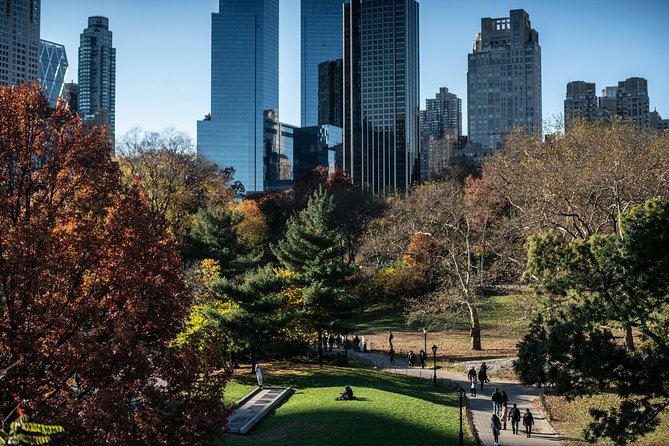
If you plan to spend time in Central Park, this section of the route helps you do it without guessing where you are. You can also use the stops near museums as “choose-your-adventure” points: if you want a quick look, step off briefly; if you want a deeper visit, stay longer.
Onboard Comfort: Open-Top Views and Real-World Timing
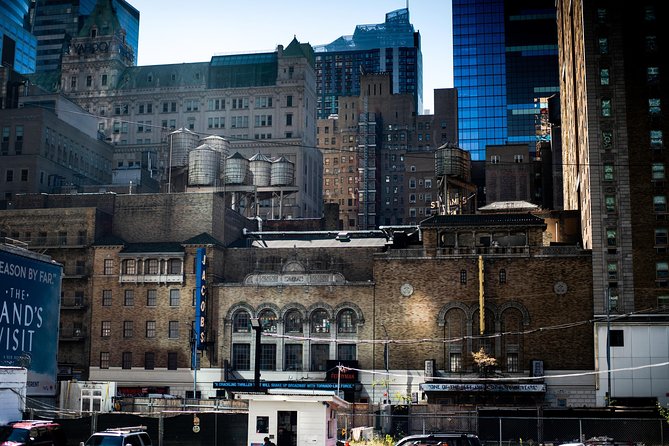
You ride in an open-top double-decker. That’s a huge plus for views and photos, especially if you take the upper deck when it’s safe and comfortable. On clear days, you’ll see the city stretch in every direction.
But this is also where reality hits. The bus is open-top, and in cold weather you’ll feel it. Some riders noted the bus wasn’t heated, even when it was freezing, while others said sitting upstairs was still worth it because the views and the flexibility beat being stuck indoors.
How often do buses arrive?
The bus arrives approximately every hour on both routes. In real life, traffic can change timing, and that affects how long you may wait between hops.
My practical advice: when you’re hopping on, check the live tracking and don’t plan your next stop so tightly that a 10- to 20-minute wait ruins the day.
Finding the Right Stop: Blue vs Red Lines and the Common Confusions
This tour is easy to use when you can find the correct boarding spot. It gets annoying when you can’t.
A few patterns show up in real-world issues:
- stops can be confusing if you’re not sure which line you’re on
- some stop names sound closer to the landmark than they actually are
- apps can be hard to use if you’re cold, tired, or in a hurry
Here’s how I’d handle it. When you arrive in the area, check the stop address and nearby landmarks listed on the official info and get oriented before you commit to waiting. If you’re in freezing temperatures, keep moving until you know exactly where the boarding point is, then settle.
Also, if you’re using headphones for narration, treat that setup like part of your routine. If you realize your audio isn’t working, fix it early rather than waiting until you miss the next story.
The Value Question: Is $44 Worth It vs Just Taking the Subway
At about $44 per person as listed, Big Bus NYC can be good value if your day has two ingredients:
1) you want to cover a lot of iconic places, and
2) you want the narration to help you understand what you’re seeing
Where it can feel less worth it is when your plan is minimal. If you only care about a couple of stops, the bus can turn into a pricey way to commute around Manhattan.
Also remember: some stops are better for orientation than for landing exactly at a specific sight. The Statue of Liberty area stop, for example, can feel like you’re not at the main action point for the ferry. In those cases, think of the bus as your “get close” tool, then use walking or another transit option to reach the exact destination.
When the Audio Feels Personal: Drivers Who Make It Better
A prerecorded route can still feel alive when a driver or staff member adds real-time energy and guidance. When narration is delivered by staff like Ms Copeland (noted as an awesome hop-on/off driver and narrator) or Santana (praised for being fantastic and pointing out what to do next), the ride can shift from passive listening into a more helpful street-level experience.
That matters because NYC is full of “you have to be there” moments. Any extra tip about where to look, what to skip, or how to walk efficiently can make the difference between a good day and a great one.
Who Should Book This and Who Might Skip It
This tour fits best if you:
- are visiting for the first time and want a fast geography lesson
- want flexibility without pre-booking a bunch of separate tours
- like using narration to decide what to explore after you get off
It may not be your best match if you:
- hate waiting for buses and you prefer point-to-point transit
- need perfect stop accuracy for a very specific target
- expect every audio moment to match your exact surroundings without interruption
If you’re the type who enjoys planning a self-guided route, the hop-on structure still works well. If you want a guided walking tour with lots of live interaction, you might prefer a different format.
Should You Book Big Bus NYC?
If your goal is to see major NYC highlights in a low-stress way, I’d say yes—especially if you’re choosing 48 or 72 hours. The loop timing (about 90 minutes per full rotation) plus the variety of neighborhoods along the route make it a practical backbone for your day.
If you do book it, do two things to make the most of it: build in extra time for stop navigation, and keep your expectations aligned with what “nearby” stops can mean. The bus is at its best when you use it as a mobility tool that also teaches you what you’re looking at, one hop at a time.
FAQ
How often does a bus arrive at each stop during the Big Bus New York Hop-On Hop-Off Open Top Tour?
A bus arrives approximately every hour on both the Downtown (Red) and Uptown (Blue) routes.
Do I have to go to a central location to redeem my ticket?
No. You can redeem your printed or electronic ticket at any of the listed bus stops along the route.
How long is a full circle ride without getting off?
A full rotation on each of the Downtown (Red) and Uptown (Blue) routes is approximately 90 minutes, and tour duration can fluctuate by season.
What route does a 24-hour ticket include?
A 24-hour ticket covers the Downtown only route.
What does a 72-hour ticket add?
A 72-hour ticket adds access to Brooklyn tours and several self-guided tours, in addition to the main loop access.
Can I bring pets or food onboard?
Pets are not allowed onboard the bus except ADA service animals. No food or alcohol is permitted onboard, though non-alcoholic drinks in screw-top bottles are allowed.