REVIEW · NEW YORK CITY
NYC: The FABulous Hell’s Kitchen Walking Tour with BFAB
Book on GetYourGuide →Operated by BFAB TOURS · Bookable on GetYourGuide
Street corners hide big stories. This Hell’s Kitchen tour with BFAB turns ordinary sidewalks into sharp, human history—immigrants, gang control, and today’s LGBTQ presence all in one 1.6-mile route.
I love the mix of real sites and story-driven context, especially the stops built around old buildings and how people actually lived there.
One possible drawback: it’s a walking tour with no included food, so if you need lots of sitting or a meal built in, plan ahead.
What I like most is the way the tour keeps moving without getting dry. You’ll hear about tenement design rules, meet key community organizations, and even play an interactive quiz with a prize.
That said, the subject matter can get dark—gangs and tragic events are part of the neighborhood’s record—so keep that in mind if you prefer lighter history.
In This Review
- Key highlights you’ll feel as you walk
- Meeting BFAB at 42nd and 9th: the tour’s tone starts fast
- Hell’s Kitchen as a timeline: immigrants, gangs, and reinvention
- Oldest buildings and tenement life: what you’re actually seeing
- Gangs ruled here: Owney Madden, Battle Annie, and Mickey Spillane
- LGBTQ Hell’s Kitchen: from OUT Hotel and Sanctuary to FLEX
- The performer pipeline: Manhattan Plaza and The Actors Studio
- Community organizations with real impact: Hartley House, Fountain House + Body, and the garden
- Quiz game energy and the fan-clacking challenge
- Ending at FLEX bar: what to do after the last stop
- Price and logistics: is $49 a fair deal?
- Who this tour suits best (and who might not)
- Should you book BFAB’s Hell’s Kitchen walk?
- FAQ
- How long is the walking tour?
- How much walking is involved?
- Where do I meet the guide?
- Where does the tour end?
- What’s included in the ticket price?
- Is food or drinks included?
- What’s the mid-tour break for?
- What should I bring?
- Is the tour kid-friendly?
- What are the languages offered?
Key highlights you’ll feel as you walk
- Old buildings you can still stand in front of, like the German Church now Westside Theater and row houses from the late 1800s
- Tenement life explained in plain terms, including Pre-Law, Old Law, and New Law tenements and the Special Clinton District
- Street-level gang history, with names like Owney Madden, Battle Annie, and Mickey Spillane
- LGBTQ landmarks from past to present, from OUT Hotel and Sanctuary to Manhattan Plaza and FLEX (formerly POSH)
- A performer pipeline story, including Manhattan Plaza and The Actors Studio
- Fun group energy, with a mid-tour break plus a quiz game and a fan-clacking challenge
Meeting BFAB at 42nd and 9th: the tour’s tone starts fast
You meet at the NW corner of W. 42nd St. and 9th Avenue, under the trees in front of the Citibank. That spot matters: it’s right in Hell’s Kitchen’s energy zone, and it sets the expectation that this won’t be a museum crawl. You’re here to walk, look, and listen.
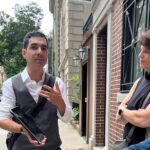
Once you link up with your guide—licensed local and known as BFAB—you’ll get a quick overview before the route gets underway. The pace is meant for real streets, not sitting indoors. In my experience, that’s usually when a neighborhood tour clicks, because the guide can point out details you’d otherwise miss: building shapes, block patterns, and the way streets funnel people through time.
This is also the kind of tour where you’ll notice the guide’s personality. It’s not just facts listed in order. It’s storytelling with enough structure that you still come away with a map in your head.
You can also read our reviews of more walking tours in New York City



Hell’s Kitchen as a timeline: immigrants, gangs, and reinvention
Hell’s Kitchen gets described in a lot of ways—some accurate, some simplified. On this tour, you get the neighborhood in layers, from working-class immigrant roots to the evolution into a multicultural artistic area and a visible LGBTQ enclave.
You’ll hear about the working-class immigrant past, including how the neighborhood’s identity formed around everyday life. You’ll also get the origin story of the name Hell’s Kitchen, and then you move into the periods when the area was shaped by violence and gang rule. The key point isn’t just that gangs existed—it’s how that control influenced streets, local power, and the way development happened.
Later, you’ll see a different side of the neighborhood: organizations, performers, and community spaces. The tour tries to answer a question you might not even realize you’re asking: how do you go from slum conditions and fear to something creative, organized, and safer?
Oldest buildings and tenement life: what you’re actually seeing
This tour doesn’t just say Hell’s Kitchen used to be older. It puts you in front of buildings still standing, so you can picture late 1800s urban life with your feet on the ground.
Among the named stops are the German Church, now the Westside Theater, and Hartley House. You’ll also see row houses dating back to the late 1800s. That matters because tenements and row houses weren’t abstract ideas—they were the physical framework for crowded rooms, shared plumbing realities, and the daily hustle of working families.
A big education moment is the explanation of tenement categories: Pre-Law, Old Law, and New Law Tenements. The names are memorable because they reflect changing rules—so instead of only getting misery stories, you learn how regulations (or the lack of them) shaped what families endured. You’ll also hear about the Special Clinton District, which helps you understand how certain parts of the neighborhood had their own set of boundaries and planning issues.
If you’re the type who likes architecture explanations tied to real human impact, this section is one of the strongest. You’re not just admiring brick—you’re connecting brick to policy and to survival.
Gangs ruled here: Owney Madden, Battle Annie, and Mickey Spillane
Hell’s Kitchen’s gangster era can sound like movie talk. The tour frames it differently: it’s about how street power influenced development and daily life.
You’ll learn how the gangs that ruled Hell’s Kitchen influenced its growth, including names that come up again and again in neighborhood lore. The tour mentions Owney Madden, Battle Annie, and Mickey Spillane. You’ll also hear the kind of stories that are colorful on the surface but sometimes tragic underneath.
Here’s what I think is valuable for you as a visitor: the guide uses these stories to explain a system. It’s not just who was tough. It’s why people were afraid, how informal power worked, and what the neighborhood’s future looked like once that era faded.
LGBTQ Hell’s Kitchen: from OUT Hotel and Sanctuary to FLEX
One of the tour’s real strengths is how it treats LGBTQ life as a timeline, not a single “landmark moment.” You’ll hear stories about the gay past and present of the neighborhood, with specific places woven into that story.
Stops and references include the OUT Hotel, Sanctuary, Manhattan Plaza, and the Ritz/Q murders. You’ll also hear about Posh Bar, now associated with FLEX (the tour highlights FLEX, formerly POSH) as one of the ending points.
I like this approach because it helps you avoid the common tourist problem: checking off a sign on a wall and moving on. Instead, you get context for why these venues mattered, and how the neighborhood became part of LGBTQ social life over time.
If you’re coming from outside the US, this section is also a great reality check. It shows how community spaces aren’t just entertainment—they’re infrastructure. You can feel that in the way the tour links social life to safe places, visibility, and resilience.





The performer pipeline: Manhattan Plaza and The Actors Studio
Hell’s Kitchen is famous, in part, for entertainment history. This tour gives you that angle without making it only about glamour.
You’ll hear about the home and training ground of celebrities and artists that helped shape the neighborhood into a performer pipeline. Named highlights include Manhattan Plaza and The Actors Studio. In practice, the value here is how the guide connects performance culture to the physical neighborhood: where people could train, gather, and build careers.
It also pairs nicely with the earlier tenement story. You start to see how the same blocks that once housed hardship later became stepping stones for ambition. That isn’t a fairy tale. It’s New York: hard conditions, constant reinvention, and people finding ways to work toward a different life.
Community organizations with real impact: Hartley House, Fountain House + Body, and the garden
Not every stop is about scandal or survival. The tour balances that out with community organizations whose work has had a long reach.
You’ll hear about Hartley House and also Fountain House, plus the Clinton Community Garden. The tour emphasizes that these kinds of community-based organizations inspired similar efforts across the country and around the world. That detail matters because it shifts the story from a single neighborhood event into a model other communities tried to copy.
There’s also a mid-tour break at Fountain House + Body. That’s a practical win: about halfway through, you get a pause during a 2.5-hour walk. It helps you stay sharp, especially since the tour covers roughly 1.6 miles overall on mostly flat surfaces.
If you care about how neighborhoods heal and how support networks grow, this part of the route gives you something more grounded than only history trivia.
Quiz game energy and the fan-clacking challenge
This tour isn’t purely lecture style. You’ll do an interactive quiz game as you learn. A prize goes to the participant who gets the most answers right, which turns history into something you actively track instead of passively hearing.
You’ll also get a fun, hands-on moment: learning how to clack a fan like a pro. It sounds silly until you realize what it’s doing. It gets the group involved, lowers the stress of being a tourist, and creates a shared memory you can carry after the tour ends.
The vibe here matches the tour’s overall style: serious topics, but never joyless.
Ending at FLEX bar: what to do after the last stop
The tour ends back at the meeting point area, but the final named location for the wrap-up is FLEX (formerly POSH), one of Hell’s Kitchen’s oldest gay bars. You can refresh yourself and chat with the guide at that finish point. Beverages aren’t included, so consider it a chance to keep the conversation going and then grab a drink or snack on your own.
If you want to extend the day, you’ll already have a mental map: where community spaces sit, how older buildings are woven into newer life, and which streets hold stories you can’t see from a subway window.
Price and logistics: is $49 a fair deal?
At $49 per person, this tour is priced like a solid neighborhood guide experience rather than a budget bus trip. You’re paying for a licensed local guide, a live walking format, and a structured route with 15 stops plus a break.
The practical math helps: about 2.5 hours, roughly 1.6 miles of mostly flat walking, and plenty of time at stops for explanation. That makes it good value if you want multiple themes—architecture, tenements, gang history, and LGBTQ landmarks—without juggling separate tours.
Two things aren’t included: food and drinks. Since the tour includes a break but not meals, you’ll get the most out of it if you eat beforehand (or plan to snack afterward).
Who this tour suits best (and who might not)
This is a great fit if you want Hell’s Kitchen beyond the billboard version. It suits you if you like:
- neighborhood history tied to buildings you can point at
- LGBTQ history with real place names, not vague references
- story-heavy walks that keep groups engaged with games
- community-organizations context, not just crime and drama
It may be less ideal if you want a quiet, low-stimulation experience. There are interactive elements, and the guide’s style is energetic. Also, the tour is not suitable for children under 13, so plan for adult-only company.
Because it’s about walking (mostly flat, but still walking), it’s best for you if you can comfortably cover 1.6 miles over 2.5 hours.
Should you book BFAB’s Hell’s Kitchen walk?
I’d recommend booking it if you want the kind of tour where you leave with more than photos. You’ll finish with a clearer sense of why Hell’s Kitchen became what it is—how immigrant life formed early communities, how gang rule shaped the streets, and how LGBTQ venues and performer culture helped redefine the neighborhood.
Book it if you enjoy guides who tell stories with structure and you’re happy to trade indoor time for sidewalk time. Skip it only if you’re hoping for a purely light, entertainment-only neighborhood stop. Here, the past can be tough, and that’s part of the point.
FAQ
How long is the walking tour?
The tour lasts about 2.5 hours.
How much walking is involved?
You’ll walk about 1.6 miles total, mostly over flat surfaces.
Where do I meet the guide?
Meet under the trees in front of the Citibank at the NW corner of W. 42nd St. and 9th Ave. in Hell’s Kitchen (10036).
Where does the tour end?
The tour ends back at the meeting point, with a stop at FLEX to refresh and chat near the end.
What’s included in the ticket price?
You get a guided walking tour with a live tour guide.
Is food or drinks included?
No food or drinks are included. Beverages are not included at the end point at FLEX.
What’s the mid-tour break for?
There’s a short break midway through the tour at Fountain House + Body.
What should I bring?
Bring comfortable shoes, sunglasses, an umbrella, sunscreen, water, and weather-appropriate clothing.
Is the tour kid-friendly?
The tour is not suitable for children under 13.
What are the languages offered?
The tour is offered in English.