Brooklyn’s subway hides time capsules. On this private tour, you’ll go beyond the usual station selfies and into the reasoning behind why the system was built underground, why it looks the way it does, and what still lingers from the early 1900s. I really liked the urban-planner lens from Rayn Riel, who ties design choices to how the trains run today.
Two things I liked even more: you get a real look at abandoned stations and platforms hidden in plain sight, and you also see the kind of station details that only show up when someone slows you down. That mix of visible beauty and “wait, what’s under there?” moments makes the whole experience feel fresh even if you ride the subway all the time.
One consideration: expect stair walking in an underground environment. If steps and cramped spaces bother you, plan for that up front and wear comfortable shoes.
In This Review
- Key highlights worth clocking
- Brooklyn’s subway secrets aren’t just spooky trivia
- Meet Rayn Riel and the planning brain behind the tour
- The 2-hour flow: from 50 Court Street to Barclays Center
- Abandoned platforms: what you see vs. what you can access
- Smith–9 St and the Gowanus Canal view that explains elevation
- Riding multiple lines: seeing the IRT, BMT, and IND story in motion
- Public art underground: how to read it without a museum ticket
- The Michael Jackson Bad moonwalk moment
- Ear pieces and included subway fare: small details that add real value
- What to bring and how to decide if this is your style
- Price and value for a private group up to 15
- Should you book this Brooklyn subway secrets tour?
- FAQ
- FAQ
- Where does the tour start?
- Where does the tour end?
- How long is the tour?
- Is subway fare included?
- Are ear pieces included for hearing the guide?
- Does the tour go into restricted areas?
- What kind of walking should I expect?
- What does the tour focus on besides “old stations”?
- What’s included with the Michael Jackson Bad connection?
- Is the tour only for English speakers?
Key highlights worth clocking
- Rayn Riel’s urban-planning perspective, including how early 20th-century decisions still shape today’s subway
- Peeks at abandoned platforms and lower levels you’d never notice on your own
- Smith–9 St viewpoint and the Gowanus Canal, used to explain why Brooklyn has a top-elevation rapid transit station
- A mix of train lines (including 4/5, D, G, F, and R) that reflects the former IRT, BMT, and IND companies
- Public art across older stations, explained in context instead of just pointed at
- The Michael Jackson Bad moonwalk spot, where you can practice the move in the filming location
Brooklyn’s subway secrets aren’t just spooky trivia
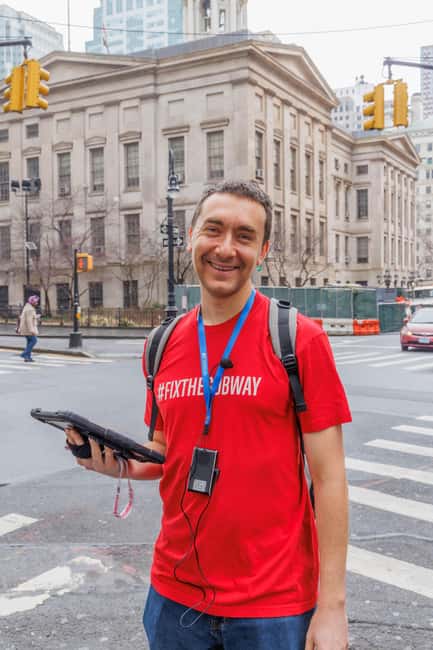
This is the kind of tour where you start noticing the subway as infrastructure, not just transit. You’ll learn how and why the transit system was built underground at the beginning of the 20th century, then you’ll connect that story to what you can still see—station layouts, architectural details, and design clues that explain later changes.
The best part is that you don’t just hear facts while standing still. You’re moving through real stations and platforms, which means the “why” lands faster. It feels like someone gave you the subway’s instruction manual, but with enough personality to keep it fun.
You can also read our reviews of more private tours in New York City



Meet Rayn Riel and the planning brain behind the tour
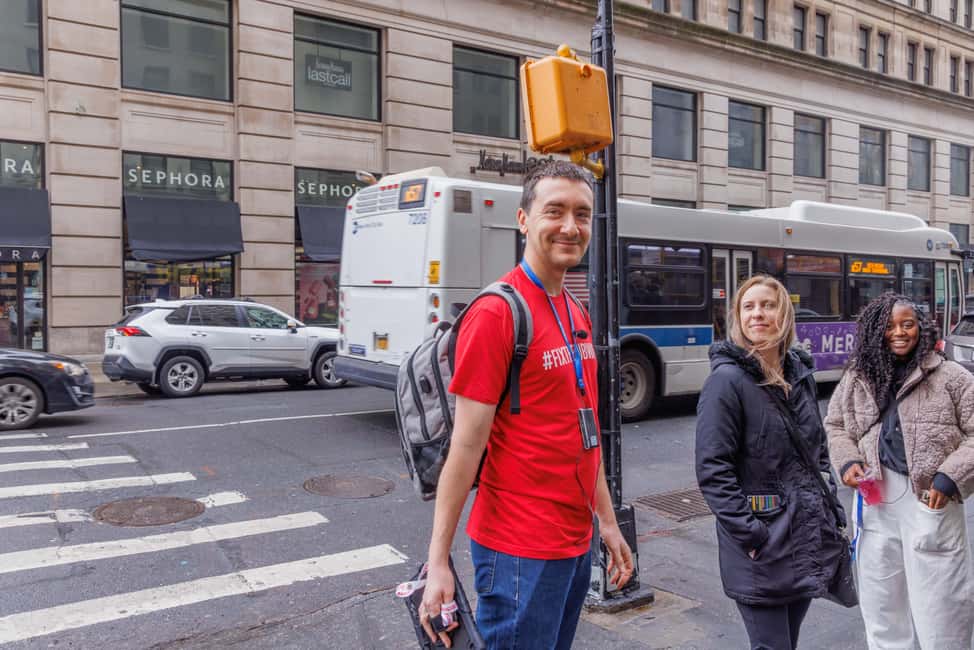
Rayn Riel is an accredited urban planner and the guide for this private experience, and it shows in how he talks. He doesn’t just list dates or brag about obscure service history. He explains how choices were made, how those choices affected what got built, and why certain spaces look the way they do today.
You also get practical context for the system as a living machine: the tour isn’t stuck in the past. The emphasis stays on how old decisions explain current realities—station access, layout constraints, and the logic behind what MTA-era riders experience every day.
And yes, there’s a human touch. The tour is built for groups, and Rayn can keep momentum even when questions pop up constantly (which they do when you’re watching for details you’ve never been trained to see).
The 2-hour flow: from 50 Court Street to Barclays Center
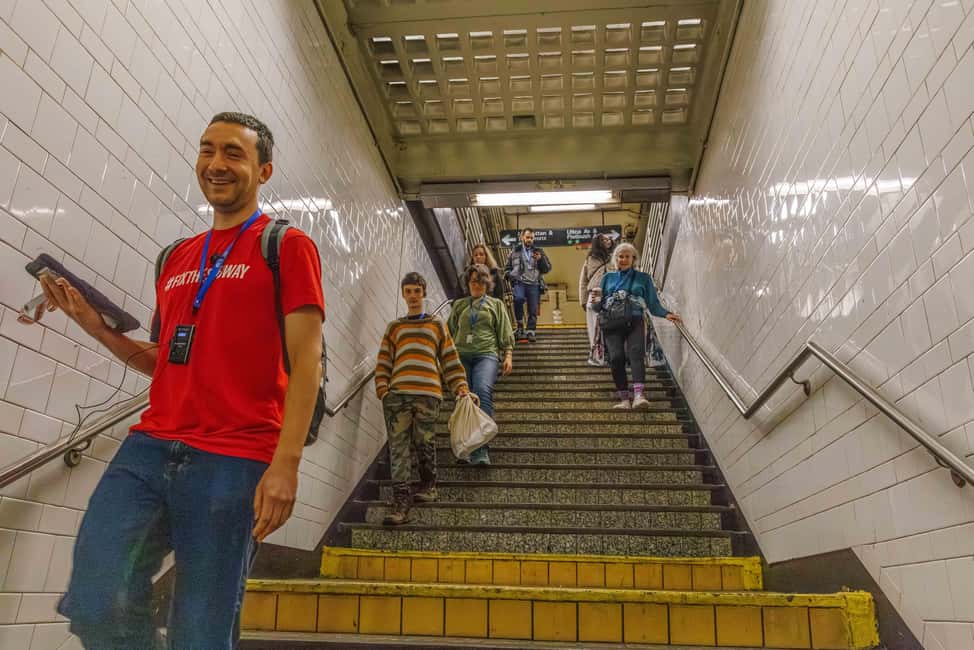
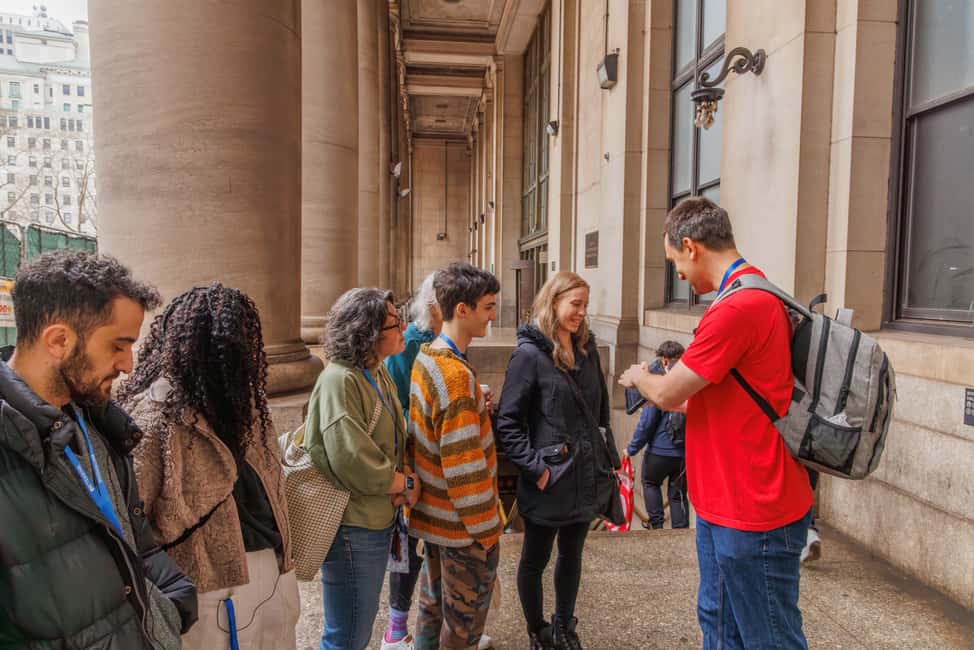
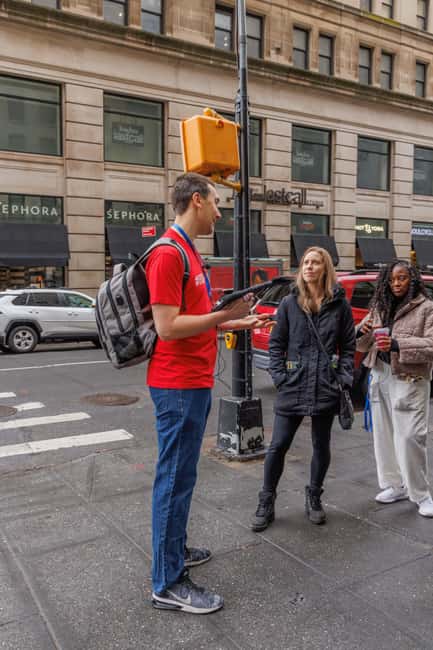
You meet outside the Starbucks at 50 Court Street and end at the Barclays Center subway station in Downtown Brooklyn. That start-and-finish setup matters because it gives you an easy before/after anchor for food and nearby plans—your tour basically nudges you into the area where you can keep exploring right afterward.
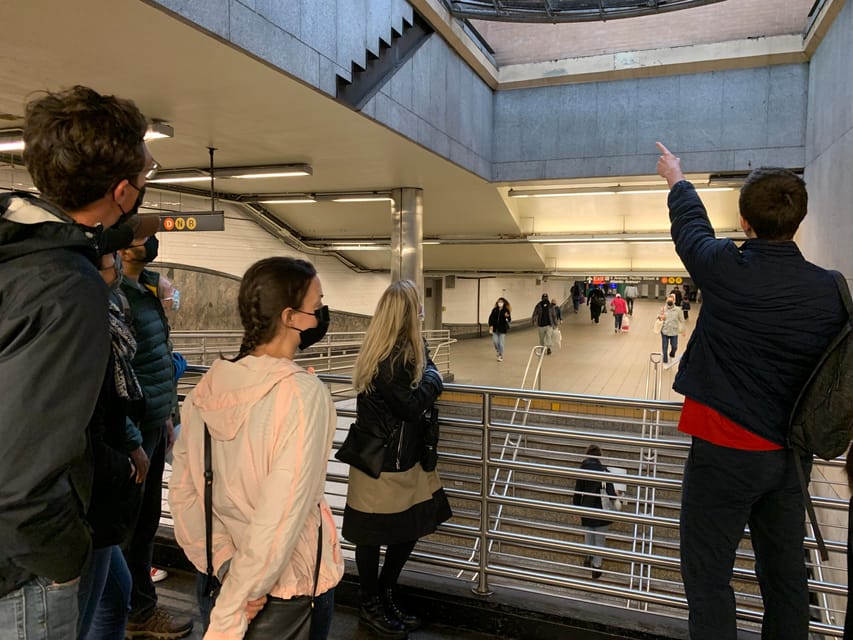
In the two hours, the pace stays focused: you’ll move between older stations, spend time at key viewpoints, and ride multiple subway lines. You’re not trying to “see everything about Brooklyn.” You’re seeing the parts that make the borough’s subway story click.
Expect walking up and down steps along the way. The tour only visits public areas, so you won’t be sent into restricted spaces, but you’ll still spend time navigating station stairs and underground corridors.
Abandoned platforms: what you see vs. what you can access
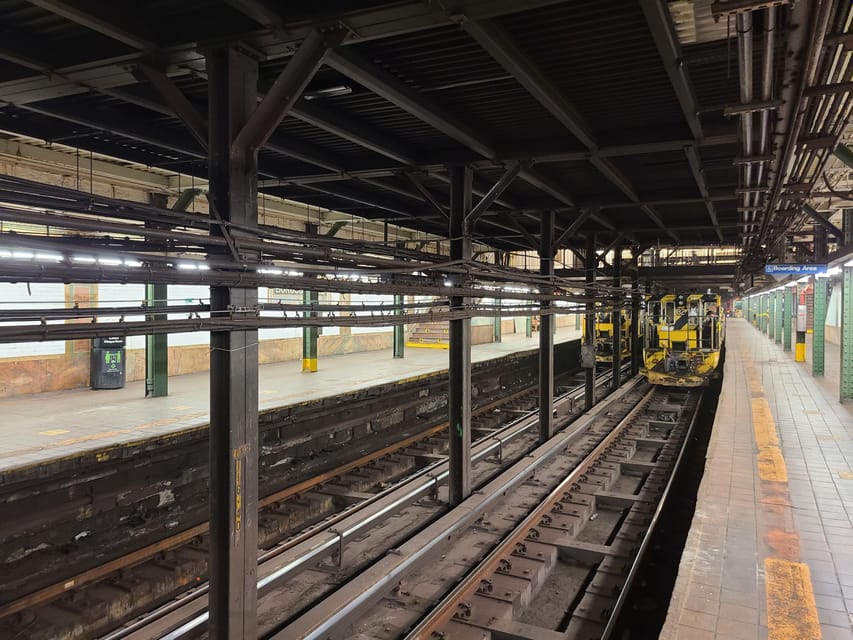
One of the biggest draws here is the promise of abandoned subway stations and platforms hidden in plain sight. You get peeks at several abandoned stations and platforms, but the tour stays within public areas—so think of it as guided viewing, not entry.
That distinction is important. You’re not crawling into closed-off tunnels, and you’re not expecting access to restricted infrastructure. Instead, Rayn helps you spot remnants—structural clues, layout differences, and signs of what used to be—then explains what those remnants mean.
A clear example that comes up is the Nevins St lower level, which you may get a look at during the tour. Even when you’ve lived here, this is the kind of area your everyday subway routine never teaches you to notice.
Smith–9 St and the Gowanus Canal view that explains elevation
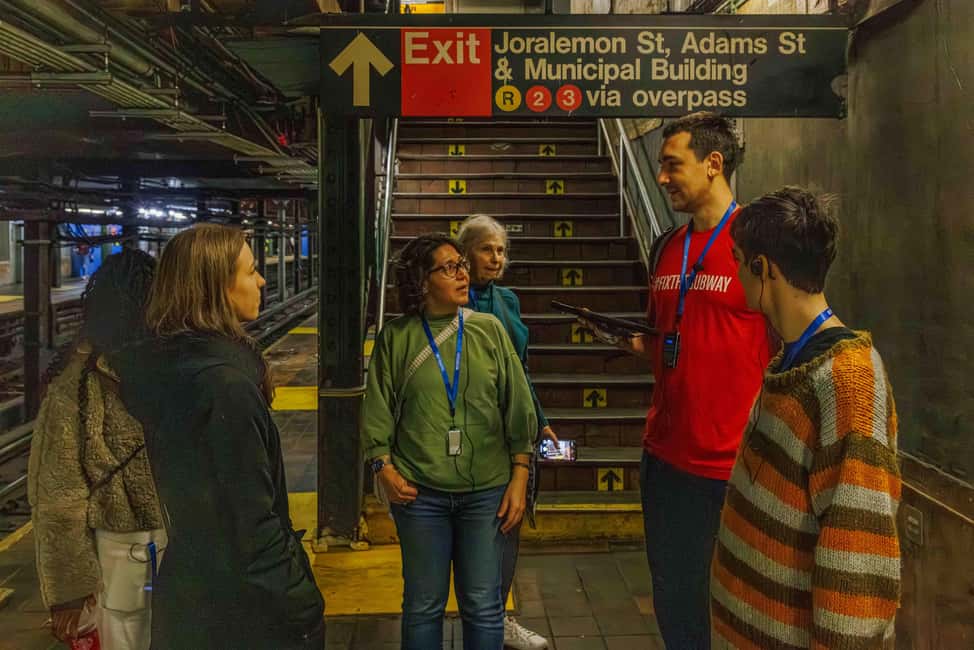
If you like the moment when a city makes sense visually, this stop is a highlight. The tour includes time at Smith–9 St station, and the explanation connects the station’s height to how Brooklyn’s system evolved.
From there, you get a perspective used to show the connection to the Gowanus Canal, and Rayn uses that viewpoint to explain why the highest rapid transit station in the Western hemisphere was built in Brooklyn. Even if you don’t memorize the engineering lesson word-for-word, you’ll remember the “oh, that’s why this feels different” feeling.
This is also where the design details get real. Stations aren’t just rooms underground; they’re shaped by terrain, connections between lines, and the practical needs of moving trains through dense neighborhoods. Watching it from the right angle makes the invisible logic visible.





Riding multiple lines: seeing the IRT, BMT, and IND story in motion
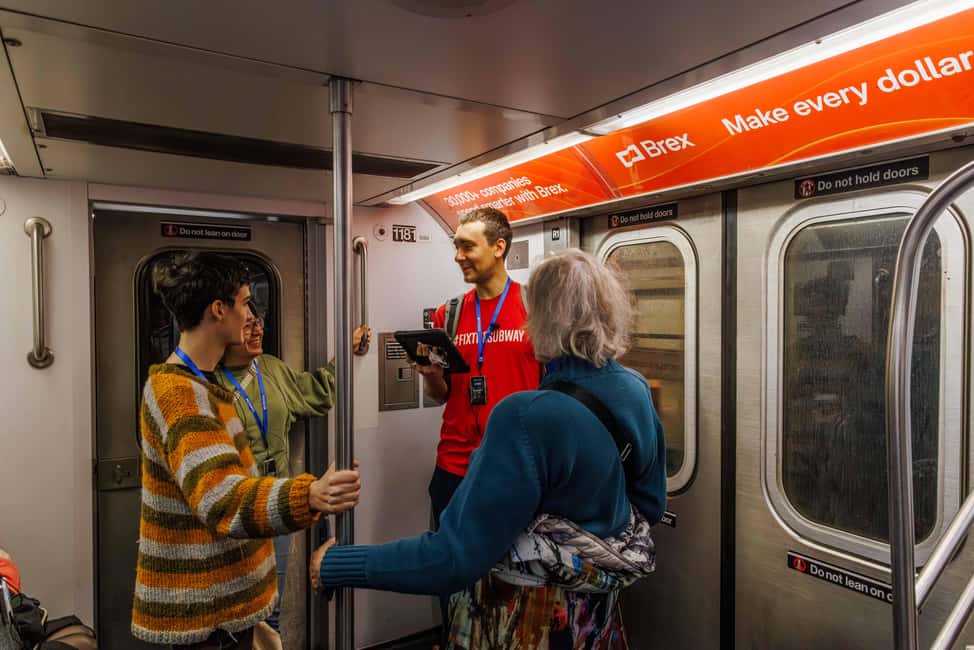
You won’t be stuck on one subway line for the entire experience. You’ll ride a variety of train routes—4/5, D, G, F, and R—and that variety matters because it helps you see how Brooklyn’s network reflects three former subway companies: the IRT, BMT, and IND.
Instead of treating the subway as one modern system, the tour makes it feel like a patchwork of plans that got stitched together over time. When you travel across different lines during the walk, you can compare station styles and operational rhythms as you go.
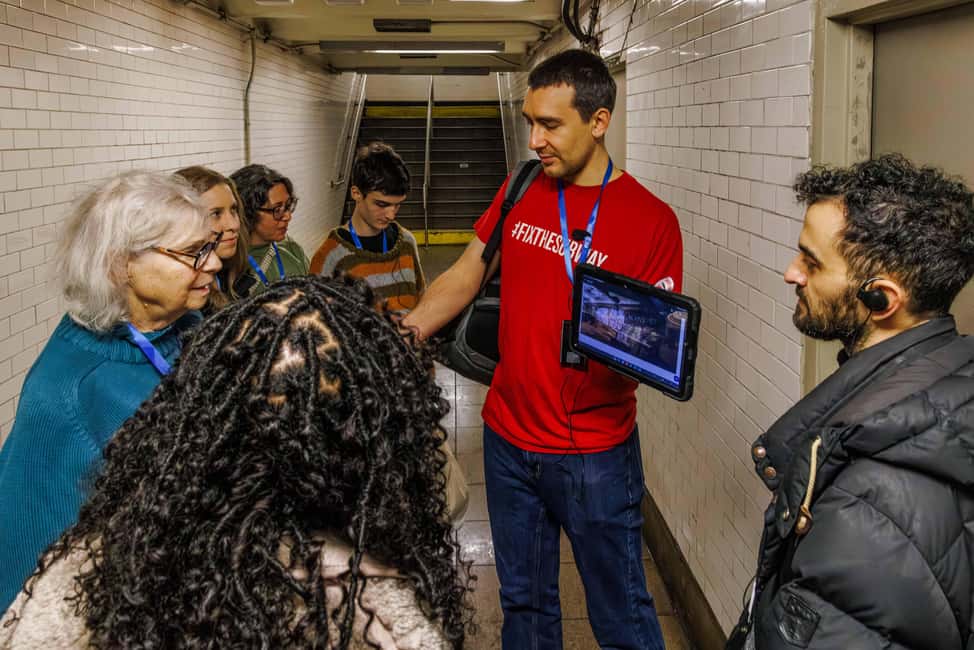
This is also where the ear pieces pay off. You’ll be close to crowds, moving through stations, and sometimes looking away from Rayn while he explains something above or beside your line of travel. Having individual audio keeps the story coherent instead of turning into guesswork.
Public art underground: how to read it without a museum ticket
Older stations in New York have lots of art, but it’s easy to ignore when you’re in hurry mode. On this tour, public art and station architecture get treated as clues, not decoration.
You’ll see examples of public art projects throughout Brooklyn, and Rayn helps translate what the art and surrounding architecture are communicating. That turns a hallway you usually rush through into a guided interpretation of how transit spaces were designed to feel like part of the city, not just a passageway.
This is one of the reasons the tour feels “authentic” rather than themed. You’re not chasing a set of staged photo ops. You’re learning how the borough chose to present itself underground.
The Michael Jackson Bad moonwalk moment
There’s a fun, very specific stop built into the experience: an opportunity to practice your moonwalk in the exact spot where Michael Jackson filmed the music video for Bad. It’s one of those moments that’s equal parts pop-culture and subway street theater.
What makes it work is the context. You’re not just posing. You’re standing in a real subway setting with a real reference point, which makes the city feel connected to the wider world beyond New York.
You may not leave a world-famous dancer, but you will leave with a story that’s actually grounded in place—one you can point to later when you’re showing friends how the subway can be art, history, and entertainment all at once.
Ear pieces and included subway fare: small details that add real value
This tour includes full subway fare for the experience and provides individual ear pieces, so everyone can hear perfectly even from a distance. That might sound like standard gear, but it changes the whole feel of a tour.
Without ear pieces, group tours in busy stations turn into shouting. With ear pieces, Rayn’s explanations stay clear, and you don’t have to hover right next to him to catch key points.
If you’re used to tours where you constantly repeat yourself to your group, you’ll appreciate how smoothly this one keeps everyone connected to the guide’s narration while you’re walking and riding.
What to bring and how to decide if this is your style
Bring comfortable shoes. The tour involves walking up and down steps and includes time in an underground environment. If you’re fine with stairs and you enjoy close-up city details, you’ll likely find the structure easy to follow.
This also suits a wide range of interests:
- Subway enthusiasts who like infrastructure and system history
- Architecture and design fans who care about how places were shaped
- Curious New Yorkers who think they’ve seen it all (and want to be proven wrong, nicely)
It may be less ideal if you want a relaxed, mostly flat “sit and listen” experience. This is movement plus explanations, not a stroll with no stairs.
Price and value for a private group up to 15
The price is $200 per group, capped at up to 15 people. That’s a private-tout value sweet spot because you’re not paying per person for the guide time.
If you split among a smaller group, it’ll be more expensive per head, but you’re still getting something you can’t replicate easily: access to a guide who can interpret station design, abandoned features, and art in context. You’re also getting subway fare included, which helps offset costs for a tour that depends on riding transit lines.
For families, groups of friends, or locals showing visiting relatives around, this kind of pricing can feel fair fast. The key question is whether you’ll use the private structure to actually talk, ask questions, and move at the right pace—because that’s when you get your money’s worth.
Should you book this Brooklyn subway secrets tour?
I think you should book this if you enjoy the subway as a city artifact, not just a way to get from A to B. The mix of older-station design, peeks at abandoned infrastructure, public art context, and the Bad moonwalk moment gives you more than “fun facts.” You get a new way to look at the system you already rely on.
You might skip it if you want minimal stair walking, zero underground time, or a tour that accesses restricted areas. This one is rooted in public spaces, and the experience is active—steps included.
If you’re aiming for an authentic Brooklyn feeling that’s both educational and memorable, this private tour hits that target better than most “subway-themed” options.
FAQ
FAQ
Where does the tour start?
You meet outside the Starbucks at 50 Court Street. That’s the starting point for the private tour.
Where does the tour end?
The tour ends at the Barclays Center subway station in Downtown Brooklyn, steps away from local food options.
How long is the tour?
The duration is 2 hours. Start times vary, so you’ll want to check availability for the time that works for you.
Is subway fare included?
Yes. Full subway fare is provided during the tour.
Are ear pieces included for hearing the guide?
Yes. Individual ear pieces are provided so everyone can hear perfectly, even when you’re farther from the guide.
Does the tour go into restricted areas?
No. The tour only visits public areas and does not access restricted spaces.
What kind of walking should I expect?
You’ll walk and you’ll go up and down steps. Comfortable shoes are strongly recommended because parts of the experience are underground.
What does the tour focus on besides “old stations”?
You’ll also learn how and why the transit system was built underground in the early 20th century, the meaning behind art and architecture at older stations, and why the highest rapid transit station in the Western hemisphere was built in Brooklyn.
What’s included with the Michael Jackson Bad connection?
You get the opportunity to practice your moonwalk in the exact spot where Michael Jackson filmed the music video for Bad.
Is the tour only for English speakers?
The live tour guide provides the experience in English, and the tour is listed as a private group.