REVIEW · NEW YORK CITY
Recreate the Most Requested Walking Tour of 1840s New York
Book on Viator →Operated by Manhattan Unlocked Historical and Architectural Walking Tours · Bookable on Viator
You can still feel 1840s New York in the pavement. This walking tour of Lower Manhattan is built around architecture you’ll actually notice, with a guide who connects street corners to the bigger stories that shaped the city. You’ll follow the routes of famous families like the Astors, Roosevelts, and Delanos—then watch the neighborhood map flip from elite to overcrowded, hard times.
Two things I really like: the small max group size of 7 makes it easier to ask questions and slow down, and the route focuses on what’s in front of you, not just big, famous landmarks. One possible drawback: the emphasis leans more toward buildings and how they evolved than toward a pure, gang-and-slum storyline.
In This Review
- Key Highlights Worth Marking in Your Plan
- Where the 1840s Story Actually Begins: The Public Theater Site
- What to watch for in this first stretch
- Noho, Broadway, and the Skill of Seeing Reuse Up Close
- SoHo before it was called SoHo
- Bayard–Condict Building: Louis Sullivan’s One NYC Stop
- Why this stop feels worth it
- Houston Street and the Grid: How Asphalt Teaches History
- Down Broadway Toward Canal Street: Retail and Social Layers on Foot
- A note on expectations
- Foley Square: From a Lake to the Shore of the African Burial Ground
- Why I think this stop works
- Ending at Columbus Park and the Five Points Site (500 Pearl Street)
- Where the tour officially closes
- How the Guide and Group Size Shape the Experience
- Pace and physical effort
- Price and Value: What $59 Gets You Here
- Practical Tips Before You Go
- Who This Tour Is For (and Who Might Want Something Else)
- Should You Book Recreate the Most Requested Walking Tour of 1840s New York?
- FAQ
- How much does the tour cost?
- How long is the walking tour?
- Where do we meet and where does it end?
- Is the tour offered in English?
- Do I need to buy tickets for the stops?
- What group size should I expect?
- What if the weather is bad?
Key Highlights Worth Marking in Your Plan
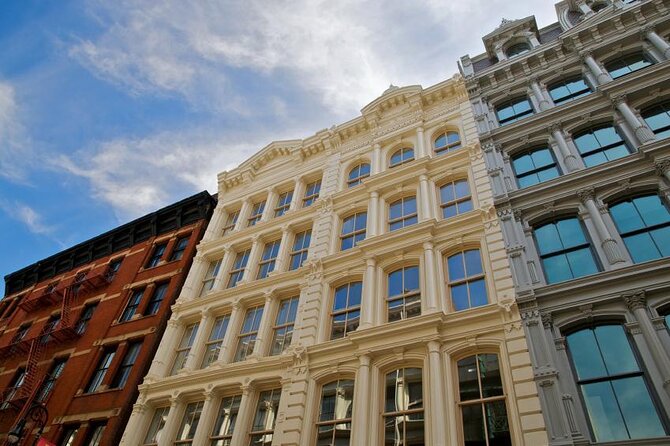
- Built around close-up architecture: you learn to read styles, sizes, and reuse of buildings on Broadway and beyond
- Small-group pace: about 2–3 hours with time to stop and process what you’re seeing
- Louis Sullivan’s Bayard–Condict Building: his only New York City building gets put in context
- Geography becomes a clue: the street grid and old shorelines explain why neighborhoods grew where they did
- Five Points ending at Columbus Park: the story lands at the site now associated with 500 Pearl Street
- Professional guides with real follow-up: praised for patience and answering questions, including guides named Robert and Rob
Where the 1840s Story Actually Begins: The Public Theater Site
The tour kicks off at 425 Lafayette St in front of the Public Theater, but the real starting point is what used to sit nearby. You’re guided to the ruins of Colonnade Row, an early-1830s residence area for the country’s elite, set on higher ground when “the city” hadn’t pushed nearly as far downtown.
I like this opening because it forces you to picture the city with different scale and distance. When you understand that this spot wasn’t always in the middle of everything, later changes feel less random and more inevitable.
You can also read our reviews of more walking tours in New York City



What to watch for in this first stretch
- How the guide frames the place as a landmark of overlapping histories
- The idea of high ground and a former pleasure garden setting, before the neighborhood got absorbed by growth
Noho, Broadway, and the Skill of Seeing Reuse Up Close
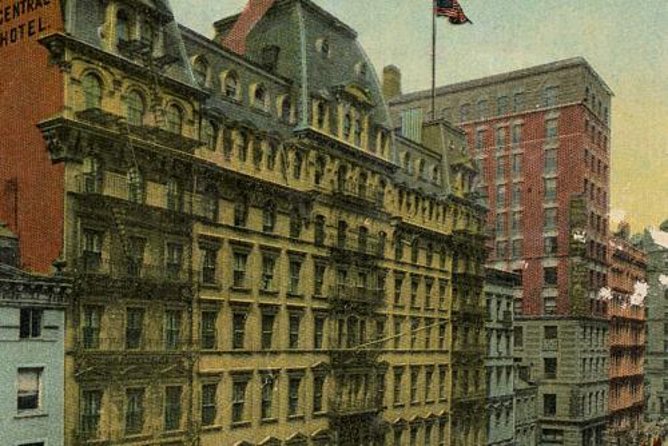
From the first stop, you head along Broadway through Noho, a neighborhood that’s close enough to the center of things but still feels like it has its own rhythms. The guide “decodes” the streetscape by pointing out building styles, proportions, and how structures were adapted—and then re-adapted—over time.
This is one of the best parts of the tour if you like figuring things out with your eyes. Instead of treating the buildings as scenery, you’re trained to notice what’s been changed, kept, or repurposed.
SoHo before it was called SoHo
As you move along, you also get a key interpretive thread: SoHo is a name-place from the 1950s, so the guide asks what people called this area before that. That single point changes your mindset. You start listening for the missing “before,” the way locals must have described their world in earlier decades.
Also, you’ll be shown how images from the past connect to the evolution of the streets you’re walking now. It’s not just pretty before-and-after pictures; it’s about identity—who lived here and who used the sidewalks.
Bayard–Condict Building: Louis Sullivan’s One NYC Stop
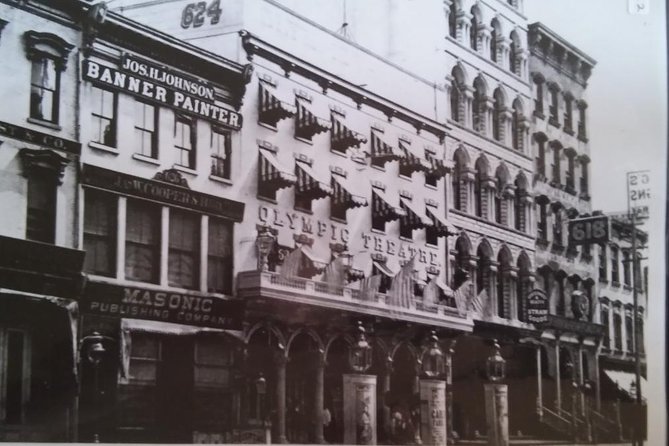
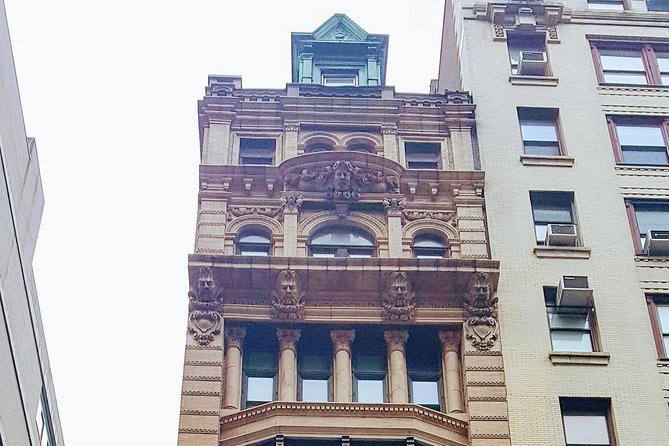
A short, focused stop breaks up the walk: the group pauses at the Bayard–Condict Building. Here’s where the tour gets very architecture-nerdy in a friendly way—this is Louis Sullivan’s only building in New York City, and the guide ties it directly to the evolution of skyscraper style.
Even if you don’t know architecture jargon, the point lands. The guide uses the building to explain how design thinking and new building technology pushed upward and reshaped the skyline logic.





Why this stop feels worth it
- It gives you a named, specific anchor for a big city-wide change
- It’s short enough to stay energetic, not exhausting
- It turns “pretty building” into “this mattered because…”
Houston Street and the Grid: How Asphalt Teaches History
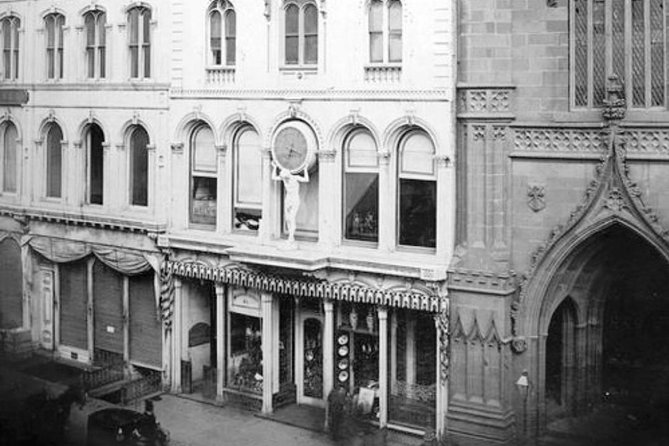
At Houston Street and Broadway, the tour shifts into the city’s underlying logic. The guide points out the ancient geography that helps explain why the grid began where it did, and you also get context about an early presence of St. Thomas Episcopal Church.
I appreciate this moment because it makes the city’s layout feel less like a random planning decision and more like a consequence of land, movement, and time. When the guide connects the grid to where people were living and traveling, the city stops feeling like a blur of avenues and starts feeling like a map with reasons.
And since this area was described as an early upper-class residential neighborhood, it sets up the emotional contrast that comes later near Five Points.
Down Broadway Toward Canal Street: Retail and Social Layers on Foot
The walk continues through SoHo, then pushes you toward Canal Street, where the guide focuses on a roster of social and retail history. This is where the tour tries to answer a simple question: what kinds of people moved through these blocks, and what did they buy or sell?
You’ll likely spend more time mentally running two timelines at once: how the city looked in the 1840s versus how it presents itself today. The guide uses explanations and images to deconstruct the streetscape, helping you connect brick-and-mortar changes to the human patterns driving them.
A note on expectations
This is not a stop-by-stop parade of major museum sites. It’s a methodical walk designed to help you read the neighborhood like a living document. If you want only top-line tourist sights, you might feel a little underwhelmed. If you enjoy urban form and how places evolve, this section is where the tour starts clicking.
Foley Square: From a Lake to the Shore of the African Burial Ground
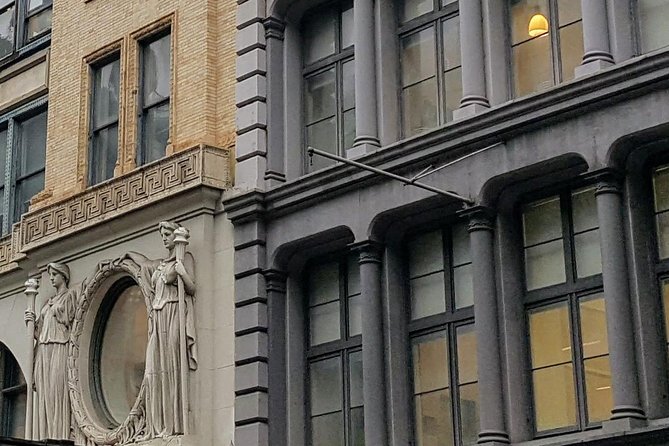
Then comes a heavy pivot at Foley Square, and the guide handles it with the seriousness the setting demands. Here, the tour explains that today’s Civic Center was once a lake, and that its shorelines overlapped with the African Burial Ground during much of the British colonial period.
From there, the story moves forward: the lake was filled in, and along those old shore areas, The Five Points developed—described as the city’s most notorious slum in New York history.
This isn’t the kind of material you want to rush. The value of the tour is that it gives you a walk-based transition into the topic, so you understand the geography first. When you see how the land changed, the social consequences make more sense.
Why I think this stop works
- It connects built environment to lived outcomes
- It makes the area feel like a consequence, not a coincidence
- It anchors later Five Points discussion in place, not just legend
Ending at Columbus Park and the Five Points Site (500 Pearl Street)
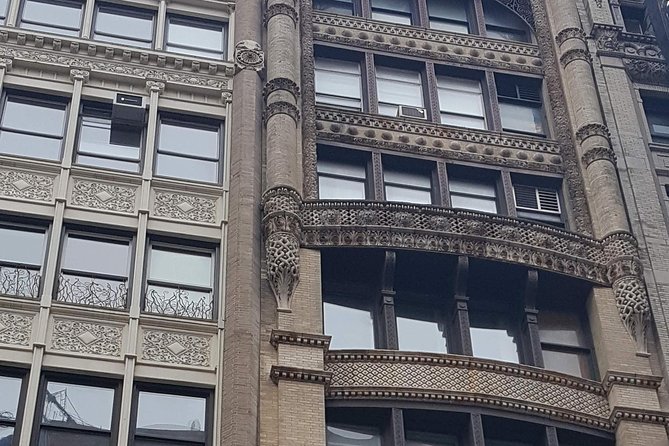
The tour finishes where the Five Points story lands most directly: Columbus Park, associated with 500 Pearl Street. The tour describes this as an ending contrast to the earlier higher-status setting of the route—moving from more privileged beginnings to the desperate, deplorable living conditions associated with Five Points.
The guide also connects this ending to multiple waves of hardship and settlement, including Irish history and later references to Mulberry Bend. From a city-story standpoint, that’s the tour doing what good walking tours do: bringing you to the location and letting the geography carry weight.
Where the tour officially closes
One practical detail: the experience lists 169 Worth St as the end point. So think of Columbus Park / the 500 Pearl Street finish as the historical narrative end, with the tour closing nearby.
How the Guide and Group Size Shape the Experience
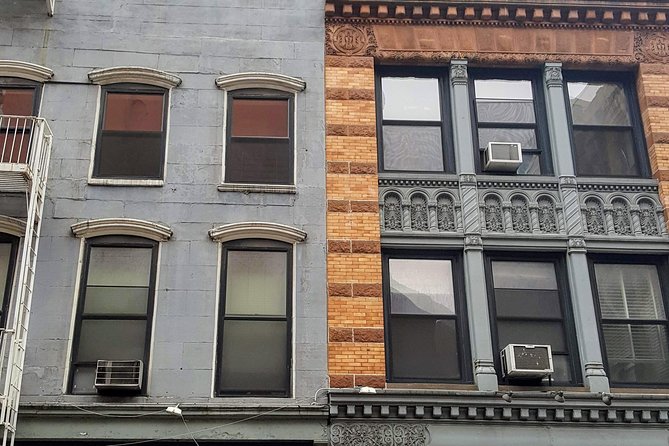
This is offered in English, with a professional guide and a maximum group size of 7. That matters more than it sounds. With fewer people, you can ask questions mid-walk without feeling like you’re slowing a busload of strangers.
The reviews attached to the tour strongly highlight this kind of guide-to-you interaction. People mention guides like Robert and Rob as being fun, deeply prepared, and patient about questions—exactly what you want when the tour is built on seeing details you might otherwise miss.
Pace and physical effort
The tour is about 2 to 3 hours, and it’s best for moderate physical fitness. That means you should be ready for sustained walking and regular stops, not a short stroll with lots of long breaks.
Price and Value: What $59 Gets You Here
At $59 per person, you’re paying for three things: a guide, a structured route, and time spent learning how to interpret what you see. In New York, that’s often better value than spending your budget on a single paid attraction, because the tour gives you skills you can reuse while you keep walking.
Also, the listed stops show admission ticket free for the tour’s key points, so you’re not stacking extra site fees on top of your ticket. The route also keeps you out of “everyone goes here” loops and into places where the story comes from architecture and street logic.
For me, the best value signal is still the group limit of 7. Paying for a small-group format is one of the easiest ways to turn a walk into an education instead of a slideshow.
Practical Tips Before You Go
- Wear shoes you can trust on city sidewalks. This is a walking tour for moderate fitness, not a casual wander.
- Bring layers. The experience is described as needing good weather, so you’ll want to dress for what New York does.
- Expect a mobile setup: the tour uses a mobile ticket.
- Since it’s near public transportation, plan to arrive a little early so you can find the Public Theater meeting point without stress.
- If you’re bringing a service animal, the tour allows service animals.
Who This Tour Is For (and Who Might Want Something Else)
Book this if you like:
- architecture and how buildings change over time
- Lower Manhattan but you want more than the usual photo stops
- the idea of using geography to understand history, especially around Five Points
You might choose a different style of tour if you’re mainly hunting for dramatic stories about gangs and slums. This walk absolutely covers Five Points themes, but the strongest thread is the built environment and the way the city’s structure explains the shift from elite spaces to harsher ones.
Should You Book Recreate the Most Requested Walking Tour of 1840s New York?
I’d book it if you want a Lower Manhattan experience that feels both specific and teachable. The small-group size, the clear focus on architecture, and the thoughtful way the route moves from Colonnade Row to Foley Square to Columbus Park give you more than just sights—you leave with a new way to read the city.
If you’re tight on time, this is still a solid choice because it runs 2 to 3 hours and ends in an area where you can keep exploring afterward. And if you love asking questions, the format is set up for that.
On the other hand, if you only want big-name attractions or you’re expecting a heavy dose of entertainment-storytelling, keep your expectations aligned with street-level design and historical interpretation.
FAQ
How much does the tour cost?
The price is $59.00 per person.
How long is the walking tour?
It runs about 2 to 3 hours.
Where do we meet and where does it end?
You start at The Public Theater, 425 Lafayette St, New York, NY 10003, and the tour ends at 169 Worth St, New York, NY 10013.
Is the tour offered in English?
Yes, it’s offered in English.
Do I need to buy tickets for the stops?
The listed stops include admission ticket free for each of the tour’s key points.
What group size should I expect?
This tour has a maximum of 7 travelers.
What if the weather is bad?
The experience requires good weather. If it’s canceled due to poor weather, you’ll be offered a different date or a full refund.