REVIEW · NEW YORK CITY
Central Park: Bethesda Terrace, Strawberry Fields, Bow Bridge
Book on Viator →Operated by New York City By Foot · Bookable on Viator
Central Park can feel huge fast. This small-group walking tour helps you see the park’s best-known sights in a smart order, with stories tied to each stop.
I especially like the expert commentary that turns familiar landmarks into something you can actually picture and remember. And because it’s capped at 15 people, the pace feels human, not rushed.
One thing to consider: this is a focused route. You’ll cover major highlights from the southeast entrance toward Strawberry Fields, but you won’t see every corner of Central Park in just about 3 hours.
In This Review
- Key things to know before you go
- Why this Central Park tour starts at Grand Army Plaza
- Duck Pond, Wollman Rink, and the Dairy Visitor Center: quick wins early
- Chess & Checkers House, the Carousel, and Sheep Meadow
- Poet’s Walk to Bethesda Terrace: where Central Park looks like a movie set
- Boathouse, the Ramble, and the lake-side shift toward Bow Bridge
- Cherry Hill and Strawberry Fields: the ending that turns reflective
- Price and value: is $39 a good deal for 3 hours?
- The morning advantage: why the 9:30am start helps
- Who should book this Bethesda Terrace and Bow Bridge walk?
- Should you book this Central Park tour?
- FAQ
- How long is the Central Park Bethesda Terrace, Strawberry Fields, and Bow Bridge walking tour?
- Where does the tour start and where does it end?
- What group size is the tour capped at?
- Are there admission fees for the stops?
- Is it using a mobile ticket?
- What is the cancellation policy?
Key things to know before you go
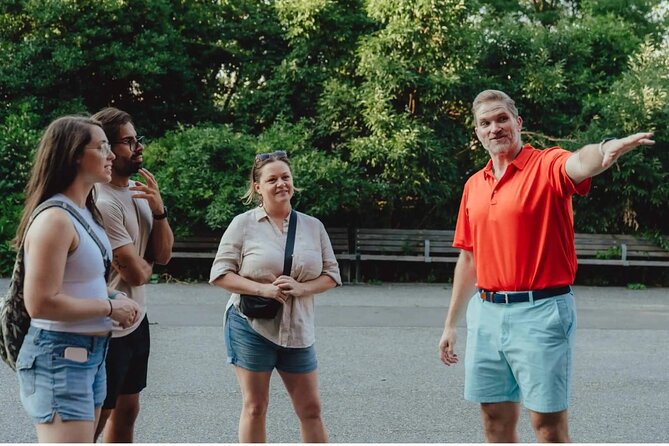
- Grand Army Plaza to Strawberry Fields: a south-to-north sweep of the park’s most recognizable sites
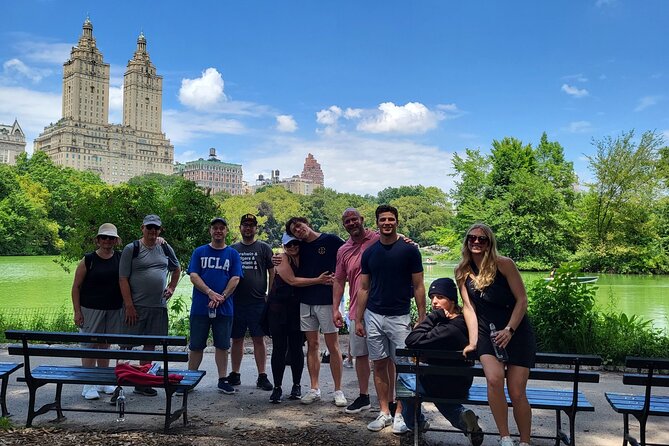
- 14+ photo stops: frequent chances to pause, not just quick walk-bys
- Small group limit (15): easier questions and a calmer experience
- Mobile ticket: simple entry without paper stress
- Morning tour timing: you get Central Park done early, then you’re free for the rest of the day
Why this Central Park tour starts at Grand Army Plaza
You begin at Grand Army Plaza, the classic southeast gateway to Central Park. Even if you’ve walked New York streets before, this is the moment your brain goes, oh right, I’m entering the city’s big green stage.
This start matters. It sets you up to orient yourself with what’s around you before you plunge into paths and bridges. You’re also starting in the same place most first-time visitors aim for anyway, so it’s a quick win: you’re not guessing where to begin.
The meeting point is at a busy, recognizable intersection area, and the route naturally transitions from city noise to park rhythm. That first shift is part of the value here. You’ll feel like you’re doing more than sightseeing. You’re learning how the park is laid out.
You can also read our reviews of more tours and experiences in New York City.



Duck Pond, Wollman Rink, and the Dairy Visitor Center: quick wins early
The first stretch is built for getting your bearings without tiring you out.
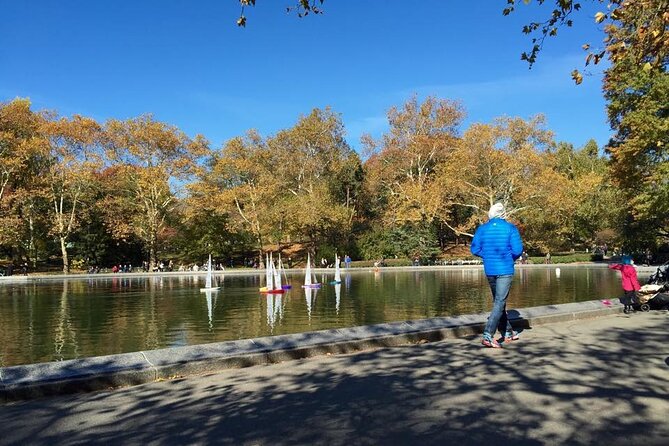
You’ll walk to the Duck Pond, a peaceful pocket where you can see ducks up close and take in the calm side of Central Park. It’s one of those spots that helps you reset after walking through traffic and buildings. The setting makes it easy to slow down for a few minutes and actually look.
Next comes Wollman Rink. Depending on season, you might see skaters or just catch the rink as a dramatic open stage with views around it. Either way, it shows you how Central Park is designed to support different kinds of play, not just strolling.
Then you head to The Dairy Visitor Center and Gift Shop. This is a small stop, but it’s visually memorable. The building’s Gothic-style look is the kind of detail that tends to slip past you on your own unless someone points it out.
If you like structure—meaning you don’t want to “wander and hope”—this early sequence is strong. You’re seeing landmarks that are easy to recognize later in photos and on maps.
Chess & Checkers House, the Carousel, and Sheep Meadow
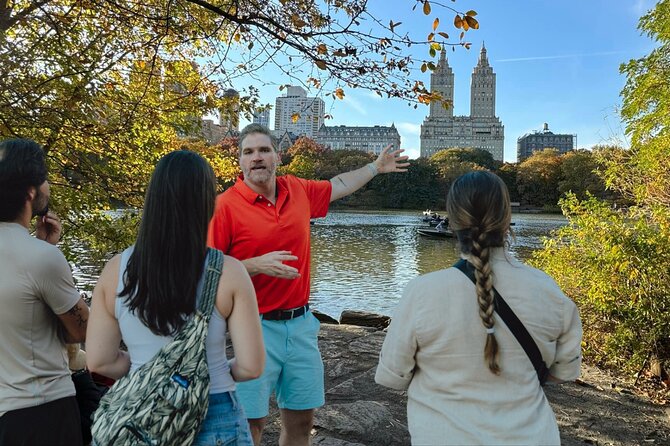
After the quieter water-and-architecture moments, the tour turns playful.
You pass by the Chess & Checkers House Visitor Center, where games are part of the vibe. It’s a fun pause, and it gives the park a community feel. You’re not just looking at nature; you’re seeing Central Park as a place people use.
Then there’s the Central Park Carousel, the Michael Friedsam Carousel. A carousel can sound like a kid-only distraction, but on a guided walk it works differently. You get the sense that this is one of the park’s long-running traditions—one of those “this is why people keep coming back” features.
If conditions allow, you’ll also visit Sheep Meadow, a wide open lawn with big views toward the surrounding skyline. This is one of the best stops on the whole route for that open-air feeling. You can breathe here. You can also grab a strong panorama moment without needing special equipment.
This part of the tour hits a nice balance: it mixes architecture, classic park entertainment, and that signature Central Park “I can see the city edges” view from the grass.
Poet’s Walk to Bethesda Terrace: where Central Park looks like a movie set
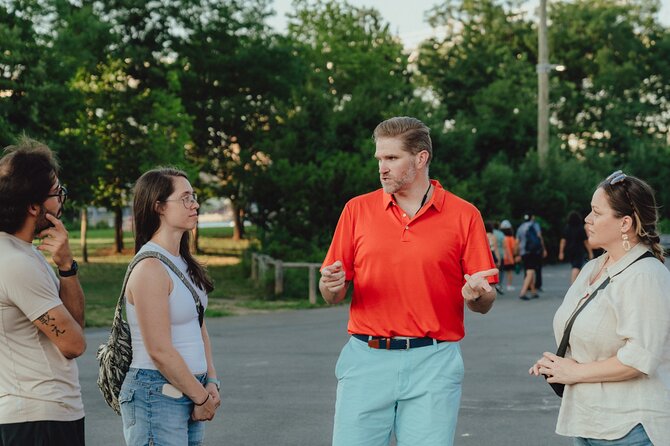
From here, the tour starts to feel more dramatic.
You’ll stroll along The Mall and Literary Walk, often associated with Poet’s Walk, a path lined with elm trees and literary-inspired benches. On your own, you might walk past this feeling “pretty.” With a guide, you pick up how the park leans into ideas—literature, reflection, and the sense that walking here is part of the point.
Then comes Bethesda Terrace, which is the heart-of-the-park moment for a lot of people. It’s big, ornate, and built for lingering. The guide focuses attention on the Angel of the Waters Fountain, which anchors the view over the adjacent area of the water.
This stop is a payoff for earlier orientation. By the time you reach Bethesda Terrace, you understand you’re not just moving between random sights. You’re moving through a designed experience—terraces, paths, water features, and viewpoint points that frame the park like scenes with different moods.
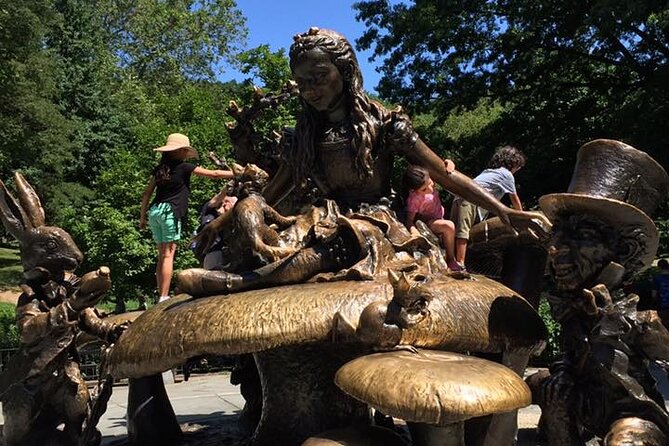
You’ll also spot the Alice in Wonderland Statue around this zone. It’s playful on purpose: Lewis Carroll fans will get a kick, and non-fans still enjoy the whimsical storytelling angle.
Boathouse, the Ramble, and the lake-side shift toward Bow Bridge
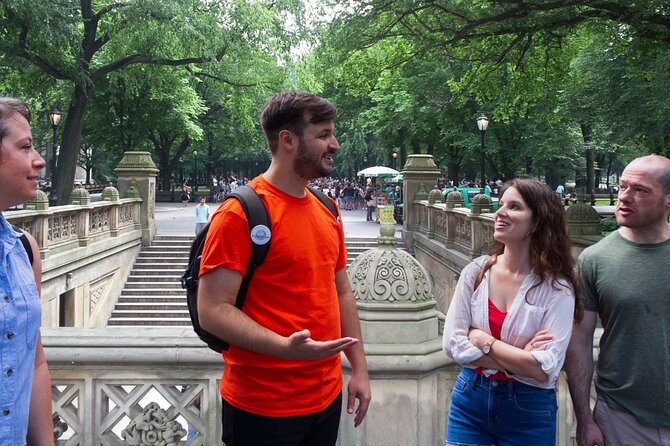
Next you shift from formal park structure into calmer, more nature-forward scenery.
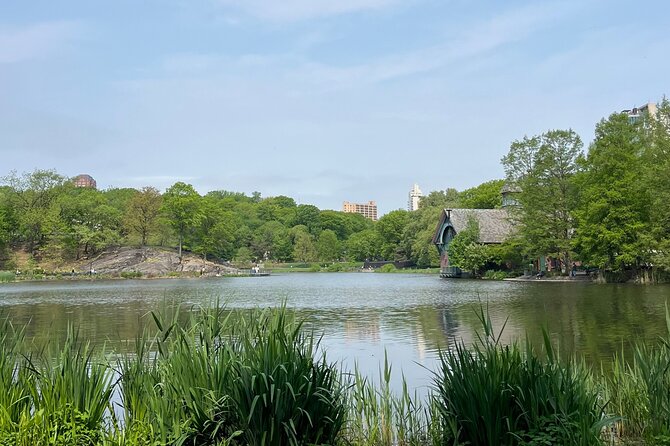
You’ll pause at the Central Park Boathouse (Loeb Boathouse), a lakeside spot where the park feels more leisurely. Even if you don’t rent a rowboat, the setting makes sense of why people come here to slow down. It’s one of those “you can hear the water even if the city is close” moments.
After that, you’ll explore The Ramble, a wooded area with winding paths and tranquil streams. This is where Central Park starts to feel like a different world from Manhattan streets. If you like birdwatching or just watching light change under trees, this is the part that tends to feel more relaxing than iconic.
Finally, you reach the section where photos get serious.
Bow Bridge is one of Central Park’s most photographed landmarks. The cast-iron arch over the lake creates that romantic “frame within the frame” effect. With a guide, timing helps. Instead of walking straight past it, you’ll know where to stand for the best view angles and when to pause so you’re not blocked by the next group.




Cherry Hill and Strawberry Fields: the ending that turns reflective
You’ll continue to Cherry Hill, an overlook with panoramic lake views and a view of Bow Bridge. It’s another pause designed for looking outward, not just snapping a quick picture. In spring, it’s known for cherry blossoms, but even outside that season it still works as a calm, high-reward view spot.
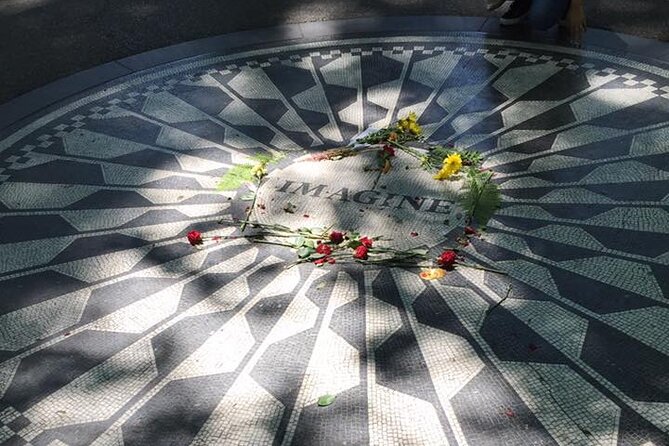
Then the tour ends at Strawberry Fields, the John Lennon Memorial. The Imagine mosaic is the moment most people come for, but the reason it works on a guided walk is the pacing. You’re finishing when your feet are tired enough to appreciate quiet.
This ending section makes sense emotionally. You go from built structures and iconic bridges into a reflective memorial area where the park feels more personal. It’s a different tone from the earlier excitement, which is a smart way to end a walk like this.
Price and value: is $39 a good deal for 3 hours?
At $39 per person for about 3 hours, the value comes from three things you don’t easily recreate on your own.
First, you get live commentary from a local, professional guide. Central Park is famous, but fame doesn’t automatically explain meaning. The guide’s job is to connect what you’re seeing to why it exists and how it fits into the park’s identity.
Second, you’re not paying for admission at the stops. The listed admissions for the sights on this route are free, so you’re mainly paying for the guided time and the structured walk.
Third, 14+ photo stops means you’re not just moving through. You’re given repeated chances to pause, frame shots, and actually enjoy the views instead of racing to the next highlight.
One more practical note: booking tends to happen about 42 days in advance on average. If you’re traveling in peak season, it’s worth reserving sooner rather than later so you’re not stuck hunting for last-minute availability.
The morning advantage: why the 9:30am start helps
The tour starts at 9:30 am, and it’s positioned as a morning option. That timing is more than convenience.
When you do Central Park later in the day, crowds and fatigue can make it feel like you’re fighting the flow. Doing it earlier means you’re starting fresh. You also get the rest of the day for other plans—museum visits, neighborhoods, or just more wandering at your own pace.
It’s also helpful that the route ends at Strawberry Fields. If you want to keep moving after the tour, you’re in a part of the park that connects naturally to other Midtown and Lower Manhattan sightseeing plans.
Who should book this Bethesda Terrace and Bow Bridge walk?
This tour is a good fit if you want:
- a first-time Central Park guide that hits the landmarks people actually talk about
- structured walking with frequent photo pauses
- a quieter, thoughtful pace that doesn’t feel like you’re sprinting through famous spots
It’s also ideal if you’ve been to New York before. You may know the park, but guided storytelling often makes familiar views feel new again.
If you’re the type who wants to roam freely without stopping, or you’re trying to cover every park district in one day, you may find the focus a little too narrow. This one is designed for highlights on a specific route, not a full-park tour.
Should you book this Central Park tour?
I’d book it if you want a guided, high-hit-rate Central Park experience—Bethesda Terrace, Bow Bridge, and Strawberry Fields—with a small group and lots of chances to pause for photos. It’s a smart way to see the park without turning your day into a navigation puzzle.
Skip it (or consider a different format) if your priority is complete coverage of all 840+ acres. In 3 hours, you’re choosing depth over breadth here—and that trade-off is exactly the point.
FAQ
How long is the Central Park Bethesda Terrace, Strawberry Fields, and Bow Bridge walking tour?
It’s approximately 3 hours long.
Where does the tour start and where does it end?
The tour starts at Grand Army Plaza, New York, NY 10019 and ends at Strawberry Fields, New York, NY 10023.
What group size is the tour capped at?
The tour is limited to a maximum of 15 travelers, so it stays small-group focused.
Are there admission fees for the stops?
The stops listed on the route are shown as having admission ticket free entries.
Is it using a mobile ticket?
Yes. The tour includes a mobile ticket.
What is the cancellation policy?
You can cancel for a full refund up to 24 hours before the experience starts. If you cancel less than 24 hours before, the amount paid is not refunded.