REVIEW · NEW YORK CITY
Central Park 5 Star Walking Tour led by Manhattan residents!
Book on GetYourGuide →Operated by Central Park Touring · Bookable on GetYourGuide
A Central Park tour, minus the tourist fog. This 2.5-hour walk led by Upper West Side residents focuses on Central Park icons and the off-the-map corners many locals miss. It starts at the José Martí Statue and you’ll spot your guide in a bright yellow jersey.
I like two things most: the guides bring a lifetime feel for how the park works, and the pacing keeps you moving without feeling rushed. I also love how the route mixes nature, architecture, and pop-culture landmarks in one clean thread.
One consideration: this is still a 2.5-hour walk on park paths, and it is not suitable for wheelchair users or people with back, heart, or mobility issues. If you’re near the listed age/weight limits, check first before you commit.
In This Review
- Key points to know before you go
- Entering Central Park with Upper West Side locals
- Route reality: 2.5 hours, and why the timing works
- The lake-to-meadow sweep: bridges, ponds, and famous-but-earned stops
- The Mall and Literary Walk: formal views that teach you how the park is built
- Bow Bridge and the Ramble: where the pace feels different
- Belvedere Castle and the Shakespeare Garden: viewpoints with meaning
- Swedish Cottage and the edges of the city: seeing Central Park as part of it
- Ending at Strawberry Fields: a famous finish you can build from
- Price and value: what $75 buys you in real terms
- Guide quality: when a tour feels like a conversation
- What to bring (so the walk stays pleasant)
- Who should book, and who should skip
- Should you book this Central Park walking tour?
- FAQ
- How long is the Central Park walking tour?
- Where do we meet the guide?
- How much does the tour cost?
- What’s included in the price?
- What languages are offered?
- Is this tour suitable for kids?
- What should I bring for the walk?
Key points to know before you go
- Local resident guides: you get a Manhattan point of view, not a script from a brochure
- Smaller-group style: the communication is clear and detailed without dragging
- A tight route with stops that “make sense”: classic landmarks plus less-frequented areas
- One bottle of water and sunblock are included, but you still need good sun-and-shoe prep
- English and Chinese guiding lets you choose the language that fits your group
- Ends near Strawberry Fields, setting you up to keep exploring nearby
Entering Central Park with Upper West Side locals
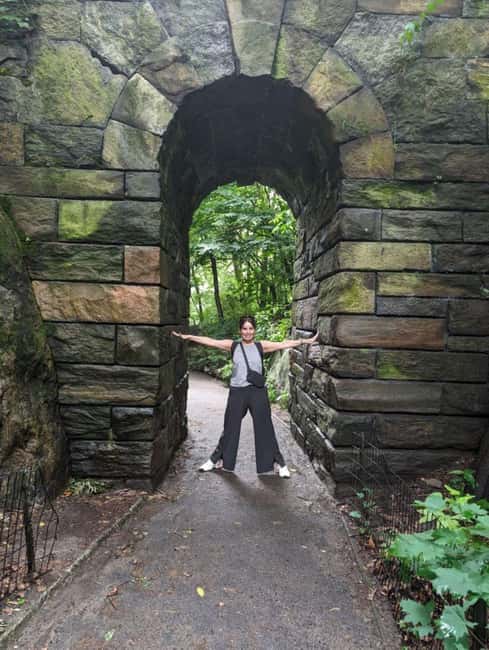
Central Park can feel like it has infinite doors, and most self-guided plans pick a few big names and then wander. This tour is different because it’s built around a local lens: the guides are lifetime, proud Upper West Side Manhattan residents. That matters because they aren’t just pointing at sights. They explain how the park’s design, history, and daily life connect.
You meet in front of the José Martí Statue, and the guide wears a bright yellow jersey. It’s an easy way to start—no awkward hunting, no guesswork, just find the yellow and walk in.
In the best Central Park tours, the talk and the walking reinforce each other. This one aims for that. The route is set so you keep your bearings as you move from one famous moment to the next, then into quieter stretches where you start noticing details you would normally walk right past.
You can also read our reviews of more walking tours in New York City



Route reality: 2.5 hours, and why the timing works
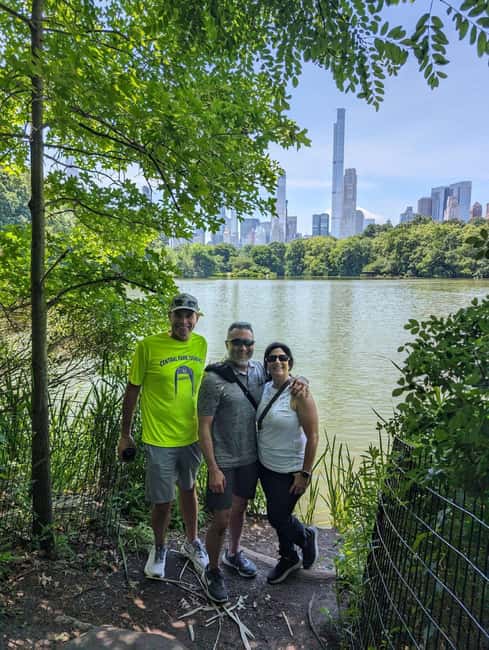
The tour runs about 2.5 hours. That’s long enough to see major highlights and still short enough that you don’t feel cooked at the end. The key is the stop mix: some places are quick passes, others are real “look-and-listen” visits.
Expect a steady rhythm:
- Short pass-by segments at key transitions (like bridges and ponds)
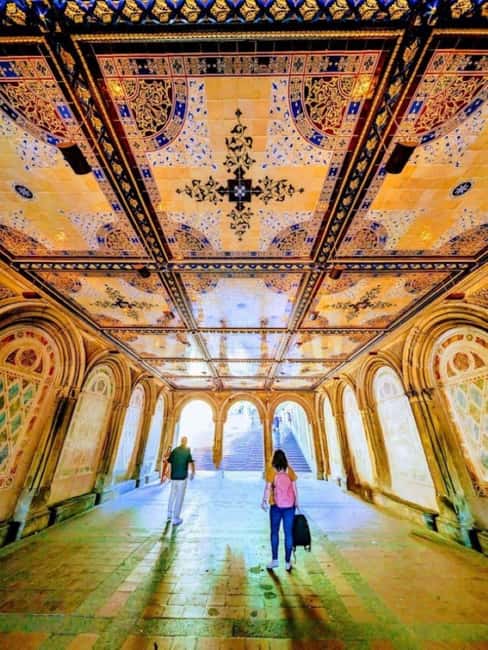
- Longer pauses at high-interest architecture and viewpoint stops (like Bethesda Fountain and Belvedere Castle)
Also, the end point is Strawberry Fields. That’s a smart finishing choice because it’s one of those landmarks that naturally pulls you into the rest of the neighborhood afterward. The activity notes say it ends back at the meeting point, so you’ll get a complete tour loop rather than being dropped in a place where you have to figure out the next step.
The lake-to-meadow sweep: bridges, ponds, and famous-but-earned stops
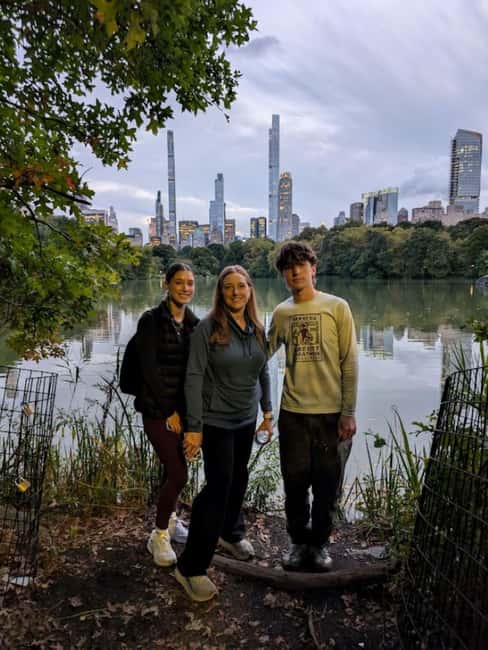
The tour starts with a dramatic anchor: José Martí Statue, then you immediately move into the park’s softer edges. Early on, the route keeps you close to water and open views, which is a great way to understand Central Park’s structure quickly.
From there, you pass Gapstow Bridge—a classic lakeside photo spot. You don’t linger long, but you do get the context you need to appreciate why this bridge is such a recognizable piece of the park’s design.
Next comes the Pond in Central Park and then Hallett Nature Sanctuary. This part is about contrast. One moment you’re in a formal-feeling water scene; the next you’re in a quieter, more nature-forward pocket. If you’ve ever thought the park was only manicured lawns, this section helps you see how intentionally varied it is.
You’ll also pass Wollman Rink and Heckscher Playground, plus the Central Park Carousel. These are big-name places, but the value of doing them on a guided walk is that you’re not just checking off stops—you’re learning how the park supports different kinds of experiences, from sporty winter energy to family-friendly fun year-round.
Then you hit Chess & Checkers House. It’s the kind of place you might skip if you’re rushing. With a guide, it becomes a small lesson in how Central Park functions as a public space for everyday play, not only sightseeing.
The early sequence ends with Sheep Meadow. That sweep of open space is where the park starts to feel like a breathing room between city blocks. If you want one moment to slow down and reset, Sheep Meadow is it.
The Mall and Literary Walk: formal views that teach you how the park is built
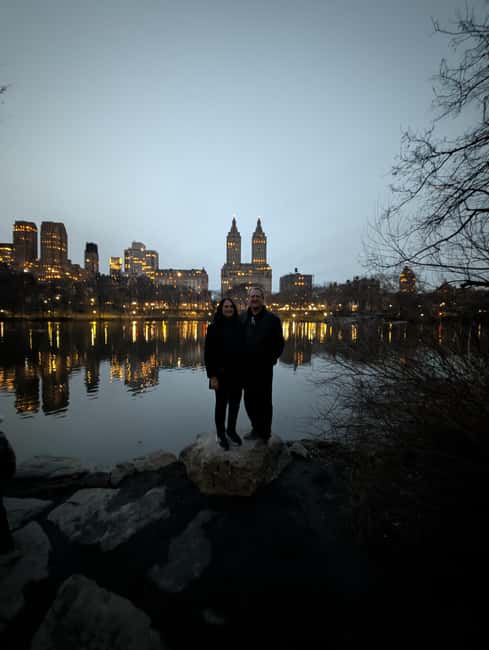
After the meadows, the tour moves into one of Central Park’s more structured areas: The Mall and Literary Walk. This is a major turning point in the experience. Up to this point, the park has been guiding your eyes across water and into nature pockets. Now it becomes more planned and more ceremonial.
You get a 20-minute visit here, which is the right amount of time to stop treating it like just a pretty corridor. With a local guide, you can start noticing sightlines: how paths align, how buildings frame the view, and how the park’s designers used geometry to make the city feel miles away.
After this, the walk brings you to Bethesda Fountain for a 10-minute visit. Bethesda is one of those iconic anchors that almost works even if you don’t know anything about it. But the best part of a guided stop is that you go beyond recognizing it—you start understanding why it became a must-see and how it fits the park’s overall storytelling.
Bow Bridge and the Ramble: where the pace feels different
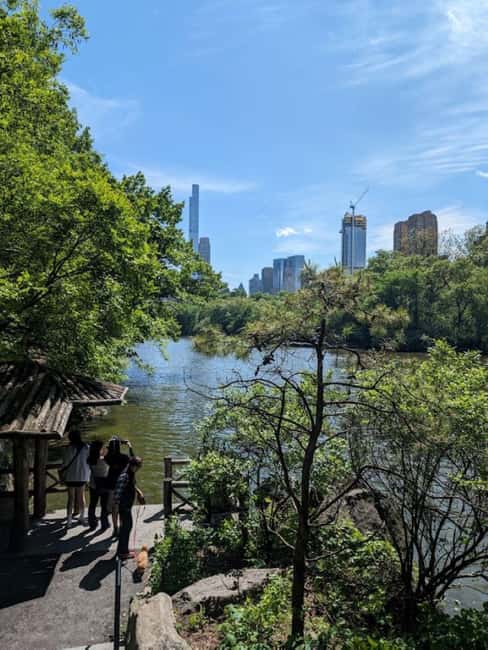
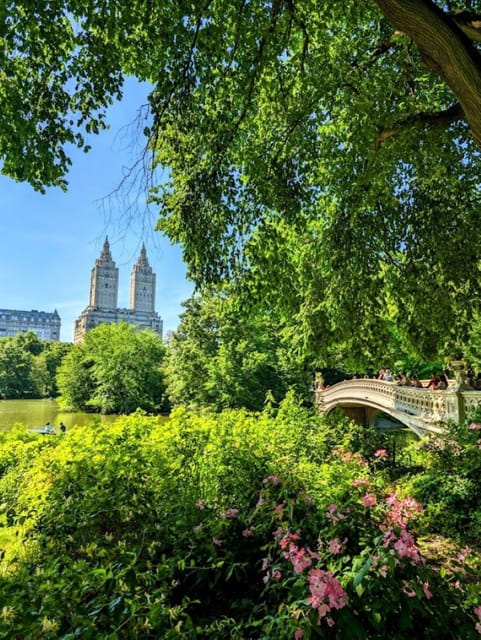
Then it’s Bow Bridge for a 10-minute visit. Like Gapstow, it’s visually famous, but the guide-led value is how you look. You start seeing it as part of a system of bridges and views rather than a single photo angle.
From there, you enter The Ramble for a 15-minute visit. This is one of Central Park’s most distinctive “mood shifts,” and it tends to make people exhale because it feels tucked away from the rest of the city. On this tour, the Ramble isn’t treated like a generic walk-in-park moment. It’s explained as a place shaped for wandering—so your eyes and your ears follow what the guide points out.
If you like when a walk feels like it has chapters, The Ramble is a strong middle act.





Belvedere Castle and the Shakespeare Garden: viewpoints with meaning
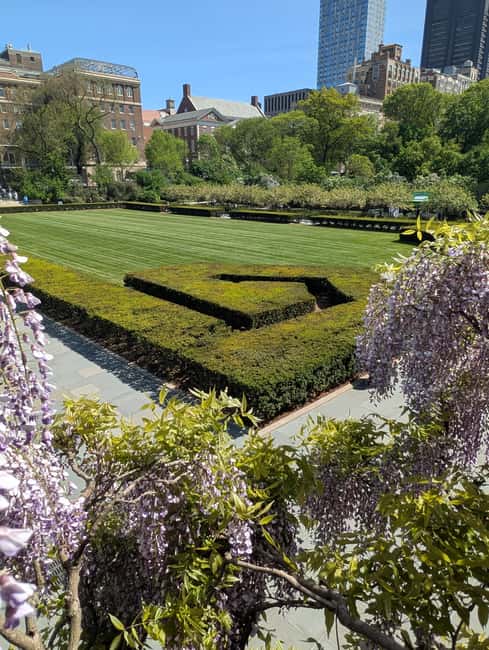
The next 10-minute visit is Belvedere Castle. The practical win here is the view and the change in perspective. You also get the chance to understand the castle area as more than a photo backdrop—it functions as a high spot where the park’s logic becomes clearer.
Then you have Shakespeare Garden for a short stop (5 minutes). This is a quick hit, but it adds something important: a reminder that Central Park isn’t only nature and architecture. It also includes themed spaces that reference culture and literature, and those small references help connect the park to the bigger New York story.
Swedish Cottage and the edges of the city: seeing Central Park as part of it
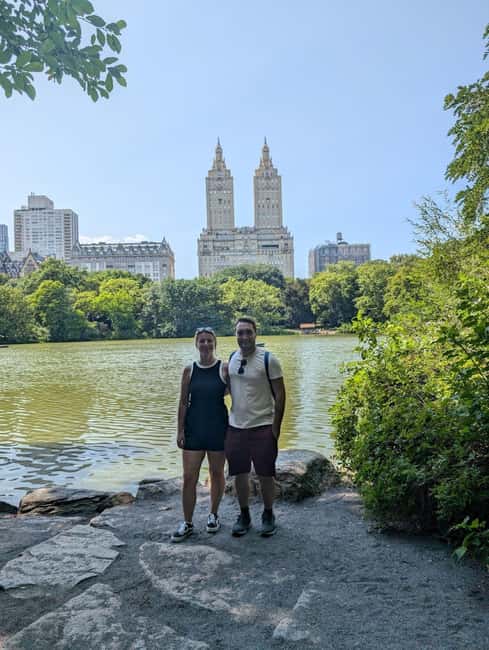
Next comes Swedish Cottage (pass by). From a distance, it’s easy to think of this as just another scenic feature. On foot with a guide, you can understand it as part of the park’s habit of borrowing ideas and shaping them into something New York makes its own.
Then the route moves to the park’s city-facing edges, where you can literally feel Manhattan close by. You pass by American Museum of Natural History and San Remo for short stops, then continue toward the Dakota for a 10-minute visit.
These stops work well because they help you see Central Park as not-isolated. It’s embedded in the city’s fabric. Standing near those famous buildings while still surrounded by park terrain is a reminder that Central Park is a negotiation between nature and the skyline.
Ending at Strawberry Fields: a famous finish you can build from
The tour finishes at Strawberry Fields (and the activity information also says it ends back at the meeting point). Either way, Strawberry Fields is a strong way to close because it’s instantly recognizable and emotionally resonant.
You also visit The Ramble and Belvedere Castle before this—so by the time you reach Strawberry Fields, you’ve already seen Central Park as place, not just a set of landmarks. You’ve walked through water scenes, family and play areas, formal paths, and viewpoint moments. The ending doesn’t feel random.
If you want to keep going after the tour, this finish location makes it easier to roll into nearby sightseeing and transit.
Price and value: what $75 buys you in real terms
At $75 per person for about 2.5 hours, this tour isn’t “cheap,” but it’s also not charging you like a private driver. The value mostly comes from three things you feel on the ground:
- A local guide with a story-driven route: you’re paying for interpretation, not just motion
- A stop plan that balances quick views and real visits: you don’t waste time
- Included essentials: bottled water (1) and sunblock are covered, so you start the day prepared
One practical note: you only get one bottle of water included. If you run hot, bring your own extra water. And yes, you should bring your own sunscreen too, because this kind of walking tour is at the mercy of the sun.
Guide quality: when a tour feels like a conversation
The tour’s style is described as clear, detailed, and revelatory, and the guide performance is a major reason this gets such strong marks.
In one set of experiences, Sam was praised for being patient and caring—and meeting him felt like catching up with an old friend. Another guide, Patrick, was described as making Central Park history feel accessible while still pointing out features you wouldn’t normally find on your own.
That’s the sweet spot you want: you shouldn’t feel lectured, and you shouldn’t feel like you’re walking past “random stuff.” The best moments on this tour are when the guide helps you connect dots—between architecture, everyday park life, and why certain spots became famous.
What to bring (so the walk stays pleasant)
This is a classic “wear your walking shoes” outing. Bring:
- Comfortable shoes (and hiking shoes if you like extra grip)
- Sunglasses
- Sun hat
- Sunscreen
The route includes bridges, paths, and a good amount of walking. If the day is warm, you’ll feel it. If it’s cooler, you’ll still want the sun protection because Central Park sun can bounce off the bright stone and open areas.
Who should book, and who should skip
This tour is best for people who:
- Want a guided, stop-by-stop way to understand Central Park
- Like architecture and city-linked context, not just trees and benches
- Prefer a small-group style with time to ask questions
It is not suitable for:
- Children under 12
- People with back problems
- People with mobility impairments
- Wheelchair users
- People with heart problems
- People over the listed weight limit (over 275 lbs / 125 kg)
- People over the listed age limits (75 and 80 are both mentioned, so check what applies to your booking)
If you’re unsure about your situation, the safest move is to confirm suitability before you book rather than assuming you can “push through” an uneven park walk.
Should you book this Central Park walking tour?
I’d book it if you want Central Park to feel like a guided storyline, not a map app with random stops. The route blends famous anchors (Bethesda Fountain, Bow Bridge, Belvedere Castle, Dakota, Strawberry Fields) with more varied park sections so the experience doesn’t get repetitive.
Skip it if you need full accessibility support or you know you can’t handle a long walking session. Also, if your group is looking for a short highlight-only experience, you might decide 2.5 hours is more time than you want.
If you’re in good shape and you like learning while you walk, this is a strong value choice for seeing Central Park with a Manhattan resident’s perspective.
FAQ
How long is the Central Park walking tour?
It lasts about 2.5 hours.
Where do we meet the guide?
Meet in front of the José Martí Statue. Guides wear bright yellow jerseys.
How much does the tour cost?
The price is $75 per person.
What’s included in the price?
It includes bottled water (1) and sunblock.
What languages are offered?
The tour is offered in English and Chinese.
Is this tour suitable for kids?
No. It is not suitable for children under 12.
What should I bring for the walk?
Bring comfortable shoes, sunglasses, a sun hat, and sunscreen (plus hiking shoes if you prefer).