REVIEW · NEW YORK CITY
Central Park Pedicab Tour / Photo Stops
Book on Viator →Operated by NYC Park Tours™ | Central Park Tours · Bookable on Viator
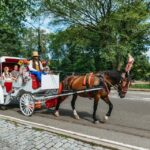
Central Park is big, but your time is not. This private pedicab tour is a fast, low-stress way to hit the park’s top highlights with a guide who does the navigation and points out the stories you’d miss on your own. I especially like the photo-stop style of the ride and the way the guide ties sights to pop culture, from Home Alone 2 moments to SummerStage history.
What also works well is the private setup for just your group, so you can move at a pace that feels right and stop where you want. In real-world terms, people rave about guides like Sam, AJ, Josh, and Omar for being friendly, bringing solid park context, and doing a lot of hands-on photo help.
The main drawback to keep in mind is weather. The tour requires good conditions, so on a rainy or rough day you might need to reschedule, and shorter options can still feel packed if you like lingering.
In This Review
- Key Highlights You’ll Actually Notice
- A Map-Free Way to See Central Park’s Biggest Stars
- Price and Value: What $39.90 Gets You in Real Life
- Where You Meet: 1411 6th Avenue and the Tour Rhythm
- One-Hour Core: From Victorian-Era Fun to Bethesda Fountain
- Carousel and Chess & Checkers House: Real Old-School New York Fun
- Wollman Rink Season: Winter’s Most Famous Ice-Photo Stop
- Gapstow Bridge, The Pond, and Conservatory Water: Water Views You’ll Recognize
- Central Park Zoo and Balto: Pop Culture Landmarks with Real Presence
- Rumsey Playfield, SummerStage, and Heckscher Playground for the Kid-At-Heart
- Bethesda Fountain, Bethesda Terrace, and Cherry Hill: Where Details Matter
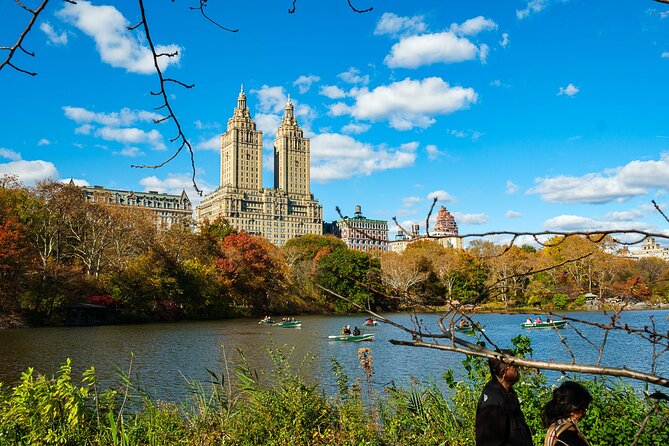
- Bow Bridge, The Mall, and the Lake: The Views You’ll Want to Revisit
- Strawberry Fields, The Dakota, and Sheep Meadow: Moving From Icon to Emotion
- Tavern on the Green: A Historic Building With a Modern Meal Angle
- The Falconer and Daniel Webster Monument: Less-Famous Spots Worth Your Stop
- Two-Hour Add-Ons: Alice, Cleopatra’s Needle, The Met Area, The Reservoir, and Belvedere Castle
- Should You Book This Central Park Pedicab Tour?
- FAQ
- How long is the Central Park pedicab tour?
- How much does the tour cost?
- Is this tour private?
- Where do we meet?
- Is there a minimum number of travelers?
- What language is the tour offered in?
- Are admission tickets included?
- Are tips included in the price?
- Is hotel pickup included?
- What happens if weather is poor?
Key Highlights You’ll Actually Notice
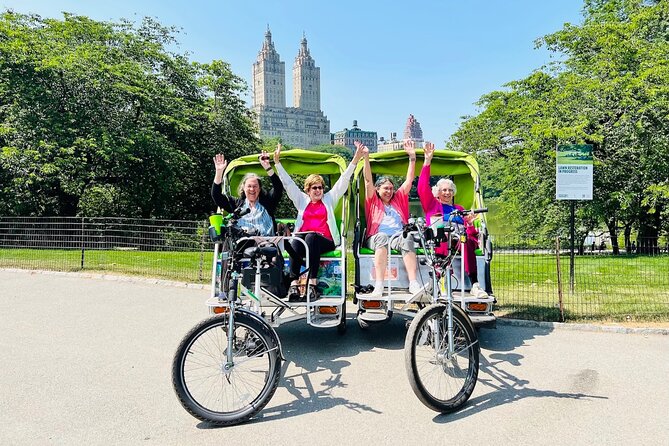
- Private pedicab for your group: you’re not squeezed into a big shared ride.
- Photo stops built into the route: you’ll get time to frame the classic shots, not just pass by.
- Movie-and-history storytelling: a guide connects park features to film and TV references you’ll recognize.
- Iconic Central Park locations in one run: Bethesda, Bow Bridge, Strawberry Fields, Sheep Meadow, and more.
- Longer options add major landmarks: Alice in Wonderland, Cleopatra’s Needle, the Met area, and Belvedere Castle.
- Most stops are free to enter: many areas you visit don’t charge admission (Met is the notable exception).
A Map-Free Way to See Central Park’s Biggest Stars
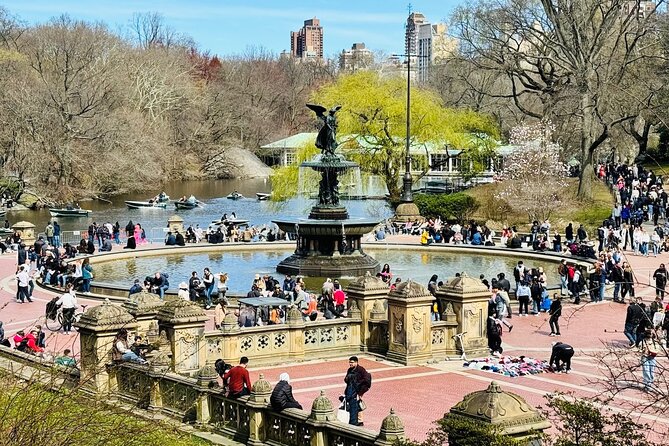
Central Park can be a choose-your-own-adventure place, but it’s also easy to waste time. This tour is built for the opposite: you ride, you pause, and you get the highlights without studying a map or second-guessing the route.
The pedicab aspect matters more than you might think. When you’re up on the seat, you can actually look around—trees, bridges, fountains, and the lake—rather than drifting into “walk, walk, walk” fatigue. For couples, families, and anyone with a tight itinerary, that changes the whole feel of the park.
You can also read our reviews of more tours and experiences in New York City.



Price and Value: What $39.90 Gets You in Real Life
The price is $39.90 per person, and the value comes from three things: private time, guidance, and photo help.
First, you’re paying for the guide to manage the flow. When someone else handles the “where next” decisions, you spend your energy enjoying the sights instead of planning the next turn. Second, you’re getting a scenic pedicab ride that’s more comfortable than rushing on foot—especially if you’re traveling with kids or you just don’t want to clock up miles.
Here’s the part that helps you budget: a lot of the stops you’ll hit are listed with free admission. The one explicit exception is the Metropolitan Museum of Art area stop, where admission is not included. Optional tips are not included, and hotel pickup isn’t offered, so plan for arriving on your own.
Where You Meet: 1411 6th Avenue and the Tour Rhythm
You start at 1411 6th Ave, New York, NY 10019, and the tour ends back at the same meeting point. That round-trip convenience helps you tie the activity to the rest of your day.
The tour is offered in English, and it’s designed so most people can participate. One more detail: there’s a minimum of 2 travelers required, even though it’s still a private experience for your group. So don’t plan on booking it solo unless you’re sure the minimum can be met.
One-Hour Core: From Victorian-Era Fun to Bethesda Fountain
This is the heart of the ride: an hour in the park where your guide takes you to the most famous zones and gives the stories as you go.
You’ll look toward the Victorian Garden area and, in winter, the ice-skating angle tied to Central Park’s seasonality. Then you’ll hit the Chess & Checkers House area and the oldest carousel in the city—both of which are classic Central Park “stop-and-smile” landmarks.
From there the route connects to the Central Park Mall, lined by American elms, and to Central Park’s classic public-art moments like the statue of Balto. If you’re into pop culture, you’ll also get the references your brain will recognize later—SummerStage (connected to Good Morning America) and the remote control boat scene tied to Stuart Little.
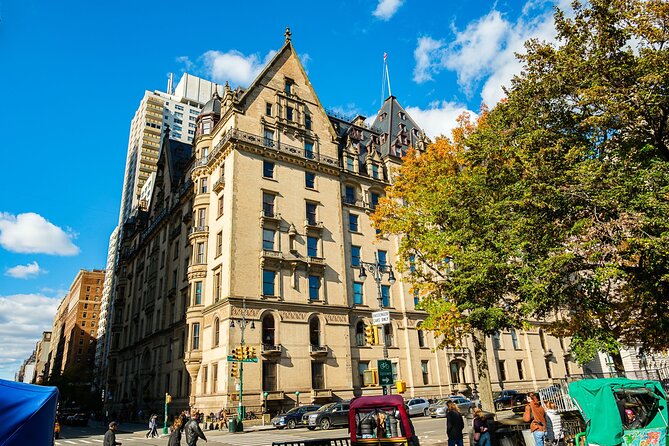
As the ride pushes toward the park’s most cinematic backdrop, expect stops around Bethesda Fountain and the Bethesda Terrace views. Then it swings toward the lake areas: Turtle Lake and the Boathouse zone, plus photo time around Bow Bridge. Before you’re done, the tour typically brings you through Strawberry Fields (John Lennon Memorial) and the Dakota area, then winds down in the southern-green comfort of Sheep Meadow.
Carousel and Chess & Checkers House: Real Old-School New York Fun
Two of the most loved “pause here” stops are the Carousel and the game tables at Chess & Checkers House.
The Central Park Carousel traces back to 1908, made by Solomon Stein and Harry Goldstein. The current carousel is known for 57 hand-carved horses and two decorative chariots, and while it’s still working, it’s over 100 years old and has gone through repairs over time. The vibe is simple: it’s whimsical, it’s historic, and it’s built for memorable photos.
Next up is Chess & Checkers House Visitor Center, built in 1952. The structure is octagonal, with 24 game tables under a wooden trellis. Even if you don’t play, it’s a great spot to watch people and grab a family-friendly photo stop without feeling like you’re rushing through a museum.



Wollman Rink Season: Winter’s Most Famous Ice-Photo Stop
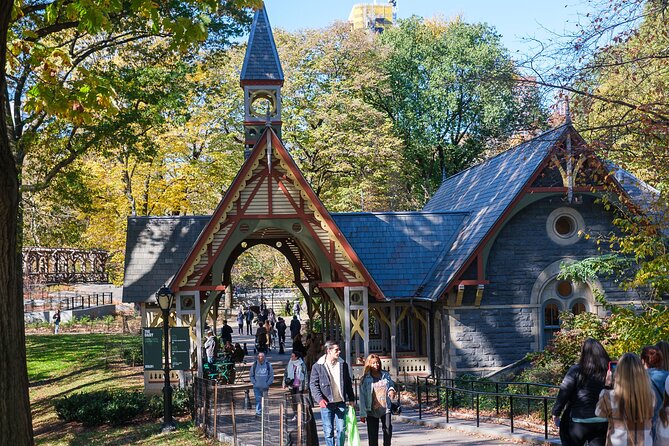
If you’re visiting late October through early April, the Wollman Rink is part of the Central Park story. It’s a public ice rink in the southern part of the park, and it’s named after the Wollman family, who funded the original construction.
Even when you’re not skating, it’s still a strong photo reference point because it’s tied to multiple movies listed for this area. The bonus here is timing: this stop is short (about 5 minutes), so it fits easily into the tour flow.
Gapstow Bridge, The Pond, and Conservatory Water: Water Views You’ll Recognize
A big chunk of Central Park’s “movie look” comes from the water edges, stone bridges, and the feeling that the park changes scene to scene.
You’ll stop by Gapstow Bridge, a rustic stone bridge covered in vines and built over the narrow neck of the Pond. It’s one of the classic overview spots, and it’s strongly associated with film and TV scenes listed for this stop. Expect a quick photo moment—about 3 minutes—to get the framing right.
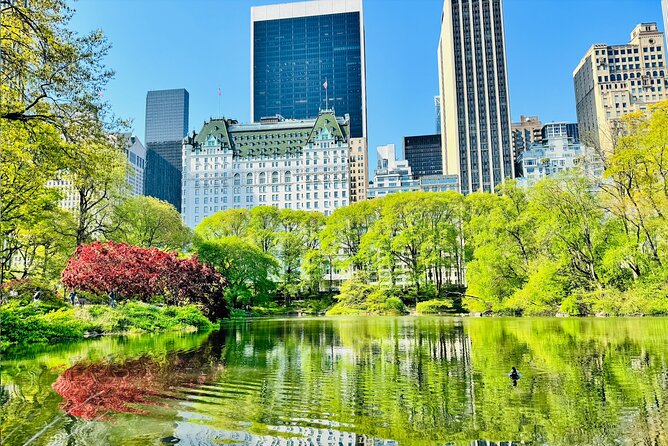
Then comes the Pond at Central Park, a 3.8-acre lake on the site of natural rock outcrops and a brook that originally emptied into the East River. The park designers shaped the surrounding area so the view changes as you move through it, which is why this is such a natural place for your guide to slow down and point things out.
After that, Conservatory Water (also called the Model Boat Pond) is the playful side of the water story. People launch and race miniature sailboats and yachts, and the boats are stored and rented at the nearby Kerbs Boathouse, which also has a cafe. Benches around the water make it easy to watch, and this stop ties in statues including Alice in Wonderland and Hans Christian Andersen. The tour time here is very short—around 1 minute—so use it to get a “we were here” photo.
If you’re hunting for the Elf bridge shot, your route also includes Pinebank Arch, designed to blend into the surrounding rock and foliage. Its lacy ironwork is the visual hook, and it’s often photographed as a “survey the scenery” spot.
Central Park Zoo and Balto: Pop Culture Landmarks with Real Presence
Two famous stops make the park feel like more than just scenic landscaping.
The Central Park Zoo sits in the southeast corner of the park and covers about 6.5 acres. It’s part of the Wildlife Conservation Society’s broader system, which also includes four zoos and one aquarium. If you’ve seen Madagascar, the connection will click instantly, but even without that, the location is memorable because it’s integrated into the park’s natural design.
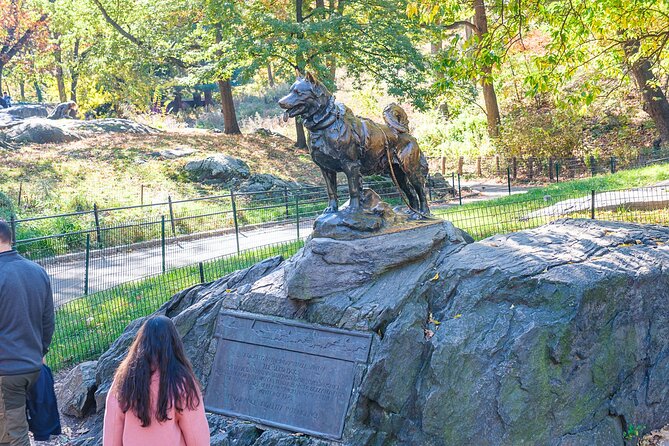
Then there’s Balto Statue, a bronze monument installed in 1925 by Frederick Roth. Balto was a Siberian husky sled dog associated with Leonhard Seppala, and the statue has become one of those Central Park figures you can’t unsee once you spot it.
Rumsey Playfield, SummerStage, and Heckscher Playground for the Kid-At-Heart
If you’re traveling with kids, this tour quietly nails the balance of famous landmarks and “let them look around” energy.
Rumsey Playfield is tied to SummerStage (linked in the tour to Good Morning America). What makes it interesting is how the site evolved: it originally had a restaurant structure connected to the park’s design legacy, later shifted into an Art Deco nightclub, and then was replaced by a playground after being razed in 1937. The Mother Goose statue marks the playfield entrance, and SummerStage moved here in 1990.
For a classic playground stop, you’ll also visit Heckscher Playground, the oldest and largest of Central Park’s 22 playgrounds. It opened in 1926 and is named for philanthropist August Hecksche. The practical value: it’s close to Central Park South, so you don’t have to trek far just to give kids some open-air energy.
Bethesda Fountain, Bethesda Terrace, and Cherry Hill: Where Details Matter
This is where the park turns cinematic in a more literal way.
Bethesda Fountain is the centerpiece of the lower terrace, centered on the pool with the famous fountain sculpture by Emma Stebbins. The work was unveiled in 1873, and the statue is often called the Angel of the Waters, tying to the biblical healing story from the Gospel of John. It’s one of those stops where your guide can point out symbolism while you take in the scale.
Just up the chain is Bethesda Terrace, the setting for film references including Gossip Girl and Home Alone. The most striking detail here is the story of the Minton tiles: they were removed in the 1980s renovation, later restored after private funding, and reinstalled in 2007. The restoration project involved about $7 million and returned around 14,000 tiles, which makes this terrace feel like a living lesson in how cities protect art.
Nearby is Cherry Hill Fountain, described as Central Park’s most historical fountain. It was designed by Jacob Wrey Mould in the 1860s as a watering trough for horses, and today it still looks like a mini monument with its granite dome and bluestone basin inset with Minton tiles. A 14-foot tower with eight frosted glass lamps crowns it, and it’s an easy win for photos because it stays visually distinct even in a busy setting.
Bow Bridge, The Mall, and the Lake: The Views You’ll Want to Revisit
Some Central Park moments are all about sightlines, and this route hits them.
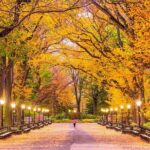
The Central Park Mall is a straight promenade lined with American elm trees, designed by Olmsted and Vaux. It’s a “slow down and people-watch” corridor, which is exactly what you want after the more whimsical stops. If you like classic New York walking spaces, this is your payoff.
Next is the Lake, a 20-acre water body that connects the Ramble and Bethesda Terrace areas. It’s often called the heart of Central Park, and you can explore it by boat thanks to rowboat rentals at the Loeb Boathouse. The short tour time here (about 3 minutes) means you’ll get the big view, not a long linger.
Then comes Bow Bridge. It was completed in 1862, designed by Calvert Vaux and Jacob Wrey Mould, built by Janes, Kirtland & Co., and restored in 1974. The bridge has had closures for renovations (like a closure in November 2023 for a two-month repair), so if you’re traveling close to seasonal maintenance windows, you might still want to keep your eyes open for changes.
If you want water + bridges + the “we’re in New York” feeling at once, this section is where it clicks.
Strawberry Fields, The Dakota, and Sheep Meadow: Moving From Icon to Emotion
Central Park isn’t only fountains and bridges. It also holds places that feel personal.
Strawberry Fields, John Lennon Memorial is a 2.5-acre landscaped section dedicated to John Lennon. It’s named after Strawberry Fields Forever, which connects the site to the Beatles song—and the song name itself traces back to a children’s home in Liverpool. Even in a quick stop, it tends to feel like a pause in pace, not just a photo stop.
Across the way is The Dakota, one of the most famous residential buildings in the park area. Work began after Clark’s apartment plans in 1879, and the building became a housing cooperative in 1961. The Dakota has long housed artists and performers, and it’s specifically tied to John Lennon’s story, since he was murdered outside the building in 1980.
Then you finish in the open-green calm of Sheep Meadow, a 15-acre lawn that’s ideal for relaxing, sunbathing, reading, and picnicking—plus the best kind of skyline contrast photos.
Tavern on the Green: A Historic Building With a Modern Meal Angle
This stop is short, but it adds context to the park as a place that feeds people as well as entertains them.
Tavern on the Green is an American cuisine restaurant in Central Park. The building has had different roles since it opened in 1934, including a period as a visitor center and gift shop. The deeper story is that the structure started as a sheepfold built in 1870 under a design by Calvert Vaux and Jacob Wrey Mould, and the sheep were removed in 1934 under NYC Parks commissioner Robert Moses. Today it’s reopened after major renovation.
If you plan a meal in or near the park later, it’s useful to know this stop exists before you head out for dinner.
The Falconer and Daniel Webster Monument: Less-Famous Spots Worth Your Stop
Not every Central Park highlight is a headline photo. Two monuments add depth to the route.
The Falconer was donated to Central Park in 1875 by George Kemp. It was created by sculptor George Blackall Simonds, based on an artwork Kemp saw while traveling in Europe. The point here is that your guide gets you to recognizable-feeling sculpture even if you didn’t plan it.
Daniel Webster Monument is a large-scale memorial with a 20-foot pedestal and a 14-foot figure. It was donated by Gordon W. Burnham and sculpted by Thomas Ball. Its placement was controversial because Burnham wanted it nearer the Mall, but Olmsted and Vaux avoided blocking key views and chose the intersection of the West Drive and 72nd Street Cross Drive instead.
Two-Hour Add-Ons: Alice, Cleopatra’s Needle, The Met Area, The Reservoir, and Belvedere Castle
If you take a longer option, you add some of the park’s most famous “outside-the-park-city” landmarks.
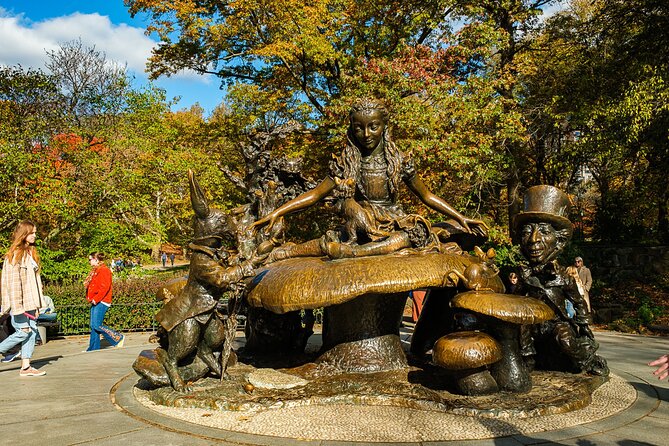
Alice in Wonderland Statue is included in the 2-hour tour. It was donated by George Delacorte as a gift for the city’s children and a memorial for his wife Margarita. The nearby visual connection also supports the Conservatory Water statue area, so the theme feels consistent.
Then you’ll see Cleopatra’s Needle, included in the 2-hour option. It was created about 3,500 years ago in Egypt and dedicated to Central Park in 1881. It’s described as the oldest outdoor monument in New York City.
After that is the Metropolitan Museum of Art area stop, also included in the 2-hour tour—but admission is not included. The tour framing here is about Central Park’s role in the museum’s origin. The park commissioners offered land in 1874, Calvert Vaux designed a High Victorian Gothic plan, and the first wing opened in 1880.
Next comes Jacqueline Kennedy Onassis Reservoir, built between 1858 and 1862. It covers about 106 acres with a curving footprint that was designed to better harmonize with the park. It’s described as holding more than one billion gallons of water.
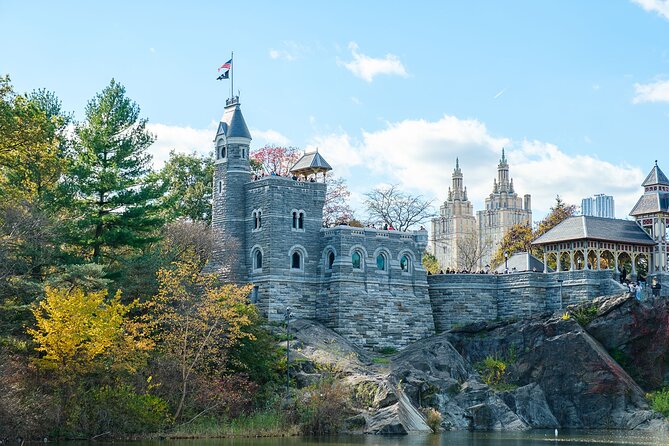
Finally, you reach Belvedere Castle, included in the 2-hour tour. It’s a folly designed by Calvert Vaux and Jacob Wrey Mould in 1867, with exhibit rooms and an observation deck. Since 1919, it has housed Central Park’s official weather station.
This add-on portion is for people who want a Central Park day that spills into the wider New York feel—art, monuments, and city views—without turning into a full museum day.
Should You Book This Central Park Pedicab Tour?
Book it if you want the park’s biggest icons plus photo-ready stops, and you’d rather spend time enjoying the scenery than planning a route. It’s also a smart fit if you care about context: guides like Sam, AJ, Josh, and Omar show up repeatedly in the tour’s five-star track record for friendliness, great photo help, and clear explanations that make the sites easier to remember later.
Skip or reconsider if you’re extremely flexible about timing only because weather matters here. Also consider the length: a 1-hour option is great for getting bearings and hitting the classics, but if you want long hangs at a few places, you may wish you booked longer.
If your goal is Central Park highlights with minimal stress and strong photo results, this is an easy yes.
FAQ
How long is the Central Park pedicab tour?
It runs about 1 to 3 hours, depending on the option you choose.
How much does the tour cost?
The price is $39.90 per person.
Is this tour private?
Yes. It’s a private experience, and only your group participates.
Where do we meet?
You meet at 1411 6th Ave, New York, NY 10019, USA.
Is there a minimum number of travelers?
Yes. The experience requires a minimum of 2 travelers.
What language is the tour offered in?
The tour is offered in English.
Are admission tickets included?
Many stops list free admission, but the Metropolitan Museum of Art admission is not included.
Are tips included in the price?
No. Tips or gratuities are optional and not included.
Is hotel pickup included?
No. Hotel pickup isn’t included.
What happens if weather is poor?
The tour requires good weather. If it’s canceled due to poor weather, you’ll be offered a different date or a full refund.