REVIEW · NEW YORK CITY
Lower Manhattan & 9/11 Memorial Walking Tour Semi-Private 12ppl
Book on Viator →Operated by Babylon Tours New York City · Bookable on Viator
Lower Manhattan changes fast, and this walk keeps up. You’ll start by the water, glide through the Wall Street headlines, and end at the 9/11 Memorial area with real context behind the landmarks. I like that it’s semi-private (max 12), so you’re not stuck listening from the back row.
Two things I especially like: you get a lot of major stops without having to plan transfers, and the guide’s story makes familiar places feel new. You’ll see the New York Stock Exchange exterior and Federal Hall, then move to the memorial pools with a clear sense of what each site represents.
One consideration: parts of this tour may involve standing and walking through busy, open-air areas, so if crowds or long stretches on foot wear you down, plan accordingly and wear solid shoes.
In This Review
- Key things that make this Lower Manhattan tour worth your afternoon
- A Semi-Private Lower Manhattan Walk That Actually Feels Personal
- Battery Park to the Harbor: Starting With Immigration and Scale
- Seaglass Recovery and Bowling Green: The Oldest Park Meets a New Symbol
- Charging Bull, Trinity Church, and the Wall Street Walk That Changes the Mood
- NYSE Exterior, Fearless Girl, and Federal Hall’s Neoclassical Face
- St. Paul’s Chapel, Zuccotti Park, and the Shift From Money to Memory
- One World Trade Center and the 9/11 Memorial Pools: What to Focus On
- How the Guide Makes or Breaks This Walk (Kevin, Jonathan, Rob, Matt, Katherine, Ashley)
- Price: Why About $52 Can Be Good Value Here
- Practical Tips Before You Go (Comfort, Pace, and What to Wear)
- Who This Lower Manhattan & 9/11 Tour Fits Best
- Should You Book It?
- FAQ
- How long is the Lower Manhattan & 9/11 Memorial Walking Tour?
- What is the group size for this semi-private tour?
- Where does the tour start and where does it end?
- What time does the tour start?
- Is the tour offered in English?
- Does the tour run in bad weather?
- Are the tickets to attractions included?
- Do I need a hotel pickup or drop-off?
- What should I know about fitness level?
Key things that make this Lower Manhattan tour worth your afternoon
- Small-group pace (up to 12): easier questions, more attention, less herding.
- Wall Street history without museum tickets: exterior landmarks like NYSE and Federal Hall are part of the walk.
- A recovery-and-memory route: Hurricane Sandy symbolism near the harbor, then 9/11 remembrance.
- Professional guide storytelling: many guests highlight guides who connect architecture and today’s Lower Manhattan culture.
- Mostly free sights, with select entry not included: you’ll see key exteriors plus the memorial area, while some entrances cost extra.
- Starts at Battery Park Underpass (2:00 pm): convenient for getting right into the Lower Manhattan core.
A Semi-Private Lower Manhattan Walk That Actually Feels Personal
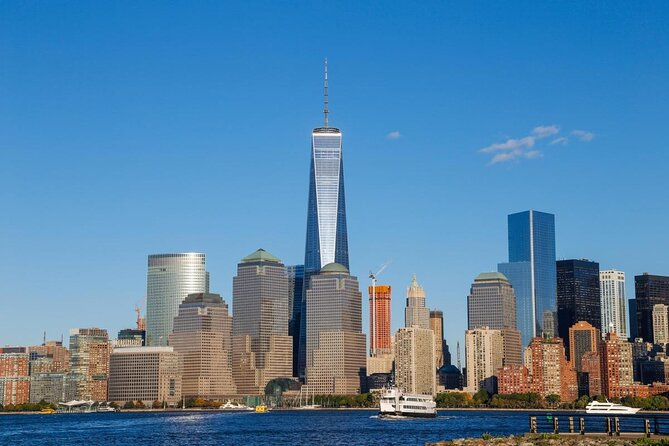
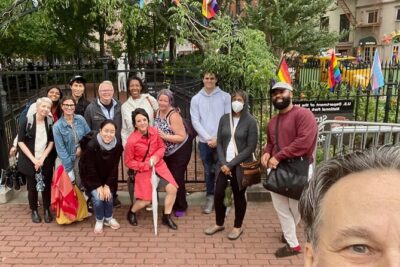
This tour is built for people who want a serious sense of place, not just selfies in front of famous buildings. The group size is capped at 12, which matters more than you’d think. With a smaller group, it’s easier to hear the guide, ask one-off questions, and keep your bearings as the route threads between iconic corners.
Timing is also friendly: it runs about 2.5 hours and starts at 2:00 pm. That’s a practical slot if you want to get your Lower Manhattan orientation early enough to still enjoy the rest of the day. Since it runs rain or shine, I treat this like any good walking plan in New York: dress in layers, and bring something for wet weather if the forecast looks shaky.
The biggest value here is that you’re not stuck piecing together history from guidebooks. The guide links the dots across immigration stories, financial power, urban recovery, and national grief—so the area doesn’t feel like disconnected landmarks.
You can also read our reviews of more walking tours in New York City



Battery Park to the Harbor: Starting With Immigration and Scale
You begin at the Battery Park Underpass, which puts you close to the waterfront energy of Lower Manhattan. The first stop is Castle Clinton National Monument. It’s easy to glance at and keep walking, but the guide frames it as an early gateway—built between 1808 and 1811 and used as the first U.S. immigration station. The scale of that story is what makes this start work: millions arrived in the period after 1855 to 1890, and this site ties the city’s growth to that human movement.
From there, you’ll look out toward New York Harbor, near the mouth of the Hudson River. This is one of those “take in the big picture” moments. You don’t need to be a geography nerd; you just need a few minutes to understand why this port mattered—then you’ll feel the logic of why Lower Manhattan developed the way it did.
If you’re someone who likes your history grounded in physical places (and not just dates), these first two stops give you a strong foundation. If you’re mainly after modern skyline photos, you might find these scenes less dramatic than the later Wall Street views—but they set up everything that follows.
Seaglass Recovery and Bowling Green: The Oldest Park Meets a New Symbol
Next comes a quieter but surprisingly meaningful contrast: the SeaGlass Carousel. It’s fish-themed, yes—but the key is its message of recovery after Hurricane Sandy in 2012, with design and construction taking nearly a decade. A carousel usually sounds like pure fun. Here, the guide helps you see it as a public art signal: the neighborhood rebuilding itself with visible, kid-friendly joy.
Then you move to Bowling Green, described as New York’s oldest park. Even if you’ve heard the name before, it’s worth lingering because the stories are unusually layered for such a small green space. You’ll get the tradition that it served as a council ground for Native American tribes, and it’s also tied to the 1626 sale of Manhattan connected to Peter Minuit. This is one of those stops where you realize Lower Manhattan history isn’t just “European city first” or “financial district first.” It’s much older and more complicated.
A practical plus: these stops are close to major landmarks later, so you’re not adding extra wandering. A small downside: because this area can be active with foot traffic, you may spend part of the time looking at the space between people rather than settling into deep sightseeing.
Charging Bull, Trinity Church, and the Wall Street Walk That Changes the Mood
Once you hit the core of Wall Street, the mood shifts. You’ll pass the Charging Bull, the bronze sculpture that artist Arturo Di Modica placed outside the New York Stock Exchange without permission. It’s become an instant icon, and the guide’s framing helps you understand why it’s stuck: it’s part performance, part street legend, and part symbol people use as a photo cue for ambition.
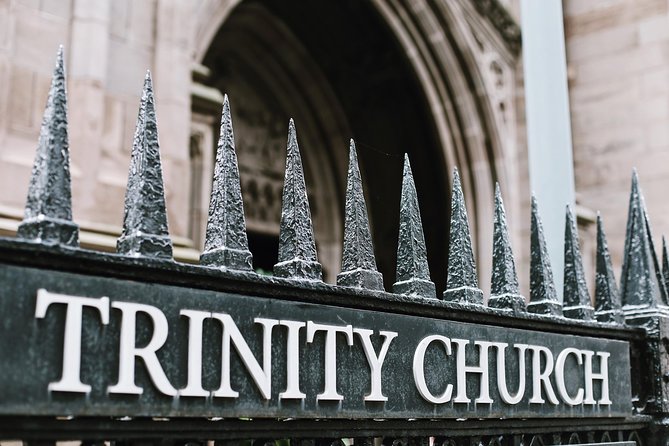
Then you’ll visit Trinity Church NYC, which dates to the early parish history starting in 1696. This is a “history plus atmosphere” stop near Wall Street and Broadway. You’ll also see graves connected to Mr. and Mrs. Hamilton in the churchyard, along with monuments near their resting place. It’s a different kind of monument than the ones at the memorial—more local, more personal, and tied to the early story of the country.
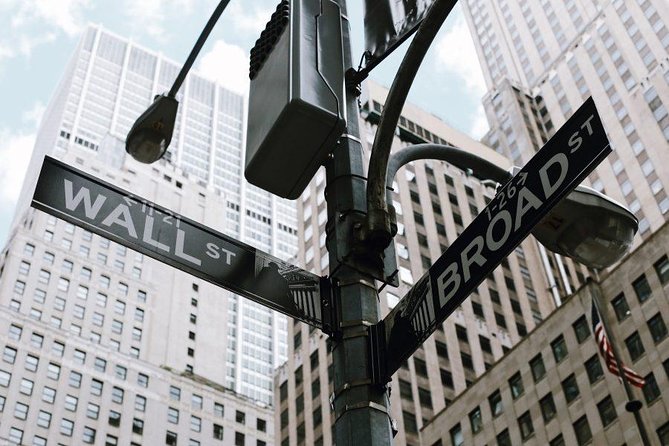
After that, you’ll walk along Wall Street itself, famous for the international financial system and its eight-block run through Lower Manhattan. Even without going inside anything, this section works because you’re seeing the density of power made visible: banks, institutions, and the kind of architecture that tried to look permanent from day one.
If crowds bother you, this is the part where you’ll want to keep moving with the group instead of pausing too long for photos. It’s not hard, just busy.
NYSE Exterior, Fearless Girl, and Federal Hall’s Neoclassical Face
Next up is the New York Stock Exchange exterior, framed as the world’s largest stock exchange and a National Historic Landmark. You’re not going inside here, but the outside tells a story: this is architecture designed to signal authority, stability, and public confidence.
Just nearby you’ll see Fearless Girl, a bronze statue by Kristen Visbal. The guide connects it to broader conversations about female empowerment and how public art can shift the meaning of a space that’s usually associated with money and men. Even if you’ve seen Fearless Girl on social media, it lands differently in person because it’s placed where Wall Street mythology happens.
Then you continue to House of Morgan, noting its classical architecture and landmark status. From there, you reach Federal Hall, the site that’s tied to early American governance. The present structure dates to 1842, described as one of the best examples of neoclassical architecture in New York, even though the original Greek Revival building was completed in 1703.
A nice balance point here: you’re moving from “global finance theatre” to “nation-building,” and the guide helps you see that these aren’t separate themes in Lower Manhattan. They’re linked. Federal Hall sits in the same corridor of power that later shaped the markets you’ll recognize today.
You can also read our reviews of more private tours in New York City






St. Paul’s Chapel, Zuccotti Park, and the Shift From Money to Memory
After the Federal Hall area, you’ll make your way to St. Paul’s Chapel. This chapel is part of the Trinity Church Wall Street parish, and it’s remembered as a kind of chapel-of-ease for people who didn’t want to walk a few blocks to Trinity. It opened in 1766 and was the tallest building in New York City at the time.
One thing I like about this stop is that it turns the volume down. Wall Street can feel like it’s shouting. The chapel gives you a quieter checkpoint—one that helps the later 9/11 section feel respectful rather than rushed.
From there, you head to Zuccotti Park, formerly Liberty Plaza Park. This is one of the most emotionally loaded parts of the walk. The area was damaged in the 9/11 attacks, then recovered, and it’s now used for events tied to the anniversary. It’s not just a “nice plaza.” It’s a reminder that public spaces get rewritten by major events.
This is also a spot where the guide’s tone matters. Good guides slow down just enough that you can take it in without feeling like the tour is sprinting toward the next landmark.
One World Trade Center and the 9/11 Memorial Pools: What to Focus On
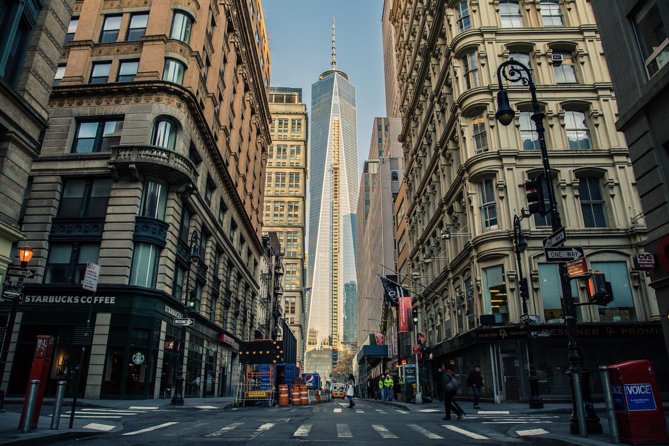
As you move on, you’ll see One World Trade Center, known as the Freedom Tower, on the skyline line where the Twin Towers once stood. Even from street level, this stop carries weight. The guide usually helps you connect the current height and design to the loss and rebuilding of the site—without turning it into a spectacle.
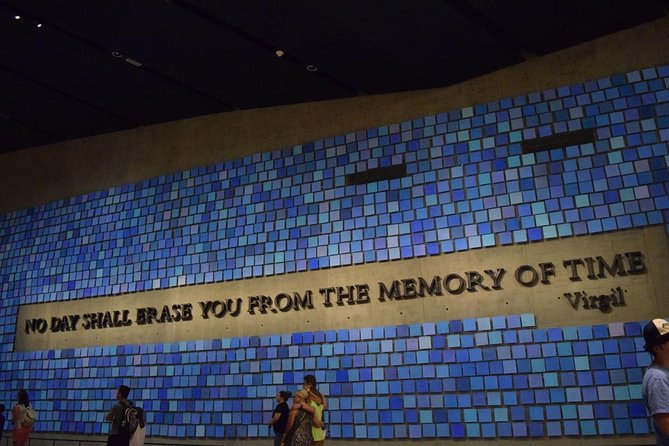
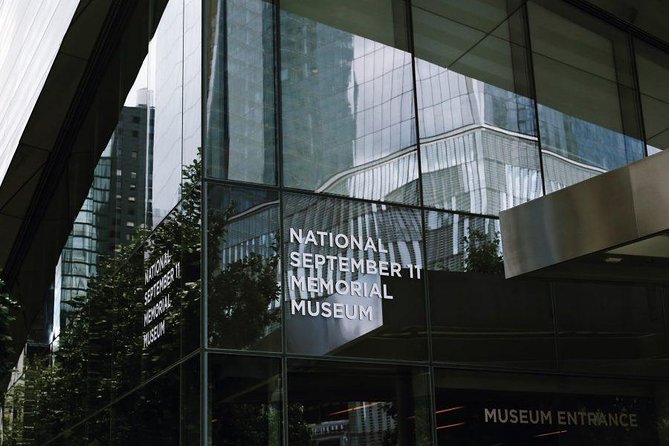
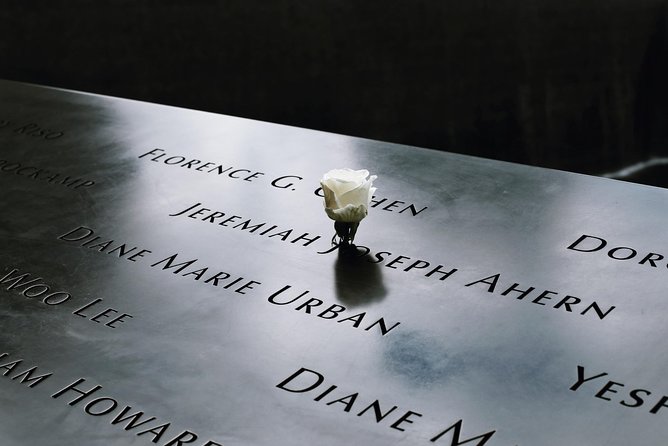
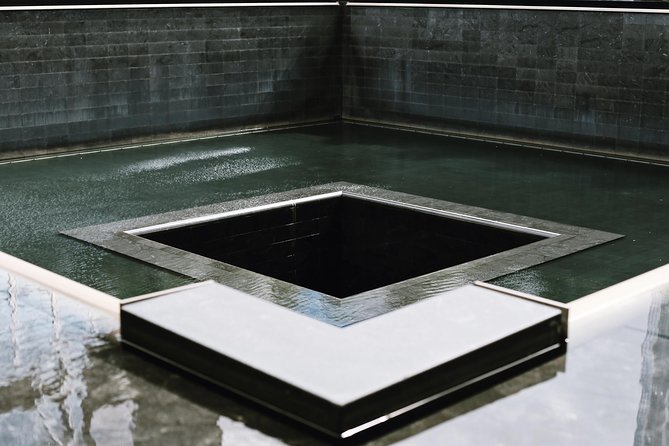
Then you reach the National September 11 Memorial & Museum area. The tour focuses on the Memorial, built around twin reflecting pools described as the largest manmade waterfalls in North America. The names of those who died are inscribed into bronze panels along the edges of the pools.
Here’s what I’d tell you to do: don’t rush your gaze. If you only read a handful of names, that still counts. The point is to let the place do its work. Some people prefer a quick walk-through; others need longer. Either approach can feel right, but your best experience comes when you stop treating this like a checklist.
Also note the practical detail: admission for the Memorial & Museum is not included. In other words, you may be able to view the Memorial area without paying extra depending on how you plan your time, but the museum-side access is something you’d need to handle separately if you want it.
How the Guide Makes or Breaks This Walk (Kevin, Jonathan, Rob, Matt, Katherine, Ashley)
On a tour like this, the guide isn’t just a narrator. They’re the person who sets the pacing, the tone, and the “why does this matter” layer. And the strongest feedback from past groups points to guides who know the history and also know how to make it human.
You may hear names like Kevin, described as giving plenty of history plus useful tips around Lower Manhattan. Jonathan is highlighted as a historian type, good for turning the street view into understandable context. Rob gets credit for tying architecture to the way Lower Manhattan works today. Jeff is noted for strong 9/11 insights.
If you want a more tailored experience, Matt is praised for being friendly and adjusting the day based on interests once you get going. And if you like visuals, Katherine is mentioned for supplementing stories with pictures and for being engaging while also adding a personal NY resident perspective on 9/11 history.
Ashley is singled out for an outstanding, enthusiastic style, plus detailed explanations of places like St. Paul’s Chapel. One guest even called out in-depth commentary that covered more than just the headline stops, including architecture around the Oculus area. That kind of added context can turn a standard route into a memory you actually keep.
Bottom line: pay attention to how your guide speaks. If they slow down, ask if you have questions, and connect facts to what you’re standing next to, that’s when the tour becomes more than walking.
Price: Why About $52 Can Be Good Value Here
At $51.94 per person for roughly 2.5 hours, the value depends on your priorities. This price is not buying a pile of museum tickets. Instead, it’s paying for a professional guide plus access to a lot of major Lower Manhattan landmarks by foot.
You get a semi-private size cap, which is a real cost driver in New York tour pricing. And most stops you’ll see along the way are marked free at the site level, including Castle Clinton, Bowling Green, Trinity Church area viewing, the NYSE exterior, Fearless Girl, Federal Hall, St. Paul’s Chapel, Zuccotti Park, and exterior-focused sections of the route.
What’s not included is entry for a couple of the higher-ticket areas: the tour lists tickets as not included for One World Trade Center and the National 9/11 Memorial & Museum. So if your goal includes going inside every possible structure, you should budget extra for those separate admissions.
My advice: if you’re mainly after storytelling and orientation—Wall Street history plus a meaningful memorial visit—this is a smart way to spend an afternoon. If you want a lot of indoor ticketed time, you’ll likely end up paying additional entry fees anyway, which changes the value equation.
Practical Tips Before You Go (Comfort, Pace, and What to Wear)
This is a walking tour with a moderate physical fitness expectation. That doesn’t mean it’s punishing, but it does mean you should plan like you’ll be on your feet for much of the 2.5 hours, including standing at stops.
Wear shoes you’d be happy wearing all day in the city. Bring a light layer if it’s chilly, and a hat or rain protection if the weather is doing its New York thing. Since the tour runs rain or shine, your clothing matters.
One more practical point: the stops are concentrated in Lower Manhattan, so you’ll get a lot of “wow” per mile. The tradeoff is that you’re moving through some of the busiest, most photographed street corridors. Staying with the group keeps it smooth.
Who This Lower Manhattan & 9/11 Tour Fits Best
This tour is a great fit if:
- you want a guided Lower Manhattan history without planning a DIY route across too many blocks
- you care about how finance, immigration, and national events connect in one city neighborhood
- you prefer a small-group experience over large bus tours
- you want a guide who can make the 9/11 memorial area feel respectful and understandable
It’s also a strong match for first-timers who feel overwhelmed by how much is packed into Lower Manhattan. And it can work for repeat visitors too, because the guide focus on architecture and meaning can add new layers even if you’ve walked past these places before.
If your top goal is pure entertainment or shopping, you might find this more thoughtful than exciting. But if you want context, it’s the kind of walk you’ll be glad you did.
Should You Book It?
If you’re spending limited time in New York and you want Wall Street plus the 9/11 memorial area handled with care, I’d book it. The semi-private max 12 is the big reason to choose this format, especially on a day when you’ll be concentrating through crowded streets.
I’d skip it only if you strongly dislike memorial-focused tours or you want a schedule built around many paid museum interiors. In that case, you may be happier with a more ticket-heavy plan.
For most people, this hits a smart middle ground: you get key Lower Manhattan landmarks, you get guided context, and you end in a place that deserves more than a quick glance.
FAQ
How long is the Lower Manhattan & 9/11 Memorial Walking Tour?
It runs about 2 hours 30 minutes.
What is the group size for this semi-private tour?
The tour is semi-private, with a maximum of 12 travelers.
Where does the tour start and where does it end?
It starts at Battery Park Underpass, New York, NY 10004 and ends in Lower Manhattan, New York, NY.
What time does the tour start?
The start time listed is 2:00 pm.
Is the tour offered in English?
Yes, the tour is offered in English.
Does the tour run in bad weather?
Yes, the tour runs rain or shine.
Are the tickets to attractions included?
Most stops are free, but the tour lists admission not included for One World Trade Center and the National 9/11 Memorial & Museum.
Do I need a hotel pickup or drop-off?
No. Hotel pickup and drop-off are not included.
What should I know about fitness level?
The tour recommends a moderate physical fitness level, since it’s a walking experience.