REVIEW · NEW YORK CITY
Museum of the City of New York Entry Ticket
Book on GetYourGuide →Operated by Museum of the City of New York, 103 & 5th Avenue · Bookable on GetYourGuide
A day at this museum is a fast lesson in how New York works. I love the mix of big-picture NYC stories with hands-on emotions—immigration, invention, politics, and everyday grit—rather than just dates and buildings. I also like that the Activist exhibition turns history into something you can feel, then the 30-minute film Timescapes puts it all in motion.
The main thing to consider is visitor rules: no flash photography and no tripods inside. If you’re hoping to do serious photo work, plan for that, and also double-check hours for your exact date since one booking issue shows up in the wild.
This is a great fit for a single, easy museum outing in Upper Manhattan, especially when you want context for Central Park’s neighborhood and the wider city beyond it.
In This Review
- Key things to know before you go
- A Museum Mile stop with a Fifth Avenue address (and Central Park nearby)
- Tickets for one day: what $23 actually buys you
- Getting oriented fast once you walk in
- New York at Its Core: the permanent exhibit that gives you the city’s logic
- Activist New York: where protest becomes a national story
- Rotating exhibits: music, dance, photography, and the turning points that shaped America
- Timescapes (about 30 minutes): the easiest way to understand NYC’s growth
- A smart one-day flow (so you don’t rush the good parts)
- Chalsty’s Café and the Museum Shop: practical breaks that keep you pleasant
- Location strategy: how to combine this with Central Park and nearby museums
- Rules and comfort notes that affect your visit
- Who this museum visit is best for
- Should you book this Museum of the City of New York ticket?
- FAQ
- How much does the Museum of the City of New York entry ticket cost?
- Where is the museum located?
- What exhibitions are included with the ticket?
- Is the Timescapes documentary included?
- Are there rules for photography inside the museum?
- Is the museum wheelchair accessible?
- How long is the ticket valid?
Key things to know before you go

- Museum Mile location: Fifth Avenue and 103rd Street puts you right next to Central Park and other top museums
- Two major anchors: New York at Its Core and Activist New York give you structure, not just random rooms
- Short film option: Timescapes runs about 30 minutes, so it’s realistic in a one-day plan
- Rotating culture exhibits: Expect changing themes tied to music, dance, photography, and major turning points
- No flash and no tripods: Bring a phone or camera plan that works within the rules
- Small group format: Limited to 9 participants, which can make your visit feel less chaotic
A Museum Mile stop with a Fifth Avenue address (and Central Park nearby)
The Museum of the City of New York sits at 1220 5th Avenue, on the corner area around 103rd Street. The setting matters here: you’re in a neo-Georgian-style landmark building near the top of the Museum Mile, which is ideal if you’re pairing this with Central Park plans.
If you’re coming from the park side, you’re also in walking range of Central Park’s Conservatory Garden. And El Museo Del Barrio is across the street, so your day can be a neat little cultural loop without adding major transit.
One practical note: the wheelchair and stroller-accessible entrance is on the 104th Street side of the building. Manual wheelchairs are available free of charge (subject to availability), so it’s worth arriving early if you need one.
You can also read our reviews of more tours and experiences in New York City



Tickets for one day: what $23 actually buys you

At $23 per person for a one-day entry, you’re paying for access to more than a single exhibit. You get entry to the permanent galleries and temporary/rotating shows, plus access to the Timescapes documentary.
This matters because museums can feel expensive when you only use one or two rooms. Here, you’ve got multiple anchors (permanent + Activist + film) and enough rotating content that you can tailor your interests—politics and protest, immigrant stories, culture through music/dance/photography, or national turning points.
It’s also a small-group setup limited to 9 participants. Even when you’re walking at your own pace, smaller group environments usually help you manage entry flow and keep the place from turning into a bottleneck.
Getting oriented fast once you walk in
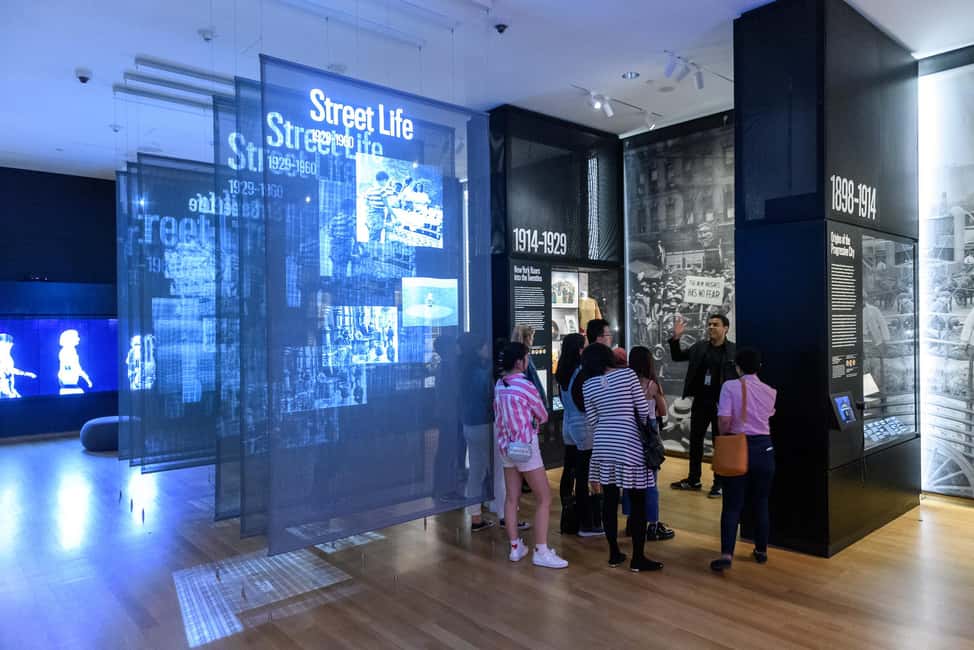
On a first visit, I’d treat this like a “choose your path” museum. The building’s layout supports that. You’ll have the kind of permanent galleries that give you context, then you can branch out into Activist and whatever temporary themes are on display that day.
The museum’s general mission is clear: it celebrates the past, present, and future of the city it calls home. That means you’ll get New York as an evolving idea—built by immigrants, shaped by politics, and powered by people who were trying to get ahead.
If you like getting bearings quickly, take a moment to look at what’s currently rotating. Rotating exhibitions are where you’ll get the day-specific “why this matters now” angle.
New York at Its Core: the permanent exhibit that gives you the city’s logic
The permanent exhibit New York at Its Core is the backbone of the visit. It focuses on innovation, energy, and struggle across generations—especially the stories of immigrants, politicians, tycoons, dreamers, master builders, and ordinary New Yorkers.
I like this exhibit because it doesn’t reduce the city to glamour. It’s more honest than that. You’ll see the pattern: people arrive with hopes, systems push back, and the city changes anyway.
As you move through the space, keep an eye out for how different groups interact—how builders and investors make plans, how politicians create rules, and how everyday people find ways to keep going. That’s the kind of context that makes the rest of your NYC trip click into place.
Activist New York: where protest becomes a national story
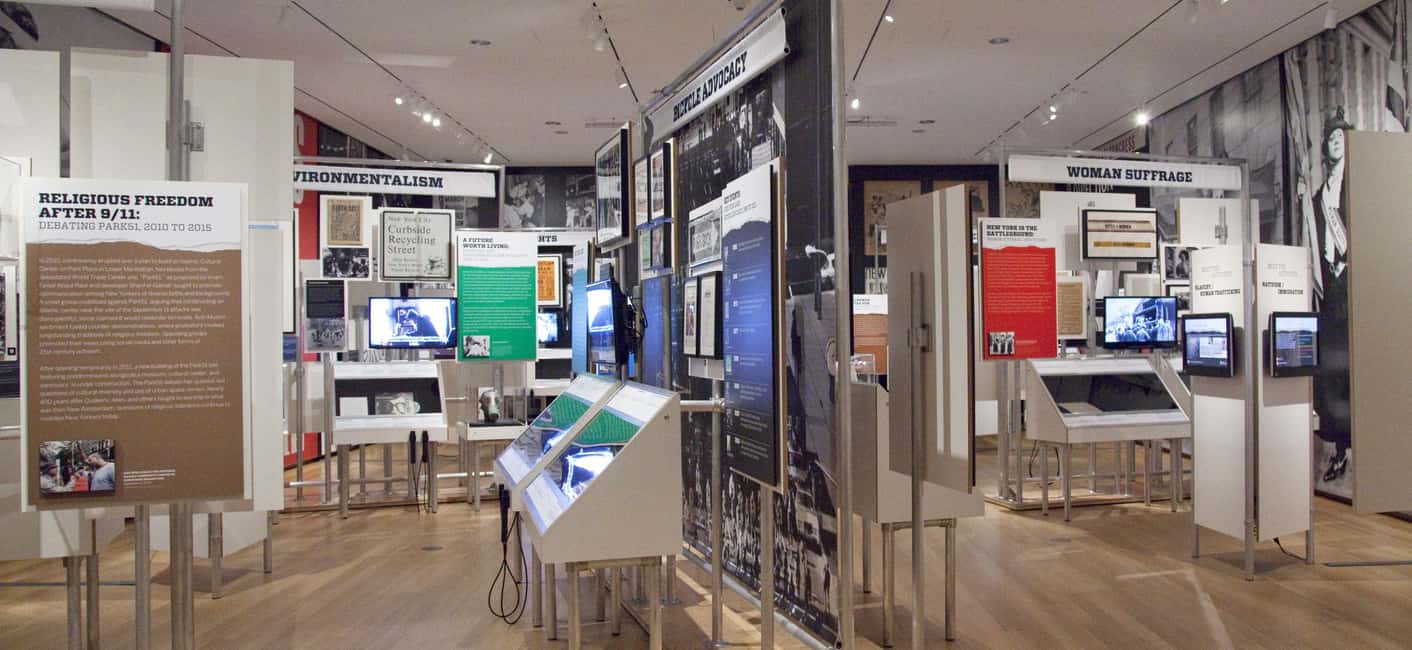
The Activist New York exhibit is the one I’d prioritize if you want the city’s conflict—not just its charm. It presents the passions and conflicts that lie underneath NYC history of agitation, and it connects that local energy to wider change in the country.
Think of this as the museum’s “why this matters” section. If you’ve ever wondered how movements gain momentum—who gets targeted, who organizes, and what finally shifts—this is the theme area that helps you see the mechanics, not just the outcome.
You’ll also feel the emotional stakes. Even without reading every label, the structure pushes you to understand that change is rarely calm. It’s powered by people who were fed up and determined to be heard.
You can also read our reviews of more city tours in New York City




Rotating exhibits: music, dance, photography, and the turning points that shaped America
Beyond the permanent galleries, the museum rotates other exhibits frequently. The topics you can expect include music, dance, photography, and critical historical pivot points that affected the national landscape.
This is where you can customize the day. If you’re into arts and how they reflect society, you’ll likely enjoy how culture threads through NYC’s changes. If you’re more history-and-politics minded, look for the exhibits that frame national turning points through New York events and people.
One nice practical detail from past visits: special displays like gingerbread houses have shown up as part of the museum experience. That’s the kind of seasonal, unexpected fun that can make the visit feel less like homework and more like a real day out—just don’t expect it to be identical every time.
Timescapes (about 30 minutes): the easiest way to understand NYC’s growth
If you want a “connect the dots” moment, schedule Timescapes early or right after you’ve built some context in the galleries. The documentary runs about 30 minutes and explores how New York grew from a small settlement into the metropolis you know today.
It’s narrated by Stanley Tucci, which gives the film a consistent voice and makes the pacing feel more polished than many museum screenings. The film also starts by covering the earliest settlement mix—Europeans, Africans, and Native Americans—then follows the city’s evolution forward.
I like this slot because it resets your brain. Walking through exhibits can leave you with fragments; a short film helps you stitch them into one storyline.
A smart one-day flow (so you don’t rush the good parts)
You don’t get a rigid itinerary, so you’ll do best with a simple plan. Here’s a visit order that works well for a one-day ticket.
Start with the permanent exhibit New York at Its Core. Give yourself enough time to catch the major themes—innovation, energy, struggle, and the generations of immigrants and makers who shaped the city.
Then head to Activist New York while the exhibit momentum is fresh. This works especially well if your brain is already primed to see history as conflict and change.
After that, switch gears with the rotating exhibits. Here’s your chance to follow your interests—music, dance, photography, or specific historical turning points. If you spot something that grabs you, slow down and don’t treat it like a checklist.
Finally, plan Timescapes. Since it’s around 30 minutes, it’s an ideal way to close the loop between what you saw in the galleries and how the museum frames the city’s bigger story.
If you still have energy, wrap with a stop at the museum shop, where you can bring home a little NYC context without needing another “thing.” If you want a break, Chalsty’s Café is included.
Chalsty’s Café and the Museum Shop: practical breaks that keep you pleasant
Chalsty’s Café is part of the included experience, which is a quiet win. You can take a break without having to leave the museum and lose time—especially helpful on days when the weather or your energy is unpredictable.
I’d treat this as a reset button: sit for a bit, look out at the museum’s surroundings from inside, then head back with a fresher focus. Museums are long, and you’ll enjoy the exhibits more if you don’t turn your visit into endurance training.
The museum shop is also included, so you can browse at the end when you’re calmer. It’s a good place to pick up something that matches the themes you actually spent time with—NYC history and culture, not random souvenirs.
Location strategy: how to combine this with Central Park and nearby museums
Because the museum sits on Fifth Avenue near the top of Museum Mile, you can build a day that’s efficient and still enjoyable. Central Park’s Conservatory Garden is just across the street area, so you can get a quick nature break before or after your museum time.
And since El Museo Del Barrio is nearby, it’s easy to stack two different cultural voices without changing neighborhoods dramatically. This works especially well if you like contrast—one museum focused on the city’s overall story, another with a distinct lens on art and community.
If you’re using public transit, it’s also easy to adjust your plan if your first exhibit timing runs long. You’re not stuck at the edge of nowhere; you’re in a place with options.
Rules and comfort notes that affect your visit
This museum has clear photography rules: no flash photography and no tripods. You can still use your phone, but plan without flash and without heavy camera supports.
On the comfort side, there’s stroller and wheelchair access, plus manual wheelchairs available for free (subject to availability). Large print and high-contrast transcripts of exhibition texts are available online too, which can help if you prefer reading details with easier formatting.
If you like having extra context, consider using the museum’s digital guide on Bloomberg Connects. It’s offered as a free arts and culture app and can help you keep your visit connected to themes you care about.
Who this museum visit is best for
This is a smart choice if you:
- want a clear, story-driven view of New York City, from immigrants to activists
- like exhibits that connect local history to national change
- prefer a museum where you can move at your pace and still cover major anchors in a day
- enjoy culture exhibits such as music, dance, and photography
You might not love it as much if you:
- only want one small specialty exhibit and hate rotating rooms
- are expecting a guided-style itinerary with someone leading you through every step (this is ticket access with you exploring)
Should you book this Museum of the City of New York ticket?
I’d book it if you want strong NYC context with manageable time commitment. At $23, you’re getting permanent exhibits, rotating shows, and a screening that’s about 30 minutes, plus a café and shop included. For many visitors, that’s the kind of value that feels worth the trip even if you have only one day.
I’d pause before booking only if your dates are tight or you rely on a very specific photography setup, since flash and tripods aren’t allowed. And if you’re sensitive to schedule surprises, it’s smart to check hours for your visit day—one outlier booking problem has shown up, and you don’t want that stress.
If you’re building a first NYC “understand the city” day, this ticket gives you more payoff than most single-entry museums.
FAQ
How much does the Museum of the City of New York entry ticket cost?
The ticket costs $23 per person.
Where is the museum located?
The museum is at 1220 5th Avenue, at 103rd Street, New York, NY 10029.
What exhibitions are included with the ticket?
Your ticket gives you access to all temporary and permanent exhibitions, including the permanent New York at Its Core and the Activist New York exhibition.
Is the Timescapes documentary included?
Yes. The ticket includes access to Timescapes, a 30-minute documentary.
Are there rules for photography inside the museum?
Yes. Flash photography and tripods are not allowed.
Is the museum wheelchair accessible?
Yes. The wheelchair and stroller-accessible entrance is on the 104th Street side of the building. Manual wheelchairs are available free of charge (subject to availability).
How long is the ticket valid?
The ticket is valid for 1 day. Starting times depend on availability, so check the schedule when you book.