REVIEW · NEW YORK CITY
New York City: Museum of Illusions Entry Ticket
Book on GetYourGuide →Operated by Museum of Illusions New York City · Bookable on GetYourGuide
Your eyes argue with your brain here. The Museum of Illusions New York in Chelsea is a visual, sensory, and science-based break from the usual NYC museum routine, packed with interactive optical setups. It’s an easy-to-find stop at 77 8th Ave, right on the corner of W 14th St and 8th Ave.
I especially like how the exhibits are built for play, not just looking. You move through illusion rooms and try physical tricks like defying gravity, plus scenes where your body seems to grow and shrink.
One thing to consider: opinions are mixed, and some people feel it can be short for the $35 entry price. If you’re the type who needs lots of space and hours of wandering, you may want to set expectations before you go.
In This Review
- Key things I’d focus on before you buy
- Museum of Illusions New York: what the ticket really gets you
- How to plan your visit in the real world
- Entering the illusion rooms: the part that sticks with you
- Holograms and visual installations: what to watch for
- The life-size kaleidoscope experience: a photo moment with real payoff
- Managing expectations on size and time
- Value: is $35 a fair deal in New York?
- Who this is best for (and who should think twice)
- Where it sits in a Chelsea itinerary
- Should you book the Museum of Illusions New York?
- FAQ
- Where is the Museum of Illusions in New York?
- What’s included with the entry ticket?
- How long is the ticket valid for?
- How many exhibits are there?
- What kinds of exhibits should I expect?
- Is the museum wheelchair accessible?
- Is the ticket refundable?
- What’s the duration of the experience?
Key things I’d focus on before you buy
- The museum is action-first: you’ll be doing, not just staring.
- Scale and gravity tricks: expect moments where your brain misreads size and motion.
- Holograms and visual installations: they’re part science lesson, part eye-popping show.
- A group-friendly layout: it’s built for sharing reactions with friends and family.
- Location convenience: Chelsea makes it simple to pair with other neighborhood stops.
Museum of Illusions New York: what the ticket really gets you

The Museum of Illusions is a one-day entry ticket in Manhattan’s Chelsea area. The big promise is simple: you’ll walk through a mind-bending collection of optical illusions that show how your brain turns light, movement, and patterns into what you think is reality.
Instead of “quiet gallery” rules, this is the kind of attraction where you’re expected to interact. The museum offers 50+ hands-on exhibits, including illusion rooms, hologram-based displays, and other interactive installations. The overall vibe is friendly and social, which is exactly what makes it work so well for families, friend groups, date nights, and group outings.
The setting is also convenient. The building entrance is on the corner of W 14th St and 8th Ave, with the address listed as 77 8th Ave. That matters in NYC, because an easy location saves time and stress, especially if you’re traveling with others.
You can also read our reviews of more tours and experiences in New York City



How to plan your visit in the real world
The ticket is valid for 1 day, and you’ll choose a time slot based on availability. That small detail matters more than people expect: if you’re touring a busy NYC itinerary, you’ll want to pick a time when everyone in your group can actually go.
Also, there’s no refund once booked, so treat it like a real commitment. If your schedule is flexible, try to line it up with a period when the group is rested and in “try stuff” mode.
As for how long to stay, the information provided doesn’t give a fixed duration for the museum itself. What you can do instead is plan for a visit where you move room to room, repeat the ones you like, and take breaks when your brain is overloaded from pattern confusion. Some people end up wanting extra time in favorite spaces, while others appreciate a shorter, punchy outing.
Entering the illusion rooms: the part that sticks with you

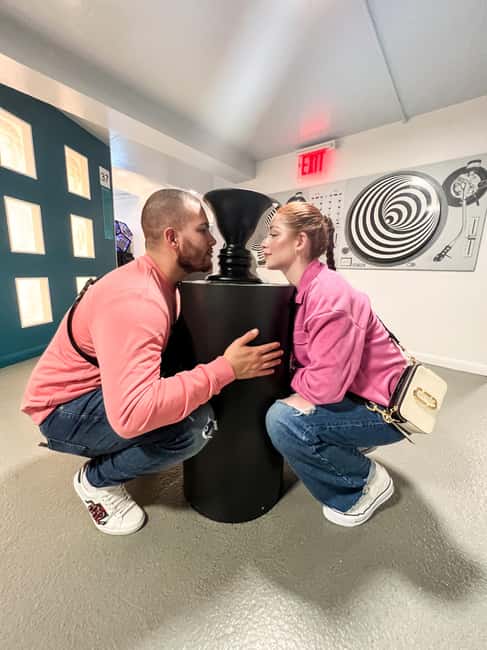
One of the best reasons to come here is that the museum doesn’t rely on trick posters alone. The core experience is illusion rooms and installations where the setup is physical. You’re not just observing an optical trick; you’re standing inside it, interacting with it, and reacting in real time.
Here’s what that typically means as you walk through:
- You’ll run into scenes that change your perception of gravity, where your body and the camera’s perspective fight to define what’s happening.
- You’ll see exhibits designed to make you feel your scale has shifted, with experiences that make your body look like it grows or shrinks.
- You’ll hit environments built around optical misdirection, where your mind tries to “correct” what it sees before it catches up.
This is where the science angle shows up in a way that feels practical. Optical illusions aren’t magic; they’re your brain making fast guesses. When you step into a room that overwhelms depth cues or size comparisons, you can feel how quickly your brain tries to fill in missing information.
Holograms and visual installations: what to watch for

The museum also includes holograms, plus other visual installations. If you like the “how did they do that” side of modern display tech, this is a satisfying section. Hologram effects tend to work best when you move a bit—your position changes what you think you’re seeing—so don’t rush past.
What I’d suggest you do here:
- Pause long enough to let your eye settle, then walk a step or two to see how the illusion responds.
- Watch how your brain changes interpretation as soon as the perspective shifts.
- Use your phone camera if you want, but don’t treat it as the only goal. The illusion can be part of the experience even without filming.
This is also a good zone for mixed groups—adults and kids can enjoy it at their own speed. Some people focus on the effect; others focus on how it’s constructed. Either way, you’ll likely get that same head-tilt moment.
The life-size kaleidoscope experience: a photo moment with real payoff

One highlight called out in the experience description is walking into a life-size kaleidoscope. That’s the kind of exhibit that turns “look at the art” into “step into the art.”
This is the moment that usually delivers two things:
- Instant wow factor, because the visual field becomes the show.
- A clear sense of why perception is about interpretation, not just light.
If your group is photo-friendly, this is the stop that gets people moving into position and laughing at their own reactions. If your group isn’t especially into photos, it still works because the physical scale makes it hard to ignore.
You can also read our reviews of more city tours in New York City





Managing expectations on size and time
Here’s the honest balancing act. The overall rating sits at 3.1 out of 5 across 56 ratings, which signals mixed experience quality. Some comments highlight that the museum can feel a bit short, and others say it may not justify the price for the space and time you get.
That doesn’t automatically mean it’s bad. It means you should decide what you want:
- If you want a compact, high-engagement experience full of interactive optical moments, it can hit the sweet spot.
- If you expect a large, hours-long museum with endless galleries, you might feel rushed or underwhelmed.
My practical advice: treat it as a focused stop—an afternoon mood reset, not the centerpiece of a full-day museum marathon.
Value: is $35 a fair deal in New York?
At $35 per person for entry, it’s priced like an attraction with real production value, not a free pop-in gallery. The value question comes down to participation and repeatability.
You’re paying for:
- 50+ interactive exhibits
- Physical illusion rooms
- Holograms and other visual installations
- The chance to share the experience with a group, since many setups are designed to be experienced together
So the “value math” is easiest if your group plans to actually try the exhibits. If you’re the kind of visitor who glances and moves on, the price can feel steep. If your group likes hands-on fun and you’re staying in Chelsea anyway, the convenience and payoff can balance out quickly.
Also, because it’s a one-day ticket and you can pick a time slot, it’s easier to fit into a tight NYC schedule. In a city where a lot of paid attractions cost similar money, the ability to spend your time actively—rather than passively—can make the ticket feel more worthwhile.
Who this is best for (and who should think twice)
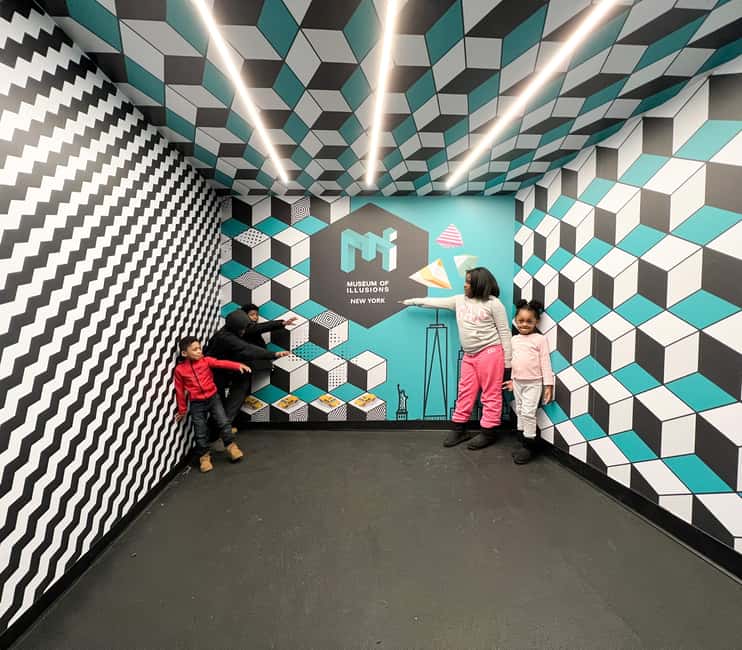
This museum is built for social energy. The experience is marketed as perfect for family adventures, friend groups, date nights, and group outings, and the structure supports that.
Best fit:
- Families who want a hands-on break from playground searching
- Friends who like playful, conversation-starting activities
- Couples who want something different than the usual “walk around and eat” routine
- Anyone who enjoys science as a story told through what your eyes do
Think twice if:
- You hate interactive exhibits and prefer quiet viewing
- You need a very long visit and don’t like short, concentrated stops
- You’re sensitive to pricing and prefer free or low-cost attractions
If you fall into the “curious but price-conscious” category, you can still make it work—just plan it like an attraction with a clear role in your day, not as a whole-day museum replacement.
Where it sits in a Chelsea itinerary
Because the museum is at 77 8th Ave, near W 14th St, it’s an easy match for a walkable chunk of Manhattan. It’s also a helpful option if you’ve already done the big-ticket NYC sights and want something light, visual, and different.
If you like building days with variety, pair it with:
- A nearby meal (you’ll likely want one after you’ve been visually “tricked”)
- A short stroll through Chelsea streets to cool down and reset
The key is to schedule it when your group is ready to engage. Optical illusions can be mentally tiring if you’re rushing through the rest of your day.
Should you book the Museum of Illusions New York?
Book it if you want a compact, hands-on NYC experience centered on optical illusions, with illusion rooms, holograms, and standout moments like the life-size kaleidoscope. If you’re traveling with people who enjoy trying things and sharing reactions, the ticket often feels like good value for what it offers.
Skip or reconsider if you’re expecting a huge museum campus or lots of time to wander. With a mixed overall rating and feedback that the visit can feel short for the money, this is best approached with the right mindset: fun, focused, and interactive.
If you do book, pick a time slot your group can actually use, since the ticket is non-refundable. Then go in expecting optical play, not a slow, calm museum day.
FAQ
Where is the Museum of Illusions in New York?
It’s located at 77 8th Ave in the Chelsea area of Manhattan, with the entrance on the corner of W 14th St and 8th Ave.
What’s included with the entry ticket?
The entry ticket is included.
How long is the ticket valid for?
The ticket is valid for 1 day. Availability may affect starting times.
How many exhibits are there?
The museum offers 50+ interactive exhibits.
What kinds of exhibits should I expect?
You can expect illusion rooms, holograms, and other hands-on visual and sensory installations that challenge perception.
Is the museum wheelchair accessible?
Yes, the museum is wheelchair accessible.
Is the ticket refundable?
The activity is non-refundable.
What’s the duration of the experience?
It’s listed as 1 day for the entry ticket. Starting times depend on availability.