REVIEW · NEW YORK CITY
New York City Slavery and Underground Railroad Tour
Book on Viator →Operated by Inside Out Tours LLC · Bookable on Viator
Slavery and freedom both left footprints on New York’s streets. This Underground Railroad tour follows a mapped-out route through key sites tied to slavery, abolitionists, and escape routes. You’ll walk a freedom trail that’s more than markers and dates, because the guide connects the places to the people who lived through them.
I especially like the human scale of the storytelling. You don’t just hear history as a timeline; you hear how enslaved people moved through the city with help from abolitionists and allies, including Frederick Douglass. I also like that the tour ends at the African Burial Ground National Monument, where the tone shifts from streets and institutions to memory, symbolism, and loss.
One thing to consider: it’s a lot of standing and listening at street corners. Even though it’s only about 2 hours 30 minutes, the pacing can feel slow in cold or rainy weather, and some stops may have construction or limited access.
In This Review
- Key takeaways before you go
- Slavery on NYC streets: why this tour hits harder than plaques
- Meeting at Bowling Green and walking like it’s Manhattan
- Stop 1: National Museum of the American Indian exterior and the Hamilton angle
- Stop 2: Battery Park and the long view of arrivals
- Stop 3: Fraunces Tavern exterior and Revolution-era history that overlaps
- Stop 4: Wall Street and the actual wall built with enslaved labor
- Stop 5: Foley Square’s Triumph of the Human Spirit
- Stop 6: African Burial Ground National Monument, where the tone changes
- The final walk to a first African-American church site
- Price and value: is $49 fair for 2.5 hours?
- Who will like this most (and who might not)
- What to bring so the tour feels worth it
- The guide experience: why certain names keep showing up
- Should you book the NYC Slavery and Underground Railroad Tour?
- FAQ
- How long is the NYC Slavery and Underground Railroad Tour?
- Where does the tour start and end?
- What is included in the tour price?
- Are museum admissions included?
- Is this tour only for people who are very physically fit?
- Is the tour limited in size?
- What happens if weather is bad?
Key takeaways before you go
- African-American Freedom Trail routing: the walk connects slavery-era geography to Underground Railroad escape pathways.
- Guide-led context, not just stops: you’ll get slavery in historical context plus New York’s specific role in the system.
- African Burial Ground as the emotional anchor: the tour’s final stop is a memorial site tied to excavated burials.
- Wall Street’s uncomfortable origin story: you’ll be told about an actual wall and how enslaved people built it.
- Frequent street-corner pauses: plan for standing time, especially outdoors.
- Small group size: limited to 30 travelers, which helps with the experience (and questions).
Slavery on NYC streets: why this tour hits harder than plaques
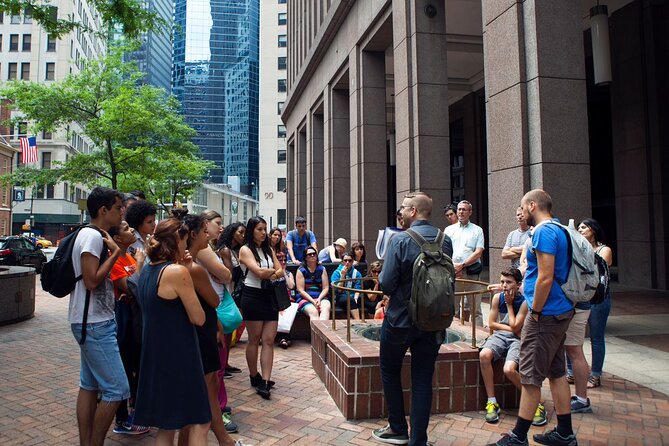
New York is full of history that’s easy to romanticize. This tour takes a different angle. It shows how the city’s wealth and growth were tangled with slavery—then it follows the other half of the story: escape, resistance, and organized help.
The core idea is simple: the Underground Railroad wasn’t one tunnel or one magic door. It was a network—routes, people, and safe places—used by African-American people fleeing enslavement, with help from abolitionists and allies. What makes this tour valuable is that it treats Manhattan like a living map, where you can point and say, that was part of the route, that’s where power and money operated, and that’s where memory was later forced into public view.
If you’re a history buff, you’ll likely enjoy how the walk focuses on New York’s own role, not just slavery in the abstract. The guide’s framing is built around slavery in historical context, New York’s role in slavery, and what the Underground Railroad meant in this city specifically.
You can also read our reviews of more city tours in New York City



Meeting at Bowling Green and walking like it’s Manhattan
The tour meets at 1 Bowling Green (Manhattan) and ends at the African Burial Ground National Monument. From the stop sequence, you can expect a steady walking route with multiple quick exterior visits and a few longer “listen here” segments.
This matters because NYC tours can feel either like a stroll or like a lecture. This one leans lecture-ish at times. You’ll spend meaningful moments outdoors while the guide sets the story. That’s not automatically bad—street corners can make the history feel real—but it does affect comfort.
A few practical notes from the tour description itself:
- The tour is for a moderate physical fitness level.
- It has a maximum group size of 30 travelers.
- It uses a mobile ticket.
- Service animals are allowed.
- Confirmation happens at booking.
If you’re sensitive to cold, wind, or rain, dress like the weather will be annoying (because sometimes it is). Several guides are noted for passionate delivery, but sound can still be tricky when you’re packed together.
Stop 1: National Museum of the American Indian exterior and the Hamilton angle
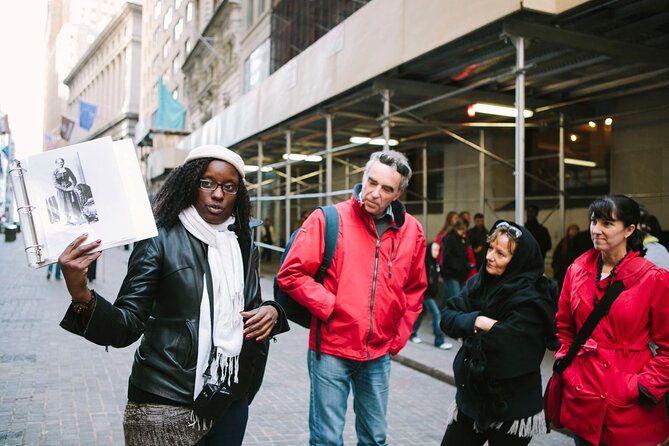
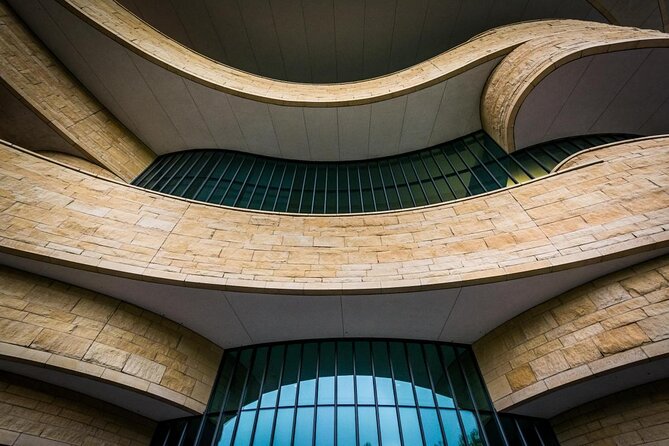
Your first stop is the National Museum of the American Indian area. The description highlights the Alexander Hamilton Custom House, a Beaux-Arts building built in 1907 with three floors of art and artifacts dedicated to Native Americans (note: exterior visit only, and admission isn’t included).
Why start here? Because it sets a tone: this city’s early power systems were built by commerce, politics, and migration—layers that overlap. Even though the tour focus is slavery and the Underground Railroad, starting near a major civic building helps you understand how New York’s public structures grew alongside exploitation.
What to watch for: exterior architecture details can feel like background, but the guide uses the setting to connect how institutions formed. If you like “how the city works,” you’ll appreciate this kind of anchoring.
Stop 2: Battery Park and the long view of arrivals
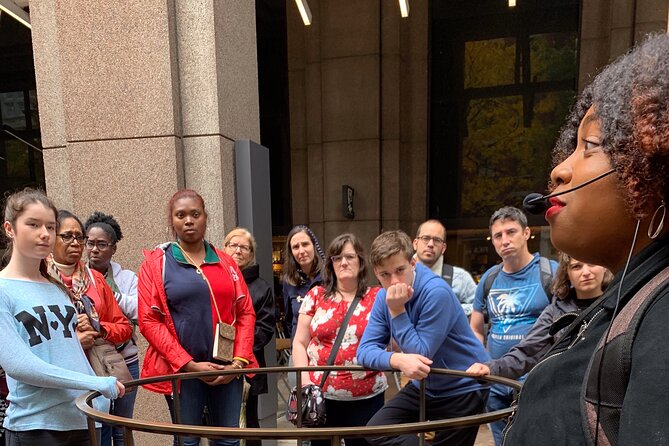
Next is Battery Park, a historic edge of Manhattan where, for more than 200 years, newcomers arrived long before Ellis Island and long before the Statue of Liberty became the main symbol of arrival.
The Underground Railroad story sits in the same broader frame: New York drew in people through ports, and then different groups faced very different outcomes. This stop gives you the “who came to the city and why” context, which makes later stops feel less like random landmarks.
A good way to approach this part: treat it like a hinge. You’re moving from arrival and power to the reality that some people arrived already trapped in forced labor.
Stop 3: Fraunces Tavern exterior and Revolution-era history that overlaps
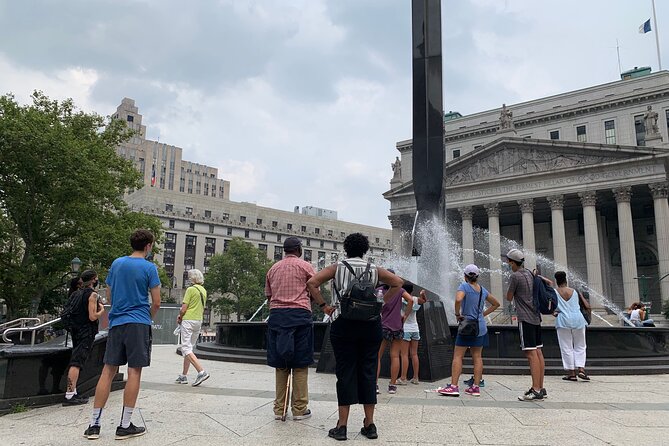
You’ll then pass Fraunces Tavern Museum on the exterior. The tavern location played a prominent role before, during, and after the American Revolution.
This is a smart stop because it places slavery-era stories in the same civic world as the Revolution. That tension is one of the most important lessons in the whole tour: the creation of the United States didn’t automatically create freedom for everyone. It created new systems and new justifications—sometimes alongside resistance.
If you’re wondering how guides handle a historic place without going inside, here’s the payoff: you’re not losing time hunting tickets or exhibits. You’re getting the story link—how a familiar landmark period connects to the broader struggle for freedom.


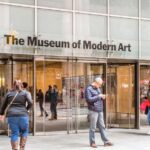


Stop 4: Wall Street and the actual wall built with enslaved labor
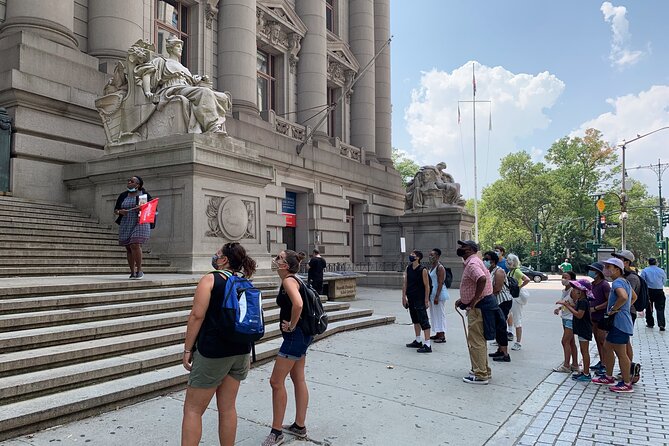
Then comes Wall Street, with a detail that changes how you read the street: an actual wall existed there from 1685 to 1699, and the financial heart of the city was built by enslaved people.
That’s the kind of fact you can’t un-know once you hear it. Even if you’ve seen Wall Street a hundred times, this reframes it. It’s not just old buildings and money; it’s labor forced onto human bodies, and it’s power that still shows up in how the city functions.
Practical takeaway: if you like photography, this is a great segment to glance at the street line and imagine what it would have looked like when the wall was there. Just keep expectations realistic: you’re mostly hearing and walking, not touring a museum.
Stop 5: Foley Square’s Triumph of the Human Spirit
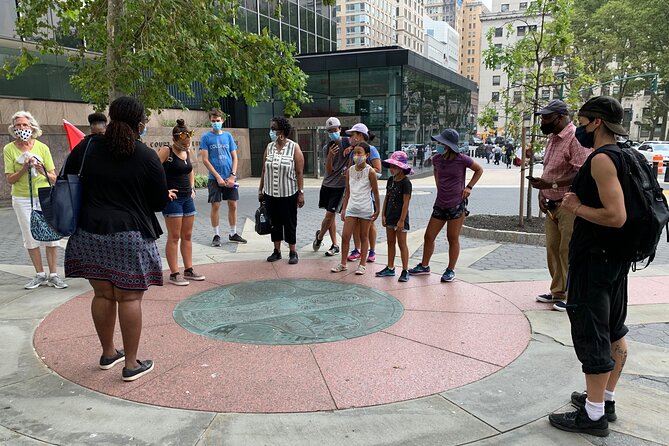
At Foley Square, the tour points you to the sculpture called Triumph of the Human Spirit, honoring the presence of enslaved people in New York.
This stop works as a bridge from the heavy facts of Wall Street to the memorial focus that comes next. Sculpture can feel vague when you’re rushing through the city, but here it’s treated as evidence of memory—proof that enslaved people’s presence isn’t only in records, it’s also carved into public symbolism.
If you’re someone who likes to interpret art and meaning, you’ll probably enjoy how the guide connects symbolism to the broader story.
Stop 6: African Burial Ground National Monument, where the tone changes
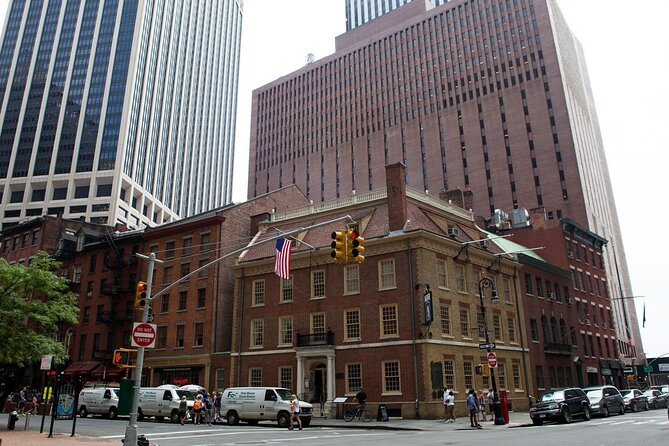
The tour’s most powerful segment is the African Burial Ground National Monument. The description is clear about why it matters: it’s the oldest and largest known excavated burial ground in New York documenting the lives of enslaved people in colonial America.
This is where the Underground Railroad story becomes something more than logistics. It becomes grief, remembrance, and the brutal reality that enslaved people lived—and died—in this city.
What you’ll likely appreciate here:
- The guide’s attention to the site’s purpose as a memorial.
- The way the tour connects symbolism and meaning tied to the monument.
- The emotional weight, which several people highlight as touching, solemn, and powerful.
One practical consideration: because this is an active memorial site, some areas can have restrictions or construction. In at least one case, a guide still managed to take the group into the museum portion even when parts of the outside grounds were unavailable—so if you notice barriers during your visit, don’t assume the whole experience will shut down. Your guide will manage what’s accessible in real time.
The final walk to a first African-American church site
After the African Burial Ground, the tour walks to the former site of the first African-American church in New York, which the description notes was also one of the Underground Railroad stops.
That final shift matters. Churches were more than worship spaces. They were community anchors—places where networks could form, information could travel, and support could be organized. Ending with a site tied to a church helps you understand how escape efforts weren’t only about secret routes on paper. They were also about people building safety and belonging.
Even if you only catch the location as a spot on a modern block, the guide’s explanation should make it feel like a historical doorway.
Price and value: is $49 fair for 2.5 hours?
At $49 per person for about 2 hours 30 minutes, this tour sits in the “reasonable for a guided walk that covers heavy material” category. Here’s why the value makes sense.
You’re not just paying for a route. You’re paying for:
- A local guide who provides slavery in historical context, New York’s role in slavery, and Underground Railroad history.
- A focused route that hits multiple major sites tied to the story.
- A finishing stop at a major national memorial with free admission.
Also, the group limit of 30 travelers helps. You’re less likely to be lost in a sea of people. That’s important for a topic where you may want clarification.
The big question isn’t price—it’s whether you’re comfortable with an outdoor, street-corner format. If you hate standing, or if you need frequent indoor breaks, this may feel like a slog. If you like guided explanation at real locations, it’s a strong value.
Who will like this most (and who might not)
This is a great fit if you:
- Love city history and want the story tied to specific places.
- Want a guided path that’s harder to assemble on your own.
- Like learning from teachers. In reviews, guides including Ludy/Ludie, Maya/Maia/Mia, and Sean are described as passionate and often classroom-trained (for example, one guide is noted as a former history teacher).
- Prefer history that doesn’t sugarcoat the reality, but aims to explain rather than blame.
It might be less ideal if you:
- Struggle with cold weather and extended outdoor standing.
- Need lots of museum time or indoor exhibits, since this is largely exterior walking and storytelling.
What to bring so the tour feels worth it
The tour is about walking and listening, so you’ll want comfort on your side.
Bring:
- Comfortable shoes for uneven sidewalks.
- A jacket and layers. The tour runs outdoors through multiple stops.
- A way to keep warm and dry if the weather turns, since the tour is described as requiring good weather.
And one sound-check tip: some people mention hearing challenges when they had to huddle close. If you’re worried about audio, get toward the front of the group and stay close enough to hear the guide’s voice without shouting over the street.
The guide experience: why certain names keep showing up
A lot of the praise centers on the people leading the walk, not just the locations.
You’ll see repeat mentions of guides like Ludy/Ludie, Mia/Maya/Maia, Sean, and Shawn. Common threads in the feedback include:
- Strong, engaging narrative delivery
- Extra context about individuals and their roles in the Underground Railroad
- Visual aids, such as binders with historical photographs used to explain key figures and places
- Personal recommendations for where to keep learning (book and museum suggestions)
That’s not a small detail. For a complicated topic, a guide who can translate big ideas into human stories is the difference between reading a fact sheet and actually understanding what happened.
Should you book the NYC Slavery and Underground Railroad Tour?
I’d book this if you want a walking route that makes New York’s slavery and Underground Railroad story concrete. The ending at African Burial Ground National Monument gives the tour emotional weight, and the route through sites like Wall Street and Foley Square helps you see how power and memory sit side by side in the same city.
Skip it if you know you can’t handle a schedule that includes a lot of outdoor standing. Also, if you’re extremely sensitive to audio (or you hate being packed close), plan to position yourself well early.
If you’re the type who likes accurate history, guided interpretation, and a thoughtful finish that doesn’t rush past grief, this is a strong pick.
FAQ
How long is the NYC Slavery and Underground Railroad Tour?
The tour runs about 2 hours 30 minutes (approx.).
Where does the tour start and end?
It starts outside the National Museum of the American Indian area and meets at 1 Bowling Green, New York, NY 10004. It ends at the African Burial Ground National Monument, 290 Broadway, New York, NY 10007.
What is included in the tour price?
You get a local guide and guided content focused on slavery in historical context, New York’s role in slavery, Underground Railroad history, and key stops tied to sites such as Fraunces Tavern, the African Burial Ground, and the site of the first slave market in New York.
Are museum admissions included?
Admission tickets are not included for some stops listed for exterior viewing, like the National Museum of the American Indian area. The African Burial Ground National Monument is listed as free admission.
Is this tour only for people who are very physically fit?
No. The tour lists a moderate physical fitness level, but it is still a walking tour with standing while the guide talks.
Is the tour limited in size?
Yes. The tour has a maximum of 30 travelers.
What happens if weather is bad?
The experience requires good weather. If canceled due to poor weather, you’ll be offered a different date or a full refund.
If you want, tell me your travel month and whether you prefer shorter walks or more museum time—I can help you judge whether this format will feel comfortable for your day.