REVIEW · NEW YORK CITY
New York City: The Bible at the Metropolitan Museum of Art
Book on GetYourGuide →Operated by The Bible at the Met · Bookable on GetYourGuide
Bible stories take real shape at the Met. I like how this tour links archaeology and art across Egyptian, Greek, and Roman rooms, and I love the way guide Mel Lehman brings connections to life with extra context. One possible drawback: it moves fast for a museum day, so bring good walking shoes and plan what you’ll do after.
You’ll start at a clear meeting spot in the Great Hall, then get a guided route that’s non-sectarian and geared for people of faith and no faith alike. After the 2-hour tour, your ticket still works for the rest of the day, which is key because the Met is huge and you’ll probably want to circle back.
In This Review
- Key things you’ll notice on this Met tour
- Starting at the Statue of Pharaoh in the Met’s Great Hall
- Egyptian galleries: Exodus context and why ancient Egypt still matters
- Greek and Roman rooms: seeing the Bible’s wider world
- Bible-inspired art at the Met: how later artists interpreted ancient stories
- Skip the ticket line, then use the rest of your ticket wisely
- What you’ll walk away with: connections you can actually use
- Who this is best for (and who should plan differently)
- Price and value: what $60 gets you at the Met
- Should you book The Bible at the Met?
- FAQ
- What is the duration of the tour?
- How much does the tour cost?
- Where do I meet the guide?
- Is the tour non-sectarian?
- What photography rules should I know?
- Is the ticket valid after the tour ends?
- Is this tour wheelchair accessible?
Key things you’ll notice on this Met tour
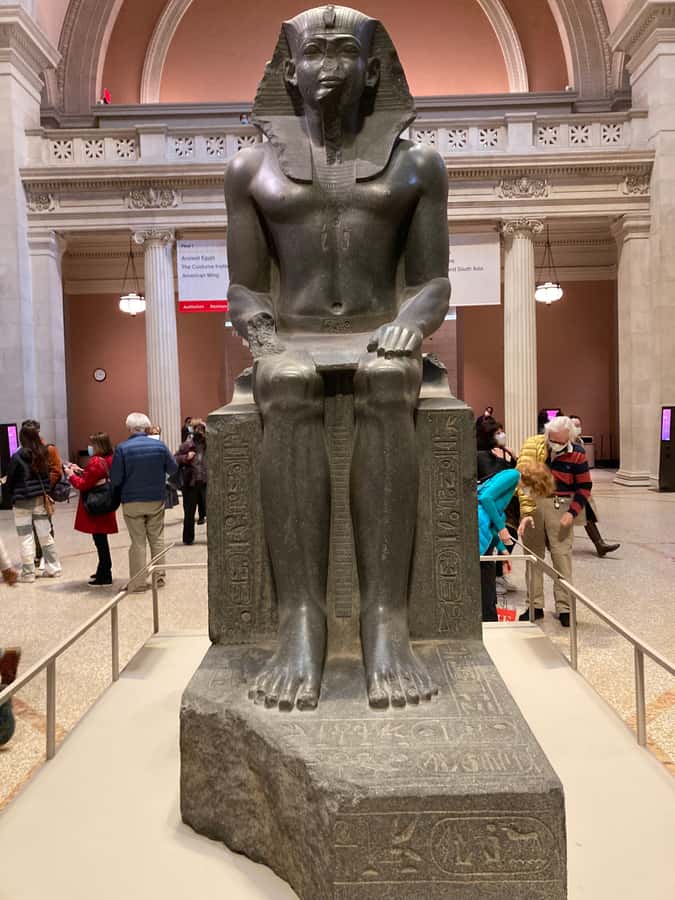
- You’ll start at the Statue of Pharaoh in the Great Hall, so you don’t waste time figuring out where to go.
- Mel Lehman’s explanations go beyond the wall labels, answering questions in a warm, flexible way.
- Egyptian connections get real meaning as you move from ancient Egypt toward the Bible’s world.
- Greek and Roman sections connect the setting of many biblical stories with the visual language of antiquity.
- Bible-inspired painting appears along the route, so you see how later artists interpreted sacred scenes.
- You get a practical take-home style aid that pairs artifacts with Bible passages.
Starting at the Statue of Pharaoh in the Met’s Great Hall
The best part of this tour begins before you even enter the galleries: you meet at the Statue of Pharaoh in the Great Hall (entrance area). That matters at the Met because it’s easy to lose time just getting oriented.
You also skip the ticket line, which helps you make the most of your 2-hour guided window. The tour runs in English with a live guide, so you’re not left scanning signs and guessing what connects to what.
If you’re the type who likes to arrive, get oriented, and then settle in, this meeting style works. If you hate group timing, keep in mind the tour is scheduled and designed to cover multiple museum areas in a short span.
You can also read our reviews of more city tours in New York City



Egyptian galleries: Exodus context and why ancient Egypt still matters
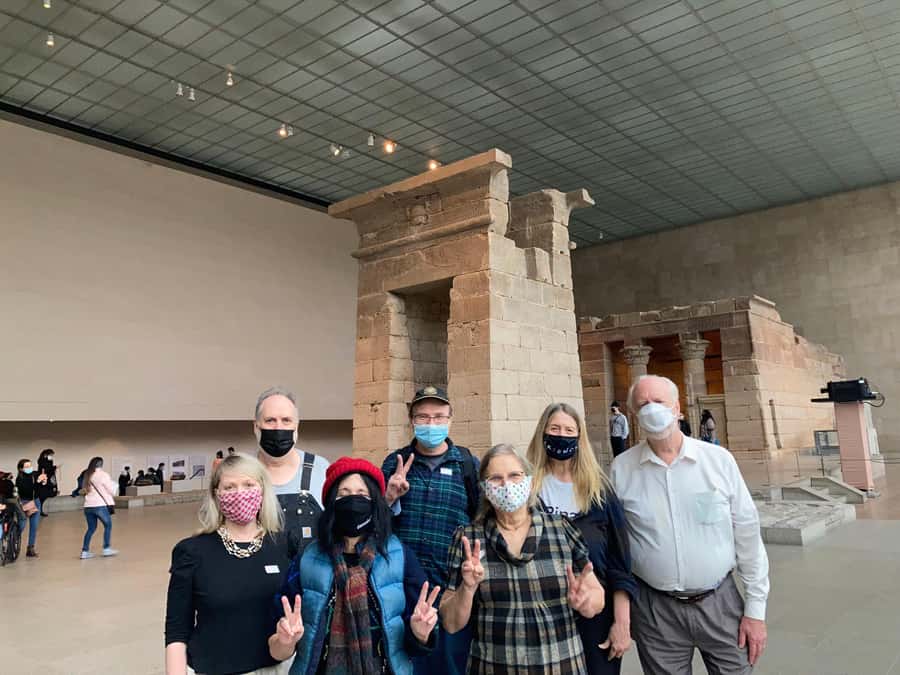
A major focus is the Met’s Egyptian section, and the route is built around the Bible’s deep ties to ancient Egypt. The Exodus story is more than a narrative here—it’s treated as part of a real historical crossroads, where ancient Egyptian culture, politics, and power shaped the world people were living in.
What I like about how this plays out is that you’re not asked to treat Egypt as a vague backdrop. You’re guided to look at the visual language of Egyptian artifacts and then connect that language to what the Bible says about that world.
You’ll also move through this section with a sense of pacing that feels intentional. The guide breaks things up with questions and short pauses so you can actually read what you’re seeing, not just shuffle past it. That’s especially helpful if you’re pairing the Bible with museum objects for the first time.
Practical note: the Met is built for walking, and the Egyptian galleries still require steady steps. Bring comfortable shoes and expect to move.
Greek and Roman rooms: seeing the Bible’s wider world
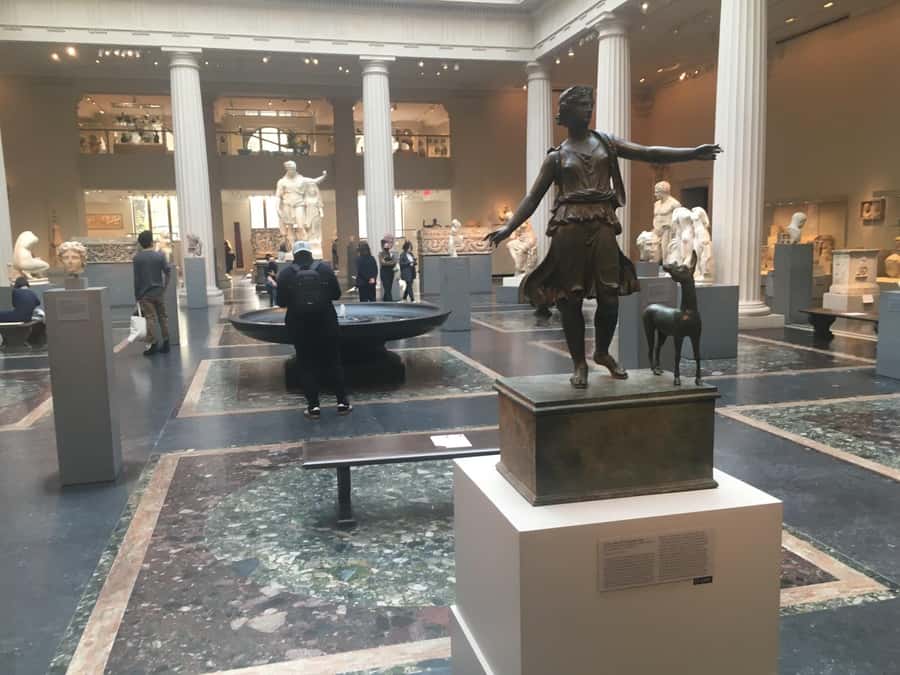
After Egypt, the tour shifts to ancient Greece and Rome, two cultures that show up across the Bible’s timeline and themes. This isn’t about forcing a single interpretation. It’s about helping you notice how biblical history sits inside a bigger Mediterranean world.
In these rooms, you’ll get a different kind of context than you did in Egypt. Egyptian artifacts often feel like symbols of continuity—settings that last, rituals that repeat. Greek and Roman materials often feel like public life made visible—ideas carried through sculpture, architecture, and everyday objects.
That contrast helps. It makes the biblical world feel less like a distant “always then” and more like a place that changed over time. If you care about how stories travel, adapt, and get retold, this section is where you start to feel the payoff.
One consideration: because this tour has a tight 2-hour duration, the Greek and Roman time is efficient. You’ll want to treat it as a launchpad. If something really grabs you, plan to spend extra time afterward on your own.
Bible-inspired art at the Met: how later artists interpreted ancient stories
The tour also includes art connected to the Bible, including works by painters who were inspired by biblical themes. This is a smart pairing, because it shows you two different layers of meaning:
- the physical world (archaeology and ancient artifacts)
- the later world (how artists imagined, staged, and interpreted biblical scenes)
Even if you’re not religious, you can still enjoy the art side. Bible-inspired painting has its own visual grammar—emotion, symbolism, composition choices—that helps you understand how people have interpreted these stories for centuries.
If you are religious, this part can feel more personal in a different way. Art can highlight what communities chose to emphasize: sacrifice, redemption, struggle, hope, and the tension between human weakness and divine purpose. This tour keeps that tone non-sectarian, but it still honors why the Bible mattered to real people.
Here’s a practical tip: the rules say no flash photography. That means you can still take pictures for your own notes without the disruptive flash. Just plan to keep your camera ready but respectful.
Skip the ticket line, then use the rest of your ticket wisely
This experience includes a guided tour of the Metropolitan Museum of Art, and your ticket is good for the remaining part of the day after the tour. That is a big part of the value, because the Met is too large to finish in one morning.
I like this structure because it avoids the common problem of “a tour that ends and you’re stuck wishing you had more time.” Instead, you leave the tour with a direction. You know what areas matter, and you can go back with a sharper eye.
You can also build your own second pass through the galleries. If you’re the type who reads every label, plan some extra time beyond the tour. If you’re more of a “see it, remember it” person, you can stay flexible and focus on what caught your attention during the guided portion.
One more practical point: this is a museum day, not a quick stop. Don’t forget water. The tour info also notes there aren’t water fountains you can rely on, so bring a bottle if you want one.
You can also read our reviews of more museum experiences in New York City




What you’ll walk away with: connections you can actually use
The strongest praise for this tour centers on the guide. Mel Lehman is highlighted as warm, kind, humorous, and flexible, with a talent for answering questions and adjusting breaks as needed. That kind of guide makes a difference in a place as complex as the Met, because you’re not just collecting facts—you’re learning how to connect them.
A standout detail is that you can receive a brochure-style list pairing artifacts with corresponding Bible passages. That’s a practical tool. Instead of remembering a vague feeling of significance, you have a way to review what you saw and match it to the story you came with.
That’s also why this tour can work for people who are unsure about the Bible’s historical grounding. Seeing objects in context doesn’t automatically prove anything by itself, but it can strengthen your sense of where biblical traditions intersect with real ancient cultures.
And if you’re coming with no religious background, you still benefit. The tour isn’t preaching. It’s helping you read the Met through one lens, and then letting you choose what to do with that lens afterward.
Who this is best for (and who should plan differently)
This is a great fit if you want a guided path through the Egyptian, Greek, and Roman areas with a Bible-themed connection, without the pressure of a sectarian environment. It’s also strong if you like a guide who can explain meaning, answer questions, and slow down when needed.
It may be less ideal if you want a long, slow, museum-by-museum crawl. The tour is 2 hours, and that’s intentional. You’ll get breadth rather than total coverage.
It also suits people who like structured orientation. Meeting at a specific point in the Great Hall, getting a routed focus, and then having time to roam afterward is a smart combination for first-time Met visitors.
Price and value: what $60 gets you at the Met
At $60 per person for a 2-hour guided tour, this isn’t a bargain, and it’s not trying to be. The value comes from what’s included:
- a live guided tour focused on Bible-related connections
- Met ticket access that continues for the rest of your day
- skip-the-ticket-line entry help
- a thematic route that pairs archaeology and art rather than random gallery wandering
If you were going to the Met anyway, the included ticket-for-the-day piece is a big part of your return. If you were planning to do it on your own, you’d still be spending time finding what matters; the guide compresses that work into a focused 2-hour plan.
So I think the best way to see the price is this: you’re paying for a guided filter. And in the Met, a filter is worth real money.
Should you book The Bible at the Met?
If you want a practical, non-sectarian way to connect Bible stories to what you can actually see—Egyptian objects, Greek and Roman context, and Bible-inspired paintings—this tour is a good bet.
Book it if you like clear guidance, questions answered in real time, and a route that gives you a plan for the rest of the museum day. Skip it if you’re trying to do a slow, independent deep study of one area, because the tour is designed for breadth in two hours.
FAQ
What is the duration of the tour?
The tour lasts 2 hours.
How much does the tour cost?
The price is $60 per person.
Where do I meet the guide?
Meet at the Statue of Pharaoh in the Great Hall (entrance) of the Metropolitan Museum of Art.
Is the tour non-sectarian?
Yes. The tour is described as non-sectarian and appropriate for people of faith and of no faith alike.
What photography rules should I know?
Flash photography is not allowed. Photography without flash is allowed.
Is the ticket valid after the tour ends?
Yes. The included ticket is good for the remaining part of the day after the tour.
Is this tour wheelchair accessible?
Yes. The experience is wheelchair accessible.