REVIEW · NEW YORK CITY
New York Upper West Side Art and Architecture Tour
Book on Viator →Operated by Build Tours · Bookable on Viator
Architecture gets clearer fast. Manhattan’s Upper West Side can look like a blur of glass and stone until someone gives you a street-level map. I like that this tour uses personal headsets to cut through city noise, and that it stays small-group friendly so your questions actually land. One thing to consider: the stops move quickly, with several points clocking in at around 5 minutes, so it’s more about fast recognition than deep time inside.
You’ll start at Columbus Circle and end near Hearst Tower, with about 2 hours of walking that includes travel time. At $49 per person, the value is strong if you want an expert guide for the big names (Lincoln Center, the Met Opera, Juilliard) plus practical context as you move. And if the weather isn’t good, the tour can be adjusted or refunded.
In This Review
- Key things to notice on this Upper West Side walk
- Why the Upper West Side works for architecture (even if you feel lost)
- Price and value: what $49 really covers
- Getting from Columbus Circle to Hearst Tower without missing the story
- The headset part is more important than it sounds
- Stop-by-stop: what to look for on the Upper West Side route
- Stop 1: Columbus Circle (Columbus statue, Time Warner Building, Central Park Tower)
- Stop 2: Time Warner Center
- Stop 3: Museum of Arts and Design (see and discuss)
- Stop 4: Central Park (walk by and discuss)
- Stop 5: Lincoln Center for the Performing Arts
- Stop 6: David Geffen Hall
- Stop 7: New York City Ballet
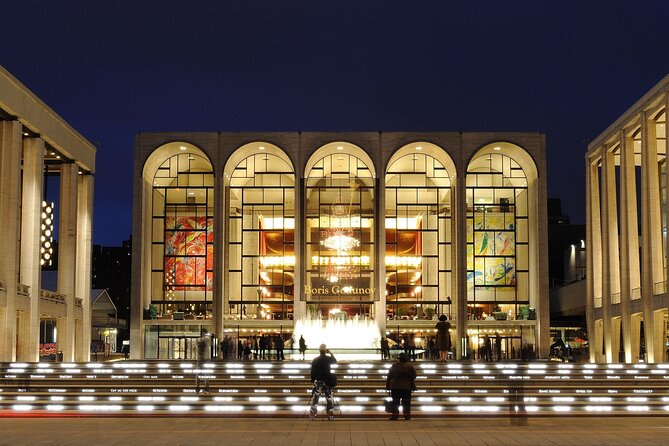
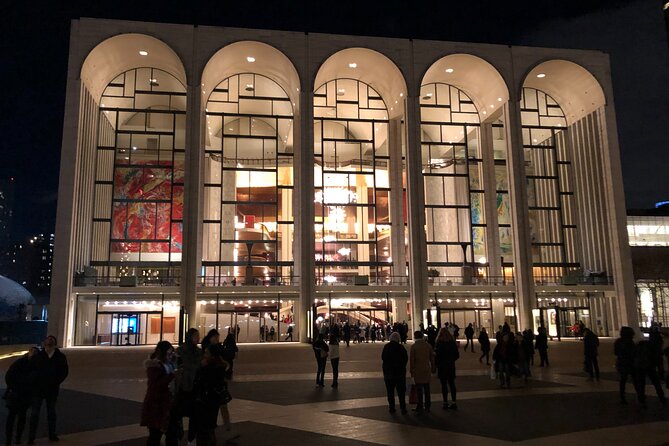
- Stop 8: The Metropolitan Opera
- Stop 9: Vivian Beaumont Theater at Lincoln Center
- Stop 10: The Juilliard School (Pietro Belluschi; extension by Diller and Scofidio + Renfro)
- Stop 11: Alice Tully Hall
- Pass by: Fordham University
- Stop 12: Hearst Tower (Norman Foster)
- The guide makes the tour: from mixed groups to serious questions
- Who this tour is best for (and who might want a different plan)
- What to bring and how to get more out of the route
- Final call: should you book this Upper West Side art and architecture tour?
- FAQ
- How long is the New York Upper West Side Art and Architecture Tour?
- Where does the tour start and end?
- What is the price per person?
- Is the tour a guided small-group experience?
- Does the tour include headsets?
- Are admission tickets included for the stops?
- What languages are the guide sessions offered in?
- Are service animals allowed?
- What is the cancellation policy?
Key things to notice on this Upper West Side walk
- Headsets with a live guide: you can hear explanations clearly even at busy intersections
- Max group size of 15: enough people for a lively tour, not so many that you fade into the crowd
- Iconic “cluster” of culture: Lincoln Center, the opera, and ballet show up in one tight loop
- Design-minded stops: from the Museum of Arts and Design to the modern sweep at Hearst Tower
- Short, timed segments: you’ll learn to spot features quickly, then move on
- Free included access where offered: several stops list free admission tickets as part of the tour
Why the Upper West Side works for architecture (even if you feel lost)
The Upper West Side is one of those parts of Manhattan where buildings are packed close—but the story isn’t obvious until you’re taught how to look. This tour is built for that exact moment when you’re standing on the sidewalk thinking, Okay, but what am I seeing?
I like that the route connects architecture to city planning and everyday movement. You don’t just get trivia about famous names. You get a guide’s lens on how these major institutions shape the street grid, the skyline, and even how people flow toward parks and cultural spaces.
And it’s not just “big landmarks.” The itinerary includes design and performance venues side by side, which helps you notice how different building types solve different problems—noise, crowds, entrances, views, and long-term use.
You can also read our reviews of more tours and experiences in New York City.



Price and value: what $49 really covers
At $49 per person for about 2 hours, the headline value is not the buildings themselves—it’s the human explanation and the tools that make the explanation usable.
Here’s what you’re getting for the price:
- An in-person guide (English, Spanish, French, Italian are supported)
- Professional individual headsets for every guest
- A small-group size capped at 15
- Admission tickets listed as free for the stops included on the route
- A mobile ticket, so you’re not juggling paper
In New York, guided walking tours can get expensive fast. This one stays affordable while still giving you the one thing you can’t replicate by reading alone: real-time direction on what to look for and why it matters. If you’re the type who learns faster with a person talking you through the view, this is a good deal.
Getting from Columbus Circle to Hearst Tower without missing the story
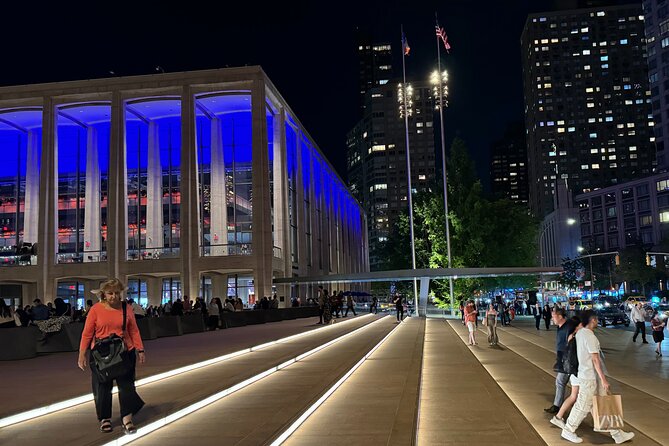
The tour runs around 2 hours and starts at Columbus Circle. It ends at Hearst Tower (300 W 57th St), close to subway connections and other transit.
That start-to-finish design matters. You get a natural “walk of viewpoints” that changes as you cross major cultural and commercial zones. You also end at a landmark you can easily pair with the rest of your day—dinner plans, museums, or a quick subway hop back uptown or downtown.
Because it’s a walking tour, you’ll want to dress for real street time. The schedule includes fixed stop windows (often 5–15 minutes), so you shouldn’t plan to wander off mid-tour. Think of it like a guided route with short lessons attached to each scene.
The headset part is more important than it sounds
New York is loud. That’s not a complaint—it’s just reality. This tour solves it with professional headsets so you can hear the guide clearly while you’re standing near traffic, construction zones, and noisy crowds.
That changes the experience. Without headsets, you’d miss details and end up relying on vague impressions. With them, you can actually follow the explanation, then turn your attention back to the building feature being pointed out—massing, façade rhythm, public entrances, or how a venue connects to the surrounding city.
Stop-by-stop: what to look for on the Upper West Side route


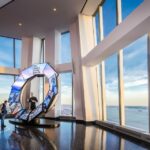

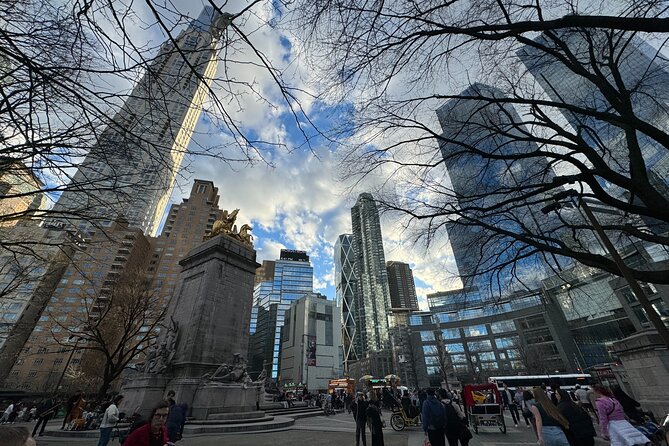
Stop 1: Columbus Circle (Columbus statue, Time Warner Building, Central Park Tower)
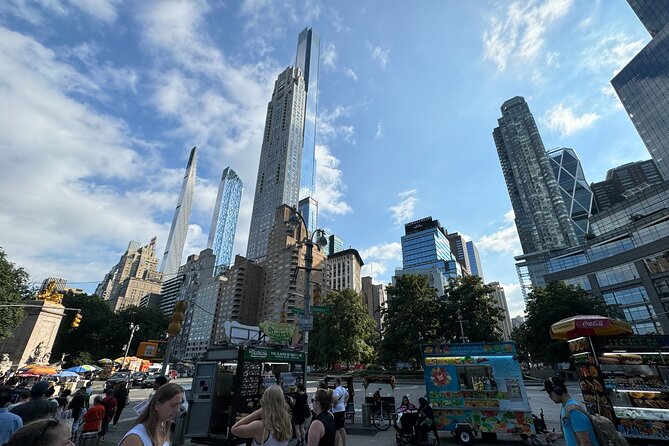
You begin at Columbus Circle, where public monuments and major buildings meet at a busy crossroads. The obvious focus is the Cristopher Columbus statue, but the architectural lesson starts with the way the area frames the skyline and your sight lines toward Central Park.
You’ll also look at the Time Warner Building and the Central Park Tower. The key here is to notice how tall buildings play with distance. Up close, façades can feel busy. From the sidewalk, the guide’s direction helps you see the bigger geometry first—then the details.
Drawback to expect: because you’re at a major intersection, this isn’t a quiet stop. Even with headsets, your best photos may come in brief windows when the light and crowd density cooperate.
Stop 2: Time Warner Center
Next up is the Time Warner Center, a building that’s easy to recognize and surprisingly easier to misunderstand. From street level, you might focus on what’s flashy. The tour helps you notice what’s structural: how the building supports the “civic” role of the area and how the architecture meets the public realm.
This stop is short (about 10 minutes), so treat it like orientation. The goal isn’t to memorize every element—it’s to train your eyes so later stops feel connected.
Stop 3: Museum of Arts and Design (see and discuss)
The route then includes the Museum of Arts and Design. Even if you don’t go inside as part of your day, the explanation helps you see why this kind of museum belongs here—design and craft fit naturally with an Upper West Side corridor that also hosts art, performance, and major institutions.
Timing is brief here, so you’ll get the gist and move on. If you’re a design person, you’ll probably want to return after the tour and spend real time with exhibits.
Stop 4: Central Park (walk by and discuss)
Central Park shows up as a moving viewpoint rather than a full detour. This is smart. You get the chance to relate architecture to open space, including how edges of buildings “perform” next to a park.
The lesson you’ll likely carry with you: architecture doesn’t just face streets—it also faces air, views, and pedestrian routes. In about 10 minutes, you can start noticing that relationship even if you’re not a trained planner.
Stop 5: Lincoln Center for the Performing Arts
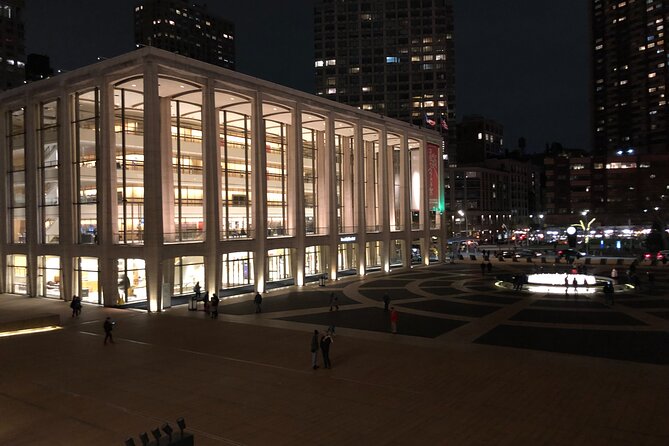
Lincoln Center is where the tour really clicks for most people. It’s one thing to know the place exists. It’s another to understand how the complex works as an urban machine—entry points, audience flow, and how multiple venues can share a single identity while still feeling distinct.
This stop is about 10 minutes, so you’re not getting a full history lecture. You’re getting an architectural orientation: what to observe first so you don’t feel overwhelmed when you look around.
Stop 6: David Geffen Hall
David Geffen Hall appears as a focused moment. The timing (around 5 minutes) suggests that the guide is pointing you toward a few specific features rather than asking you to slow down for every angle.
Even a short stop helps. You learn what to notice—how the hall expresses itself from the outside, and how the building’s presence changes the way you think about the surrounding public space.
Stop 7: New York City Ballet
Then you shift from the hall to New York City Ballet, still within the same Lincoln Center orbit. This is where you start realizing a theme: buildings for performance are designed for people, not just views.
A drawback if you’re expecting lots of time inside: the itinerary keeps you moving. That’s ideal if you want momentum and context. It’s less ideal if you’re hoping for a long, quiet look at interiors.
Stop 8: The Metropolitan Opera
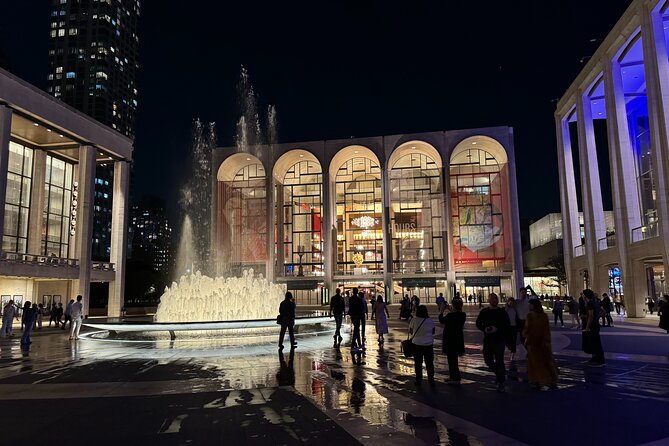
The itinerary includes the Metropolitan Opera House. This stop is brief (about 5 minutes), but the external look and positioning are enough to trigger the bigger story: how an institution like this anchors a neighborhood identity.
If you’ve ever walked past the Met and wondered why it feels both monumental and specific, a guided explanation helps you connect design choices to the public experience.
Stop 9: Vivian Beaumont Theater at Lincoln Center
Next is the Vivian Beaumont Theater, again with a quick look (around 5 minutes). The value of these short performance stops is that you start comparing. You’re not just seeing one famous venue—you’re noticing how each venue’s architecture communicates a different kind of stage presence.
Stop 10: The Juilliard School (Pietro Belluschi; extension by Diller and Scofidio + Renfro)
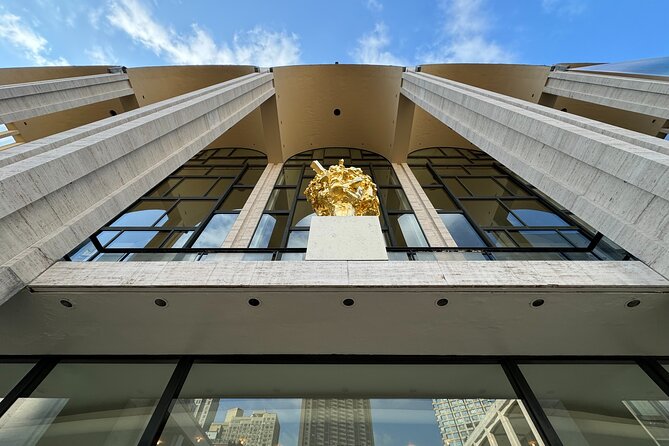
This is one of the most concrete architecture moments on the route because the tour includes named designers. You’ll see the Juilliard School by Pietro Belluschi, plus an extension associated with Diller and Scofidio + Renfro.
That mix matters for what you learn. It’s a live example of how institutions evolve without leaving their original identity behind. When you look at the building after hearing that, you’re more likely to notice how the older structure and newer additions speak to each other—or sometimes don’t, which is also part of the urban story.
This stop is about 15 minutes, which gives you more time to take in the details and ask questions. In at least one case, an architect on the tour had a million questions and got answers, which fits the idea that Juilliard is the kind of stop where technical curiosity gets rewarded.
Stop 11: Alice Tully Hall
Then you move to Alice Tully Hall. Like several of the Lincoln Center venues, this is a short window (around 5 minutes). You’ll likely be guided toward a few key exterior observations, and the rest is about comparison: how this hall’s look fits into the whole complex.
Pass by: Fordham University
The route also includes passing by Fordham University. This is a useful “context” stop. It reminds you that the area isn’t only cultural venues and corporate buildings; it’s also education and long-term use.
Because it’s pass-by, you’ll get less time here. Use it as a mental bookmark for the next time you’re in the area with more time.
Stop 12: Hearst Tower (Norman Foster)
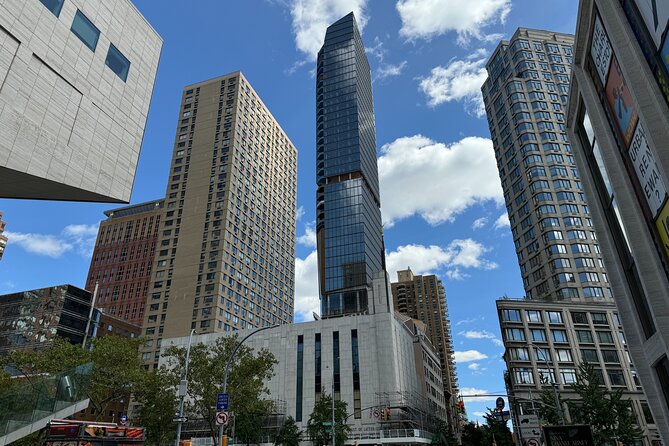
You end at Hearst Tower, designed by Norman Foster. This is an excellent finish because it gives you a modern architecture contrast after the performance cluster.
The itinerary lists this as a 10-minute visit. That’s long enough to understand the big idea, but not so long that you lose track of why it’s your endpoint. When you reach Hearst Tower, you’re likely to notice how the tour has trained your eyes from “recognize the famous building” to “interpret the architecture behind it.”
The guide makes the tour: from mixed groups to serious questions
One reason this tour earns top marks is the guide approach. In the best sessions, the explanation adapts to who’s in the group: an architecture-minded person can ask technical questions, and a non-architect can still follow easily.
Ivan is specifically mentioned in the tour’s feedback as a guide who’s both pleasant and very good at answering deep questions. There’s also an emphasis on interactivity. If you speak up at intersections—what you’re wondering about, what you noticed—you’ll likely get a direct answer rather than a quick brush-off.
There’s also a strong theme of learning to see familiar places differently. Even someone who lives in New York can walk these blocks with fresh eyes once they know what to focus on.
Who this tour is best for (and who might want a different plan)
This tour is a strong match if:
- You want a guided architecture overview in 2 hours
- You like big-name landmarks but also want the “how it fits together” explanation
- You appreciate clear listening support via headsets
- You’re visiting with a mixed group and need something that works for different interest levels
You might want a different tour plan if:
- You expect long interior access or extended time at each venue
- You want a slower, museum-style pace instead of a moving itinerary
- You’re mainly looking for an art museum visit rather than a city-and-building lesson
What to bring and how to get more out of the route
A few practical choices will make a difference:
- Wear comfortable walking shoes. The route is only about 2 hours, but it’s still street time.
- Bring a charged phone or camera. You’ll see a lot of recognizable shapes quickly.
- If you’re the question type, prepare one or two. The tour format rewards curiosity.
If weather looks questionable, plan your timing accordingly. The experience is described as requiring good weather, and if it’s canceled due to poor conditions you’ll be offered a different date or a full refund.
Final call: should you book this Upper West Side art and architecture tour?
Yes, if you want an efficient, high-signal introduction to the Upper West Side’s architecture and urban planning—and you prefer a live guide who keeps things understandable. The $49 price works especially well because the tour includes headsets, a small group, and free admission tickets listed for the stops where entry is part of the experience.
Skip it if you’re craving lots of quiet time in buildings or you want a long museum-style visit. But if your goal is to walk these streets and finally know what you’re looking at, this is an easy booking.
FAQ
How long is the New York Upper West Side Art and Architecture Tour?
The tour lasts about 2 hours, including travel time.
Where does the tour start and end?
It starts at Columbus Circle and ends at Hearst Tower at 300 W 57th St. The end point is close to subway and other transportation.
What is the price per person?
The price is $49.00 per person.
Is the tour a guided small-group experience?
Yes. It’s a guided walking tour with a maximum of 15 travelers. You receive in-person guide support.
Does the tour include headsets?
Yes. Each guest gets professional individual headsets to hear the guide clearly.
Are admission tickets included for the stops?
Admission tickets listed on the itinerary are free, and the tour includes fees and taxes.
What languages are the guide sessions offered in?
The guide is listed as available in English, Spanish, French, and Italian.
Are service animals allowed?
Yes, service animals are allowed.
What is the cancellation policy?
You can cancel for a full refund up to 24 hours before the experience starts. The tour also requires good weather, and if canceled due to poor weather you’ll be offered a different date or a full refund.