REVIEW · NEW YORK CITY
New York’s Iconic Central Park: A Self-Guided Audio Tour
Book on Viator →Operated by VoiceMap Audio Tours · Bookable on Viator
Central Park changes when you press play. This self-guided VoiceMap tour is a smart way to get stories while you walk, from Grand Army Plaza to the Dakota. I love the offline audio and maps, and I also like that it is limited to your group so you can stop without feeling rushed. One drawback to consider: if you rely too heavily on the on-phone path guidance, Central Park’s layout can feel confusing at points.
At $14.99 per person for about 90 minutes to 2 hours, it can be a good value if you want more than a quick lap around the highlights. You’ll also get lifetime access in English, which means you can come back and replay parts later. The key is simple: bring your own smartphone and headphones, and download everything before you start.
In This Review
- Key things I’d plan around
- VoiceMap pacing: a self-guided Central Park walk with real structure
- Price and value: $14.99 for audio, maps, and a guided feel
- Grand Army Plaza start: when the tour tells you where you are
- Pulitzer Fountain and William Tecumseh Sherman: architecture and war you can spot
- Gapstow Bridge and Central Park Zoo: movies, TV, and a legendary escape
- Balto, the Indian Hunter statue, and the Cathedral Walk idea
- Bethesda Terrace and Bethesda Fountain: views plus design clues
- Bow Bridge to Strawberry Fields: when the park gets darker
- Ending at the Dakota Hotel: your final landmark and a tidy finish
- When the phone navigation feels off: a real-world consideration
- Who this Central Park audio tour fits best
- Should you book the Central Park self-guided VoiceMap tour?
- FAQ
- How long is the Central Park New York’s Iconic Central Park self-guided audio tour?
- Where does the tour start and end?
- How much does it cost?
- Does it work offline?
- Do I need to bring a smartphone or headphones?
- Is this tour private, or will I join other people?
Key things I’d plan around

- Offline access means you can keep going even with spotty cell service in the park.
- Grand Army Plaza to the Dakota gives you a clear start and finish you can anchor on.
- Emmy-nominated storytelling ties the sites together with a guide-style narrative.
- Pausing is built in, so you can stop for photos or to re-orient yourself.
- Central Park’s turns can be tricky, so use major landmarks as your backup when paths feel weird.
- Statues, politics, and pop culture show up in the stops, not just scenery.
VoiceMap pacing: a self-guided Central Park walk with real structure
This is a self-guided audio tour you run on your phone. You download the VoiceMap app, grab the tour, and start when you’re ready at the meeting point near Grand Army Plaza. There’s no need to coordinate with a group schedule, which is handy in a place where crowds can swing hour to hour.
The format is designed for walking at your pace. You can stop and start as you like, which matters in Central Park because you’ll hit photo moments and scenic pauses whether you plan them or not. It also helps with energy level. If you want a slower stroll, you can stretch the experience toward the 2-hour end.
The tour is offered in English and includes offline access to audio, maps, and geodata. That’s a big deal in Central Park, where reception can be inconsistent under tree cover. You also get lifetime access, so it’s not a one-and-done ticket.
You can also read our reviews of more guided tours in New York City



Price and value: $14.99 for audio, maps, and a guided feel

At $14.99 per person, this tour isn’t trying to replace a full guided day. It’s more like a “walking guide in your pocket” for roughly 90 minutes to 2 hours. If you were considering hiring a private guide or doing a bunch of paid add-ons, the math often gets easier with something that costs less and stays useful long after your visit.
What you get is practical: VoiceMap app access for Android and iOS, lifetime tour access, and offline materials. Those inclusions can save you from buying multiple guides or tickets just to learn what you’re looking at.
What’s not included is equally important. You must bring your own smartphone and headphones, and you’ll need to handle your own food, drinks, and transportation. Also, the tour does not include museum tickets or entrance fees for anything you pass along the way. So plan for this as an outside-walking experience.
If you’re the kind of person who hates tech on vacation, take a breath first. This is phone-based, and it works best when your device is charged and you’ve downloaded offline content before you’re deep in the park. And yes, the experience is non-refundable, so treat it like a plan you intend to use.
Grand Army Plaza start: when the tour tells you where you are

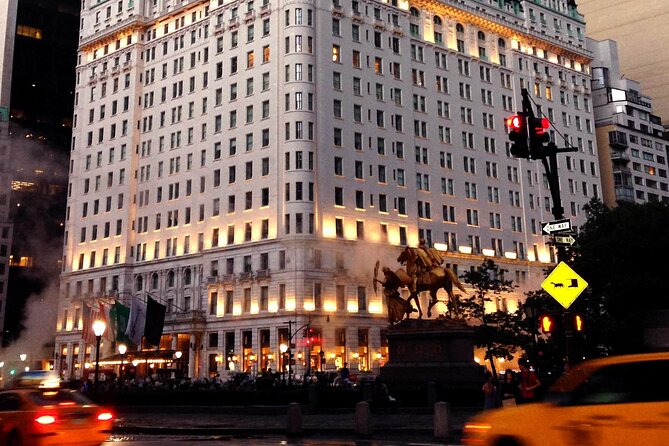
The tour starts at 768 5th Ave at Grand Army Plaza, in front of the Plaza Hotel. This is a smart opening location because it’s recognizable and easy to find from nearby transit and streets. It also gives you a clean way to orient yourself before the park becomes a maze of paths.
Right away, you’ll hear an introduction to VoiceMap and how the audio experience is supposed to work while you walk. That matters because you’re about to rely on a mix of listening and visual landmark spotting. Once you get those cues, the rest becomes more intuitive.
From the start, you’ll be moving through the park while the narration connects the dots between what you see and why it matters. The goal isn’t just names and dates. It’s context you can keep in your head as you pass each site.
Pulitzer Fountain and William Tecumseh Sherman: architecture and war you can spot
Next up is the Pulitzer Fountain. You’ll be walking past it while the audio explains that it was designed in 1916 by Thomas Hastings. Hastings also worked on major New York landmarks, including the New York Public Library, so the tour is quietly teaching you how the city’s architects show up again and again.
After that, you’ll come to the statue of William Tecumseh Sherman. The story told here is memorable: in the Civil War battle of Shiloh, Sherman had his horse shot out from under him. That detail gives the monument a human, dramatic edge. It’s not just a name in stone.
One reason I like stops like these is that they prepare you for how Central Park mixes spectacle with memory. You’re walking in a park, sure, but the audio keeps reminding you that this is also a public record—war, design, and civic ambition stamped into the grounds.
Gapstow Bridge and Central Park Zoo: movies, TV, and a legendary escape

As you continue, the tour takes you past the Gapstow Bridge. It’s the kind of view that looks like it belongs in a movie set, and the audio calls out pop culture references like Home Alone 2, The Devil Wears Prada, Gossip Girl, and Enchanted. Even if you only recognize one or two, it helps you look at the bridge like a visual icon, not just a crossing.
Then you’ll pass Central Park Zoo. The audio points you to a classic park legend: the Great Zoo Escape of 1874. When you hear stories like this while standing in place, the park stops being just a pretty background. It becomes a stage where real events played out.
Practical tip: bridges and zoo areas can be busy. If you’re trying to get photos without interruptions, consider starting earlier in the day or later when foot traffic thins. The tour pacing lets you wait a minute and keep moving.
You can also read our reviews of more tours and experiences in New York City






Balto, the Indian Hunter statue, and the Cathedral Walk idea
The tour includes the Balto statue. The audio shares an important clarification: Balto isn’t actually the dog’s true name. Still, the story connected to him—saving Nome, Alaska—has stuck in American imagination. Hearing that distinction matters, because it nudges you to look at public monuments with a slightly critical eye.
Next, you’ll walk by John Quincy Adams Ward’s famed Indian Hunter statue. The audio explains the statue and the artist while you pass. This is one of those stops that broadens the experience beyond “pretty park things.” It pushes you to think about how art, identity, and public space intersect.
Then the route shifts toward Central Park’s mall, often nicknamed Cathedral Walk. If you’ve ever walked through a corridor of trees and felt the space tighten around you, that’s the vibe. The audio explains why that nickname sticks, and it gives you a way to connect the feel of the walk with the design of the park.
One of the most interesting parts here is the tour’s discussion of women in Central Park’s statuary. You’ll hear that until August 2020, there wasn’t a statue honoring a real woman in Central Park, marked around the 100th anniversary of the 19th Amendment and women’s right to vote. It’s a sobering idea, and it lands better because you’re literally surrounded by monuments as you listen.
Bethesda Terrace and Bethesda Fountain: views plus design clues
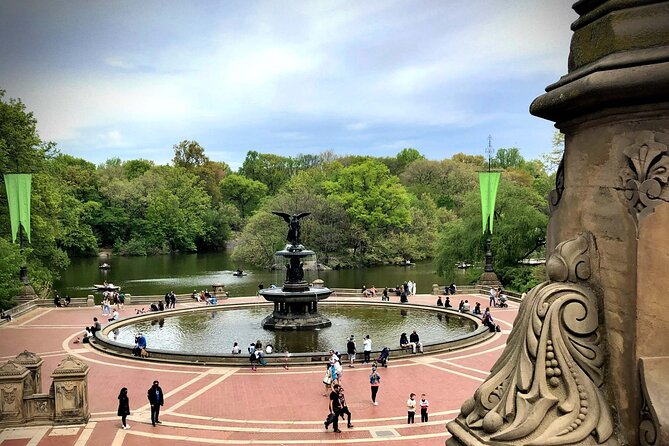
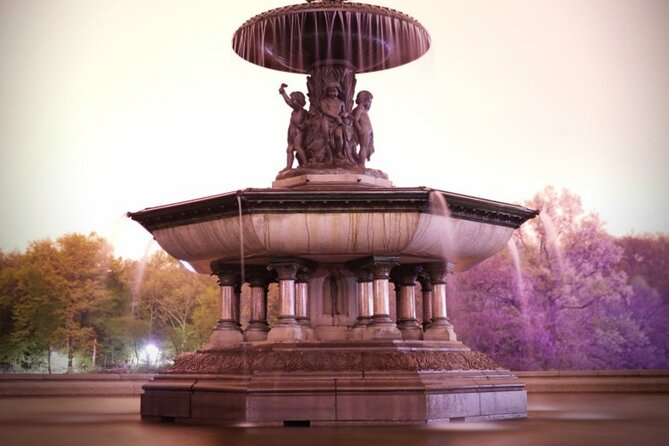
As you approach Bethesda Terrace and Bethesda Fountain, the tour leans into the visual payoff. From here, you get some classic park views, and the audio adds history so you can understand what you’re looking at.
You’ll learn a bit about Bethesda Terrace’s history while you take in the setting. Then you’ll hear about the history of Bethesda Fountain as you walk past it. This stop is useful if you tend to skim architecture. The audio gives you a simple framework so the scene feels less random and more intentional.
It’s also a good moment to slow down. Bethesda areas are popular for photos, and you’ll likely want a couple of minutes to take it in without rushing. Since the tour is play-and-pause friendly, you can let the narration sync with your walk without feeling trapped by it.
Bow Bridge to Strawberry Fields: when the park gets darker
Bow Bridge is next, and the audio doesn’t treat it like just scenery. You’ll hear about the horrors connected to its shadows. The important thing to know is that this stop shifts tone. If you’re visiting with kids, you might want to preview what they’re likely to hear or be ready to adjust the volume.
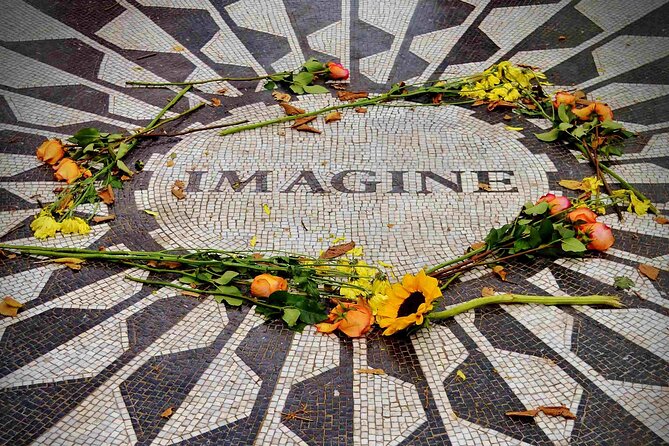
After Bow Bridge, you’ll reach Strawberry Fields. The tour connects the location to John Lennon’s murder. This is a different kind of memory than the statues and war stories. It’s tied to music history and personal loss, and it tends to make people quiet.
Stops like these are a reminder that Central Park isn’t only a “day out.” It’s also a place where public space holds private grief and big cultural moments. The audio helps you notice that instead of just walking through it.
Ending at the Dakota Hotel: your final landmark and a tidy finish
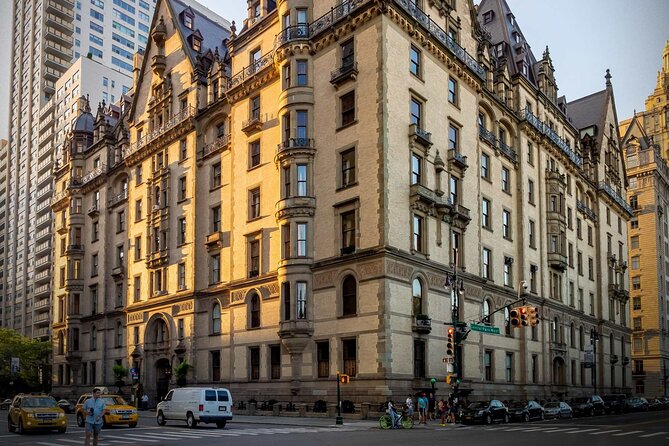
The tour ends in front of the Dakota Hotel at 1 W 72nd St. This is a strong closing point because it feels like the park meeting the city again. You’re finishing near a major address, so it’s easy to plan your next step—subway, a meal, or just a long walk.
Before the tour ends, the audio shares how the hotel came to be. That kind of ending is useful: it gives you one last story to carry outside the park. When your brain is already tired from walking, a clear finale helps you feel like the experience had a beginning-middle-end arc.
This route is structured enough that you shouldn’t feel like you’re wandering without purpose. You may still get momentarily turned around, but the tour’s landmarks—fountains, bridges, major statues—give you handles to grab.
When the phone navigation feels off: a real-world consideration
Central Park can make anyone feel lost, even with good intentions. One person reported that the route guidance kept looping and even suggested they were lost, asking for a refund. That’s not the experience you want.
So here’s how I’d protect yourself:
- Download the offline audio and maps before you step into the park.
- Use the big landmarks as your primary wayfinding, like bridges, fountains, and statues.
- Keep your expectations flexible. If you stop to look around, just restart your bearings rather than forcing the phone to be right every step.
If you’re the type who hates any chance of getting turned around, you might still enjoy this, but consider building extra time into your day.
Who this Central Park audio tour fits best
This is a great choice if you want:
- a guided-feeling walk without booking a timed tour
- offline audio and maps that let you move freely
- stories tied to landmarks, not just general descriptions
- the ability to pause for photos and slow down when you need to
It’s also a good fit for solo walkers and couples who prefer control. Since it’s limited to your group, you’re not dealing with a big crowd’s pace.
It may be less ideal if you dislike phone-based navigation, or if you depend entirely on the screen for step-by-step directions. In Central Park, it’s safer to treat audio as the guide and landmarks as the map.
Should you book the Central Park self-guided VoiceMap tour?
I’d book this if you’re visiting Central Park for a focused walking pass and want the park to explain itself. Offline access, lifetime replay, and a narrative that covers monuments, bridges, and memorials make the $14.99 feel reasonable for the time you’ll spend out there.
I’d skip or think twice if you absolutely need hands-on human guidance, or if you know you’ll stress over getting your bearings from an app. Central Park is big, and even a great audio tour can’t change that reality.
If you’re on the fence, do this: plan for a comfortable, unhurried walk, download offline first, and let the tour guide you by landmarks. You’ll likely end up seeing more than you expected—without turning your day into a strict schedule.
FAQ
How long is the Central Park New York’s Iconic Central Park self-guided audio tour?
The tour takes about 90 minutes to 2 hours.
Where does the tour start and end?
It starts at 768 5th Ave, New York, NY 10019 (in front of the Plaza Hotel at Grand Army Plaza) and ends at 1 W 72nd St, New York, NY 10023 (in front of The Dakota).
How much does it cost?
It costs $14.99 per person.
Does it work offline?
Yes. The tour includes offline access to audio, maps, and geodata in the VoiceMap app.
Do I need to bring a smartphone or headphones?
Yes. A smartphone and headphones are not included, so you’ll need to bring both.
Is this tour private, or will I join other people?
It’s listed as a private tour/activity, limited to just your group. Only your group participates.