REVIEW · NEW YORK CITY
NY Helicopter Tour: New York City Skyline (Heliport fees Incl)
Book on Viator →Operated by HeliNY · Bookable on Viator
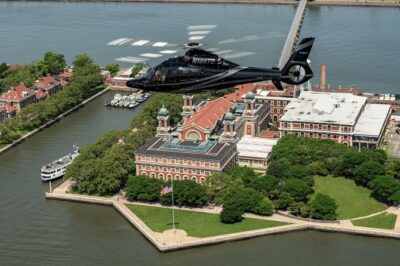
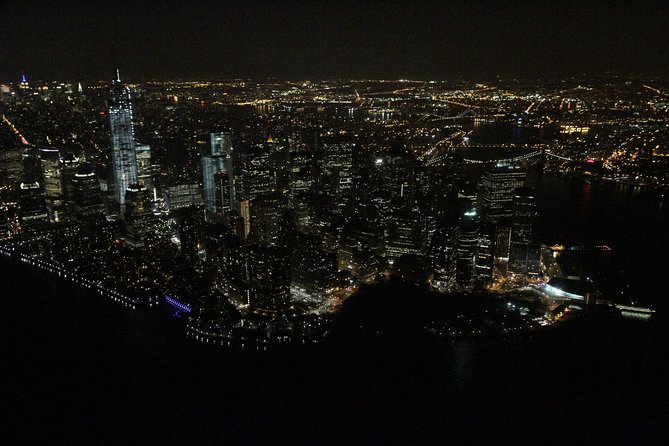
NYC looks different from above. This night helicopter tour is built for the skyline glow: lit landmarks, a live pilot with narration, and a short flight window that keeps the whole thing feeling tight and special. I especially like the floor-to-ceiling windows (Midtown lights really pop) and the way the route stacks iconic sights back to back. One consideration: at this price you’re paying for a premium experience, and it’s still a shared flight, so don’t expect tons of elbow room.
The ride leaves from Linden Municipal Airport in Linden, New Jersey, then heads toward Manhattan and comes back the same way. You’ll see a big slice of the city from above in about 25 to 30 minutes, and you can choose a departure time that fits your night. The upside is you get maximum skyline time after dark; the trade-off is the trip is not launched from inside Manhattan.
Key things to know before you go
- Pilot narration helps you identify what you’re seeing as the skyline changes fast.
- Heliport fees are included, so you’re not blindsided by arrival costs.
- Shared helicopter, max 6 passengers keeps the group small but still means close seating.
- You’ll fly over multiple neighborhoods and water edges, including views tied to Tribeca, SoHo, West Village, and Central Park.
- Bring only light: camera/phone/sunglasses are the only items you can take aboard, with lockers provided.
- Weight limit is real (275 lbs per passenger), and a seat belt extender is not offered.
In This Review
- The Night Timing That Actually Changes Everything
- Linden Airport Logistics: The Part People Skip on Purpose
- Boarding Rules: What You Can Bring (and Why It Matters)
- What 25–30 Minutes Feels Like in Practice
- Shared Flight Setup: Small Group, Close Seating Reality
- How the Pilot Narration Improves Your Sighting Game
- The Route From Takeoff to Landing: What You’ll See
- Tribeca to SoHo: Old Streets, New Angles
- West Village and Columbus Circle: Midtown Gravity Near the Edges
- Central Park: The City’s Pause Button
- Liberty to 9/11: The Emotional Middle of the Skyline
- Chelsea Piers to the Intrepid: Waterline Views
- Times Square: Bright Lights in a Short Window
- Columbia University and Yankee Stadium: College and Sports from the Hudson Side
- George Washington Bridge: The Big Finish
- Landmarks You’ll Catch Along the Way (and How to Focus)
- Price and Value: Is $354.93 Reasonable?
- Who Should Book This (and Who Should Rethink It)
- Quick Comfort and Safety Checks Before Your Flight
- Should You Book This NYC Skyline Helicopter Tour?
- FAQ
- Where does this helicopter tour depart from?
- How long is the flight?
- Is there a shuttle available from the train station?
- What can I bring onboard?
- Is there a weight limit?
- What happens if the weather is bad?
The Night Timing That Actually Changes Everything

For this type of helicopter tour, night is not just a gimmick. When the city is lit, you get contrast: bright building edges, darker water, and streets that look like moving grids from above.
You also get a practical benefit. The flight duration is short, so choosing a departure that’s late enough for the skyline glow means you spend the limited air time on the best visuals. If you can, pick a time window when you expect it to be dark for most of the flight, not just partially dark.
Linden Airport Logistics: The Part People Skip on Purpose
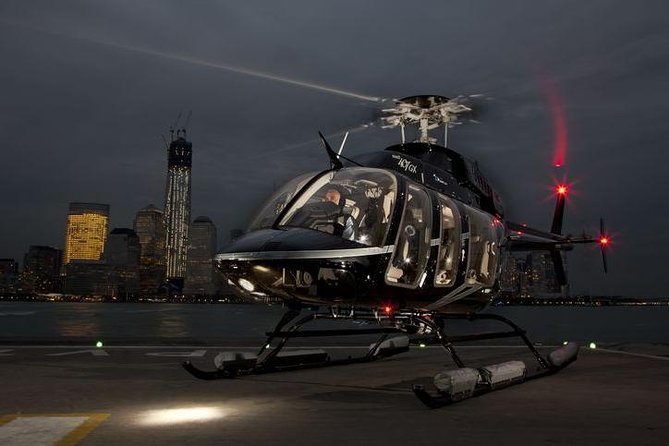
This tour departs from Linden Municipal Airport in Linden, NJ. Your taxi or ride-share part of the day is real, but you can reduce stress with the provided option: a free shuttle from Linden, NJ train station is available by request only.
Linden is also close enough that you can plan around it. One straightforward approach is: get to the Linden station area first, request the shuttle, then let their ground team handle the rest. If you’re coming from Manhattan, assume you’ll need extra time for traffic depending on the hour.
One thing to watch: the hangar and terminal area can be easy to miss if you show up right at the last minute. Build in a little buffer, and follow directions carefully once you’re on-site.
You can also read our reviews of more city tours in New York City



Boarding Rules: What You Can Bring (and Why It Matters)
On arrival, expect a security-style check. Bags are inspected, and only camera, cell phone, and sunglasses are allowed onboard. The operator provides complimentary lockers so you can stash what’s not permitted.
That rule shapes how you pack for the experience. If you want photos, plan around your phone or camera only. If you’re bringing a larger bag, don’t treat this like a “quick takeout and go” situation; you need a minute or two for locker time.
Also plan for paperwork and identity. You’ll need a current government-issued photo ID, and you’ll sign a waiver before flying.
What 25–30 Minutes Feels Like in Practice
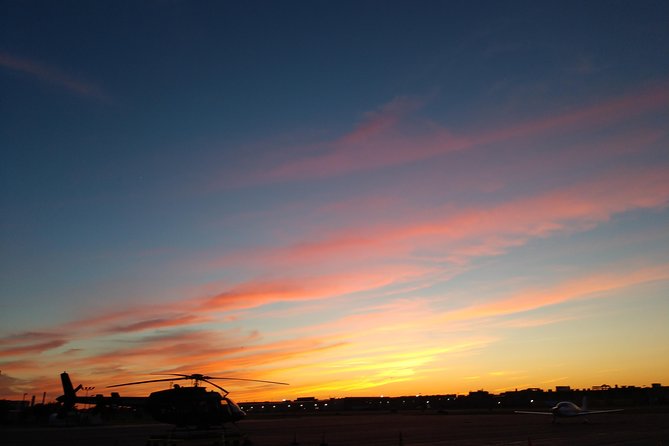
The flight itself is about 25 to 30 minutes. Some people report a slightly shorter airborne time, so think of the experience as a compact chunk where the value is in the skyline coverage, not in a long sightseeing loop.
Inside the cabin, you’re in a climate-controlled space with floor-to-ceiling windows. That matters because window height changes how much you can actually photograph and how much you can lean in for views without feeling awkward.
The flight is a shared experience, with a maximum group size of 6 travelers. This is not a private helicopter, so seating can feel close, especially if you’re larger in build or you’re sensitive to cramped quarters.
Shared Flight Setup: Small Group, Close Seating Reality
A small group sounds comfortable, and it usually is. But shared still means you’re flying next to other people, and that can affect comfort.
One practical takeaway: if you’re worried about personal space, tight rows, or sitting in a specific spot for photos, treat this as a comfort planning issue, not a “surely it’ll be fine” assumption. You’re paying for time in the air, so make your comfort choices up front.
If you get motion sensitivity, it helps that people describe the ride as smooth. Still, helicopters are helicopters, and you should plan like you might feel some movement. If that’s you, consider discussing options for motion comfort ahead of time with your travel health professional.
How the Pilot Narration Improves Your Sighting Game
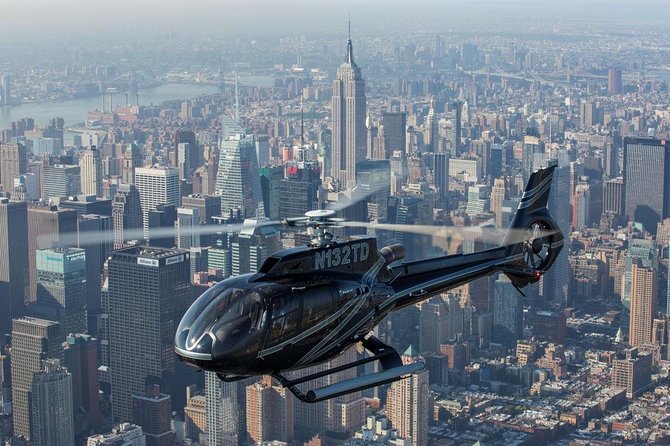
The pilot provides live narration, and that turns the skyline from a blur into something you can actually place. It’s not just “there’s a building.” It’s more like: this is where you’re looking, what it is, and how it connects to the city’s layout.
A few staff and pilot names come up in different accounts, like David, and ground staff such as Julio and Arif. Even when you don’t memorize names, it’s a good sign: people get clear instructions and feel guided from the start.
Also, narration is timed to what’s appearing next. That’s huge for a short flight, because you don’t have long gaps to figure out what’s where. You’re better off letting the pilot do the labeling while you focus on photos and skyline context.
You can also read our reviews of more tours and experiences in New York City



The Route From Takeoff to Landing: What You’ll See
After boarding at Linden Municipal Airport, the flight heads out over the Newark Airport area toward Manhattan. From there, the route is built like a highlights reel.
Here’s how the skyline story plays out, in the order you’ll experience it:
Tribeca to SoHo: Old Streets, New Angles
TriBeCa (often spelled TiBeCa on signage) gives you an early downtown skyline view with a different feel than Midtown. Look for the tight geometry of the streets and the way rooftops form patterns.
Then comes SoHo. From above, you can see how the neighborhood sits against major avenues. SoHo is also one of those places where rooflines help you tell which block you’re looking at without reading street names.
West Village and Columbus Circle: Midtown Gravity Near the Edges
Next is the West Village, then Columbus Circle. Columbus Circle is a key visual anchor because it sits where uptown and Midtown energy collide. From the air, you get a clean sense of how major traffic corridors branch out.
Central Park: The City’s Pause Button
You’ll fly above Central Park, and again later as part of the route. Central Park from a helicopter window is easy to recognize because it looks like the city’s green shape carved into the hard grid.
Watch for how the park edges line up with major streets around it. That’s the kind of “map in the sky” effect that makes a short flight feel longer than it is.
Liberty to 9/11: The Emotional Middle of the Skyline
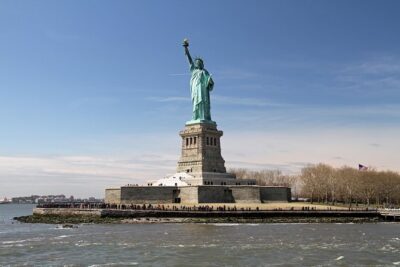
The flight passes by the Statue of Liberty and then the area tied to the National 9/11 Memorial and One World Trade Center.
These views are the kind you remember later, because they’re not random. They’re iconic and they’re tied to a specific place in the story of New York. From above, the scale hits in a different way than on street-level walks.
Chelsea Piers to the Intrepid: Waterline Views
After that, you’ll glide past Chelsea Piers and the Intrepid. The waterline changes the visual texture. You’re no longer only seeing rooftops; you’re seeing the city’s edges, marinas, and shoreline geometry.
This is also a good part of the flight for photos because water and dark sky create stronger contrast than dense skylines alone.
Times Square: Bright Lights in a Short Window
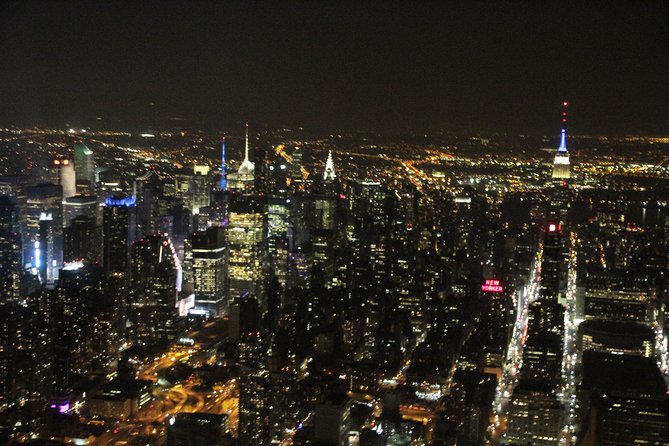
Then comes Times Square. It’s busy in the air too, just in a different way. Instead of crowds, you get the glow—signs, billboards, and intersecting streets that look like a lit circuit board.
Times Square is best when you’re ready to shoot quickly. The aircraft won’t stop long enough for slow framing, so keep your phone/camera ready before the view peaks.
Columbia University and Yankee Stadium: College and Sports from the Hudson Side
Later you’ll pass by Columbia University, and you may get a glimpse of Yankee Stadium from about the Hudson River area.
These sightings give the skyline tour more range than just downtown and Midtown. You get a sense of how the city’s major institutions sit against the river edges.
George Washington Bridge: The Big Finish
The flight wraps with the George Washington Bridge. It’s one of those sights that reads instantly from above because of its structure and scale.
As a final look, it helps you understand the city’s geographic grip: Manhattan, New Jersey, and the flow of the region.
Landmarks You’ll Catch Along the Way (and How to Focus)
Besides the neighborhoods and route anchors, the flight description includes views tied to major Midtown and downtown icons, like Rockefeller Center, the Empire State Building, the Chrysler Building, and United Nations Headquarters.
Here’s the practical way to focus. Don’t try to identify everything at once. Pick 2 or 3 targets per phase. For example:
- Midtown stretch: focus on Rockefeller Center and the Empire/Chrysler pair.
- Downtown stretch: focus on One World Trade Center and the memorial area.
- Finale: focus on the bridge and the river.
This keeps you from spinning in your seat and missing the moment.
Price and Value: Is $354.93 Reasonable?
At $354.93 per person, this is not a budget activity. You’re paying for four big cost drivers: helicopter operation, crew, small-group seating, and airport/heliport fees.
What makes it feel more “worth it” is that you’re buying time in the air with night lighting. A good Manhattan walk can show you street life, but it can’t recreate a true skyline-wide viewpoint in 25–30 minutes. The value is in seeing the city as one connected picture.
The best way to think about it: this is a high-impact, high-cost memory. If you want a once-in-a-trip experience and you’re choosing a night slot, it can feel like the most efficient way to see a lot of New York in one go.
Who Should Book This (and Who Should Rethink It)
This works best for people who:
- Want an overhead skyline shot without spending hours commuting between viewpoints.
- Like night photography and want the city lit, not washed out.
- Are comfortable with a shared experience and close seating.
It’s less ideal for people who:
- Need personal space above all else.
- Are over the 275 lbs limit (or need a belt extender, since that’s not available).
- Want to bring lots of gear on board (only limited items are allowed onboard).
Quick Comfort and Safety Checks Before Your Flight
A few rules shape your day more than you’d think. You’ll need ID, you’ll sign a waiver, and bags get inspected. Only limited items go into the cabin, and weight limits are strict at 275 lbs.
Also, the operator runs in good weather only. If weather is poor, you may be offered another date or a full refund. That means this is best planned as a flexible highlight, not something you hinge on a single impossible schedule slot.
Should You Book This NYC Skyline Helicopter Tour?
I’d book it if you want the skyline’s night look and you like the idea of a short flight that hits multiple icons in one circuit. The pilot narration and the window setup are the sort of details that actually improve the experience, not just the marketing.
I’d pause if the price stings and you’re also sensitive to tight shared seating. For some people, the value comes from the view; for others, the comfort trade-off matters more than the skyline.
If you’re celebrating a birthday, planning a date night, or just trying to do one big NYC splurge that isn’t a restaurant, this is the kind of pick that stays on your brain longer than the rest.
FAQ
Where does this helicopter tour depart from?
It departs from HeliNYMain Terminal at Linden Municipal Airport in Linden, NJ, and it returns back to the same meeting point.
How long is the flight?
The helicopter flight duration is approximately 25 to 30 minutes.
Is there a shuttle available from the train station?
Yes. There is a free shuttle from the Linden, NJ train station by request only.
What can I bring onboard?
All bags are subject to inspection. Only a camera, cell phone, and sunglasses can be brought aboard, with complimentary lockers available for other belongings.
Is there a weight limit?
Yes. The total weight per passenger limit is 275 lbs. If you weigh over that, you may be unable to fly, and seat belt extenders are not available.
What happens if the weather is bad?
This experience requires good weather. If it’s canceled due to poor weather, you’ll be offered a different date or a full refund.