REVIEW · NEW YORK CITY
NYC: Broadway Secrets & Behind-the-Scenes Studio Tour
Book on GetYourGuide →Operated by Intrepid Urban Adventures · Bookable on GetYourGuide
Broadway secrets start at street level. This small-group walk threads you through Times Square and theater landmarks, then hands you access to an active rehearsal studio where you can see how shows get built in real time. I love that it stays intimate with a maximum of 12 people, so your guide can answer questions instead of rushing past them. I also love the practical payoff: no ticket required for the big marquee moments, then a real behind-the-scenes stop that feels like you’re in the working part of the industry.
One thing to consider: it runs rain or shine, and the rehearsal studio visit involves walking up 3 flights of stairs, so it is not wheelchair accessible. Plan for comfort and weather, not just sightseeing.
In This Review
- Key highlights to look for
- Starting on Father Duffy Square: your first Broadway cue
- Times Square to classic Broadway marquees, no ticket needed
- Richard Rodgers and Majestic: spotting the lanes for major productions
- Second Stage Theatre and Theatre Row: modern Broadway’s testing ground
- Hell’s Kitchen: where the tour turns from marquee to process
- The private rehearsal studio stop: watching magic get built
- Costume and set rooms: practical details you’ll notice
- What makes it feel personal: the small-group advantage
- A fair heads-up: it’s still a walking tour first
- The $47 question: value for theater lovers
- Practical tips: shoes, stairs, and rain-or-shine reality
- Who this tour suits best
- Should you book NYC Broadway Secrets & Behind-the-Scenes Studio Tour?
- FAQ
- Where does the tour meet?
- How long is the walking tour?
- What is included in the price?
- Do I need a theater ticket to do this tour?
- Is the rehearsal studio visit wheelchair accessible?
- What should I bring?
- Does the tour run in bad weather?
Key highlights to look for
- Maximum 12 people: easier Q&A and a more personal pace through the Theater District
- Times Square sidewalk views: you’ll see famous Broadway and off-Broadway fronts without needing a show ticket
- Second Stage and Theatre Row: a quick route through places tied to newer, riskier work
- Hell’s Kitchen rehearsal-studio access: entrance included, with set and costume room peeks
- Live work in progress: you might catch set construction, costume prep, or choreography/musical rehearsal
- Guides with industry energy: reviews repeatedly call out guides like A.J., Jessie, Hannah, Micaela, Cullen, and Mickey for passion and standout storytelling
Starting on Father Duffy Square: your first Broadway cue
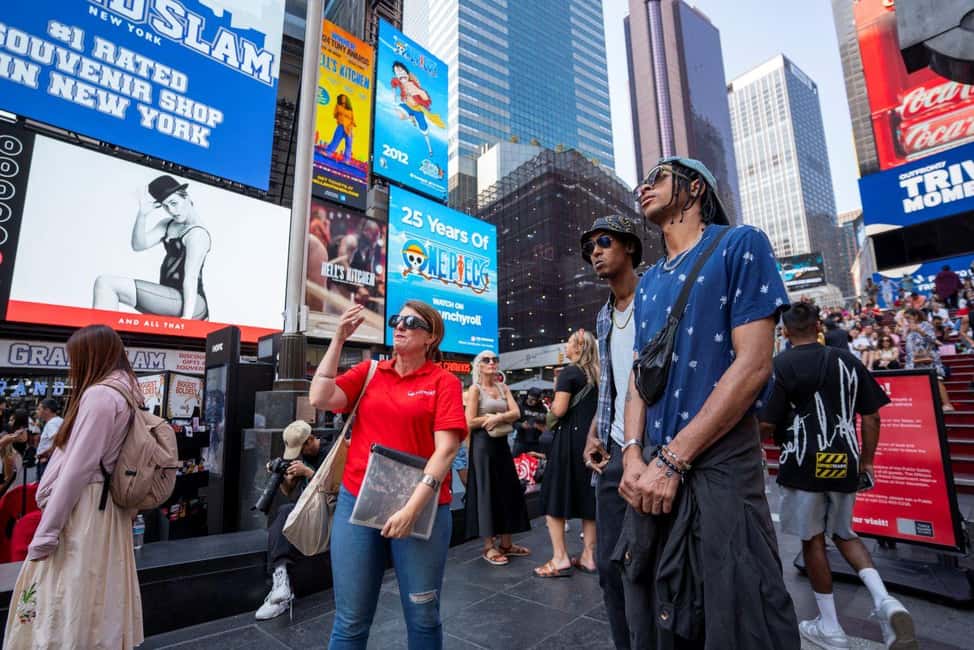
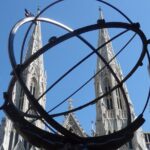
The tour meets at Father Duffy Square, in front of the statue and steps. It’s a solid spot to begin because it puts you right in the Theater District’s gravity. In the first few minutes, you’ll do two useful things: get your bearings and learn what kind of stories the guide will pull out on the walk.
This matters because the Broadway area can look like a wall of lights. A good guide helps you read what you’re seeing. You start to notice the differences between Broadway and off-Broadway venues, which is where the whole tour gets more interesting than basic sightseeing.
I’d wear comfortable shoes from the start. The experience is built as a walking tour, and the schedule doesn’t slow down just because your feet start asking questions.
You can also read our reviews of more tours and experiences in New York City.



Times Square to classic Broadway marquees, no ticket needed
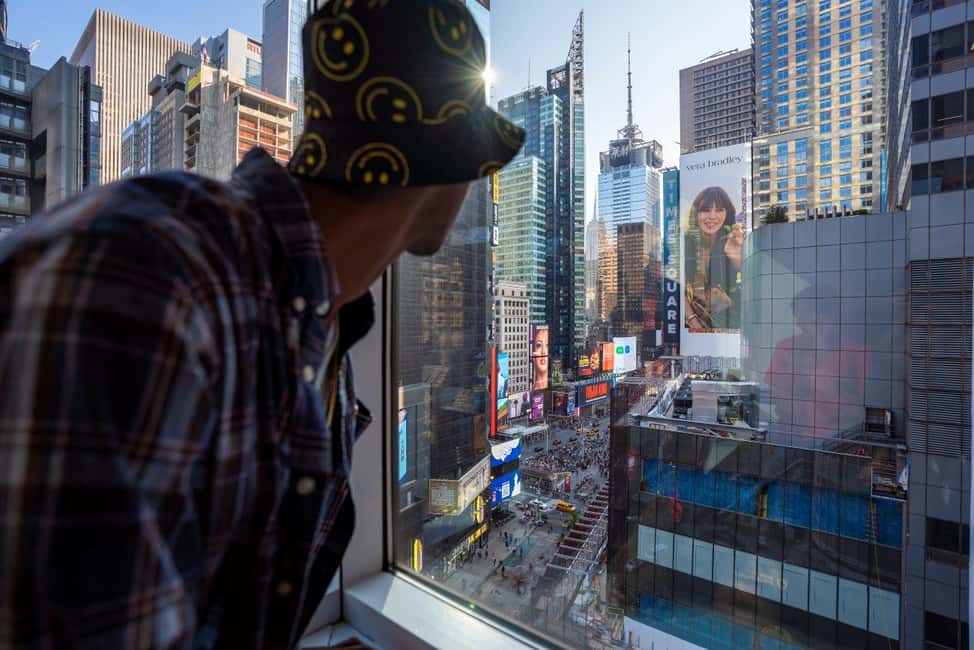
From Times Square, you’ll work your way along the edges of the big names, passing landmarks like the Richard Rodgers Theatre and the Majestic Theatre. You’re not going inside those houses. The payoff is that you’re learning the context behind the buildings while you see them in their natural habitat: crowds, signage, and the general theater buzz.
This is where the tour scores for value. You’re paying for a guided walk plus a studio visit, not for admissions to a venue you may not even be interested in. On this route, you’ll get sidewalk views of Broadway theaters, which is plenty if your goal is to understand what you’re looking at.
Two specific details make this stretch memorable:
- The guide explains how the Theater District became a machine for new work, not just a place for famous shows.
- You get references to current hits where they fit in physically and historically—for example, the Richard Rodgers Theatre is home to hits like Hamilton.
If you’re the type who likes to connect names to places, this portion will feel like turning on subtitles for a city you already recognize.
Richard Rodgers and Majestic: spotting the lanes for major productions
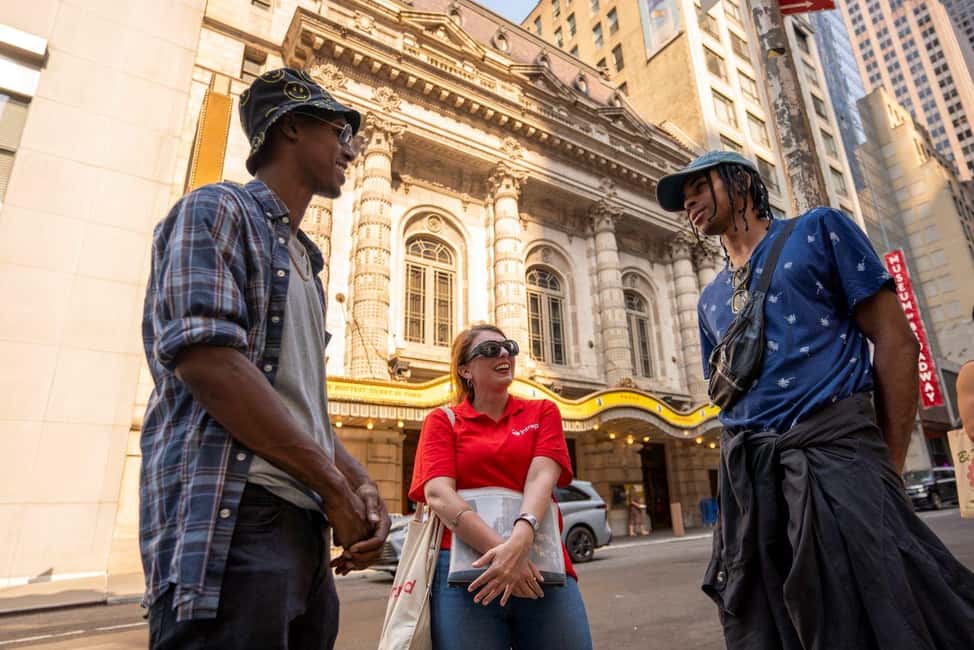
The Richard Rodgers Theatre and Majestic Theatre are more than pretty facades. They’re anchors in the Broadway ecosystem, and the guide’s job is to show you what that means.
As you walk, you’ll likely hear how different theaters operate and how programming shapes the audience mix. That context helps you stop thinking of Broadway as one giant block and start seeing it as a network of venues with different identities.
A practical tip: when you’re outside these big theaters, look for the small clues that tell you whether a show is running, what’s current, and how the neighborhood routes people in and out. The tour trains your eyes. After that, your own wandering time in the area gets better.
Second Stage Theatre and Theatre Row: modern Broadway’s testing ground
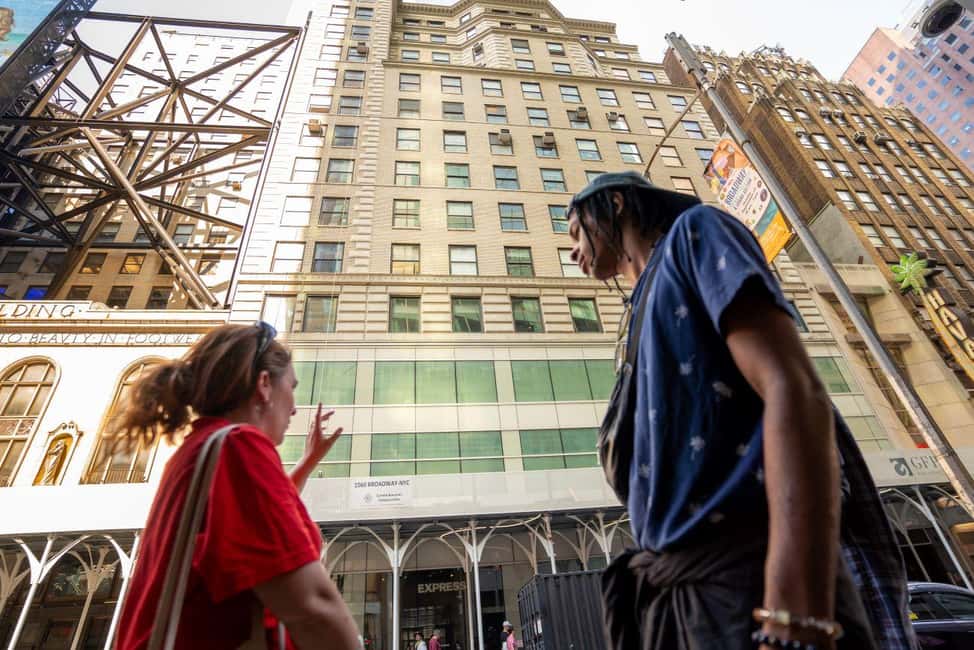
Then the walk shifts toward off-Broadway-adjacent territory, including the Second Stage Theatre and Theatre Row. One highlight called out is how groundbreaking shows like Dear Evan Hansen began in these kinds of spaces.
That’s the point. Off-Broadway and smaller houses often act like a testing ground where fresh ideas can grow without the same scale-pressure. When you hear that explanation while you’re standing near the venues, it makes the Theater District feel less like a museum and more like a living pipeline.
This segment also tends to be where the tour becomes fun even for people who aren’t hardcore about theater history. You don’t need to memorize everything. You just need to pay attention when the guide connects a venue’s purpose to what you see outside it.
Hell’s Kitchen: where the tour turns from marquee to process
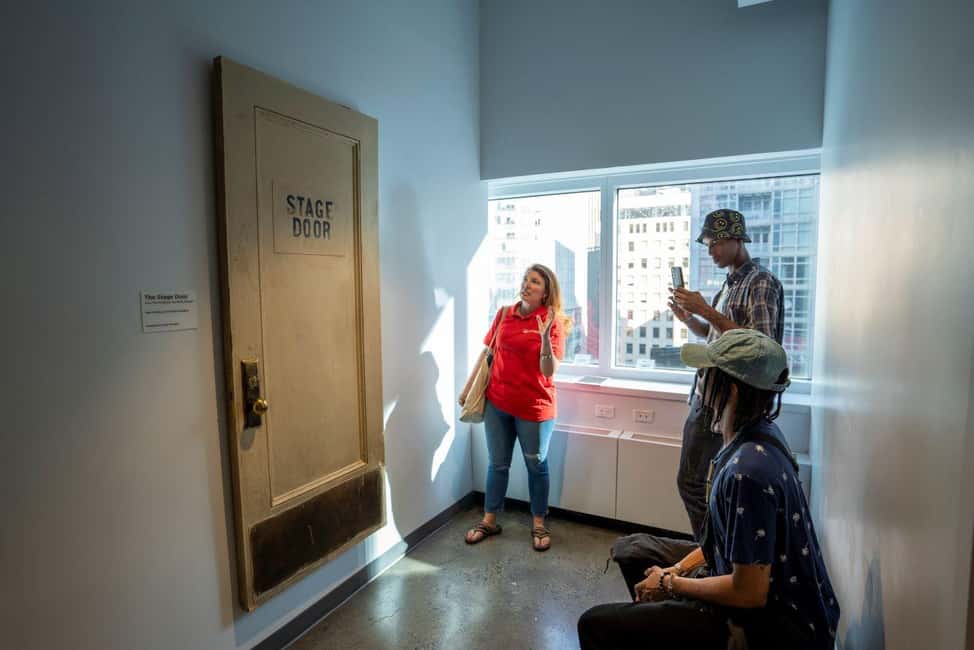
Once you move into Hell’s Kitchen, the vibe changes. The lighting is still there, but the venues and side streets feel more like working neighborhoods than postcard theater row.
Hell’s Kitchen is important to this tour because it’s where the guide can guide you from the public face of Broadway into the production reality behind it. You’re walking toward smaller stages and more behind-the-scenes energy. That sets up the studio stop so it doesn’t feel like a random add-on.
If you’re cold or it’s windy, this is also where the walking can be tougher. On one departure, the group started out in intense cold and wind, then quickly moved to sheltered spots around theater entrances and alleyways. Your takeaway: expect the weather to matter, but don’t let it ruin the flow. The guide’s route helps.



The private rehearsal studio stop: watching magic get built
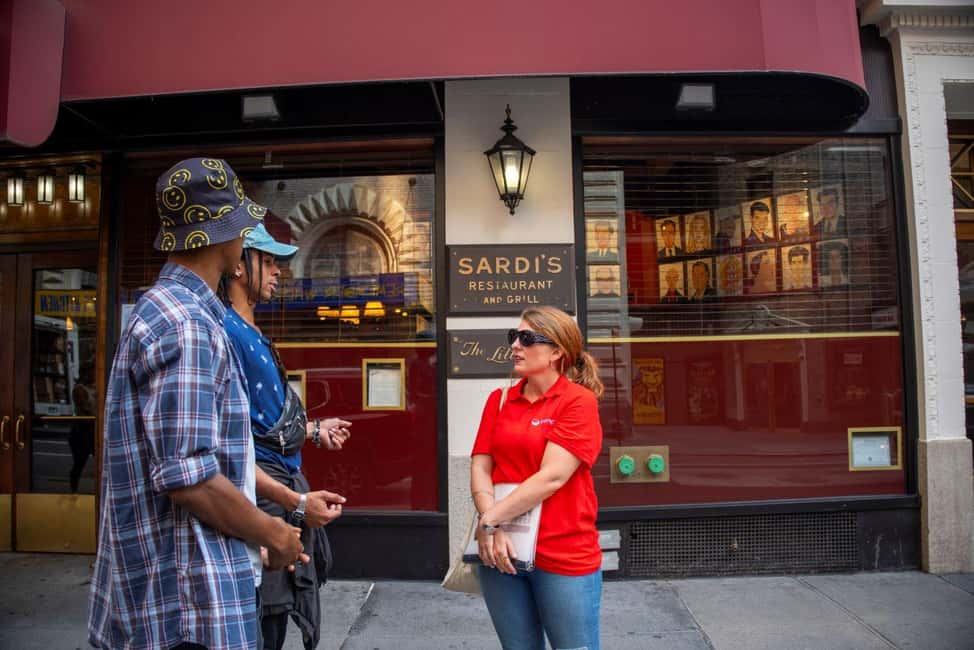
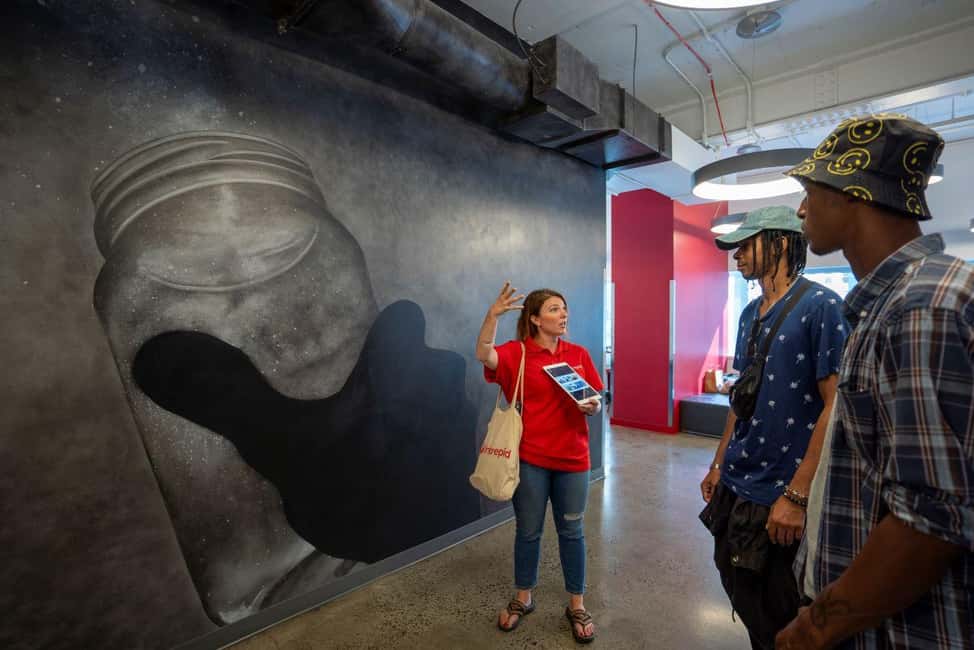
Here’s the moment that separates this tour from standard Theater District walks: you’ll get an entrance to an active rehearsal studio. This stop is included, and it’s the closest thing on the itinerary to the actual work of creating a show.
What you might see depends on the day, but the tour sets you up to recognize the stages:
- set construction
- costume design or costume prep
- rehearsal for music and choreography
- the general rhythm of how performers and production teams practice under real constraints
The experience description also notes that studio space is rented to singers and dancers, and even by Broadway shows when they’re learning a new actor into a role. That’s a big deal. It’s the kind of behind-the-scenes detail most people never think about until someone points it out.
One reviewer even mentioned a celeb sighting at the rehearsal studio. You can’t plan for that, but the point is clear: this space is active, and you’re seeing theater as a current event, not a remembered one.
Costume and set rooms: practical details you’ll notice
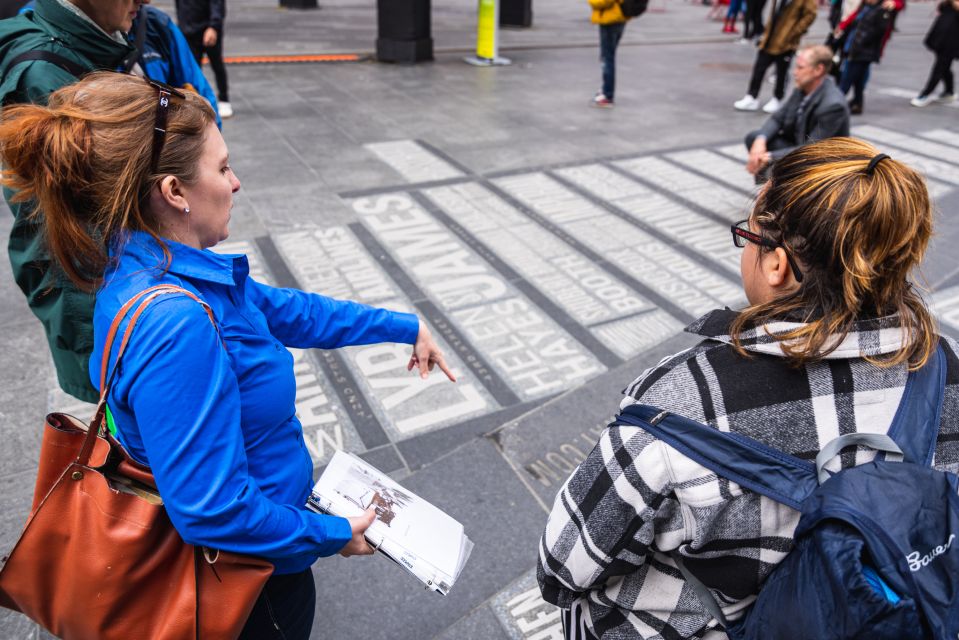
The tour highlights a peek into the magic of costume and set rooms in Hell’s Kitchen. Even if you’re not a theater craft expert, this is where your brain starts to connect the dots between what you see onstage and what had to happen offstage.
This portion works best if you slow down for a minute and look at how everything is organized for workflow. Costumes and sets aren’t just pretty. They’re built for quick changes, precise movement, and repeat performances. When you understand that, Broadway stops being only about star power and becomes about timing, teamwork, and problem-solving.
There’s also a realistic tone to rehearsal spaces. You may notice imperfections, adjustments, and the kind of trial-and-error that never shows up in marketing photos. That’s part of the magic too.
What makes it feel personal: the small-group advantage
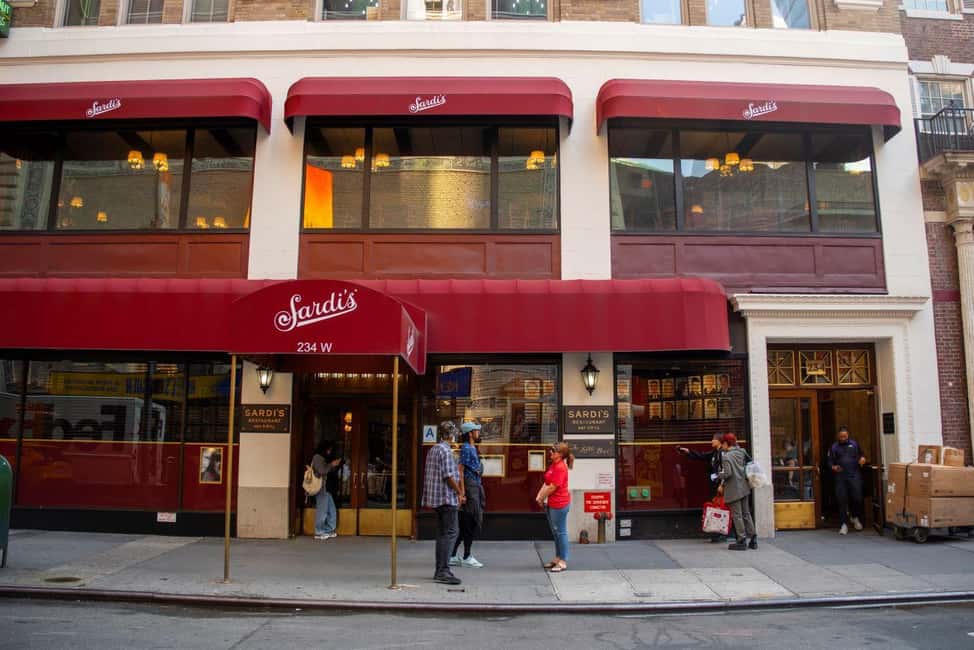
The tour caps at a maximum of 12 people. That isn’t just a comfort detail. It changes how the guide can run the walk.
In a smaller group, your guide can:
- tailor pacing based on how you’re reacting
- answer questions without derailing the whole itinerary
- point out details you’d otherwise miss when you’re focused only on the skyline
Some reviews specifically credit guides for friendly, engaging energy and for being able to handle questions in a way that keeps the group moving. Another standout theme is that the guide uses industry-insider knowledge to explain how Broadway works, not just what it looks like.
The best part: because it’s a walking tour, the conversation stays relevant. You’re not listening to an hour of facts and then immediately forgetting them while you wander off.
A fair heads-up: it’s still a walking tour first
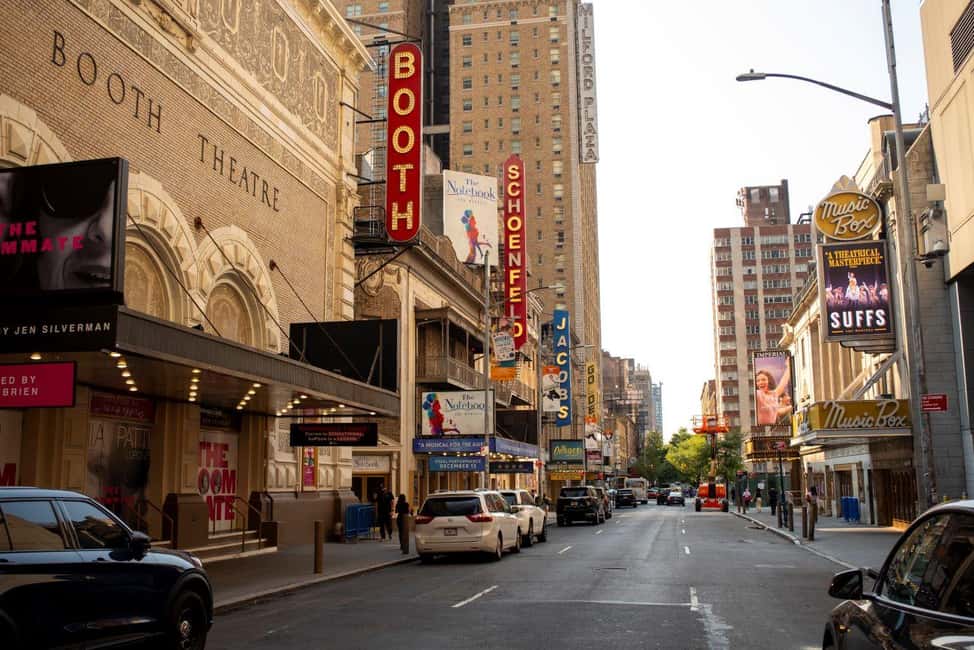
One balanced consideration: you spend time outside. This is not a full backstage access pass to every theater you pass. The behind-the-scenes component centers on the rehearsal studio visit, plus the costume and set room peek.
So if you’re expecting constant doorways into working theaters and long “back corridor” moments at every stop, you may feel the tour is more about theater history and the Theater District than true full backstage access everywhere.
Also, even on a good route, time is limited. You’ll pass many theaters, but you won’t see every single Broadway venue in one afternoon. The good news is that the guide’s storytelling helps you learn something even when you’re only looking at the sidewalk-level face of a building.
The $47 question: value for theater lovers
At $47 per person for about 2 hours, the value comes from what’s included:
- a local English-speaking guide
- a walking tour of Broadway and off-Broadway theater landmarks
- entrance to a private rehearsal studio
You’re essentially paying for two experiences: guided orientation plus access. If you’re already planning to explore the Theater District on your own, this tour is competitive because it adds context and one meaningful interior stop.
You do not get food and drinks. That’s normal for a two-hour walking experience, but it affects your planning. If you’re going to take a longer theater day, I’d eat before you start (or plan to grab something after), so you’re not thinking about snacks while you’re trying to listen.
The other value angle is the small-group size. For $47, you’re not just buying information. You’re buying attention.
Practical tips: shoes, stairs, and rain-or-shine reality
Bring comfortable shoes. You’ll be on your feet through the Theater District, then you’ll have the studio visit as the reward.
Two important physical realities:
- The rehearsal studio visit is not wheelchair accessible because it involves walking up 3 flights of stairs.
- The tour runs rain or shine and is only canceled in unsafe weather conditions.
So dress like you’re going to walk in real city weather. Layers help. A windproof outer layer can make Times Square-to-Hell’s Kitchen more bearable if the forecast is nasty.
If you have mobility limitations, check your comfort level with stairs before booking. This isn’t a gentle stroll where you can opt out easily at the next corner.
Who this tour suits best
This experience is a great fit if:
- you love Broadway and want more than just photos
- you enjoy hearing how shows get made, not just how they perform
- you want a small-group tour with room to ask questions
- you’re interested in both Broadway and off-Broadway ecosystems
It’s less ideal if:
- stairs are a problem for you (the studio portion requires climbing)
- you expect nonstop backstage access at every theater you pass
- you prefer a mostly seated experience, since this is primarily walking
Should you book NYC Broadway Secrets & Behind-the-Scenes Studio Tour?
I’d book it if you’re the kind of theater fan who likes process as much as product. The street walk helps you learn the Theater District in context, and the rehearsal studio visit is the part that gives you genuine behind-the-scenes momentum. The maximum group size also makes it feel worth it, because you get interaction instead of just hearing a lecture while moving past buildings.
Skip it if you need step-free access or you’re looking for a purely backstage, inside-every-venue tour. This is a working-studio experience, but it’s built on a walking route.
If you want a solid 2-hour plan that mixes recognizable landmarks with a real rehearsal moment, this one lands in the sweet spot.
FAQ
Where does the tour meet?
The tour meets in front of the statue and steps on Father Duffy Square, and it ends back at the same meeting point.
How long is the walking tour?
The tour lasts about 2 hours (starting times vary, so you’ll want to check availability for the exact departure).
What is included in the price?
The price includes a walking tour, a local English-speaking guide, and entrance to a private rehearsal studio.
Do I need a theater ticket to do this tour?
No. The tour includes sidewalk views of Broadway theaters, so you can enjoy the landmarks without needing to purchase a show ticket.
Is the rehearsal studio visit wheelchair accessible?
No. The rehearsal studio is not wheelchair accessible because the visit involves walking up 3 flights of stairs.
What should I bring?
Bring comfortable shoes. Since it is a walking tour and there is a stair climb for the studio visit, footwear and comfort really matter.
Does the tour run in bad weather?
It runs rain or shine, and it is only canceled in unsafe weather conditions.