REVIEW · NEW YORK CITY
NYC Broadway Tour: Backstage Stories & Theater Secrets
Book on Viator →Operated by Intrepid Urban Adventures - New York City · Bookable on Viator
Broadway runs on stories, not just spotlights. This 2-hour small-group walk mixes Times Square context with real theater process—plus a chance to watch a rehearsal studio class when schedules line up. I like how it keeps the pace easy to follow, so you’re not just staring at marquees.
Two things I really love: the small group size (max 12) that makes questions feel welcome, and the stop at a working rehearsal studio in Hell’s Kitchen, where you get a practical view of how performers and crew get shows ready. One possible drawback: rehearsal access depends on what’s happening that day, so you might see classes rather than a full-blown backstage moment in an active theater.
In This Review
- Key Highlights Worth Your Time
- Front Row to Broadway History: Why This Tour Makes Sense
- Getting Started at Winter Garden Theatre (and Why It’s a Smart Anchor)
- Times Square the Way Locals Understand It
- Duffy Square and the TKTS Ticket Lottery Reality Check
- Broadway Avenue Walk: Marquees, Owners, and Why It’s More Than Fame
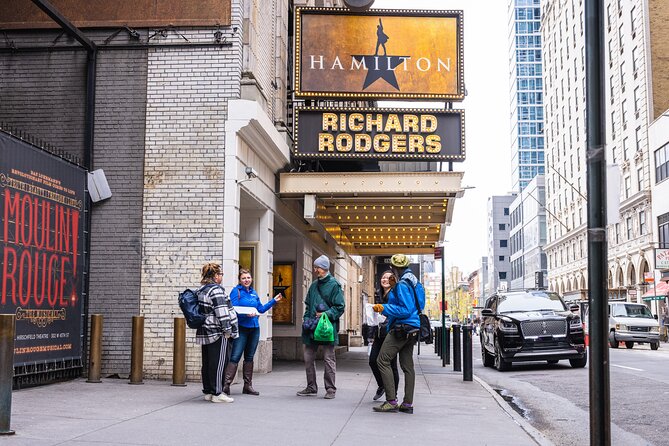
- Richard Rodgers Theatre and Hamilton’s Modern Footprint
- Majestic Theatre: Big “Music of the Night” Energy (and a 1913 Legacy)
- Off-Broadway Venues Near Midtown West: Where New Work Often Starts
- Hell’s Kitchen and the Working Rehearsal Studio Peek
- The Most Important Part: Your Guide Makes the Story Click
- Price, Timing, and How to Pair This With Your Broadway Tickets
- Who This Tour Fits Best (and Who Might Want a Different Option)
- Should You Book This Broadway Tour?
Key Highlights Worth Your Time
- Small groups (max 12) so you get actual Q and A time with the guide
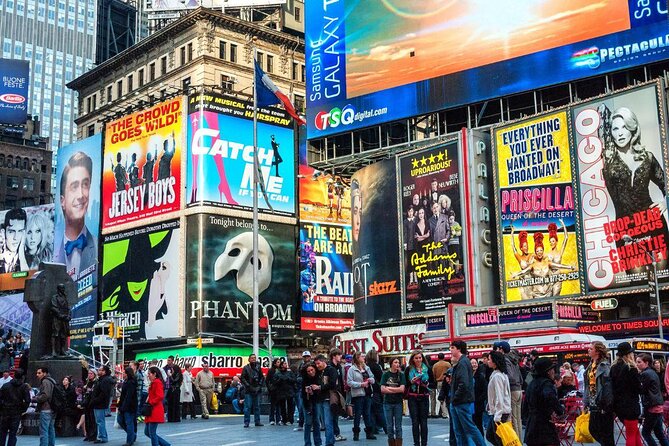
- Winter Garden Theatre start under an iconic marquee, then straight into the Times Square story
- TKTS at Duffy Square area—great for understanding how locals grab same-day tickets
- A Broadway theater walk with production and owner stories you won’t get from a guidebook
- Hell’s Kitchen rehearsal studio visit that shows the work behind the magic
- Local theater people as guides (Lucy, Lee, Jessie Fahay and others) bringing real-world perspective
Front Row to Broadway History: Why This Tour Makes Sense
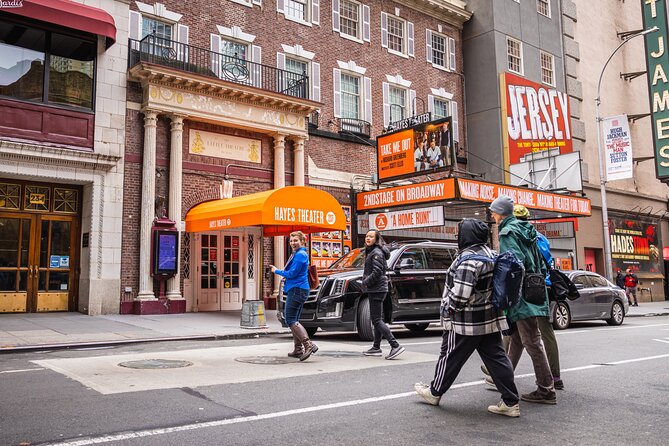
If you love theater, Broadway can feel like two different places at once: the candy-colored posters and the labor that makes them real. This tour threads those together. You’ll move through the Broadway Theater District with a guide who connects the dots between buildings, the big shows, and the people who keep productions running.
What makes it especially useful is the format. It’s short (about 2 hours) and structured like a walk you can actually enjoy, not a lecture marathon. You’ll get enough landmarks and context to make your next show feel smarter—like you’re reading the script with a backstage cheat sheet.
Value matters here too. At $50 per person, you’re not paying for museum doors. You’re paying for a local expert to point out what most people miss while they’re trying to take photos and dodge crowds.
You can also read our reviews of more tours and experiences in New York City.



Getting Started at Winter Garden Theatre (and Why It’s a Smart Anchor)
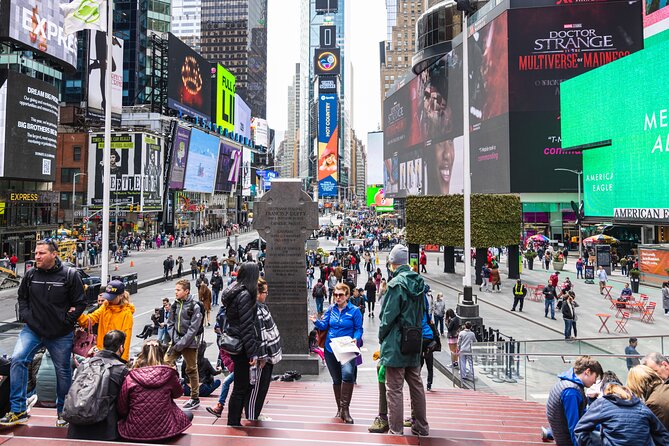
You meet at Winter Garden Theatre, 1634 Broadway—right where its marquee anchors the whole experience. That location choice isn’t random. From there, you’re set up to understand how Times Square became the show-business magnet it is today, instead of just walking through it as a neon maze.
Practical tip: wear comfortable shoes. You’re doing moderate walking, and you’ll cover a good chunk of the theater district in a short time. If you’re planning to catch a show that evening, you’ll still have energy—just plan to do this earlier rather than right before curtain.
Times Square the Way Locals Understand It
Your first stop starts by moving through the heart of Times Square with context. The tour frames this area as Longacre Square, a former rougher district that was transformed in the early 20th century into the polished center of American theater.
This is one of the tour’s best skills: it turns obvious scenery into background that helps everything click. You’ll notice how the theaters, the streets, and even the famous energy of the area connect to the growth of Broadway as an industry.
A nice bonus from the guide format: several guides are theater professionals or have theater-field backgrounds. In past groups, names like Lucy and Lee have been praised for being friendly and fun, and for sharing clear, direct industry explanations—not just dates and trivia.
Duffy Square and the TKTS Ticket Lottery Reality Check
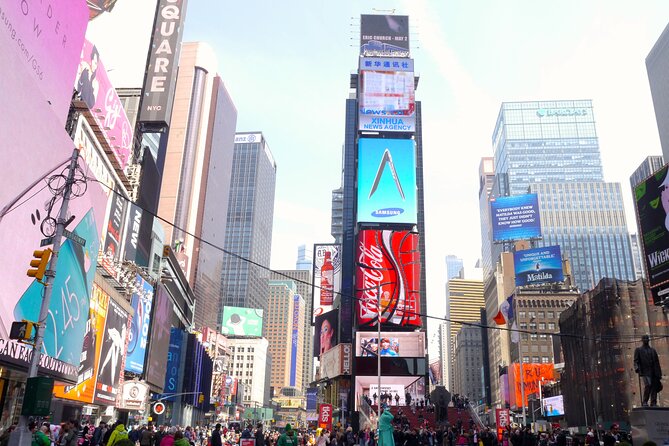
Next you head to Duffy Square, a short walk away, and the home base for the TKTS Booth. The tour highlights this spot for a reason: it’s where a huge chunk of the public tries for same-day deals through ticket lotteries.
Even if you don’t plan to gamble (or you like to preorder), this stop helps you understand a core part of how Broadway tickets actually work day to day. It also gives you a realistic strategy mindset: if you’re flexible, you can often find value closer to showtime.
One practical thought: if you’re visiting during peak tourist season, the TKTS area can feel busy. The tour keeps it simple and time-efficient, so you’re not stuck waiting around longer than you want.
Broadway Avenue Walk: Marquees, Owners, and Why It’s More Than Fame
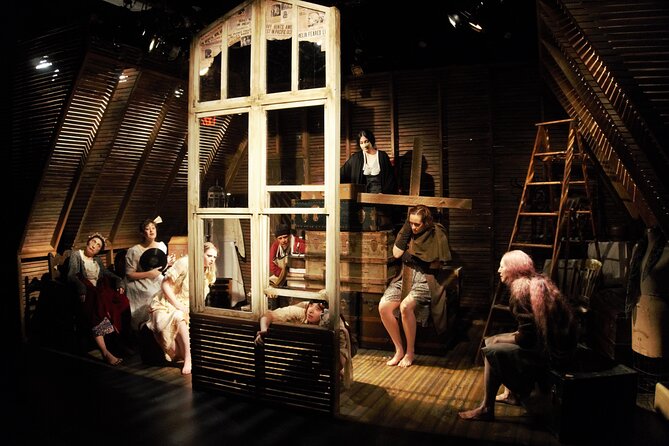
Then comes the Broadway walk itself. You’ll pass the theaters along the strip while your guide explains the historical background—stories about productions that used to play there, plus the theater traditions that shaped how Broadway became a machine.
This is also where the small-group size really pays off. You’re not being herded through a photo line. You can ask why certain theaters became icons, or how Broadway’s ecosystem grew over time.
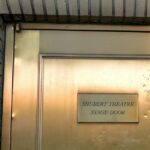
From guide storytelling in past groups, you’ll often hear about industry-side details like theater development by major producers, including the Shubert Brothers, which one group called out as a favorite part of the narration. Those kinds of stories make the avenue feel less like a set and more like a living business.
Possible drawback to keep in mind: one review-style complaint was that a guide spent more time than expected on the Actors Union topic. That doesn’t mean this tour is only about that. It just means guides may bring their own emphasis. If you’re mainly there for show history and theater architecture, ask early in the walk what the day’s focus will be.




Richard Rodgers Theatre and Hamilton’s Modern Footprint
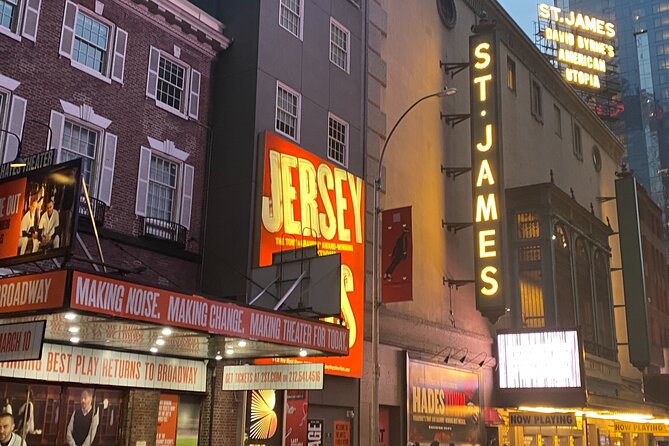
You won’t just skim the famous buildings—you’ll talk about what’s happened inside them. A standout stop is the Richard Rodgers Theatre, named for the composer behind major musical landmarks like Oklahoma!, The Sound of Music, The King and I, and South Pacific.
Since 2015, it’s been the home of Hamilton. That matters because it connects old-school musical legacy to a modern Broadway phenomenon. When the guide ties those generations together, the building stops being just a photo stop and becomes a timeline you can walk.
If you’re going to see a Broadway show during your trip, this is the moment that often makes the tour feel worth it. You’ll start noticing the layers: composers, producers, casting culture, and how the audience’s taste keeps shifting.
Majestic Theatre: Big “Music of the Night” Energy (and a 1913 Legacy)
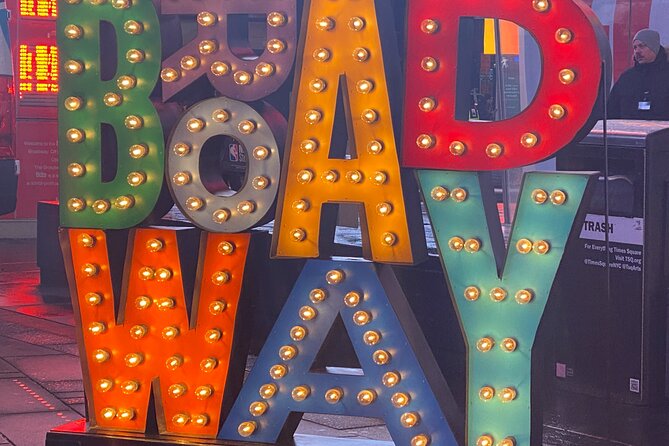
As you stroll, you’ll listen for the pull of one of the strip’s larger landmarks: the Majestic Theatre. Past productions listed for this theater include The Music Man, Camelot, and The Wiz.
The tour also calls out the Majestic as a theater opened in 1913 that’s been a staple on Broadway and has hosted the Tony Awards over the years. That makes it a great stop for understanding Broadway as an institution, not just a nightlife district.
Why it’s useful for you: when you’re about to watch a musical, it helps to know the building has been collecting theater moments for generations. Even if you don’t memorize every production name, that long timeline changes how you look at the marquee.
Off-Broadway Venues Near Midtown West: Where New Work Often Starts
The tour doesn’t only focus on the biggest names. It includes time around the off-Broadway ecosystem in the Hell’s Kitchen area, where a lot of theater life happens beyond the main Broadway stages.
You’ll hear about writer-focused development as well, including a theater company described as specializing in writer-focused plays and productions, linked in the tour context to the Tony Award-winning musical Dear Evan Hansen. That’s a big deal because it points to something Broadway fans sometimes forget: shows aren’t only built in rehearsal rooms; they’re built in development spaces where writers and producers shape the material early.
You’ll also see references to a collection of theaters described as a hub for up-and-coming theater companies, with rehearsal space and tech support. Even without going inside every office, the explanation helps you understand why certain neighborhoods feel “theater-shaped.”
And if you like playwriting more than musicals, you’ll appreciate the note about a venue that plays host to more plays than musicals and has showcased Pulitzer Prize winners like Driving Miss Daisy and The Flick. It’s a helpful angle if you’re planning what to see beyond Broadway’s top brands.
Hell’s Kitchen and the Working Rehearsal Studio Peek
This is the part theater fans tend to remember. You visit a working rehearsal studio—the kind of place where the performers, choreographers, and crew build shows even when the public never sees it.
Here’s the key value for you: it shifts the tour from history into process. You learn what rehearsal actually looks like—how classes run, how movement and dialogue get refined, and how many people support a production behind the scenes.
What you should plan for: the tour says you may catch live rehearsal or class when available. In practice, that means some days are more energetic visually than others. One group noted they saw a rehearsal space but didn’t get the full backstage moment they expected. That’s not a failure of the tour; it’s just how schedule-based theater access works.
Also, Hell’s Kitchen isn’t just a rehearsal stop. It’s a real neighborhood, and past groups liked that the tour covers the area’s theater culture along with its restaurant district feel—though the tour itself doesn’t include food.
The Most Important Part: Your Guide Makes the Story Click
Guides are a major reason this tour gets such strong scores. In past groups, names that came up include Lucy, Lee, and Jessie Fahay, and they’ve been praised for friendly delivery, strong theater background, and for sharing “how Broadway really works” details.
A guide who’s active in theater can also answer the questions you actually have, like:
- How do rehearsals work day-to-day?
- What’s the difference between a show building and a show running?
- Where do people in the industry spend their time when they’re not onstage?
One family review even pointed to this as a helpful pre-show setup—ideal if you’re heading to your first musical and want to spot what’s happening behind the curtain while the show is running.
Price, Timing, and How to Pair This With Your Broadway Tickets
At $50 per person for about 2 hours, this tour is priced like a focused experience rather than a huge production. I think it’s good value if you plan to do one Broadway show (or more). You’ll leave with the context that makes the experience feel more personal and less like you’re just consuming spectacle.
When to do it: do it earlier in your trip. Then you can use what you learned to choose the kind of show you want next—big musical, play, or something more developmental. If you’re eyeing the TKTS approach, this tour’s Duffy Square stop also helps you understand the rhythm of same-day options.
What to bring:
- comfortable walking shoes
- a charged phone (the tour uses a mobile ticket)
- water if you’ll be out in warm weather
- a snack plan, since food and drinks aren’t included
Who This Tour Fits Best (and Who Might Want a Different Option)
This tour is ideal if you fit one of these:
- You’re a theater fan who wants names, context, and real-world behind-the-scenes perspective
- You’re bringing kids and want an easy intro to Broadway history without getting lost
- You want a small-group experience where you can ask questions, not just listen
It may be less ideal if:
- You want heavy inside-theater access every stop. The tour focuses on walking and context, with the working rehearsal studio only available when scheduling allows
- You only care about actor politics or union specifics. Some guides may mention actor-related organizations more than others, so your priorities matter
Should You Book This Broadway Tour?
If you love Broadway and want your time in Midtown to feel purposeful, I’d book it. The mix is practical: Times Square context, a Broadway theater walk, and a rehearsal studio peek give you both the story and the work.
Two quick tests to decide:
- Do you want to understand what you’re seeing onstage more clearly? If yes, this helps.
- Are you okay with rehearsal access that can vary by day? If yes, you’ll get the value.
With a 4.8 rating and about 96% recommending it, and with the added bonus that it’s capped at 12 travelers, this is a strong choice for turning Broadway lights into real theater understanding.