REVIEW · NEW YORK CITY
NYC Central Park Pedicab Tours
Book on Viator →Operated by NYC Central Park Pedicab Tours · Bookable on Viator
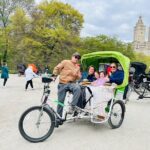
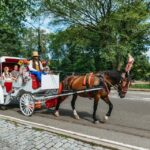
Central Park is best seen at park pace. This motorized pedicab tour lets you cover a lot of ground without doing the full marathon on foot, while your guide stitches together what you’re seeing with history, landmarks, and lots of famous-scene pointers. You also get help with photo stops, so you’re not just sitting there thinking, I should’ve packed a second memory card.
I like the mix of practical sightseeing and real commentary. The stop-and-look rhythm means you actually get moments at big names like Bethesda Fountain, Strawberry Fields, and the Bow Bridge area, not just a quick drive-by. And the guide style can be very personable, with humor and spot-on storytelling, like Ali keeping narration going for a full two hours, or Max making sure you get the pictures you want.
One thing to consider: the experience can feel a bit movie-centric at times, and if you want pure park history only, you might find that slightly off. Also, the meeting point matters. A couple of tours had some awkward start moments for people who had trouble finding the right pedicab at the designated spot.
In This Review
- Key Highlights You’ll Feel Immediately
- Why a Central Park Pedicab Works Better Than Pure Walking
- Meeting at 50 Central Park S and How the Ride Typically Starts
- Wollman Rink, The Carousel, and The Dairy: A Great Opening Stretch
- Shakespeare, Robert Burns, and Why Saturday Night Tango Might Happen
- Balto’s Medicine-Run Story and Rumsey Playfield’s Summer Stage
- Conservatory Water and the Lake Shots That Turn Into Film Scenes
- Bethesda Fountain and The Mall: The Walk That Feels Like a Movie Set
- Cherry Hill and Bow Bridge: Romantic Bridge Energy on Demand
- Strawberry Fields and The Dakota: Lennon Stops for the Curious and the Devoted
- Tavern on the Green, Sheep Meadow, and Pinebank Arch
- How Guides Turn This Into More Than Just a Ride
- Should You Book This Central Park Pedicab Tour?
Key Highlights You’ll Feel Immediately
- Motorized pedicab pace that helps you avoid foot fatigue and still see major sights
- Guide-led landmark commentary with frequent “here’s what you’re looking at” context
- Taking Pictures support so you’re not stuck doing awkward self-timer shots
- Fast, efficient route through iconic Central Park sections in about 1 to 2 hours
- Season-aware stops like Wollman Rink (ice skating in winter, pickleball in summer)
- Photo-friendly classics including Bethesda Fountain, Bow Bridge, and Strawberry Fields
Why a Central Park Pedicab Works Better Than Pure Walking
Central Park is huge. Even if you love walking, your energy can vanish halfway through. A pedicab solves that problem in a simple way: you keep moving through the park’s big highlights while saving your legs for the parts you truly want to linger at.
The ride is also a nice change of pace if you’re sightseeing with someone who gets tired easily, or if you just want a relaxed afternoon. You’ll still get plenty of time to stop and look. The key is that you’re using the pedicab to bridge distances between places like Bethesda Fountain and the literary spots closer to The Mall, rather than trying to connect everything by foot.
One more practical benefit: the experience includes taking pictures. That matters more than it sounds. If you’ve ever tried to capture a perfect view while also reading signage and listening to a guide, you know it’s hard. Here, you’re getting help with the photo moments so you can focus on the view.
You can also read our reviews of more tours and experiences in New York City.


Meeting at 50 Central Park S and How the Ride Typically Starts
This tour starts and ends at 50 Central Park S, New York, NY 10019. That means you’re not hunting down multiple drop-offs across the park. You roll out, hit the highlights, then come back to the same meeting spot.
A mobile ticket is part of the deal, and the tour is offered in English. It’s also a private tour, so it’s only your group. That can make a big difference in how the guide paces stops, handles questions, and helps with photos.
Two practical notes from the experience style itself:
- The tour requires good weather, so pick a day when conditions look stable.
- The meeting point can be a little tricky if you arrive late or don’t scan carefully. I’d aim to show up a bit early, have your confirmation handy, and take a moment to verify you’re at the correct designated spot before your time starts.
Wollman Rink, The Carousel, and The Dairy: A Great Opening Stretch
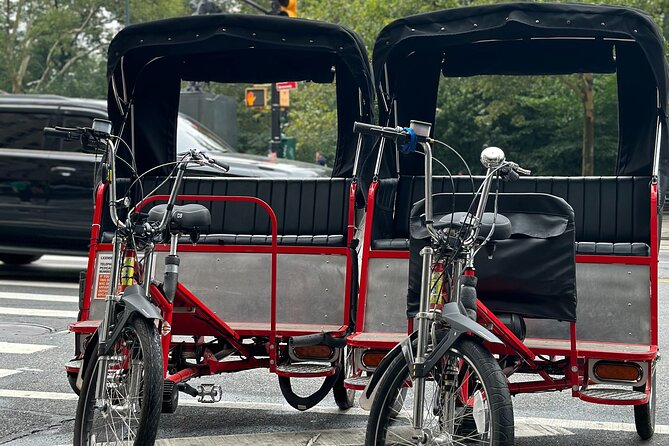
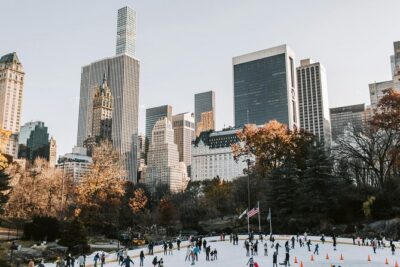
Your ride begins around Wollman Rink, a familiar Central Park spot that changes personality by season. In winter, it’s tied to ice skating. In summer, you’ll see the pickleball vibe. This is also one of those areas where pop culture references show up constantly. The stop is associated with films like Home Alone 2, Limitless, and Serendipity, which makes it easy for first-time visitors to connect a real location to scenes they’ve seen.
Right after that, you’ll get the kind of photo stops that feel instantly “Central Park.” A big one is the carousel, built in 1908 and featuring over 50 hand-carved horses. Even if you’re not riding, it’s a striking visual stop, and it photographs well from multiple angles.
Next, you’ll pass the game tables shaded by a wooden trellis built in 1952. If you’re traveling with kids or just like people-watching, this is a fun reset. It’s not just a landmark stop; it’s a small window into how Central Park functions as a neighborhood play space, not a museum.
Then there’s The Dairy, a historic building that now serves as a visitor center and gift shop. It originally worked as an eatery where children could get fresh milk. This stop gives you a quick lesson in how Central Park’s roles have shifted over time, from everyday family comforts to modern visitor services.
Shakespeare, Robert Burns, and Why Saturday Night Tango Might Happen
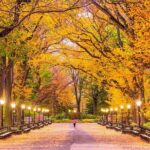
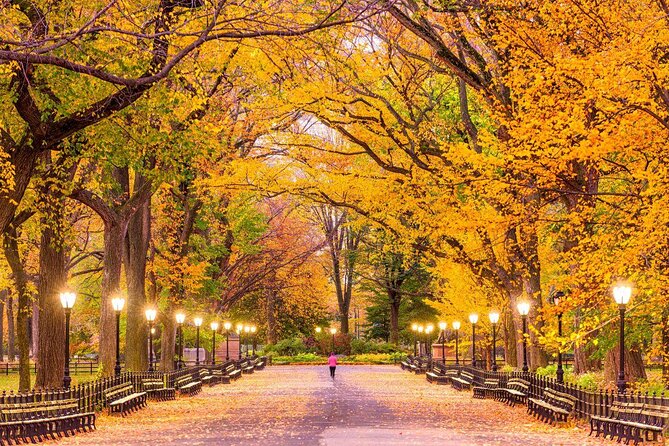
One of the most charming segments of the route is the wide promenade shaded by elm trees, where you’ll see statues of Shakespeare, Robert Burns, and other writers. Even if you don’t go deep on literature, the statues give Central Park a “thinky” quality. They also help you understand the park’s habit of mixing nature with cultural references.
In summer, the guide’s commentary can include a fun extra: free tango classes every Saturday evening near Shakespeare’s statue. If your timing lines up, it’s the kind of spontaneous street-energy bonus that makes this more than just sightseeing from a checklist.
This portion also helps you get oriented. After you’ve seen the writers’ area, Bethesda, and the Mall later, the park starts to click into place in your head. It’s the difference between seeing Central Park as a blur and actually feeling where things connect.
Balto’s Medicine-Run Story and Rumsey Playfield’s Summer Stage
The ride includes a stop for Balto, the lead sled dog known for delivering medicine in 1925 to help save children from diphtheria in Alaska. It’s a reminder that Central Park isn’t only about American royalty and poets. It also honors brave, practical service stories.
From there you’ll move toward Rumsey Playfield, which in warm months becomes SummerStage territory. Expect it to function as a hot spot for music, dance, spoken word, and film. If you happen to be there in summer, you’ll appreciate how Central Park works like a cultural venue, not just a park.
There’s also a specific media detail: in summer, Rumsey Playfield is connected with filming Good Morning America on Friday mornings. Even if that day isn’t your day, the fact that this park corner regularly hosts TV energy adds a layer of context you’d miss if you only stick to the most famous “postcard” areas.

Conservatory Water and the Lake Shots That Turn Into Film Scenes
Next comes Conservatory Water, a man-made pond where you can sell and rent remote control model boats. It’s also linked to the movie Stuart Little, so it’s an easy stop if you like recognizing locations from stories.
A bit farther along, you’ll pass an American restaurant and bar known for its lakeside view in the middle of Central Park, with movie ties including When Harry Met Sally, 27 Dresses, and Date Night. This is one of those “even if you don’t eat, you’ll see why movies love this angle” moments.
Then you reach The Lake itself, described as the second largest man-made body of water in the park. There’s also rowboat rental here, which is great if you want a slower, more classic Central Park moment before the route moves on.
One practical tip: if you want the strongest photos, time your stops with the light. The pedicab helps you get there, but your best shots still depend on sun angle and whether you’ve got a calm shoreline moment.
Bethesda Fountain and The Mall: The Walk That Feels Like a Movie Set
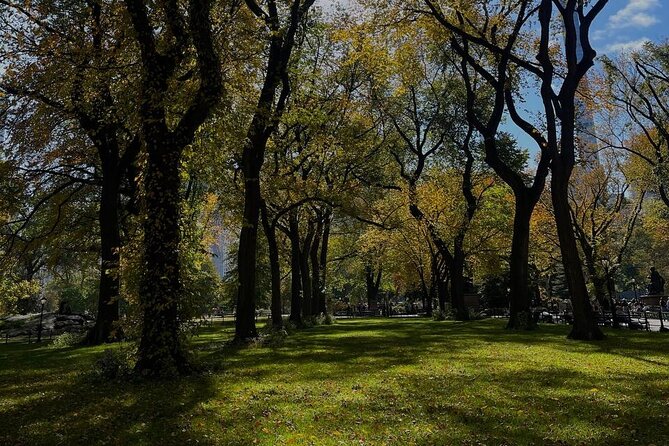
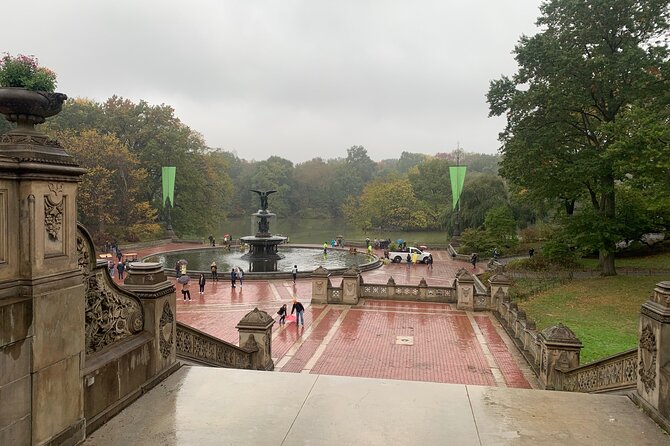
Bethesda Fountain is one of those sights that’s instantly recognizable, even if you’ve only seen it in film or TV. The tour treats it like a core stop, with time for you to actually look at the details, not just recognize the icon.
It’s also a major filming location. You’ll see it tied to movies and series like Home Alone 2, John Wick, Sex and the City, Gossip Girl, and Enchanted. That matters because it helps you understand why the fountain looks the way it does in photographs. It’s built for that framing, the way the camera loves it.
From Bethesda, you’ll head toward The Mall and the Literary Walk. The Mall is noted for the largest collection of American elm trees and a walkway that leads to Bethesda Terrace. This is a strong stretch if you like “architecture meets trees” scenes, especially in photos where the long sightlines make the park look even bigger.
The stops here are connected to films like Maid in Manhattan, Night at the Museum, and Autumn in New York. If you’re traveling with someone who likes movies, this section is a quick win. If you want more park-focused talk, ask your guide a direct question about the trees, the layout, or what the promenade was built to do.
Cherry Hill and Bow Bridge: Romantic Bridge Energy on Demand
Central Park gets extra romantic around Cherry Hill. The name comes from cherry trees that bloom there each spring, and the area overlooks the lake. It’s also known as Friends Fountain, which is a fun connection if that’s your kind of reference.
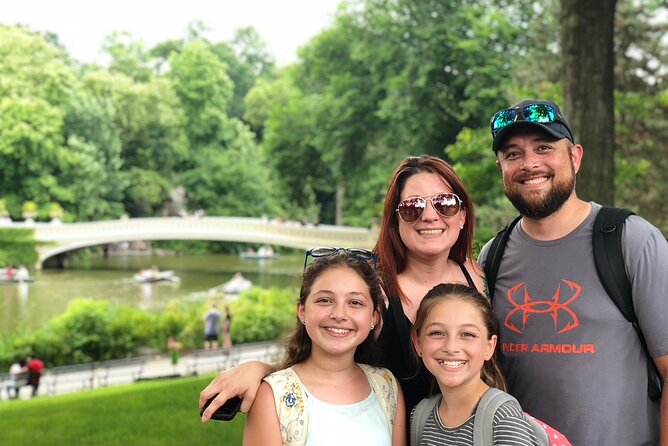
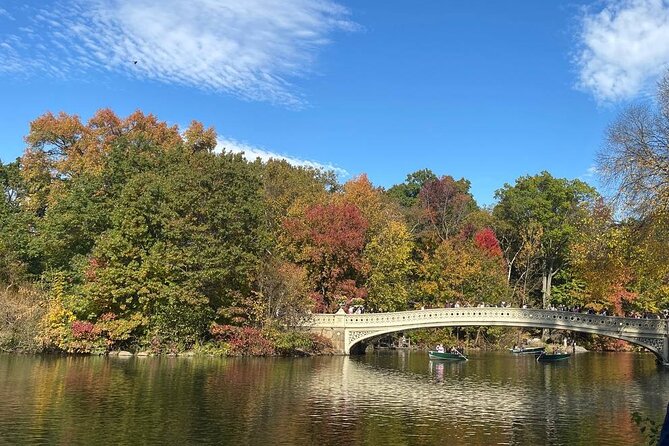
Then comes Bow Bridge, built in 1862, spanning 60 feet across the Central Park Lake and connecting Cherry Hill and Ramble. The tour calls it the Romantic Bridge and also notes the “Proposal Bridge” reputation. Whether or not you’re planning a proposal, this is one of the most photogenic places in the park because of how the bridge frames the water and the surrounding greenery.
Bow Bridge is also listed with filming connections including You’ve Got Mail, Enchanted, and Spider-man 3. If your group likes movie trivia, this is a high-engagement stop.
Take a second here to slow down. The pedicab gets you to the right spot quickly, but you’ll get the most from Bow Bridge by giving it real attention. Let the view do its job.
Strawberry Fields and The Dakota: Lennon Stops for the Curious and the Devoted
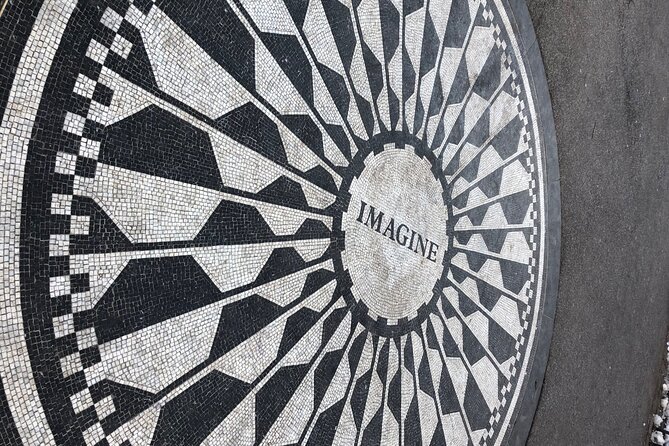
If you’re a John Lennon fan, the route hits your big moment at Strawberry Fields, the memorial to the British rock musician and peace activist John Lennon (1940 to 1980). There’s an Imagine mosaic, and it’s a common place where people stop to pay tribute.
Then the tour points you toward The Dakota, described as the first building on the Upper West Side built in 1884. The Dakota is also tied to Lennon and Yoko Ono as their home. Even if you don’t know the deeper timeline, you’ll understand quickly why this building belongs on any Central Park visit for people who connect landmarks with music history.
These stops are short but meaningful. They don’t require you to be a superfan to appreciate the emotional weight. And if you are a fan, this is the part that turns into the “I’m glad we came” moment.
Tavern on the Green, Sheep Meadow, and Pinebank Arch
Next you’ll roll past Tavern on the Green, an American restaurant and bar opened in 1934. It’s listed with filming connections including Ghostbusters and Mr. Popper’s Penguins. Even if you’re not dining, it’s a landmark that feels like it belongs to the era when Central Park had a strong “destination” vibe.
Then there’s Sheep Meadow (described as the park’s largest lawn). Historically, it was home to purebred sheep from 1864 until 1934. Today it’s used for family picnics. This stop is less about a single building and more about seeing how Central Park supports everyday leisure at scale.
Finally, you’ll reach Pinebank Arch, an elegant cast-iron bridge spanning the bridle path. It’s tied to the movie Elf, specifically Snowball Fight. This is a classic “small but memorable” stop, and it rounds out the tour nicely before you wrap back to the meeting point.
How Guides Turn This Into More Than Just a Ride
This tour is built around commentary and photo help, not just transportation. A lot of the best moments come from the guide’s voice and how they pace stops.
From the experience details, you’ll likely hear a blend of:
- What each landmark is
- Why it matters in Central Park’s story
- Film references tied to each location
- Practical tips on where to stand for photos
Guide names you may encounter include Ali, Max, Sadid, Amin, John, Harry, and Johnny Cash. People also note humor and strong friendliness, plus guides taking time with questions and making sure you don’t feel rushed. Some guides may even play music or video clips that match the sights as you go, which can be a fun way to connect the moment to the movie references.
One balanced note: there’s a fair amount of film talk. If that’s your thing, it makes the park feel like a living set. If you want more of the park’s structure and design, ask for that. Good guides can shift tone when you ask.
Also, do yourself a favor: pick a start time that fits your day. The tour lets you choose the time, and guides can tailor the energy around it. One review-style experience highlighted booking early to be before crowds. Even without chasing that exact timing, arriving when you can enjoy calmer views makes a difference.
Should You Book This Central Park Pedicab Tour?
Book it if you want a 1 to 2 hour Central Park plan that hits the big icons without draining your legs. It’s a strong fit for first-timers, couples who want classic photo spots, families who need a kinder pace, and anyone who’d rather spend time looking than navigating.
Skip it or go in with expectations if you specifically want only park history with zero movie talk. The experience includes plenty of cinematic references, and the commentary style may lean into that. Also, if you’re sensitive to start-time confusion, arrive early and double-check you’re at 50 Central Park S at the right time, since the meeting point can be the only real friction point.
If the weather is good and you like the idea of guided stops plus picture help, this is one of the simplest ways to experience Central Park’s greatest hits in a single smooth outing.