REVIEW · NEW YORK CITY
NYC: Intrepid Museum Entry Ticket
Book on GetYourGuide →Operated by Intrepid Museum · Bookable on GetYourGuide
The Intrepid Museum turns history into something physical. You walk through the USS Intrepid—from flight operations to crew spaces—and then you get the space punch with Enterprise and Apollo exhibits. A fair heads-up: you’ll do a lot of walking and some sections can be tough for mobility needs.
Two things I really like about this ticket are the ship-first layout and the way the tech themes connect across eras. You’re not just viewing aircraft and artifacts—you’re seeing how a real carrier functioned, then shifting gears to space hardware and mission storytelling. The only drawback I’d plan around is time: if you come with a tight schedule, you can easily miss the smaller add-ons or the exhibits that take longer to read.
In This Review
- Key things to know before you go
- A Ship-First Museum With Priority Access That Actually Helps
- What the included entry gets you (in plain terms)
- Where to Check In: Intrepid Square QR Ticket Line Tips
- The USS Intrepid Experience: Four Decks, One Big Reality Check
- Hangar Deck: The Best First Stop for Getting Your Bearings Fast
- Flight Deck: Restored Aircraft and the Sense of Real Flight Ops
- Gallery Deck and Third Deck: Shipboard Life Beyond the Headlines
- Aircraft, Submarines, and the WWII-Cold War Story Thread
- Space Shuttle Pavilion: Seeing Enterprise in the Real-World Scale
- Apollo: When We Went to the Moon and the Command Module Recreation
- The Submarine and Concorde Planning: Check What’s Included That Day
- A Route That Works in Real Life (Without Feeling Like You’re Chasing Things)
- Reviews-Driven Reality: Why This Museum Feels Bigger Than Its Price
- Food, Breaks, and Handling the Walking Pace
- Price and Value: Is $34 Worth It in NYC?
- Should You Book This Intrepid Museum Ticket?
- FAQ
- Where is the meeting point for this Intrepid Museum ticket?
- How long should I plan to spend at the Intrepid Museum?
- What time is the last entry into the museum?
- Is the museum wheelchair accessible?
- Can I bring luggage or large bags?
- Are there free entry rules for veterans or kids?
Key things to know before you go
- Priority access with a timed line helps, but a short wait can still happen
- Four decks of USS Intrepid cover hardware and everyday ship life
- Space Shuttle Pavilion + Enterprise is a standout for space fans
- Apollo: When We Went to the Moon adds a strong hands-on feeling via the command module recreation
- You may need extra planning for things like the submarine or Concorde, depending on what’s offered that day
- Plan 2–3 hours so you don’t feel rushed
A Ship-First Museum With Priority Access That Actually Helps

This ticket is built around one core idea: you experience the Intrepid Museum by walking the ship itself, not by watching screens all day. The museum is based on a National Historic Landmark vessel, the USS Intrepid, launched in 1943 and later used through the Cold War and Vietnam War.
Price is $34 per person, and for New York, that’s not “cheap,” but it’s also not just another small gallery. You get access to the aircraft carrier decks and the Space Shuttle Pavilion, plus included interpretation exhibits such as the story of Intrepid and Kamikaze: Day of Darkness, Day of Light.
You can also read our reviews of more tours and experiences in New York City



What the included entry gets you (in plain terms)
- Priority access to the museum
- Access to the aircraft carrier USS Intrepid
- Access to the Space Shuttle Pavilion
- Included history and interpretation exhibits tied to Intrepid
- Free WiFi on site
Where to Check In: Intrepid Square QR Ticket Line Tips

Your meeting point is 1 Intrepid Square, at 12th Avenue and 48th Street. You’ll present your QR-coded ticket at the Priority Access Timed ticket/Advanced Purchase line in the Box Office.
Here’s the practical bit: the ticket line is faster than the walk-up line, but you should still expect a short wait that can run up to 30 minutes before you’re able to enter. If you’re the type who arrives exactly at the time on the ticket, I’d loosen that up—build in a little cushion so you don’t start your visit in a rush.
Also keep in mind the last entry timing: the final entry is one hour before closing. If you’re aiming for a late afternoon visit, check the hours first so you don’t show up too close to the cutoff.
The USS Intrepid Experience: Four Decks, One Big Reality Check

The museum is arranged so you move through different functions of the ship. That matters, because it turns “wow, old planes” into “how did this place work when it mattered.”
The museum visit covers four decks:
- Hangar Deck
- Flight Deck
- Gallery Deck
- Third Deck
That deck progression is one of the best ways to understand Intrepid. You start with the big indoor space, then you shift into the flight side of the ship, and finally you get shipboard life on lower decks where things feel closer and more human.
Hangar Deck: The Best First Stop for Getting Your Bearings Fast
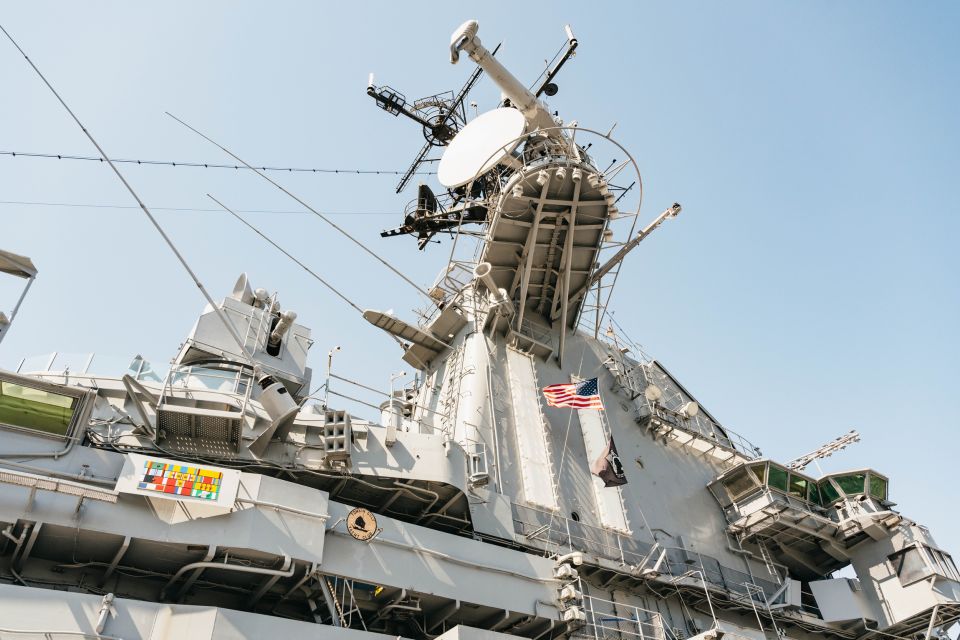
If you’re unsure where to start, start here. The Hangar Deck is the main indoor exhibit space and a strong entry point because it mixes hardware with human stories.
Think of it as your foundation. You’ll be surrounded by the museum’s major aircraft storylines and explanations before you step outside onto the flight operations areas. This is also where you’ll likely settle into the pace of the museum, since the hangar space helps you slow down and read without needing to fight wind or glare.
You can also read our reviews of more museum experiences in New York City




Flight Deck: Restored Aircraft and the Sense of Real Flight Ops

Once you step onto the Flight Deck, you get the close-up effect. You’re looking at more than two dozen authentically restored aircraft, plus you can walk around Intrepid’s island and bridges to get the layout in your head.
There’s also a Restoration Tent area, which is a great stop for anyone who cares about how museums keep things real instead of just storing them. You’ll see that aircraft restoration is a process, not a magic trick.
This part of the visit is where space fans, aviation fans, and WWII/Cold War fans all overlap. Even if you don’t know aircraft names, you’ll start noticing patterns—engines, shapes, and how different eras used different priorities.
Gallery Deck and Third Deck: Shipboard Life Beyond the Headlines

The Gallery Deck sits between the hangar and flight areas and it’s packed with operational spaces. You’ll see highlights like the Combat Information Center (CIC), a squadron ready room, and marine berthing. This is where you start thinking like the crew rather than just like a visitor.
Then the Third Deck brings the ship life angle. You’ll find restored spaces tied to daily routine, including the galley, enlisted mess, and crew berthing. These rooms do something a screen can’t: they show you how cramped work spaces can be when a ship has to function under pressure.
Aircraft, Submarines, and the WWII-Cold War Story Thread

The USS Intrepid story isn’t a straight line. It shifts with time: WWII action, then Cold War service, and later Vietnam War era history. The ship itself survived intense attacks—five kamikaze attacks and one torpedo strike—before being decommissioned in 1974.
One included exhibit that fits this theme is Kamikaze: Day of Darkness, Day of Light. You don’t have to be a military historian to appreciate it; the value is that it connects personal experience and technology to wartime decisions.
Space Shuttle Pavilion: Seeing Enterprise in the Real-World Scale

Now for the gear shift. The Space Shuttle Pavilion houses Enterprise, the prototype NASA orbiter that paved the way for the shuttle program. It’s not a full flight mission in this museum, but it does let you experience the scale and presence of shuttle-era engineering.
The pavilion uses multiple exhibit styles—original artifacts, photographs, audio, and films—to build context around the science and history of the shuttle era. You also get a sense of how the public learned to think in “program terms,” not just individual rockets and missions.
Apollo: When We Went to the Moon and the Command Module Recreation

The museum’s Apollo: When We Went to the Moon exhibit adds a second space layer on top of the shuttle display. You’ll follow the Apollo missions by focusing on the triumphs and the challenges faced by astronauts heading to the lunar surface.
One of the most useful things this exhibit offers is not just artifacts, but place-based storytelling. You can walk through a recreation of the Apollo 11 command module, the spacecraft that carried Neil Armstrong, Buzz Aldrin, and Michael Collins to the moon and back.
You’ll also see Apollo program items such as moon rocks and lunar landing gear. The museum frames these as part of the technology story—what made those missions possible—and then it pushes forward to what NASA planned next, including returning astronauts to the moon and eventually going to Mars.
The Submarine and Concorde Planning: Check What’s Included That Day

This is where you should manage expectations. Your ticket includes the aircraft carrier and the Space Shuttle Pavilion, but some major extras can be ticketed separately or require extra time.
For example, people often single out the submarine visit as a highlight, and there are mentions of needing extra tickets for the submarine and for Concorde. That means your best move is to look at the day’s on-site options before you commit to a route.
If you’re short on time, prioritize based on your interests:
- If you’re all-in on Cold War tech and crew stories, put the submarine higher on your list.
- If you’re aviation-focused, Concorde might be worth planning around.
- If you want maximum variety without extra add-ons, keep your day anchored to USS Intrepid decks plus the space exhibits.
A Route That Works in Real Life (Without Feeling Like You’re Chasing Things)
You’ve got a lot of ground here, so a route helps. The museum recommends 2–3 hours, and that’s realistic if you’re moving steadily and not stopping to read every label.
I’d structure it like this:
- Start with the Hangar Deck to get the Intrepid story and layout in your head.
- Move to the Flight Deck for the aircraft close-ups and the outdoor views from the ship.
- Hit the Gallery Deck and Third Deck next, while the operational context is fresh.
- Spend the time you want on space: Enterprise first, then Apollo (especially the command module recreation).
- If you decide to do extra add-ons like the submarine or Concorde, slot them in based on what you learn on site.
Try not to plan a “perfect finish” at the last minute. There’s always one exhibit that takes longer because you can’t stop looking at it.
Reviews-Driven Reality: Why This Museum Feels Bigger Than Its Price
Even when people disagree on what they liked most, there’s a common pattern in what really lands: the on-ship experience is the star. Walking inside a real carrier changes the feeling instantly, especially when staff members and knowledgeable specialists share how different spaces were used.
Staff helpfulness also shows up a lot in how people describe their visits. You’ll often find friendly explanation in the key areas—especially around ship operations spaces. And if you want the museum to make more sense, this is where asking a short question helps. You’ll get more out of what you see.
Two other reasons people rate it so highly:
- The mix of WWII + Cold War + space in one visit
- The fact that the exhibits are structured to keep a wide range of ages engaged, including kids and teens
Food, Breaks, and Handling the Walking Pace
You’ll be walking and standing for long stretches. That’s not a complaint; it’s just the nature of a ship museum. The good news is you can take breaks and sit when you need to.
There’s also mention of food options upstairs, and you should expect a more casual museum meal setup rather than a sit-down restaurant experience. If you’re visiting as a family, build in time for snacks so you’re not dragging tired feet through the last deck.
Price and Value: Is $34 Worth It in NYC?
At $34 per person, you’re paying for a lot more than entry to a single building. You’re getting:
- A National Historic Landmark ship experience with multiple decks
- Restored aircraft displays across eras
- The Space Shuttle Pavilion with Enterprise
- A major space exhibit focused on Apollo, including moon-related artifacts and a command module recreation
So the value math comes down to fit. If you like aviation, military history, or space technology, this ticket is strong because it gives you several “wow” types of exhibits in one go. If you only like one narrow topic, you might feel like you’re paying for variety you didn’t ask for.
If you want variety without booking multiple separate attractions, this works.
Should You Book This Intrepid Museum Ticket?
Book it if you want one NYC stop that gives you real scale: aircraft on an actual carrier deck, shipboard spaces with operational context, and space exhibits that connect across eras. It’s especially strong if you’re traveling with mixed interests—space kids, WWII adults, and aviation fans in the same group.
Skip or adjust your expectations if you hate walking or if you rely on mobility-friendly routes. The site notes it’s wheelchair accessible, but it also says some areas require stairs and ladders, with long periods of walking and standing. Also, the info includes a “not suitable for wheelchair users” note, so it’s smart to plan carefully and decide based on your specific needs.
And if you’re eager to see the submarine or Concorde, check on site what’s included and what may cost extra so you don’t get stuck deciding at the last minute.
FAQ
Where is the meeting point for this Intrepid Museum ticket?
You meet at 1 Intrepid Square, at 12th Avenue and 48th Street in New York, NY 10036. You’ll present your QR-coded ticket at the Priority Access Timed ticket/Advanced Purchase line in the Box Office.
How long should I plan to spend at the Intrepid Museum?
Plan on about 2–3 hours for your visit. That gives you time to cover the major ship areas and the space exhibits without feeling completely rushed.
What time is the last entry into the museum?
The last entry is one hour before closing. If you arrive late, you might not be able to enter even if the museum is still open.
Is the museum wheelchair accessible?
The activity notes wheelchair accessibility, but it also warns that some areas aren’t wheelchair accessible because they involve stairs and ladders. It also notes it may not be suitable for wheelchair users, so it’s worth planning your route carefully.
Can I bring luggage or large bags?
No. Luggage or large bags are not allowed.
Are there free entry rules for veterans or kids?
Veterans with a valid ID go free. Also, children under 16 must be accompanied by an adult, and unaccompanied minors aren’t allowed.