REVIEW · NEW YORK CITY
New York City & The High Line – Self Guided Walking Tour
Book on Viator →Operated by Vidi Guides · Bookable on Viator
Phone-free NYC, with facts in your ear. This self-guided audio walk strings together some of the West Side’s most famous stops, with a historian-style narration and offline listening so you can keep moving instead of hunting for signal. I like that it’s designed to help you look up—the route is built around real viewpoints, not a scavenger hunt.
My second big plus is how much planning is baked into the experience: you get GPS location awareness to stay on track and built-in Instagram hotspots so you know where to stand for better angles. The main drawback to consider is tech dependency—this runs through the Vidi Guides app, so you’ll want to download the tour ahead of time and make sure you start at the High Line end, since the narration expects the correct direction.
In This Review
- Key things to know before you go
- Phone-Free NYC: What This Walk Feels Like
- Price and Value: Why $10.13 Can Make Sense
- Offline Audio and GPS: How to Make It Actually Work
- Stop 1: The High Line Entrance and Whitney Museum Context
- Stop 2: Chelsea Piers and Pier 54 (Plus Little Island)
- Stop 3: Chelsea Market for Food-Spot Energy
- Stop 4: IAC Building, ROXY Nights, and the Manhattan Projects View
- Stop 5: Guardian Angel Church and the Flyover Gardens
- Stop 6: The Vessel and Its Staircase Photo Angles
- Stop 7: Hudson Yards Views and the Urban Renewal Angle
- Who This Tour Fits Best
- Booking Decision: Should You Go?
- FAQ
- FAQ
- How much does the New York City & The High Line self-guided audio tour cost?
- How long is the tour?
- Can I listen offline?
- Do I need to bring headphones and a mobile device?
- Where does the tour start and end?
- What app platform is used for the audio tour?
- Are admission tickets required for the stops?
- Can I bring a service animal?
- What’s the cancellation policy?
Key things to know before you go
- Offline-ready audio: download in advance, then listen without WiFi
- GPS map guidance: you can follow the route without constant screen-checking
- High Line to Hudson Yards in ~50 minutes: a focused walk that fits a half-day schedule
- Designed photo moments: Instagram hotspots tell you where to position yourself
- Stops mix architecture + food + public space: not just views, but context
- You supply the hardware: you’ll need your own mobile device and headphones
Phone-Free NYC: What This Walk Feels Like

This is the kind of tour that works best when you treat it like a walking soundtrack. The goal is simple: you listen to narration while the city does its thing around you—so you can enjoy the streets, the sights, and the skyline without constantly looking down.
You’ll move through a string of major neighborhoods—High Line, Chelsea area, Meatpacking District edges, and Hudson Yards. And because the tour is meant to be location aware, you’re not stuck guessing where you are or what you should do next.
You can also read our reviews of more walking tours in New York City



Price and Value: Why $10.13 Can Make Sense
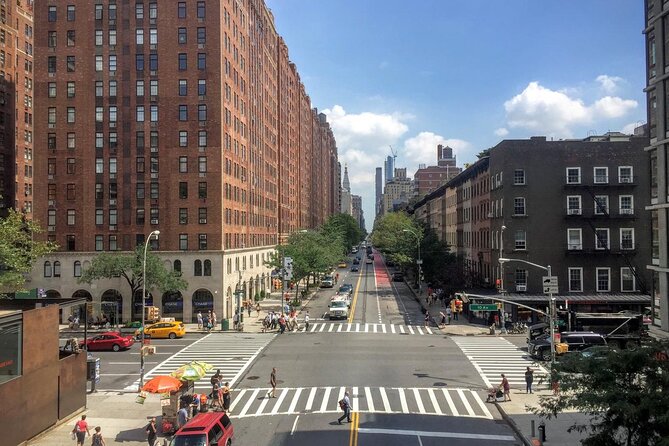
At $10.13 per person for an audio experience that takes about 50 minutes, you’re paying for convenience plus good context. There’s no entrance ticket to buy for any of the listed stops, and most of the “value” comes from the narration: it tells you what you’re looking at and why it matters.
This is also a budget-friendly option if you want the High Line story without paying for a guided walking group. The key tradeoff is that it’s self-guided, so you don’t get a human answering questions on the spot.
Also note what’s not included: the tour gives you audio access, but you bring your own mobile device and headphones. If you already travel with those, you’re in great shape.
Offline Audio and GPS: How to Make It Actually Work
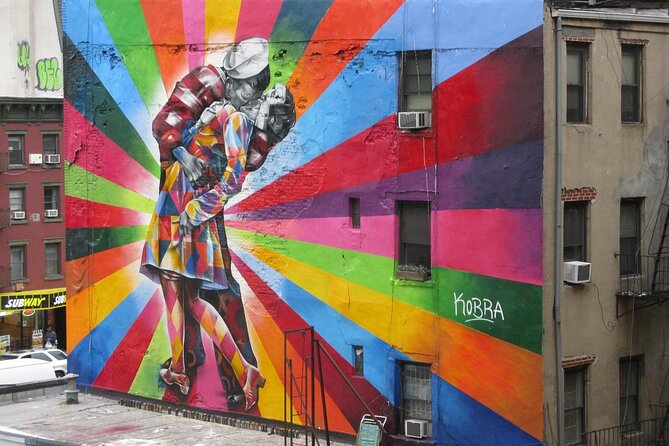
This experience is built for offline use. In plain terms: download the tour before you go, then rely on the app’s GPS map to keep you moving along the route.
Two practical tips help a lot:
- Download first, then test once while you’re still near your starting point. Audio apps can be sensitive to downloads that failed halfway.
- Start at the High Line entrance where the tour begins. The pacing and narration assume you’re going from the High Line toward Hudson Yards.
If you’re used to a different audio platform, expect a learning curve. The tour runs through Vidi Guides, and the interface may feel different than other well-known audio tour apps you might have used before.
Stop 1: The High Line Entrance and Whitney Museum Context
Your tour starts on the High Line at the entrance area in the 10011 zone. The first thing the narration nudges you to do is get oriented: you’ll find a strong view toward the Hudson River to your left, which helps you “read” the city quickly.
Then the tour points you toward the Whitney Museum and the way it’s described in the narration: an art museum focused on twentieth-century and contemporary American art, with a special focus on works by living artists.
Why this matters on a self-guided walk: it gives your eyes something to do besides admire the greenery. You’re not just passing time—you’re building context as you move.
Stop 2: Chelsea Piers and Pier 54 (Plus Little Island)
From the High Line, the route pushes you toward the Chelsea Piers area, where you look down around 13th Street toward Pier 54. The narration flags that the past here is “interesting” and also somewhat tragic, which is a useful framing.
Today, the piers in the area are more for recreation—parks and entertainment space instead of industry. And you also get a sightline to Little Island, the overwater park that opened in spring 2021.
If you like “then and now” stories, this stop does a good job of connecting what you see (public space) with what used to be there (a more complicated past).
You can also read our reviews of more guided tours in New York City






Stop 3: Chelsea Market for Food-Spot Energy
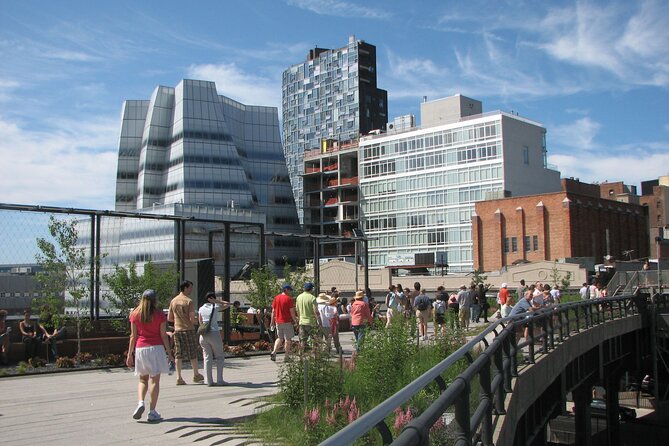
Next up is Chelsea Market, one of the classic anchors of the Meatpacking District vibe. The tour encourages you to step inside and treat it like a place to browse—because it’s a concentrated food world.
You’ll find a range of shops in the narration’s examples: seafood, butcheries, tacos, and brownies. So even if you’re not planning to eat a full meal, it’s easy to grab something small and keep the walking momentum.
One smart thing about using an audio tour here: it can keep you from turning a quick stop into an hour-long wandering detour. The narration keeps you moving while still letting you enjoy the atmosphere.
Stop 4: IAC Building, ROXY Nights, and the Manhattan Projects View
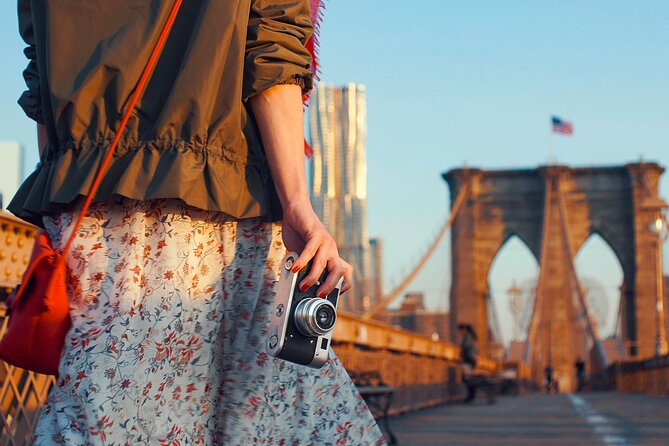
This is where the walk gets extra New York. You’re pointed toward iconic architecture in the Meatpacking area, including the IAC Building and the famous ROXY.
The ROXY segment is all about transformation. The narration explains it began as a roller disco, then shifted to a regular club as roller skating faded in popularity. And it stacks up the star power: performers connected to the venue include Madonna, Liza Minelli, Whitney Houston, and Beyoncé.
Then the route adds a heavier layer with the Manhattan Projects context—described as the nuclear project tied to the development of the world’s first atomic bomb used during World War II. The narration also gestures your attention toward the Baker & Williams Warehouses below.
This stop is a good reminder that “pretty buildings” in Manhattan are often sitting on complicated stories. If you like your sightseeing with a little tension and contrast, you’ll appreciate this part.
Stop 5: Guardian Angel Church and the Flyover Gardens

After the nightlife-and-industry story beat, you step into a more quiet, reflective setting: the Church of the Guardian Angel. The narration calls it one of New York’s few churches and uses it as a breather before you head to the next modern space.
Then you reach the Flyover, described as a set of garden segments between 25th and 27th Streets. The tour notes you can use a raised walkway to look down at the plant life above and what sits below, including forgotten train tracks.
This is one of those stops where the audio tour format helps. You’re seeing layers—construction, plants, and remnants of what came before. The narration guides your eyes so you notice details you might skip if you were just walking past.
Stop 6: The Vessel and Its Staircase Photo Angles
The High Line’s most contemporary—and yes, most talked-about—addition is The Vessel. The structure dominates the final curve, and the narration frames it as bizarre and popular at the same time, with views from multiple levels.
The key physical detail is the one that matters for your photos: it has different levels and interlocking staircases. The tour’s “where to stand” approach is especially useful here. If you’ve ever walked around an art installation and felt like you saw it from all the wrong angles, this part is built to prevent that.
Because The Vessel can draw crowds, your best strategy is to follow the narration’s positioning instructions and not spend too long guessing. You’ll get more out of it with a clear plan.
Stop 7: Hudson Yards Views and the Urban Renewal Angle
The tour ends at Hudson Yards, with the narration pointing you toward a stunning view of the area and the river beyond.
The story here is about change. The narration describes Hudson Yards as a model for urban renewal and sustainably-driven gentrification, with the hope that it brings advantages to both locals and visitors over time.
Even if you’re skeptical of big redevelopment projects (a totally reasonable stance), this ending is useful because it gives you a lens. You’re not just looking at new buildings—you’re thinking about what “new” means in a city where neighborhoods evolve fast.
After the tour finishes, the experience is designed for you to keep exploring on your own from Hudson Yards. That’s a natural endpoint: you’re in the middle of plenty of things to do next, and you don’t have to rush back to a meeting point.
Who This Tour Fits Best
This self-guided audio walk is a strong match if you want:
- A budget-friendly way to get context while walking
- A route built around major sights (High Line, Chelsea Market, The Vessel)
- Offline narration so you’re not paying for data roaming or draining your phone battery
It’s also a good option for solo travelers or anyone who dislikes group schedules. Since there’s no need for a guidebook, you can keep your attention on the street.
The biggest mismatch is if you rely on a tour leader for decision-making. If you want someone to adjust the plan mid-walk, this format won’t do that.
Booking Decision: Should You Go?
I’d book this if you’re comfortable using an audio app and you’ll take two minutes to get set up properly. Download the tour ahead of time, bring headphones, and start at the High Line entrance so the narration lines up with what you’re seeing.
Skip it or rethink it if you’re likely to struggle with phone-based tech mid-walk. With self-guided tours, a wonky app day can cut the value fast. But if your device behaves and you follow the start point, you’ll get a very solid “great views + real context” walk for a price that won’t ruin your NYC budget.
FAQ
FAQ
How much does the New York City & The High Line self-guided audio tour cost?
The price is $10.13 per person.
How long is the tour?
The duration is about 50 minutes.
Can I listen offline?
Yes. You can download the tour in advance and use offline mode without WiFi.
Do I need to bring headphones and a mobile device?
Yes. Headphones and your mobile device are not included.
Where does the tour start and end?
It starts at the High Line in New York, NY 10011, and it ends at Hudson Yards in New York, NY 10001.
What app platform is used for the audio tour?
The tour is provided through Vidi Guides.
Are admission tickets required for the stops?
The tour notes the stops as free in the experience details, including The High Line, Chelsea Piers, Chelsea Market, and Hudson Yards.
Can I bring a service animal?
Yes, service animals are allowed.
What’s the cancellation policy?
You can cancel for free up to 24 hours in advance for a full refund. If you cancel less than 24 hours before the experience’s start time, the amount paid is not refunded.