REVIEW · NEW YORK CITY
NYC: New York City Landmarks & History City Tour by Cart
Book on Viator →Operated by American Capital Tours · Bookable on Viator
Manhattan, but from a rolling seat. This 2-hour golf cart tour is a smart way to hit a lot of landmarks in one run, with a local guide adding context as you glide past Hudson Yards, the High Line area, and classic Midtown sights. It’s designed for an easy pace, with a small group size that keeps questions welcome.
I especially like how the route mixes short walking stretches with mostly seated viewing, so you get neighborhood texture without the full stamina tax. I also love the way guides like Ian and JP focus on details you can’t easily spot on your own, from street and architecture notes to pop-culture references in places like the West Village.
One possible drawback: if you’re taking this in chilly weather, the cart’s wind and rain cover can limit side visibility, and the experience can feel a bit more enclosed than expected—plus NYC traffic can slow the timing.
In This Review
- Key things to know before you roll
- Why a cart tour works so well in Midtown
- Meeting at 438 W 33rd and what the timing feels like
- Hudson Yards, Vessel views, and the modern Manhattan start
- High Line to Chelsea Market: quick access to two very different experiences
- Meatpacking District: history through the street texture
- West Village stop: tree-lined streets and pop-culture breadcrumbs
- Washington Square Park and Greenwich Village: the classic corner-of-New-York mood
- Empire State Building and Flatiron photos without entry tickets
- Madison Square Park as the calmer finish
- Price and value: what $79 buys in real time
- Comfort and safety: the wind cover, blankets, and how to plan
- Who should book this cart tour?
- Should you book this cart tour of Midtown and beyond?
- FAQ
- How long is the NYC Landmarks & History City Tour by Cart?
- Where does the tour start?
- Does the tour end back at the meeting point?
- What language is the tour offered in?
- Is a mobile ticket included?
- What group size should I expect?
- Are tickets or admissions included for stops?
- What’s included in the price?
- Are tips included?
- What if weather conditions make the tour unsafe?
Key things to know before you roll

- Max 7 people makes this feel calmer than the big-bus crowd
- Cart + short stops lets you see more while still stepping out near key spots
- Photo stops at Midtown icons include Empire State Building and the Flatiron Building
- Guide storytelling with pop-culture cues shows up around the West Village
- Winter comfort features like blankets and wind protection help, but dress warm anyway
- Traffic and seasonal expectations can affect pacing, especially in rush hour or holiday seasons
Why a cart tour works so well in Midtown

Midtown can be a lot: big avenues, fast-moving traffic, long blocks, and crowds that make photos feel like a team sport. A cart tour solves the main problem by giving you momentum—sight after sight—without turning your day into a leg workout.
You still get real street-level moments, because the route includes short stops where you can step out, look around, and take pictures. That balance matters. It’s not just drive-by sightseeing, and it’s not only walking either.
The small group size (up to 7) also changes the feel. You can ask questions, adjust your pace, and regroup without the usual rush that comes with large tours.
You can also read our reviews of more city tours in New York City



Meeting at 438 W 33rd and what the timing feels like
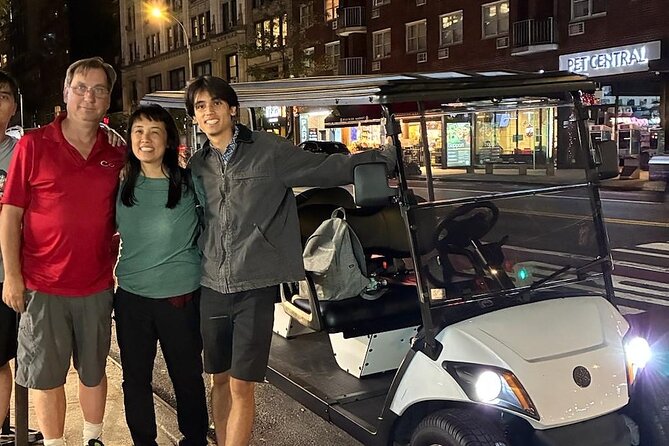
The tour meets at 438 W 33rd St and ends back there, so you don’t have to solve transit logistics mid-day. The total time is listed at about 2 hours, which is a tight window for Manhattan if you’re doing it on foot.
Because it’s a mobile ticket tour and it runs in English, plan to have your phone charged and ready. The meeting point is near public transportation, which is useful if you’re combining it with other plans like a museum or a late dinner reservation.
In practical terms, expect a mix of drive-by views and small on-foot moments. That’s why the timing works: instead of spending 20 minutes to get between far-apart neighborhoods, the cart handles the travel while the guide uses the moment to tell you what you’re looking at.
Hudson Yards, Vessel views, and the modern Manhattan start
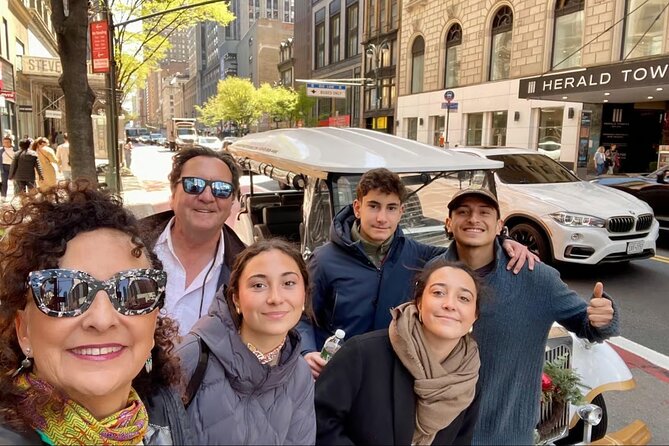
The tour begins by bringing you to Hudson Yards, the newer, sharply designed side of Manhattan’s West Side. Even if you’ve seen images online, the scale feels different when you’re in the area and looking at tall buildings and public art in person.
You’ll see the Vessel, that honeycomb-like structure that people line up for climbing and viewpoints. You also pass the Edge observation deck area. Even without going inside, it helps you understand how this part of Manhattan is built around skyline views and visitor flow.
Starting here is smart because it sets a contrast early. You get modern architecture and landmark design right away, then the route moves into older neighborhoods with different street rhythm.
High Line to Chelsea Market: quick access to two very different experiences
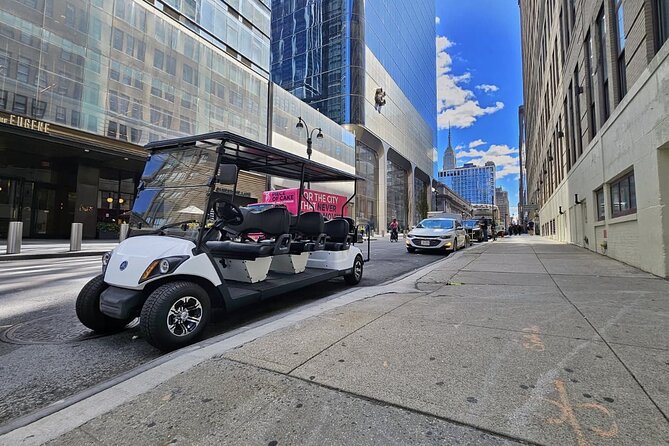
Next up is the High Line, an elevated park built on an old freight rail line. You’ll spend about 10 minutes, and that’s enough time to get the layout, the plantings, and the signature perspective over the city and toward the Hudson River.
The best part of the High Line on a cart tour is efficiency. You’re not wasting time figuring out where to enter or how to connect viewpoints. You get the highlights in a short window.
Then you head toward Chelsea Market, where you pass by an indoor market known for food stalls and shops. The stop is brief (around 5 minutes), so think of it as a taste of the area rather than a full meal plan. If you want to eat there, you’ll likely need to plan a separate stop later.
Meatpacking District: history through the street texture
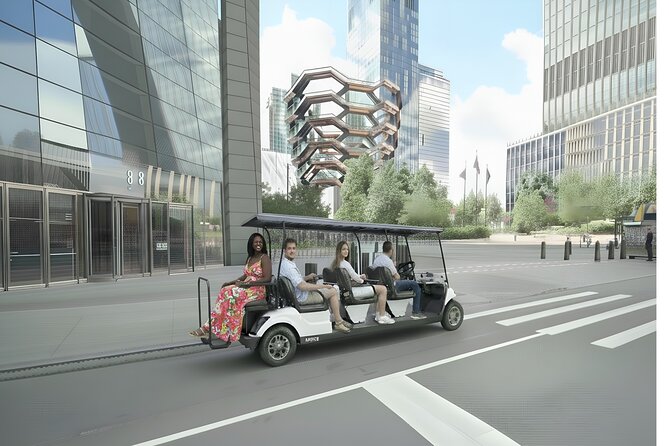
You’ll pass through the Meatpacking District for about 10 minutes, using the cart for movement while you catch the vibe from the street. This neighborhood is known for cobblestone streets and the mix of trendy retail, restaurants, and nightlife energy.
On your own, it’s easy to either rush through or get stuck browsing with no idea what you’re looking at historically. On this kind of guided cart route, you can connect the modern storefronts to the neighborhood’s past.
A small timing note: because this portion is mostly pass-through, it’s more about getting your bearings than doing a full exploration. If you love walking, you’ll probably want to return after the tour with fresh time.
You can also read our reviews of more historical tours in New York City





West Village stop: tree-lined streets and pop-culture breadcrumbs
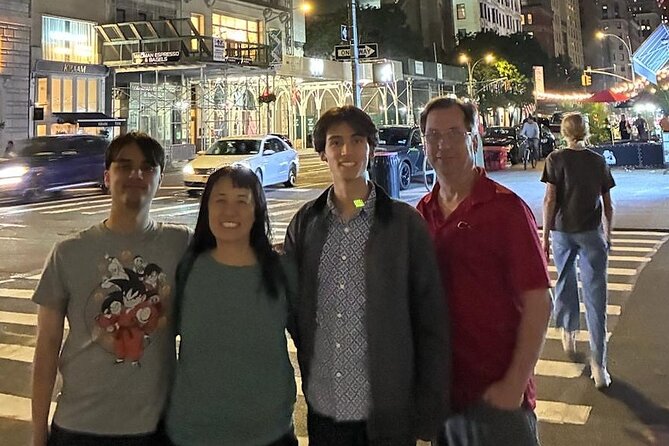
The most interesting neighborhood moment is the West Village, where you get a longer stop of about 15 minutes. This is the part where you can slow down and actually look at the streetscape: boutiques, cafes, and the classic, calmer-feeling blocks.
The guide references specific spots that you might recognize from entertainment. Two examples mentioned are Perry Street, tied to Sex and the City, and 23 Cornelia Street, which has shown up in Taylor Swift song storytelling. Even if you’re not a superfan, it’s a fun way to turn a stroll into something that feels personal and story-driven.
If you like photos, this is the moment to do them. West Village streets photograph well because you’re not only capturing buildings—you’re capturing the street rhythm.
Washington Square Park and Greenwich Village: the classic corner-of-New-York mood
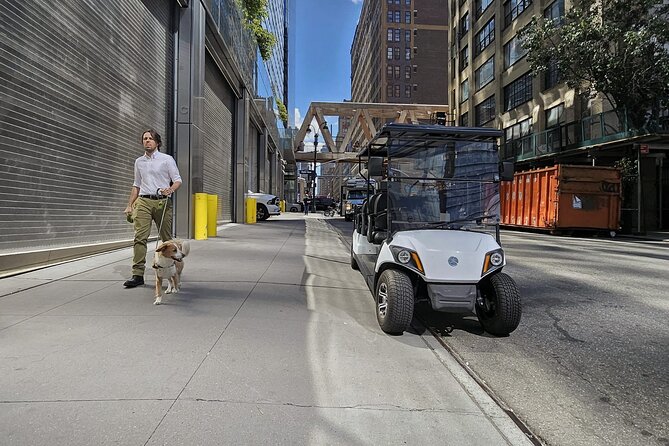
You pass Washington Square Park for about 10 minutes (either pass by or stop, depending on the flow). The park is a recognizable Greenwich Village anchor, with its arch and fountain, plus the street performers and everyday community atmosphere around it.
Then you move through Greenwich Village. Expect the route to give you a sense of the neighborhood’s artistic and music-related cultural reputation without turning it into a full walking day. It’s like getting the opening credits before the main plot.
If you’re someone who wants a lot of time in one neighborhood, keep your expectations realistic here. You’ll get the feeling and the highlights, and you can choose what to revisit later.
Empire State Building and Flatiron photos without entry tickets
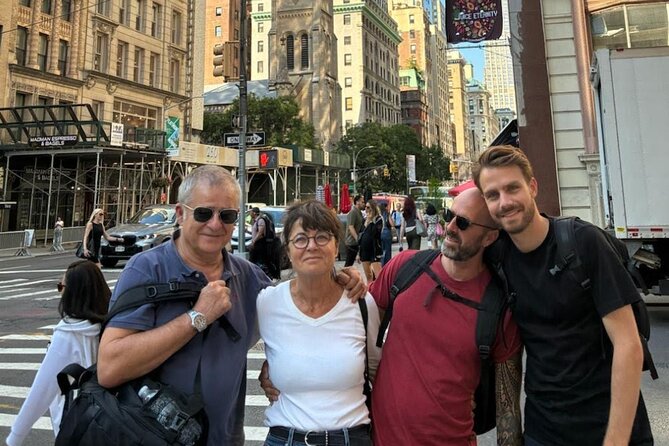
Midtown iconic landmarks usually take time. Here, you get photo stops instead of long ticket lines.
You’ll make a short stop at the Empire State Building for about 5 minutes, and the tour notes that admission isn’t included. That matters. If you want the view from the top, you’ll need a separate plan for tickets and timing.
After that, you’ll photo-stop at the Flatiron Building for about 5 minutes. This triangular landmark is one of those New York “instant recognition” structures. From the right angle, it also helps you understand why this part of Manhattan became so visually famous.
These quick stops are a good match for a cart tour format. You get the photo, you get the context from your guide, and you don’t burn your whole afternoon stuck waiting.
Madison Square Park as the calmer finish
You’ll pass by Madison Square Park for about 5 minutes. It’s one of those spaces that works as a reset button: green area, public art, and views back toward the Flatiron area.
This stop is brief, but it’s useful. After the big skyline moments, you get a softer setting that lets you look around without the same intensity of crowds and traffic.
It’s also a good point to check your bearings. You’ll likely end back at the start, and having seen where you are helps the rest of your day feel less like wandering.
Price and value: what $79 buys in real time
At $79 per person for about 2 hours, you’re paying for three things: transportation in a cart, a guided story layer, and the ability to see more than you could comfortably do on foot.
Here’s the value logic. Walking the full set of landmarks you’ll cover would take far longer and would force you to choose what to skip. The cart handles the movement, while the guide keeps the stops meaningful.
The tour also includes information and the cart ride with sightseeing at no extra charge, so there aren’t surprise ticket fees built into most stops. The tour explicitly notes that the Empire State Building photo stop has admission not included, and tips aren’t included either.
Is it a deal if you only want one famous photo? Probably not. But if you want a guided overview of multiple neighborhoods and landmarks in a short afternoon, this price starts to make sense fast.
Comfort and safety: the wind cover, blankets, and how to plan
This is where experience can vary by season.
In colder months, the cart uses a plastic wind and cold cover. The cover is there to protect you from wind, and it’s clear enough to help visibility from the cart. Still, it can feel more enclosed than an open-air ride, especially if you’re trying to see out of the side in motion.
Some people also mention feeling close to fast-moving cars. That doesn’t automatically mean the ride is unsafe, but it does suggest you should treat it like a transportation ride: keep your hands and kids safely inside, listen to instructions, and don’t lean out for photos.
Comfort support shows up in the reviews too, with mention of blankets and ways the guide helps people stay warm. If you book in winter, wear layers. Bring gloves if you run cold. And plan for the fact that winter walking stops may feel brisk even when you’re mostly seated.
One small heads-up: a review mentions the smell of gas fumes on the cart. You might not notice it, but if you’re sensitive to smells, be aware that it can happen.
Who should book this cart tour?
This is a strong match if you:
- Want a quick, guided overview of Midtown plus West Side and Greenwich Village
- Prefer to sit for the travel portions but still step out for photos
- Appreciate local storytelling, including pop-culture references like Sex and the City and Taylor Swift song locations tied to the West Village
- Like the idea of a small group and a relaxed pace
It may be less satisfying if you:
- Want to spend a long time at any one attraction (this route favors quick stops)
- Expect every seasonal element to look exactly like promo photos, since weather and timing can change the feel of the ride
- Plan to do the Empire State Building observation deck during the tour, since admission is not included
Should you book this cart tour of Midtown and beyond?
I’d book it if your priority is seeing many landmarks in one afternoon with a guide who can turn city blocks into stories. The best part isn’t just the cart ride—it’s the way the tour connects modern Hudson Yards, the High Line area, and classic Midtown icons into a coherent route.
Skip it if you’re trying to maximize time at specific attractions like observation decks, or if you strongly prefer open-air sightseeing without any wind cover. Also, if you’re picky about pacing, keep in mind that NYC traffic can affect how quickly you move from stop to stop.
If you’re aiming for efficient, guided orientation—this tour format is a solid value.
FAQ
How long is the NYC Landmarks & History City Tour by Cart?
The tour is listed at about 2 hours.
Where does the tour start?
The meeting point is 438 W 33rd St, New York, NY 10001.
Does the tour end back at the meeting point?
Yes, the activity ends back at the meeting point.
What language is the tour offered in?
The tour is offered in English.
Is a mobile ticket included?
Yes, it includes a mobile ticket.
What group size should I expect?
The tour has a maximum of 7 travelers.
Are tickets or admissions included for stops?
Most stops are listed as free for admission (like the High Line). The Empire State Building photo stop notes that admission is not included.
What’s included in the price?
The price includes the cart ride and sightseeing, plus information provided by the guide at no extra charge.
Are tips included?
No. Gratuities/tips are not included.
What if weather conditions make the tour unsafe?
One cancellation example mentions extreme wind and cold weather making it unsafe to run, and a full refund was provided.