REVIEW · NEW YORK CITY
American Museum of Natural History Admission Ticket
Book on Viator →Operated by American Museum of Natural History · Bookable on Viator
Dinosaurs and deep space share the same building. This admission ticket to the American Museum of Natural History on Manhattan’s Upper West Side gives you access to over 40 exhibition galleries, including the Rose Center for Earth and Space and the Richard Gilder science areas, so you can go at your own pace.
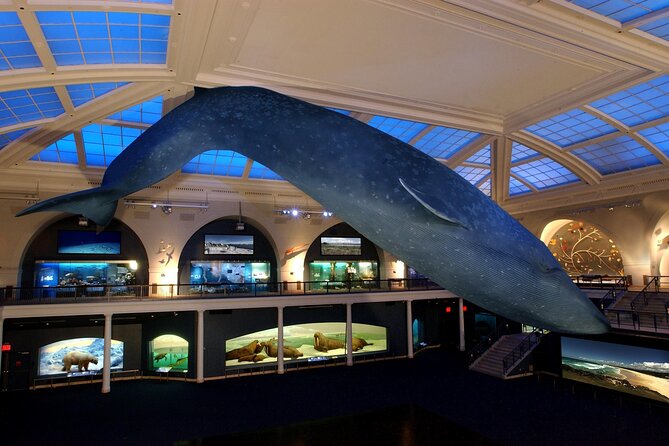
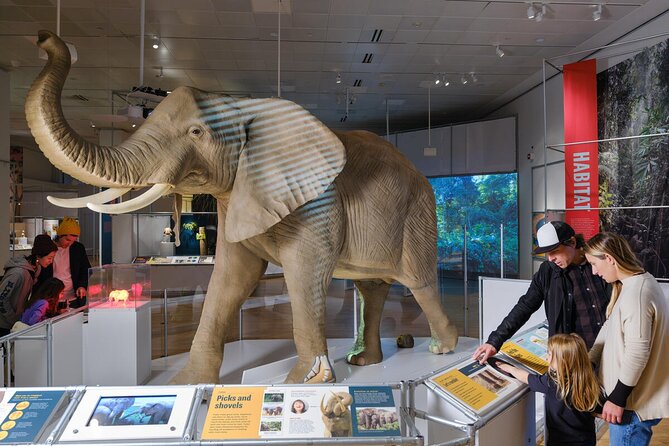
I especially like two things. First, the scope: you’re not stuck in one theme. You’re moving through natural history, universe history, and hands-on-style learning spaces all in one stop. Second, the museum’s iconic scale: the T. rex skeleton in the dinosaur halls, the Asian elephants in the Akeley-style mammal spaces, and that 29-meter blue whale model that makes other big exhibits feel small.
One thing to consider: you have to convert your voucher into an actual entry ticket once you arrive, and that can add waiting time. I’d also plan for the fact that the museum is big, so getting lost is easy unless you use the map and decide what matters most to you.
In This Review
- Key highlights that matter before you go
- What this AMNH admission ticket really includes
- Entering the museum and the first 10 minutes that save your day
- T. rex, elephants, and the blue whale: the exhibits people remember
- Rose Center for Earth and Space: where the universe feels less abstract
- Richard Gilder Center: science, learning, and a family-friendly tempo
- What’s not included: ticketed extras you might want
- A 3–4 hour visit works, if you plan your priorities
- Crowds, vouchers, and avoiding the ticketing hiccup
- Food, breaks, and kid-friendly sanity
- Value check: is $37 a fair price for this AMNH day?
- Who should book this AMNH ticket?
- Should you book this AMNH admission ticket?
- FAQ
- How long should I plan for at the American Museum of Natural History?
- What does general admission include?
- What is not included with this ticket?
- Do I need to convert a voucher to enter?
- Is the ticket offered in English?
- Are service animals allowed?
- Can I get a map at the museum?
- What are the cancellation terms?
Key highlights that matter before you go

- 40+ galleries plus the Rose Center and Richard Gilder science areas, letting you build your own route
- Iconic exhibits you can’t really replace in other stops, like the T. rex hall and the blue whale model
- A full-day style pass (even if you only budget 3–4 hours), so you’re not rushed off to the next thing
- Paper maps available at entrances and info desks, which is handy because signage isn’t always straightforward
- Not everything is included: planetarium shows and a few special attractions require extra tickets
What this AMNH admission ticket really includes
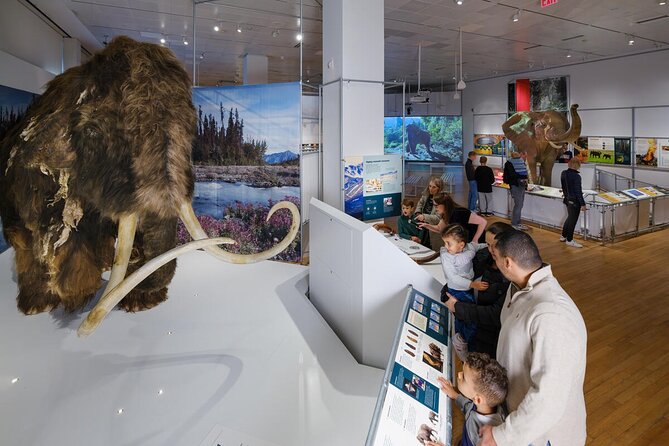
This is general admission, so think broad access, not a guided tour. Your ticket covers more than 40 permanent exhibition halls, and it also includes the Rose Center for Earth and Space plus the Richard Gilder Center for Science, Education, and Innovation.
You’ll likely spend a minimum of about 3 hours, but the museum runs longer than that for many people. One reason is simple: it’s stacked across multiple levels, and each level can feel like its own mini-museum. If your goal is only a quick hit of dinosaurs and out, you can do it. If your goal is learning and lingering, you can stretch this into a fuller day.
Practical details: confirmation comes at booking time, service animals are allowed, and the site is near public transportation. There’s also a paper map you can grab at the museum entrances, information desks, and membership desks—use it early.
Language is listed as English. Most travelers can participate, and children under 3 get waived admission fees. That makes this a strong option if you’re traveling with toddlers who still need shorter attention spans.
You can also read our reviews of more tours and experiences in New York City



Entering the museum and the first 10 minutes that save your day
Plan to arrive ready to convert your voucher. This ticket is designed to work with a voucher system, and you’ll exchange it for an admission ticket on site. That’s easy when lines move, but it’s also the part that can create delays.
Once inside, don’t waste time “wandering until something catches your eye.” The museum is massive, and even with a map, it’s easy to end up backtracking. I suggest you pick your top 3 must-sees before you enter, then let everything else become bonus points.
Because the museum is indoors and runs on big foot traffic, crowds can show up fast. Even if you start early, you may still find busy conditions in popular halls. The floors are hard and you’ll do lots of walking, so comfy shoes are not optional.
If you’re traveling with kids, this is where the museum’s layout helps. Many people find it stroller-friendly and generally workable for accessibility needs. Still, you’ll want to keep an eye on pacing. Strollers are great, but tight crowd surges can slow everyone down.
T. rex, elephants, and the blue whale: the exhibits people remember
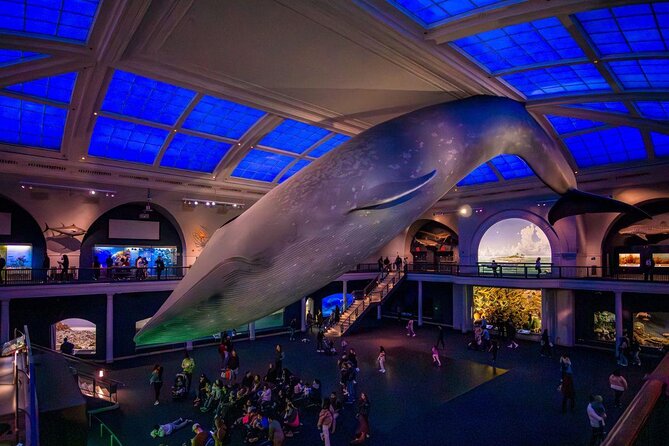
AMNH shines when you hit the big-name spaces early. This admission ticket gives you access to major permanent galleries, including Hall of Saurischian Dinosaurs, Akeley Hall of African Mammals, and Milstein Hall of Ocean Life.
Here’s how I’d think about them for your day:
- Dinosaurs (T. rex in the dinosaur halls): This is the classic jaw-drop moment. Even if you’re not a dinosaur person, the size of the skeleton and the scale of the hall help you understand how long “deep time” really is.
- Akeley Hall of African Mammals (Asian elephants are highlighted): Mammals exhibits tend to click with kids because the displays feel grounded in the real world, not just fossils and bones. The elephants are a great “bridge” between science and empathy.
- Milstein Hall of Ocean Life (29-meter blue whale model): This is the museum’s way of saying size matters. When you see a model that long, it changes how you interpret everything from evolution to ecology.
These are the kinds of exhibits that also help adults. You leave with more than facts. You leave with a sense of scale: scale in time, in bodies, and in the planet’s systems.
The only drawback is that popular exhibits can be crowded. If you can, plan these as your early targets, and then shift to slower galleries after you’ve gotten the iconic moments out of the way.
Rose Center for Earth and Space: where the universe feels less abstract
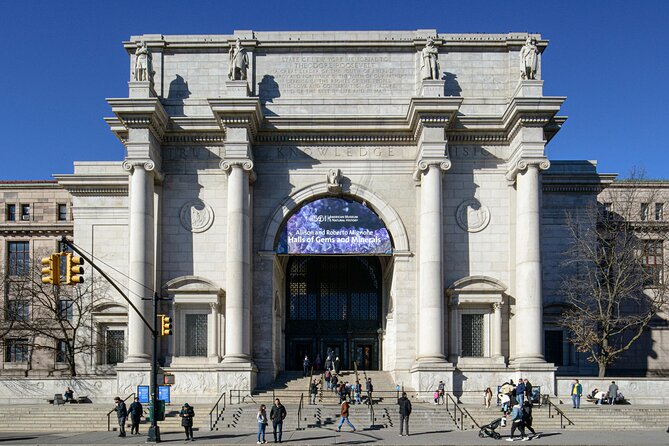
The Rose Center for Earth and Space is included with this ticket, and it’s one of the strongest reasons to choose general admission here instead of only focusing on animals. You’re not just seeing nature on Earth—you’re seeing Earth in a larger cosmic story.
This area fits two traveler styles:
- If you like science but don’t want homework, it helps you connect the dots through visual displays and a “big picture” setting.
- If you’re traveling with kids, it works because space is a natural curiosity magnet.
Since the details of the specific exhibits aren’t spelled out in your ticket description, you should treat this as your flexible zone. If your family is more into planet stories, aim here next. If you’re more into fossils and wildlife, you can leave it later, knowing it’s already included.
You should also keep an eye on any add-on experiences connected to space. The ticket’s general admission scope excludes certain planetarium-related elements, so you may want to decide in advance whether you want those extra experiences.
Richard Gilder Center: science, learning, and a family-friendly tempo
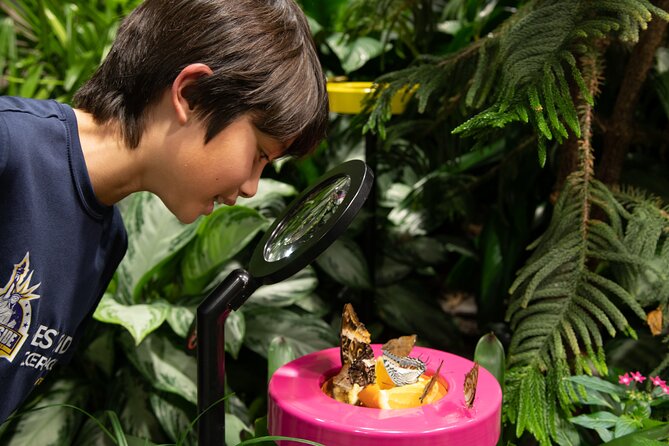
Your ticket also includes access to the Richard Gilder Center for Science, Education, and Innovation. Even without a specific “one exhibit” promise in the details, this part of AMNH generally serves a simple purpose: it keeps the museum feeling modern and approachable.
This matters because big natural history museums can sometimes feel like a long hallway of facts. A science and education center adds momentum. It’s often a good place to let kids reset between intense “look at bones” halls and to help adults reframe what they just saw.
I’d use this section as your pacing tool. If you’re hitting the museum with children, plan a short break here rather than powering straight through. You’ll come back fresher, and your attention span will behave better.
You can also read our reviews of more historical tours in New York City





What’s not included: ticketed extras you might want
General admission does not include certain ticketed attractions. Your ticket excludes:
- Invisible Worlds
- the butterfly vivarium
- the giant-screen film
- the Hayden Planetarium Space Show
This is important for two reasons. First, it affects how long you can comfortably plan. If planetarium shows are high on your list, you’ll want to budget extra time and make sure those tickets are handled separately.
Second, it prevents disappointment if you assumed everything was included. With this museum, it’s easy to see the big “wow” things and then learn you need an add-on for a couple of the signature experiences.
One tip I strongly recommend: decide what “must happen” means for you. If you don’t care about planetarium programming, you can enjoy the rest of AMNH without any stress. If you do care, plan for an extra step so your day doesn’t get hijacked by last-minute decisions.
A 3–4 hour visit works, if you plan your priorities
The listed duration is about 3 to 4 hours, and that’s a realistic planning window for a focused visit. But AMNH has a way of making time feel elastic. Many people end up walking longer because each hall is compelling.
Here’s a practical approach:
- Book a time window that fits your energy, not just your schedule.
- Pick your big three (for example: T. rex hall, mammals elephants, blue whale).
- Build in buffer time for crowding and for the fact that the museum layout can feel confusing without a plan.
Strollers and accessibility can work well here, but you’ll still want to pace. Hard floors plus lots of walking adds up. If you’re with older kids or adults who like museums, 3 hours can be enough if you focus. If you’re with younger kids, 3–4 hours often becomes a full-on event with breaks and snack stops.
Crowds, vouchers, and avoiding the ticketing hiccup

This experience can be very smooth. Some people report efficient entry. But the voucher-to-ticket step is the one area where things can wobble.
Keep these points in mind:
- Your voucher needs to be converted into a real admission ticket at the museum.
- If your entry time is tight, that conversion process can feel like a hurdle.
- If your reference number or QR code doesn’t display properly, it can turn into extra time at the ticketing counter.
The most efficient mindset is to show up with everything ready: your confirmation details and your QR information, plus patience for that first exchange. Also, if you’re trying to avoid any possible line delays at all, consider the tradeoff of buying directly from the museum. Some visitors found that approach faster and smoother.
The key is simple: don’t treat the voucher as an instant ticket. Treat it as a heads-up that you still have to collect your entry pass once you arrive.
Food, breaks, and kid-friendly sanity
You’re not just walking through exhibits—you’re living inside one. That means breaks are part of the plan, especially with families.
There’s a food court on site, and one review specifically called out gluten-free options like GF pizza and brownies. Even if you don’t need gluten-free, it’s a useful reminder: you can stay on-site instead of hunting for nearby quick meals during the middle of your museum day.
For families, build your day around energy, not just exhibits. If you keep kids moving from one hall to the next without a break, the last third of the museum can feel like forced marching. If you pace with snacks and a short sit-down, you’ll get more enjoyment out of the learning.
Value check: is $37 a fair price for this AMNH day?
At $37 per person, this ticket is priced like a major NYC museum admission. The value comes from what’s included: more than 40 permanent exhibition halls plus the Rose Center and the Richard Gilder Center.
This is not a “grab-and-go” ticket. It’s a museum pass that supports a longer visit and gives you room to choose. If you’re the type who likes to move fast, you may feel like you’re leaving value behind. If you’re the type who likes stopping, reading, and looking up close, it can feel like a bargain because there’s so much included.
The exclusions matter for value too. If you strongly care about the butterfly vivarium, giant-screen film, or the planetarium show, you’ll likely pay extra for those pieces. If those aren’t priorities, you can spend the full admission value on the included permanent galleries and feel satisfied.
For families, it also has a plus: kids under 3 have waived fees, and the museum is broadly family-friendly. That can make the total day cost more manageable than attractions where almost everything is add-on pricing.
Who should book this AMNH ticket?
I’d book this ticket if you want a high-impact NYC museum day without paying for a formal guided tour. It’s best for:
- Families with kids who want animals, dinosaurs, and science in one location
- Adults who like learning but want flexibility rather than a tightly scheduled walkthrough
- Anyone who wants iconic AMNH moments plus time to wander through supporting galleries
I’d think twice if:
- Your schedule is ultra-tight and you want zero waiting time for ticket conversion
- You already know you want multiple excluded ticketed experiences and want a single all-in-one bundle (because some key attractions require extra tickets)
Should you book this AMNH admission ticket?
Yes, with one practical caution. AMNH is the kind of museum that can fit a lot of traveler styles, and general admission here gives you the foundation: 40+ galleries, the Rose Center, and the Richard Gilder science spaces.
Book it if you can handle the voucher-to-ticket step and you’re willing to spend real time walking. I’d also prioritize the big-name halls early, grab a paper map when you enter, and keep your expectations aligned: some special experiences like the planetarium show are not included.
If you’re going for dinosaurs plus deep space plus enough time to slow down, this ticket tends to be a solid value for a Manhattan day.
FAQ
How long should I plan for at the American Museum of Natural History?
Plan on about 3 to 4 hours for a visit. If you want time to see multiple levels and go at an unhurried pace, you may want more time.
What does general admission include?
General admission includes access to more than 40 permanent exhibition halls, the Rose Center for Earth and Space, and the Richard Gilder Center for Science, Education, and Innovation.
What is not included with this ticket?
General admission does not include ticketed exhibitions such as Invisible Worlds, the butterfly vivarium, the giant-screen film, and the Hayden Planetarium Space Show.
Do I need to convert a voucher to enter?
Yes. You’ll need to get your voucher converted to an admission ticket at the museum.
Is the ticket offered in English?
The experience is offered in English.
Are service animals allowed?
Yes, service animals are allowed.
Can I get a map at the museum?
Yes. You can get a paper map at the museum entrances, information desks, and membership desks.
What are the cancellation terms?
Free cancellation is available up to 24 hours in advance for a full refund. If you cancel less than 24 hours before the experience start time, the amount paid is not refunded.