REVIEW · NEW YORK CITY
Private Theatre District Tour
Book on Viator →Operated by Top Dog Tours Inc. · Bookable on Viator
Broadway street corners can teach you a lot. This private Theater District tour turns Midtown into a living backstage lesson, guided by an industry professional for about two hours of walking and storytelling. You’ll move past the big marquees and learn how shows went from ideas to cultural moments, including why something like Hamilton landed so hard.
I love the way the tour spotlights specific theaters by name, not just generic Broadway talk. I also like that the guide pulls real show-industry details into the walk, with stories the likes of Lucas and Patrick have been praised for in past runs.
One catch to plan around: this is an outside-walk experience. Backstage and lobby access isn’t guaranteed, and the focus is on what you can see and hear from the sidewalks—so it’s not the same thing as getting into a theater.
In This Review
- Quick highlights for your Theater District walk
- Why this private Theater District tour works in about 2 hours
- Starting at the Majestic Theatre: Phantom’s doorstep and the first big stories
- Sardi’s and the Shubert Theatre: where theater people talk shop
- 45th Street Theater Row: Booth, Jacobs, Golden, Imperial, Hirschfeld, Music Box
- The Marriott Marquis area and the Marquis Theatre site
- Hamilton at the Richard Rogers Theatre, then the walk toward Wicked
- Times Square and Duffy Square: learning the neighborhood behind the neon
- Hell’s Kitchen and the Off-Broadway thread you shouldn’t skip
- Price and value: is $80 per person worth it?
- What to do to make the tour smoother (and more enjoyable)
- Who this private Theater District tour is best for
- Should you book this tour?
- FAQ
- Where does the tour start and end?
- How long is the private Theater District tour?
- How much does it cost?
- Is this tour private?
- What language is the tour offered in?
- Are theater tickets or entrance fees included?
- Is there an audio guide?
- How much walking is involved?
- Does it run in bad weather?
- Can kids join, and do there need to be adults?
- Is there a cancellation window for a full refund?
Quick highlights for your Theater District walk
- Industry-pro experience: You get commentary tied to how theater is made and why it matters.
- Majestic to Gershwin route: You start at the Majestic and finish at the Gershwin for Wicked.
- Times Square context: Duffy Square and nearby history make the area click fast.
- Theater-row lineup: Expect stops along 45th Street with multiple landmark venues.
- Sardi’s stop: The iconic theater industry hangout gets its moment.
- Hamilton and Wicked landmarks: Smash-hit theaters anchor the second half of the tour.
Why this private Theater District tour works in about 2 hours
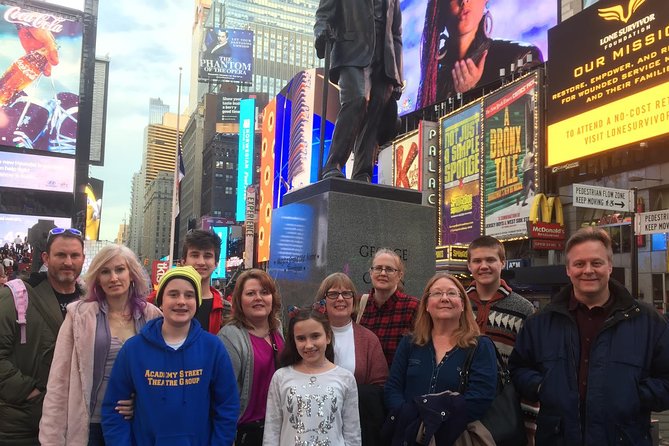
The best part of a short walking tour in New York is the payoff-to-time ratio. With only about two hours, you’re not trying to “cover Broadway” like a checklist. You’re getting an organized path through the loudest, most famous theater block in the city, with a guide who keeps the story moving.
The route is built around recognizable anchors. You kick things off at the Majestic Theatre (the Phantom of the Opera home), then continue down the Midtown theater strip toward a finish outside the Gershwin Theatre (Wicked’s stage). Along the way, you pause for context: how these places became show magnets, how musicals got their footing, and why certain eras and artists still shape what gets produced today.
And because it’s private, you’re not stuck listening to a lecture aimed at the loudest person in the group. It’s geared to your group’s pace—useful if you want time to look up at marquees, ask questions, or simply slow down and take it in.
You can also read our reviews of more private tours in New York City



Starting at the Majestic Theatre: Phantom’s doorstep and the first big stories
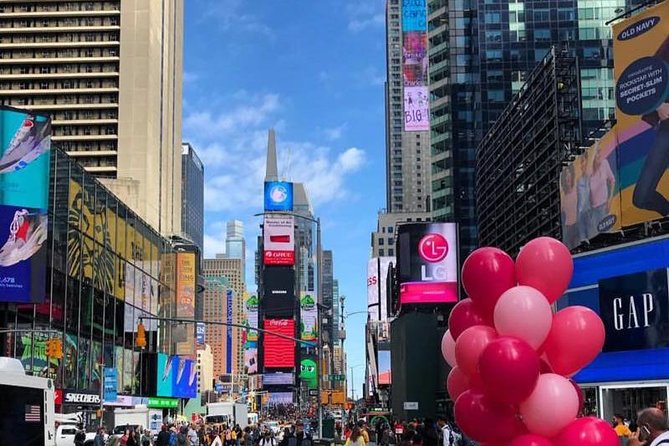
Your tour starts outside the Majestic Theatre at 245 W 44th St. The immediate benefit here is focus. When your first “wow” is already one of the most recognizable names in theater, you’re primed for the rest of Midtown.
From the start, the guide typically sets the tone with what opened here, why it became a landmark, and how this specific block evolved into the Broadway brand we know now. You’ll also get a quick sense of the theater ecosystem: directors, producers, choreographers, composers—people who create the music and the machinery behind what ends up onstage.
I like how this first stop frames the tour. Instead of treating the theaters like random buildings, you start seeing them like chapters. That makes the second half—where shows and neighborhoods connect—feel less like sightseeing and more like a guided map of how Broadway became Broadway.
Practical note: this is a walking tour, and the meeting point is in the busiest theater zone. Wear comfortable shoes. You’ll be on your feet for long stretches.
Sardi’s and the Shubert Theatre: where theater people talk shop
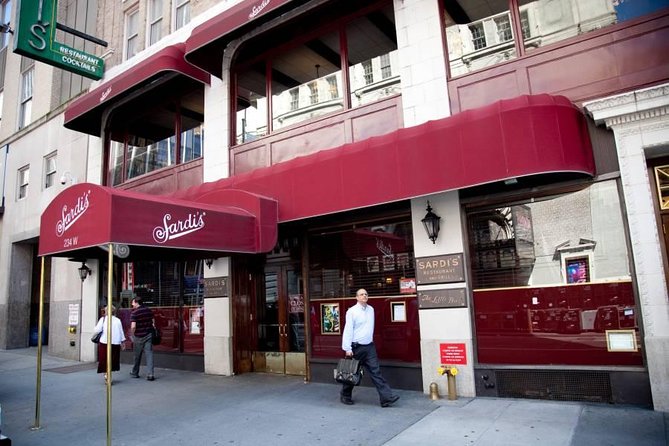
As you head down the street, you’ll stop outside Sardi’s, the classic watering hole for the theater community and fans. Even if you’ve never been inside, it’s a useful place to learn why Broadway has always been social, not just artistic.
This kind of stop matters because Broadway isn’t only about the curtain rising. It’s about the network—people meeting, ideas circulating, and industry chatter keeping momentum. In a city that can feel anonymous, it’s a reminder that theater is built by real relationships.
Continuing onward, you’ll also hear commentary connected to the Shubert Theatre. This is where the guide usually connects the dots between who built this era, how theaters became production homes, and how musical theater grew into the cultural phenomenon it is today.
If you’re the type who likes context—why a show became famous, not just that it existed—these early stops are where you start to feel the value of a live guide versus a self-guided stroll.
45th Street Theater Row: Booth, Jacobs, Golden, Imperial, Hirschfeld, Music Box
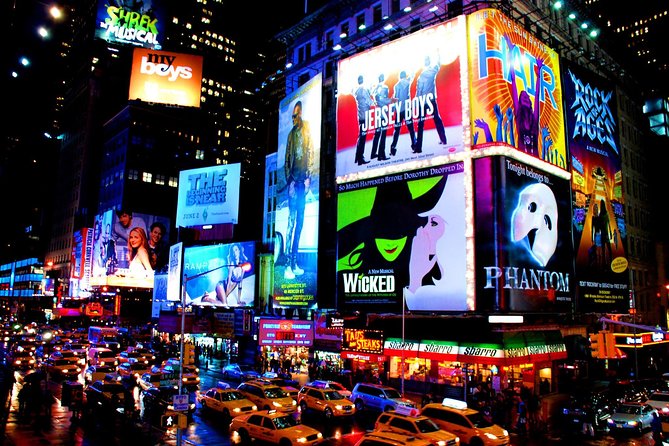
Once you turn toward 45th Street, the walking tour does what the best Broadway experiences do: it gives you landmarks you can immediately recognize and actually remember later.
Along this stretch, you’ll pass venues including:
- Booth Theatre
- Jacobs Theatre
- Golden Theatre
- Imperial Theatre
- Hirschfeld Theatre
- Music Box Theatre
The point of walking all these names in one corridor is simple: it shows how tightly packed Broadway is. Each theater feels like its own world, yet they share the same street rhythm. You’ll get commentary that ties the buildings to what they’ve hosted, and how different productions shaped the overall sound and style of musical theater.
Two things I find especially useful here:
- You learn to read the lineup—not just the marquee, but how different theaters fit different types of shows and eras.
- Your Broadway memory sticks better when you learn it in sequence. Seeing these theaters in motion helps you attach facts to visuals.
One caution: this is a photo-friendly zone, but your time is limited. If you stop for every picture, you’ll feel rushed later. I’d keep your eyes up first, photos second.
The Marriott Marquis area and the Marquis Theatre site
Next up, you’ll see the Marriott Marquis Hotel and learn about the Marquis Theatre area—specifically the history of what used to be there before the hotel changed the skyline.
This stop is a good reminder that Broadway Midtown isn’t frozen in time. The neighborhood keeps adapting, and the theater story keeps moving even when buildings don’t stay the same. It’s also one of the most “New York” moments on the walk: you’re learning theater history in a city where real estate and show business share the same address.
If you love cities that change while still preserving identity, this part hits the right tone. It’s not just, Look at a theater. It’s, Understand how the area transforms and why the theater district remains the theater district.





Hamilton at the Richard Rogers Theatre, then the walk toward Wicked
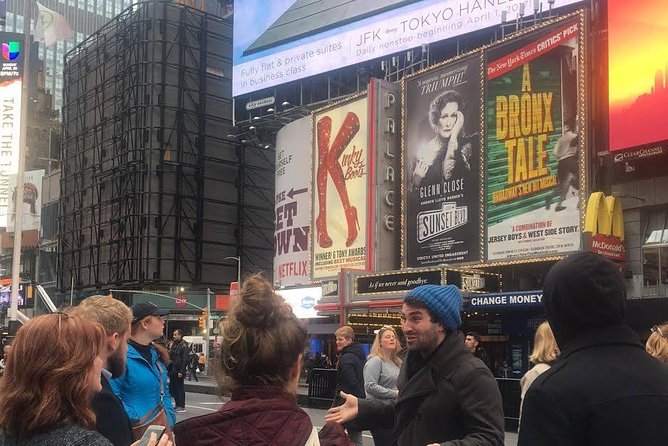
The tour’s mid-to-late portion focuses on modern Broadway cultural gravity. You’ll head toward the Richard Rogers Theatre, home to the smash hit Hamilton. If Hamilton is your entry point into musical theater, this is a smart moment to anchor the discussion. You’ll hear about how a show becomes a phenomenon—why it resonates, how it connects to broader cultural conversations, and how the musical-theater “golden age” ideas still matter even when the style is new.
After that, the route continues toward Duffy Square, the center of Times Square. This matters because Times Square is where Broadway’s audience energy becomes visible at street level. You get history that explains how this Manhattan corner became the famous magnet it is now, which helps you make sense of why people flock here even if they’ve never sat in a seat.
And eventually, your walk ends outside the Gershwin Theatre for Wicked. Ending here is a nice closing move: you go from Phantom’s doorstep at the start to one of today’s biggest popular titles at the finish. It gives your tour a clear “from classic to current” arc.
Times Square and Duffy Square: learning the neighborhood behind the neon
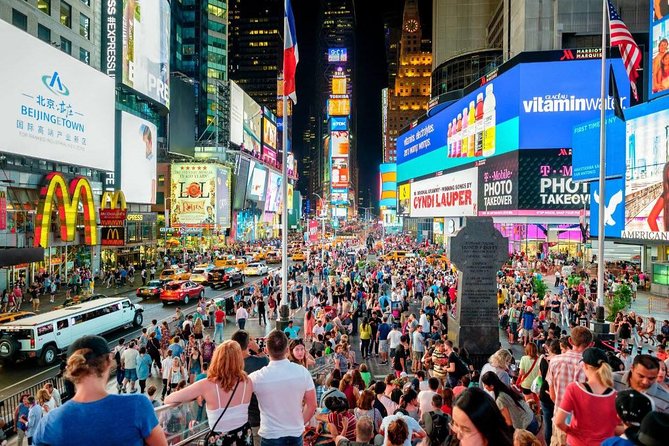
Times Square can feel like chaos if you arrive without context. This tour helps you slow it down by putting the place into a story.
At Duffy Square, you’ll hear about the area’s history and how this part of Manhattan became such a famous location. The value isn’t that you’ll suddenly stop noticing the crowds. It’s that you’ll understand why the crowds are there—why the theater district concentrates attention in this specific zone.
This is also where a guide earns their pay. A walking tour guide can point out what’s worth noticing now and what’s worth remembering later. The commentary turns the sidewalk into a narrative.
Hell’s Kitchen and the Off-Broadway thread you shouldn’t skip
As the walk continues, you’ll hear a bit about Hell’s Kitchen and how it fits into the broader theater world. Even if you came for Broadway only, this is a useful detour because it shows the theater ecosystem doesn’t end at curtain time on 42nd Street.
You’ll also get a touch of the Off-Broadway scene. The key word here is touch. The tour doesn’t pretend it can map every theater alternative in Manhattan. Instead, it gives you enough context to understand that Broadway is one peak, not the entire mountain range.
For me, this part is a strong reason to book a guided version. Self-guided walking can get you photos. A guide can get you connections—how neighborhoods and smaller stages feed the bigger Broadway machine.
Price and value: is $80 per person worth it?
At $80 per person for an approximately 2-hour private walk, this is priced like a premium city-guide experience, not a budget group tour. That said, the value is fairly clear based on what’s included and what you’re getting in return.
What you’re paying for:
- a private group experience
- a local guide with industry professional storytelling
- a structured route from the Majestic Theatre area to the Gershwin Theatre
- show-and-neighborhood commentary focused on how theater gets made and why it matters
What you’re not paying for:
- theater entrance tickets
- backstage or lobby access (not guaranteed)
- an audio guide (it isn’t listed as included)
So how should you judge value? I think it depends on your expectations.
- If you want a guided narrative of Broadway’s key landmarks and how they connect, $80 can feel fair—especially because you’re not just looking at buildings.
- If you’re expecting inside-theater access or a hands-on experience, this price might feel steep, since the tour stays outside and backstage access isn’t promised.
If you’re traveling with one or two people who all care about theater, the private format can also make the cost feel more reasonable—because you’re not splitting attention across a large group.
What to do to make the tour smoother (and more enjoyable)
This tour is simple, but New York adds friction. A few practical habits help.
- Wear good shoes. There’s a decent amount of walking, and Midtown sidewalks don’t always feel flat.
- Dress for weather. It operates in all weather conditions, and you’re advised to dress appropriately.
- Bring your patience for crowds. You’ll be walking near major theater traffic, especially around Times Square and the Duffy Square area.
- Plan for an exterior-focused experience. Backstage and lobby access is not guaranteed, so don’t build your day around it.
- If English is a challenge, plan ahead. The tour is offered in English, and an audio guide translating the tour isn’t included.
If you’re a first-timer to NYC or a theater fan who wants the quick orientation that makes later show decisions easier, this is exactly the kind of tour that helps.
Who this private Theater District tour is best for
This tour is a strong fit if you:
- love Broadway and want a guided sense of the major theaters in a short window
- care about the bigger story—how musicals evolved and how shows become cultural events
- want a private experience rather than navigating a large group through Midtown
It’s also a good match for families who can handle walking and enjoy show stories, with one rule to remember: children under 18 must be accompanied by an adult at least 21 years of age.
If you’re the type who only wants “ticket in hand” theater time, this may feel like a warm-up day instead of the main event. But as a primer, it can make the shows you choose afterward feel more personal.
Should you book this tour?
I’d book it if you want your Broadway day to start with context, not just movement. For $80, you’re buying a guide-led story across the most recognizable theater zone in Manhattan, anchored by stops tied to Phantom, Hamilton, and Wicked.
I would not book it if your goal is guaranteed inside access to theaters or a backstage tour. This one is designed for the sidewalk experience—smart, story-driven, and outside-focused—so set expectations accordingly.
If your party includes theater lovers and you’re coming during the operating window (10:00 AM to 4:00 PM), this is a solid use of a morning or afternoon. Reserve early too; it’s commonly booked about 14 days in advance.
FAQ
Where does the tour start and end?
It starts outside the Majestic Theatre at 245 W 44th St, New York, NY 10036, and ends outside the Gershwin Theatre at 222 W 51st St, New York, NY 10019.
How long is the private Theater District tour?
The tour runs for about 2 hours.
How much does it cost?
The price is $80.00 per person.
Is this tour private?
Yes. It’s a private tour/activity, and only your group participates.
What language is the tour offered in?
The tour is offered in English.
Are theater tickets or entrance fees included?
No. Entrance to the theaters is not included.
Is there an audio guide?
No. An audio guide is not included.
How much walking is involved?
There is a decent amount of walking, so comfortable shoes are important.
Does it run in bad weather?
It operates in all weather conditions, but if cancellation happens due to dangerous weather, you’ll be offered an alternative date or a full refund.
Can kids join, and do there need to be adults?
Children under 18 must be accompanied by an adult at least 21 years of age.
Is there a cancellation window for a full refund?
Yes. You can cancel up to 24 hours in advance for a full refund.
If you want, tell me your travel dates and whether you’re more into classic musicals or modern hits like Hamilton. I can suggest an ideal time window for this walk so it pairs nicely with your theater tickets.