REVIEW · NEW YORK CITY
Private Walking Tour: Footsteps of Dylan and Springsteen
Book on Viator →Operated by Ann McDermott · Bookable on Viator
Some streets sound louder when you know the backstory. This private walking tour connects the dots between Greenwich Village clubs and the music legends you associate with Dylan and Springsteen. I like that you get personal attention, not a one-size-fits-all lecture, and that the guide brings the area’s sound and characters to life with real, specific details.
One thing to plan around: this experience runs on foot and it is weather-dependent, so on a cold or wet day you’ll want to dress for walking between stops and keep a good attitude.
In This Review
- Key highlights worth aiming for
- Greenwich Village is the stage, not just the setting
- Private walking tour format: what you actually get for the price
- Stop 1: Greenwich Village club trail with Dylan/Suze Rotolo context
- Washington Square Park audio moment: a quick way to feel the pulse
- The Bitter End: how early fame gets built
- Cafe Wha?: the Dylan-to-Springsteen bridge you can walk yourself
- The photo finish at Jones Street & W 4th Street
- Ann McDermott and the storytelling style that keeps it fun
- Price and value: $50 for a 2-hour music map
- Who should book this tour
- Quick practical notes to make the walk easier
- Should you book Footsteps of Dylan and Springsteen?
- FAQ
- How long is the private walking tour?
- Is this tour private for my group?
- What language is the tour offered in?
- Where do I start, and where does the tour end?
- Is admission included for the stops?
- What happens if weather is bad?
Key highlights worth aiming for
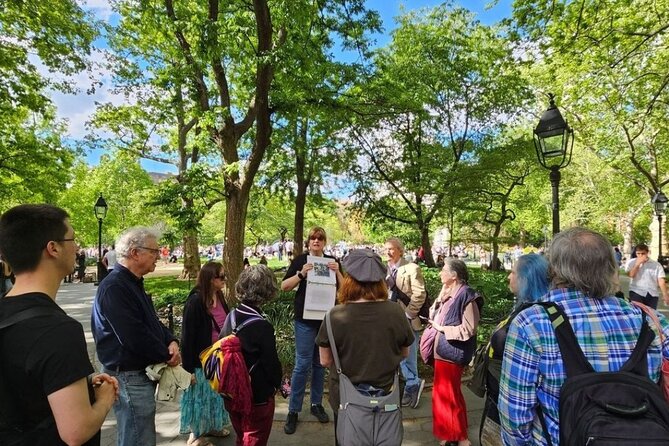
- Ann McDermott’s photo-and-clipping binder: historic photos, news clippings, and concert adverts help everything feel grounded.
- Gerde’s, The Bottom Line, The Bitter End, Cafe AuGoGo, The Gaslight Cafe, and more: a club-hopping route without the hassle of doing it yourself.
- Washington Square Park as the crossroads: you get an audio moment in the village’s symbolic center.
- The Bitter End stop with real career-launch credibility: the venue’s role in early fame is part of the story.
- Cafe Wha? and the Dylan-to-Springsteen street logic: the tour ties eras together using the same blocks and venues.
- A built-in photo finish at Jones Street & W 4th Street: you end where Dylan and Suze Rotolo had their Freewheelin cover photo taken.
Greenwich Village is the stage, not just the setting
Greenwich Village is one of those places where the streets feel like they’re holding onto old chords. This tour leans into that idea. Instead of treating the neighborhood like a sightseeing list, it treats it like a map of music—where you can stand outside a club, picture a crowd, and understand why artists kept coming back.
The big value here is the way the tour connects famous names to specific blocks. You’re not just hearing who played where. You’re learning how the Village’s nightlife ecosystem worked—venues, scenes, and the kind of nights that helped careers start moving.
You can also read our reviews of more walking tours in New York City



Private walking tour format: what you actually get for the price
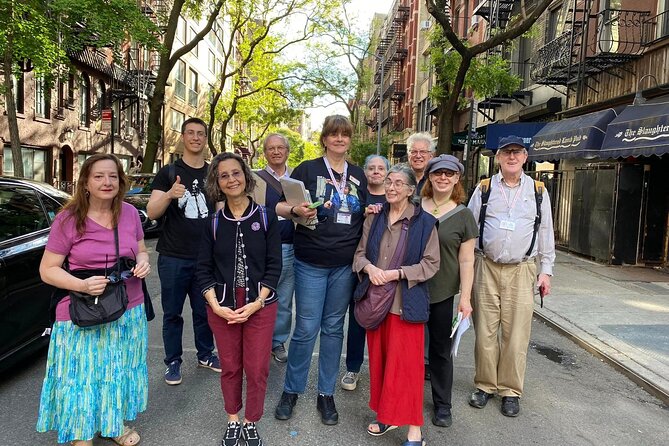
This is a private experience for only your group, which matters more in a music tour than you might think. When you’re walking for about 2 hours, you want flexibility: a quick pause for a better photo angle, time to ask one more question, or a slower pace if you’re absorbing details.
The tour is also easy to follow logistically. It starts at 1 W 4th St and ends at the corner of Jones Street & W 4th Street. That end point is more than a stop—it’s a payoff, because the tour is designed to land you at a famous photo location.
For me, the best part of private in this setting is how it turns passive listening into an actual conversation. In the real world, that’s what keeps a short walking tour from feeling rushed.
Stop 1: Greenwich Village club trail with Dylan/Suze Rotolo context
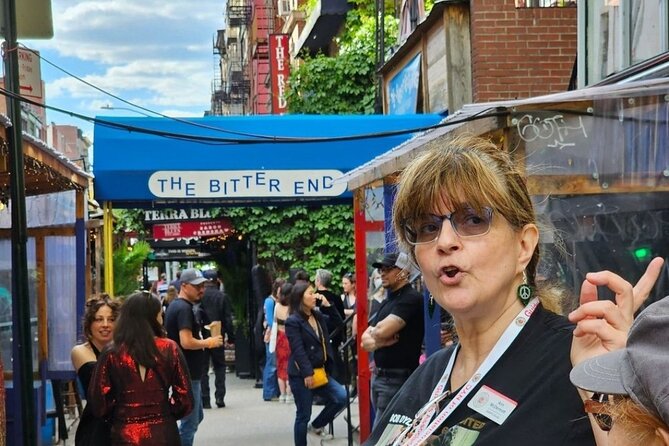
You begin with a Village walk that functions like an opening montage. The tour hits several historic spots in the Greenwich Village orbit, including Gerde’s Folk City, The Bottom Line, The Bitter End, Cafe AuGoGo, The Gaslight Cafe, The Hotel Earle, and Cafe Society.
Then comes a key added layer: the tour includes the former home of Bob Dylan and Suze Rotolo. This matters because it shifts the vibe from backstage myth to real geography. When you know where someone lived, you stop thinking of the legends as just names attached to songs. You start understanding how close everything really was.
Timing is fairly punchy at about 30 minutes at the first stop area. That’s a good thing if you like momentum. It can feel a bit fast if you want long textbook explanations at each venue exterior. Still, the tour’s promise is a relaxed pace with the ability to pause for photos as you wish, so the guide can usually calibrate once you’re on the street.
Washington Square Park audio moment: a quick way to feel the pulse
Next you’ll focus on Washington Square Park, described as the spiritual heart of Greenwich Village. This stop includes an audio tour component, so you get to hear the neighborhood’s stories through a guided format while you stand in the actual place.
This is one of the smartest parts of the itinerary because Washington Square Park is a kind of stage without a roof. In the 1960s, it was a place where informal music moments and public energy mixed together. The tour ties it to the idea of spur-of-the-moment performances and the broader fight for free speech. Even if you’re not a political history buff, that context helps explain why musicians and audiences didn’t just hang out—they shaped culture together.
It’s also designed to be efficient: about 30 minutes here. You’re not stuck in one spot for an hour, and you still get enough time to absorb the meaning of the place.
The Bitter End: how early fame gets built
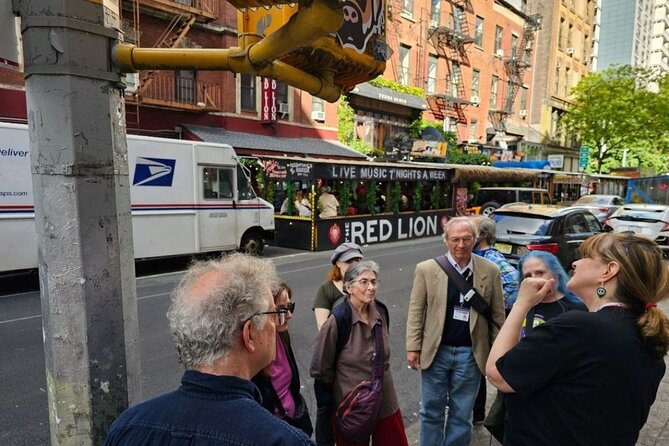
From there, the tour goes to the Bitter End for another about 30 minutes. The tour frames it as one of the venues that continued to help launch careers—going all the way to examples like Taylor Swift—while also calling out how hot the scene was in the 60s and 70s.
What I like about including Bitter End after Washington Square Park is the pacing and the story logic. You move from an open public space that symbolizes the Village’s cultural energy to a club that symbolizes the launchpad energy—where talent shows up and the right people might notice.
The Bitter End stop also works well if you enjoy pattern recognition. Once you’ve seen a few venues, you start to notice how the Village’s nightlife network made sense. It’s less random than it looks from far away.
You can also read our reviews of more private tours in New York City




Cafe Wha?: the Dylan-to-Springsteen bridge you can walk yourself
The final named music stop is Cafe Wha?, another about 30 minutes. This is where the tour makes a direct connection between the streets and the big names you’re actually here for: Bob Dylan, Jimmy Hendrix, and Bruce Springsteen.
The interesting detail here is the tour’s emphasis on early days—when artists played before they became household names. It even includes a specific anecdote about Dylan working a gig where he did backup harmonic for $1.00 a day. Whether you love trivia or you hate it, this kind of detail is useful because it shrinks the distance between iconic music and ordinary human schedules.
This stop is also the tour’s thematic bridge. Dylan and Springsteen belong to different mainstream eras, but the Village is a common origin-point story. You don’t have to force connections. You just walk the blocks and let the similarities show up naturally.
The photo finish at Jones Street & W 4th Street
One of the tour’s smartest design choices is the end point. You’ll finish at Jones Street & W 4th Street, the corner where Bob Dylan and Suze Rotolo had their photograph taken for the cover of Freewheelin. The tour also takes a photo there with you.
This is more than a souvenir. It gives your walk a clear narrative arc: you start with the Village’s club and home-base context, and you end with a framed moment tied to an album cover that many people already know. It’s a satisfying way to close a tour like this, especially if you’re traveling and want one final image that really feels like the point.
Ann McDermott and the storytelling style that keeps it fun
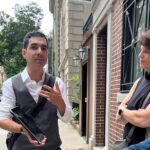
The guide on this experience is Ann McDermott, and she’s a major reason the tour earns a full score. Her approach is engaging and grounded. One of the standout details from the tour description and guide behavior is that she doesn’t just talk from memory—she supports stories with a binder of historic photos, news clippings, and concert adverts.
That kind of support changes the vibe. Instead of feeling like you’re listening to someone improvise, you feel like you’re seeing evidence. It also helps explain why you come away with more than just names. You leave with a mental map of where things happened and what the scene looked like.
Another theme that comes through is practical generosity. The guide shares tips for lunch and suggests where to catch live music later. That’s valuable because it turns a walking tour from an isolated activity into part of your day plan.
Also, if you worry about how tours handle uncomfortable weather: Ann is used to doing this even when conditions are rough. That matters because your best memories come from tours you can actually enjoy, not tours you rush through because you’re freezing.
Price and value: $50 for a 2-hour music map
At $50 per person for about 2 hours, the price is reasonable for a private, guide-led walking tour in New York, especially one focused on a tight geographic theme like Greenwich Village music venues.
Here’s how I’d judge value on this one:
- You’re paying for organization: the walk stitches together multiple famous venues and relevant context.
- You’re paying for interpretation: the stories are not generic; the guide uses supporting materials.
- You’re paying for efficiency: you cover several key locations without needing to plan each stop and check opening dates.
If you already know the neighborhood well and you mostly want a casual stroll, you could piece it together yourself. But if your goal is to understand the “why” behind the legends—how the Village environment shaped the music—this price feels like a fair exchange for time and clarity.
Who should book this tour
This tour fits best if you:
- Like Bob Dylan and Bruce Springsteen, but also want the supporting cast of venues and scenes around them.
- Enjoy walking tours that are about meaning, not just photos by famous front doors.
- Want a guide who can help you place the names in real geography—especially in a neighborhood like Greenwich Village where the streets can blur together.
It’s also a solid choice for a first visit to the area. You get a lot of references that make later wandering easier because the neighborhood clicks into place.
Quick practical notes to make the walk easier
This is in English, and it uses a mobile ticket. It’s near public transportation, which helps when you’re fitting it into a full day in Manhattan.
One more thing: since the tour is weather-dependent and you’ll be outside at multiple points, dress for walking and don’t plan on sitting much. If it’s chilly, bring layers. If it’s hot, wear breathable clothing and plan for short pauses.
Should you book Footsteps of Dylan and Springsteen?
Book it if you want a focused music tour that helps Greenwich Village make sense. The combination of a private format, a specific club-and-album storyline, and a guide who brings evidence (photos, clippings, adverts) makes this more than a casual nostalgia walk.
Skip it if you want a long, slow museum-style experience. This is a walking tour with efficient stops and a clear route. You’ll get a lot of stops, and you’ll move on—so it’s best for people who enjoy that pace.
FAQ
How long is the private walking tour?
The tour lasts about 2 hours.
Is this tour private for my group?
Yes. It’s a private tour/activity, so only your group participates.
What language is the tour offered in?
The tour is offered in English.
Where do I start, and where does the tour end?
You start at 1 W 4th St, New York, NY 10012, and the tour ends at the corner of Jones Street and W 4th Street (Jones St & W 4th St, New York, NY 10014).
Is admission included for the stops?
The itinerary lists admission tickets as free for the stops.
What happens if weather is bad?
The experience requires good weather. If it’s canceled due to poor weather, you’ll be offered a different date or a full refund.