REVIEW · BROOKLYN
Williamsburg Walking Tour: History, Hipsters, Hasids & Hops
Book on Viator →Bookable on Viator
Two hours in Brooklyn and you’ll see layers fast. This walking tour connects Williamsburg Bridge history with modern-day corners like Domino Park, then threads through Bedford Avenue and into Williamsburg’s changing streets. I love how the route mixes big infrastructure with street-level detail, so the neighborhood feels understandable, not random. One thing to note: it’s a short sampler, so if you want long stops or slow museum-style pacing, you may feel slightly rushed.
I also love the human part. Your guide, Marcus, is praised for being very engaging, answering lots of questions, and tailoring the walk to your interests. The only real drawback is you’ll cover a lot on foot in about two hours, so comfortable shoes matter, especially if your feet get tired quickly.
In This Review
- Key highlights I’d plan around
- Williamsburg Bridge: Getting oriented fast on Brooklyn’s big connection
- Domino Park: New public space and Manhattan views without the fuss
- Bedford Avenue: Street-level change you can actually feel
- Williamsburg: A neighborhood with mixed layers and real conversations
- McCarren Park: Finish with space, not an abrupt stop
- Price and value for a $65 two-hour guided walk
- What Marcus does well (and why it changes the whole walk)
- Who this Williamsburg walking tour is best for
- Should you book this Williamsburg Walking Tour?
- FAQ
- How long is the Williamsburg walking tour?
- How much does the tour cost?
- Where do I meet, and where does the tour end?
- Which stops are included on the route?
- What language is the tour offered in?
- What is the group size limit?
- What if I need to cancel?
Key highlights I’d plan around
- Marcus as a hands-on guide who answers questions and keeps the stories moving
- Williamsburg Bridge at the start for instant context and orientation
- Domino Park views with a newer-public-space feel and Manhattan sight lines
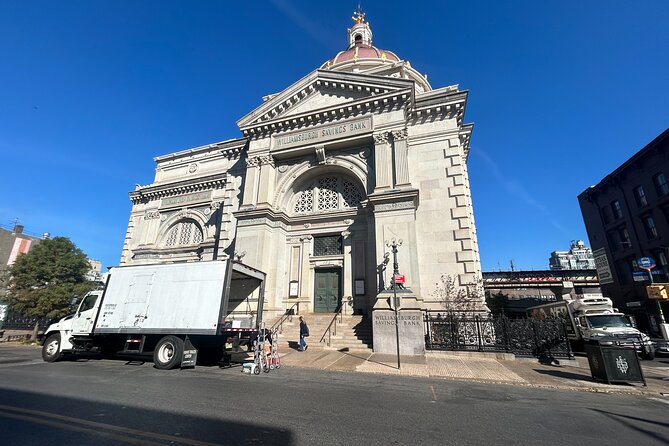
- Bedford Avenue street-level history where change and continuity both show up
- A tidy loop ending at McCarren Park so you finish with space to linger
Williamsburg Bridge: Getting oriented fast on Brooklyn’s big connection
The tour starts at the Marcy Ave MTA area, with the meeting point given as the train station elevator at 300 Broadway, Brooklyn. It’s a practical place to begin because you can usually line it up with your subway plan, and you’re not guessing your way into the neighborhood.
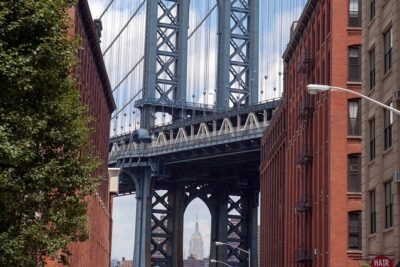
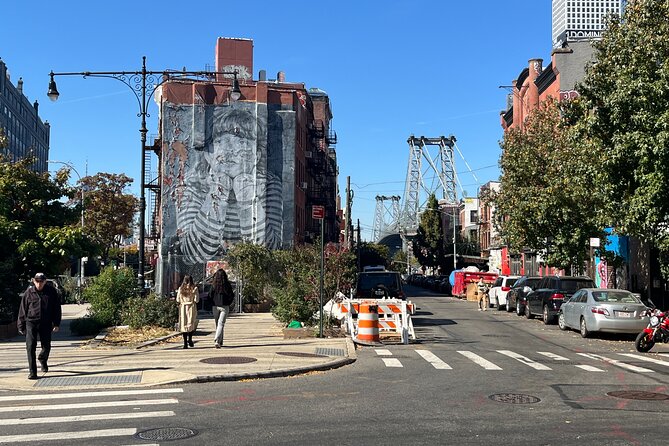
You’ll head first to Williamsburg Bridge, and this is a smart move. Bridges are more than backdrops. They’re infrastructure that shapes how people move, trade, work, and show up in new areas. Even if you’re not a transit nerd, you’ll get the story of why this bridge matters to the neighborhood’s development and identity. The 15-minute timing is brief, but it’s enough to give you a mental map before you move on.
If you like architecture, engineering, and the way the city grows around transit, this opener will click. If you’re only interested in cafés and shopping, you might still appreciate it because it sets the logic for everything that comes next: where people go after the bridge, and how those routes change the street grid you’ll walk later.
You can also read our reviews of more walking tours in Brooklyn



Domino Park: New public space and Manhattan views without the fuss
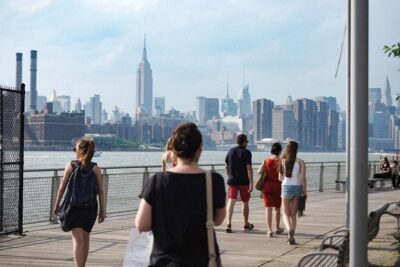
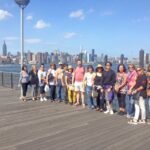
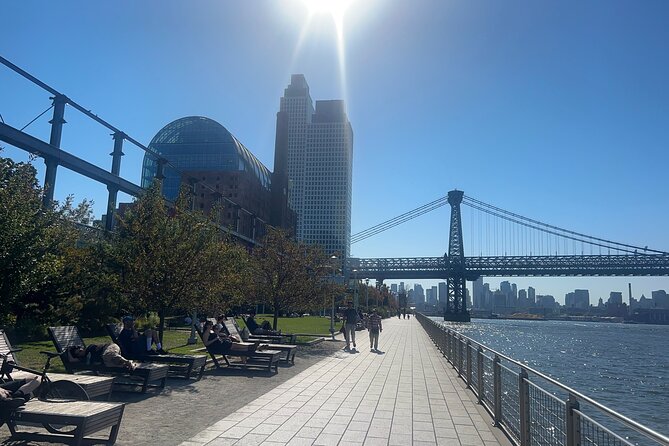
Next up is Domino Park, a newer public space that’s built for people to actually use it, not just photograph from afar. You get about 15 minutes here, and in a short tour like this, time matters. That means you’ll likely want to choose one or two spots to pause: one for the views toward Manhattan and one to take in how the park sits in the surrounding neighborhood.
The value of Domino Park on a walking tour is that it acts like a hinge between eras. One minute you’re in older Brooklyn patterns; the next you’re in a modern public space with clear sight lines and a sense of what development looks like up close. It’s a good reality check. You can see the “present-day” version of Williamsburg without waiting for a specific attraction to open.
My practical advice here: if the weather’s good, this is where you should slow down your pace. The park setting is meant for lingering, and the views are the kind you’ll remember later when you’re walking past buildings that used to have a different purpose.
One small consideration: since the tour is only about two hours total, you won’t get a long sit-down. If you’re the type who needs more than a quick pause to enjoy a viewpoint, keep your expectations realistic.
Bedford Avenue: Street-level change you can actually feel
After the park, the walk shifts to Bedford Avenue, which is known for reflecting change in the area while still carrying history. You’ll spend about 15 minutes here, and the timing again tells you what the guide is trying to do: give you just enough time to connect what you see on the street with what you’ve been told so far.
This is the part of the tour where your eyes do most of the work. Streets like Bedford Avenue aren’t just lines on a map. They’re where people shop, work, commute, and run errands. They’re also where neighborhoods show signs of evolution. In a short guided walk, the guide’s job is to point out the patterns you might otherwise miss—how a street can feel new in some ways and still anchored in older rhythms.
Because this stop is brief, I’d use it to ask questions if you have them. Marcus is specifically praised for being comfortable with lots of questions, and Bedford Avenue is the best place to use that skill. You’ll be looking at the physical evidence in front of you, so your questions won’t feel abstract.
Williamsburg: A neighborhood with mixed layers and real conversations
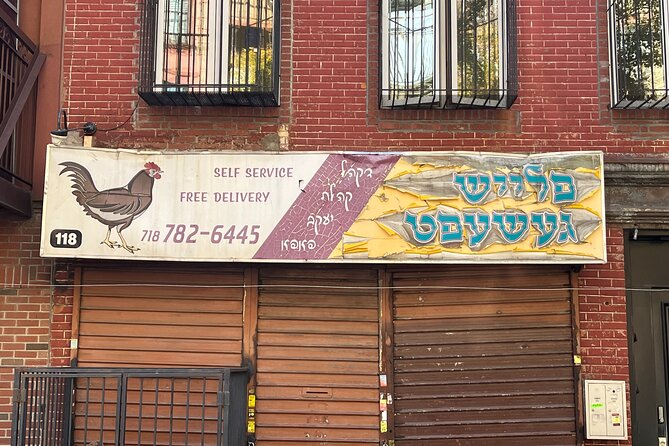
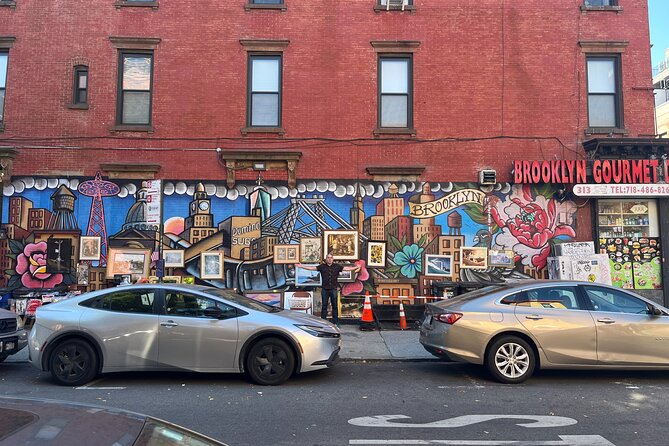
Then you get into Williamsburg itself for about 30 minutes. This is the longest segment in the tour besides the bridge-and-parks context, and it’s where the tour title starts to make sense. The name hints at a mix of scenes and communities—things like hipster culture and Hasidic life, plus the idea of hops (which usually points to beer and brewing culture). You won’t get a lecture hall vibe here. You’ll get a guided walk through the neighborhood’s feel: the way different groups use space, the way streets tell stories, and the way old and new exist side by side.
In other words, this stop is for pattern recognition. You’ll likely notice how blocks change, how the neighborhood can feel different from street to street, and how public life plays out. That’s why this segment matters after Domino Park and Bedford Avenue. By the time you reach the core walking stretch, you’re not just seeing sights—you’re understanding connections.
Keep expectations grounded: this isn’t a deep dive into any one topic. It’s a guided “here’s what to notice” walk. If you’re the kind of traveler who loves to leave with a short list of places to revisit later, Williamsburg is exactly where you should get that list in your head.
McCarren Park: Finish with space, not an abrupt stop
The tour ends at McCarren Park, at 776 Lorimer St, Brooklyn. You’ll get about 15 minutes there. The park is described as big, and the plan is to find a nice spot to finish before sending you on your way.
That matters more than it sounds. A tour that ends in a clear, open public space helps you decompress. You can take a few photos, check your phone, and plan dinner or the next neighborhood stop without feeling like you’re scrambling to meet a second deadline.
It’s also an easy mental wrap-up. After walking through bridge history, park views, and street-level change, you end somewhere meant for everyday use. That gives your brain a landing point: you’ve seen how Williamsburg connects and changes, and now you can let it sink in while sitting under trees or watching people move through the park.
Tip: if you want to keep the momentum going after the tour, McCarren Park is a natural springboard for food and drinks nearby—so it’s a good finishing spot for a casual evening plan.
You can also read our reviews of more historical tours in Brooklyn


Price and value for a $65 two-hour guided walk
At $65 per person for about two hours, this is priced like an experience that’s meant to be efficient and practical rather than all-day. The biggest value drivers here are the guided format and the route design.
First, the stops are all on the walking itinerary and don’t require paid admissions. The tour notes free admission for each listed stop, which means you’re not stacking hidden costs on top of the ticket price. Second, the group size is capped at 15 travelers, which usually means you’re less likely to get lost in the crowd and more likely to actually hear your guide.
Also, this tends to book up. It’s noted as being booked on average 12 days in advance, so if you’re visiting during a busy period, don’t wait until the last minute. I’ve found that for short, high-quality walking tours, scheduling slips quickly once people lock in their trip days.
You’ll want to decide whether the price matches your style. If you love learning while walking and you enjoy street-level context, $65 for a small-group guide is a reasonable deal. If you prefer wandering without commentary, you’ll probably get more value by self-guiding—though you’d miss the structured context that Marcus delivers.
What Marcus does well (and why it changes the whole walk)
The most praised aspect is the guide. Marcus is described as super engaging, full of interesting stories and history, and happy to answer lots of questions. That’s not fluff. It tells me how the tour feels in real life: interactive, not lecture-heavy.
There’s also another key detail: personalization. You’ll get a tour that adapts to your interests, rather than a one-size script. That can be a game-changer. Two different travelers can stand in the same exact spot and walk away with different takeaways, because the guide is listening and steering based on what you care about.
For you, that means:
- If you’re curious about how the neighborhood shifted over time, you’ll likely get clear explanations tied to what you see.
- If you’re more focused on modern life and street culture, you should be able to steer questions toward what matters to you.
- If you like asking follow-ups, Marcus is comfortable answering them.
One practical consideration: with a small group, your chance to ask questions is better than on huge tours, but it still helps if you prepare a couple of questions before the walk starts. Even one curiosity can steer a big chunk of the experience.
Who this Williamsburg walking tour is best for
This is a good pick if you:
- Want a structured introduction to Williamsburg without planning a whole day around it
- Like learning through walking—bridges, parks, and streets are your kind of attractions
- Appreciate a small group size and a guide who handles questions
- Want an easy starting point for a later self-guided exploration of the area
It may not be the best fit if you:
- Need long time sitting in one place
- Prefer museums and indoor stops over outdoor walking
- Get frustrated by brisk pacing in short tours
If you’re traveling solo or as a couple, the small group cap works in your favor. If you’re with friends and you all want different kinds of information, the guide’s personalization is also a strong reason to book.
Should you book this Williamsburg Walking Tour?
I’d book it if you want an efficient, story-driven walk that connects big-picture Brooklyn infrastructure with day-to-day neighborhood life. The combination of Marcus’s engaging style, a route that moves through major anchors (bridge, Domino Park, Bedford Avenue, Williamsburg, McCarren Park), and a small group makes this feel like a tour that respects your time.
I would skip it only if you’re the type who wants long stops, lots of free time to roam, or you’d rather learn on your own with no guide talking in your ear. For most visitors, though, this is a solid way to get oriented and leave with a better sense of what you’re seeing.
FAQ
How long is the Williamsburg walking tour?
The tour is about 2 hours.
How much does the tour cost?
It costs $65.00 per person.
Where do I meet, and where does the tour end?
You meet at the Marcy Ave MTA/Train station elevator, 300 Broadway, Brooklyn, NY 11211, and the tour ends at McCarren Park, 776 Lorimer St, Brooklyn, NY 11222.
Which stops are included on the route?
The stops are Williamsburg Bridge, Domino Park, Bedford Avenue, Williamsburg, and McCarren Park.
What language is the tour offered in?
The tour is offered in English.
What is the group size limit?
The maximum group size is 15 travelers.
What if I need to cancel?
You can cancel for a full refund if you do it at least 24 hours before the experience’s start time. Free cancellation is available up to 24 hours in advance.