REVIEW · NEW YORK CITY
A Gilded Age Audio Guide: New York’s Millionaire Row
Book on Viator →Operated by VoiceMap Audio Tours · Bookable on Viator
Millionaire Row, narrated like an audiobook. This self-guided Fifth Avenue audio stroll makes the Gilded Age feel close-up, and I especially like the GPS-guided narration (it tells you what to look at as you walk) plus the offline access so you can keep going without stress. The main drawback is practical: you’ll need to bring your own smartphone and headphones, since they aren’t included.
You start outside the Metropolitan Club, then work your way along Fifth Avenue toward a smooth finish at The Met. The “no dead time” factor matters here: you’re not waiting for a human guide to regroup with the group. If you prefer a live Q&A or want someone to adjust stories on the spot, this format may feel a bit too self-directed.
For $14.99, the value is the flexibility. You get unlimited lifetime use of the tour before and after your booking date, plus the option for virtual playback like an audiobook from anywhere—handy if you want to prep at your hotel or relisten on a quieter evening.
In This Review
- Key takeaways before you go
- Millionaire Row with GPS narration: how the 1 hour 20–1 hour 40 format works
- Starting outside the Metropolitan Club: the Gilded Age opens right away
- Fifth Avenue power walk: mansions, clubs, and Central Park peeks
- The Arsenal and the Conservancy: when a weapon storage becomes public space
- Beaux-Arts and Vanderbilt-era grandeur: the mansion string that matters
- The Frick Collection: art at the end of an industrialist’s address
- Architect memorial and stately houses: Richard Morris Hunt and more
- Madison Avenue and the tobacco tycoon stop: shifting from Fifth to shopping prestige
- Ending at The Metropolitan Museum of Art: turn the walk into a museum block
- Price and value: what you really get for $14.99
- The technical stuff that makes it easier than you think
- Who this tour suits best (and who should skip it)
- Quick FAQ
- FAQ
- How long is the Millionaire Row audio tour?
- Where does the tour start and end?
- What language is the tour offered in?
- Do I need to bring a smartphone and headphones?
- Is it a live guided tour?
- Can I use the tour again after I book?
- Can I download for offline use?
- Should you book this Millionaire Row audio tour?
Key takeaways before you go
- GPS that talks to you as you walk: it triggers the next story automatically and cues crossings and directions.
- Offline audio and maps: you can download ahead and keep exploring even with spotty signal.
- No crowd pressure: you can pause, rewind, and stop when you actually want to look.
- A smart finish at The Met: you end right where a museum day can continue.
- Restroom and off-track warnings: the app helps you avoid the common I-turned-the-wrong-corner problem.
Millionaire Row with GPS narration: how the 1 hour 20–1 hour 40 format works
This is built for a very specific kind of New York sightseeing: slow enough to notice architecture, fast enough that you still feel like you “did” something after 90 minutes. The duration sits around 1 hour 20 minutes to 1 hour 40 minutes, which is a sweet spot when you’re mixing in other Upper East Side plans.
The real win is that it’s not a live group schedule. You don’t have to match a time window where everyone moves together. Instead, you walk your pace and the audio follows your location. In practice, that means you can linger at a façade, take a photo, then get back to the narration without that awkward dead moment you get on some guided tours.
I also like the way the tour keeps the focus on the “why,” not only the “what.” You’re not just told that a mansion is grand. You learn how the Gilded Age robber barons used wealth to shape the city’s image—then you look at what’s still visible today.
And yes, there’s one caution: because it’s self-guided, you’ll want to stay aware of where you are. The app’s designed to help (it can warn you if you get off track), but you still need to do your part and watch the street crossings.
You can also read our reviews of more walking tours in New York City



Starting outside the Metropolitan Club: the Gilded Age opens right away
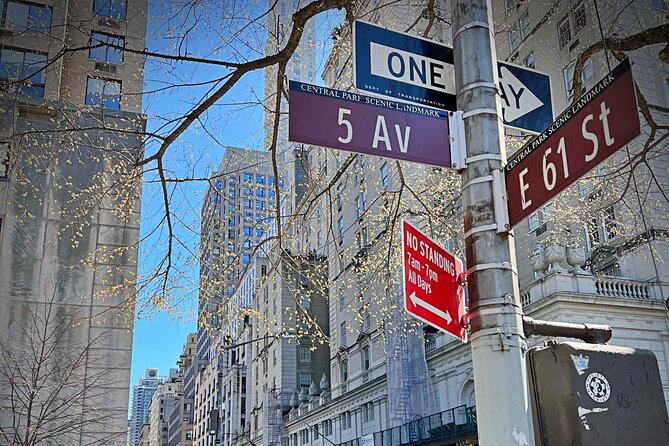
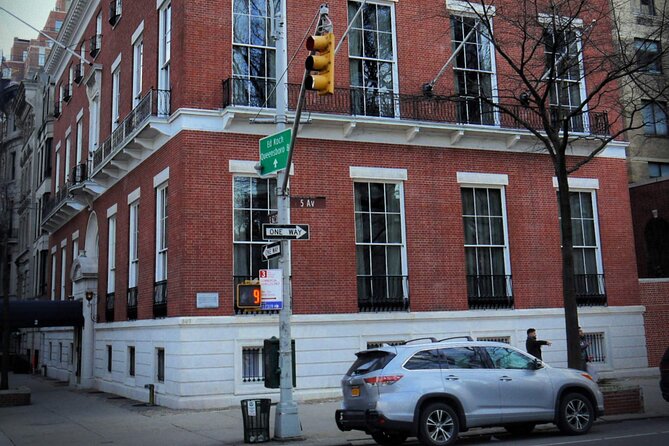
The walk begins near East 60th Street, outside the Metropolitan Club area. That matters because it sets the tone immediately. The Metropolitan Club was founded by J. P. Morgan, and even if you only catch the exterior, it signals the world you’re entering: private clubs, big money, and social power built into the city’s layout.
This is the kind of start that works especially well for first-time visitors. You’re not wandering aimlessly along Fifth Avenue trying to guess where the “important” buildings are. The tour starts you at a meaningful point, then you move from one clue to the next.
Practical tip: on a first pass, give yourself a little buffer time before you start so you can download anything you need and get comfortable with the app controls (play, pause, rewind). When you’re ready, let the narration guide your next decision: when to look up, which direction to turn, and when to cross.
Fifth Avenue power walk: mansions, clubs, and Central Park peeks

Once you’re moving, Fifth Avenue turns into a kind of open-air classroom. You’ll stroll along one of the most prestigious addresses on the planet, where luxury boutiques share space with grand “statement” buildings.
A standout part of this section is how it handles the idea of elite social life. You’ll pass the Knickerbocker Club, a private social club strongly tied to the upper-class identity of New York. It’s a good reminder that in the Gilded Age, power wasn’t only about business. It was also about networks—people who gathered, reinforced status, and turned access into influence.
You’ll also get a glimpse of Central Park, which is crucial for understanding the whole Fifth Avenue story. The park functions like a quiet reward for wealth—an oasis in the middle of the city. Even if you don’t enter the park, seeing it from the avenue gives context to why certain addresses became so desirable.
The Arsenal and the Conservancy: when a weapon storage becomes public space
One of the more interesting turns on this walk is The Arsenal. The tour frames it as a building with a past connected to military use, and then you see how it’s used now: it houses the Central Park Conservancy.
This contrast is exactly why audio tours can work better than quick bus sightseeing. When you hear the shift from wartime function to cultural stewardship, the building becomes more than a pretty stop. It becomes part of the city’s ongoing makeover—how institutions evolve as the world changes.
If you like architecture that carries a backstory, this is a moment to slow down. The curb-to-building distance on Fifth Avenue can be short, so you may need to time your photos with traffic and foot flow.
Beaux-Arts and Vanderbilt-era grandeur: the mansion string that matters
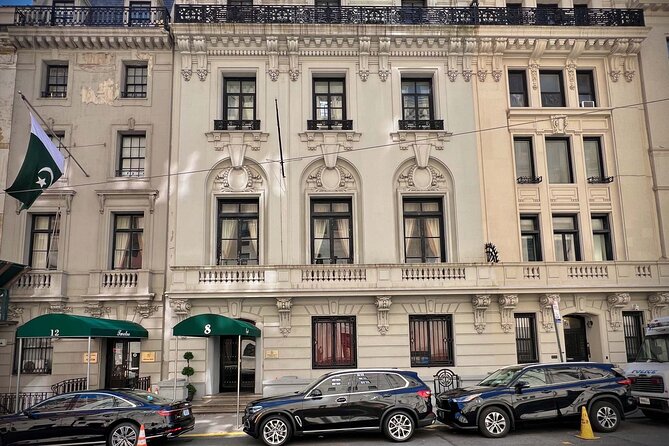
As you continue, the tour leans hard into Gilded Age residential glamour. You’ll pass the Beekman Mansion, the Emily Thorn Vanderbilt Sloane White Mansion, and you’ll see the architectural language that wealthy families used to announce their place in society.
Then there’s a high-value stop for fans of grand design: the Herbert N Strauss House. The narration focuses on how this architectural gem reflects the grandeur and elegance associated with the Gilded Age era. Even if you’re not an architecture nerd, you can usually feel the difference between “old impressive” and “old designed to intimidate.”
One thing to keep in mind: Upper East Side mansions are mostly experienced from the sidewalk. You won’t get interior access on this walk, so your best strategy is to look at what you can actually see:
- the scale (how tall and wide it feels compared to nearby buildings)
- the symmetry and detailing
- the way the entry and façade signal status
That’s why the GPS narration is helpful. It guides your attention so you’re not just staring blankly at a pretty wall.
You can also read our reviews of more guided tours in New York City






The Frick Collection: art at the end of an industrialist’s address
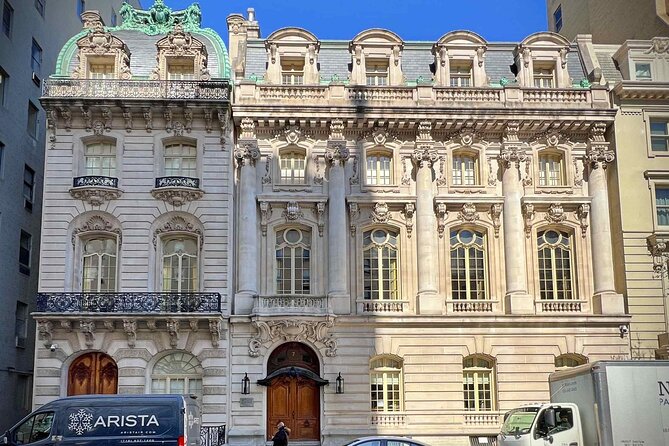
You’ll also pass by The Frick Collection, housed in the former residence of Henry Clay Frick. This is a powerful stop because it connects money, taste, and public access.
Frick’s home turned into a museum is the kind of transformation the Gilded Age helped make possible—wealth used to build a private world, then reorganized into something people can study and enjoy. If you’re the kind of visitor who likes art but doesn’t want to spend a full day planning museum routes, ending your walk near The Met is a nice way to keep the momentum going.
While you’re walking past, try to notice how a place designed for private life adapts to public culture. That contrast is part of the story the tour is telling.
Architect memorial and stately houses: Richard Morris Hunt and more
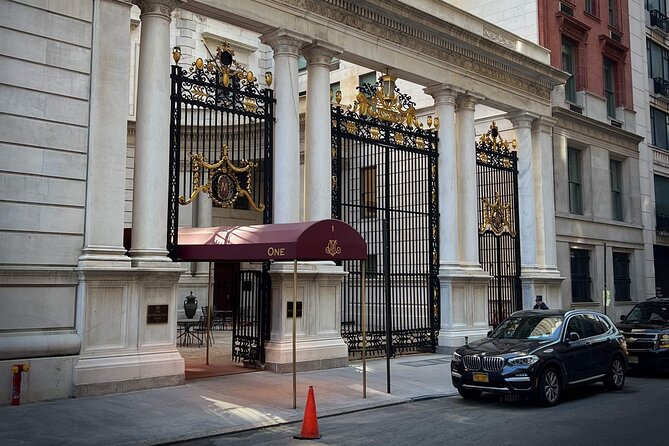
Another stop worth paying attention to is the Richard Morris Hunt Memorial. Hunt was a key architect in shaping New York’s architectural landscape, and the tour uses this moment to put names to the styles you’re seeing all along Fifth Avenue.
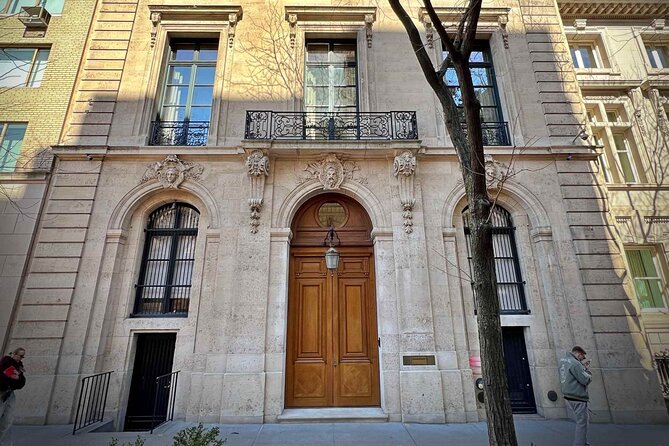
Then you’ll move through additional Upper East Side landmarks, including the Edward S Harkness House. You’ll also encounter the Herbert N Strauss House earlier in the walk. The tour’s angle is consistent: these buildings aren’t random. They’re evidence of how architecture became a social signal.
If you’re short on energy, this is the point where you can make the decision to focus. You don’t have to “read” every detail. Pick a couple of façades to match with what you just heard: Gilded Age ambitions, public legacy, and the way a wealthy address creates a recognizable identity.
Madison Avenue and the tobacco tycoon stop: shifting from Fifth to shopping prestige
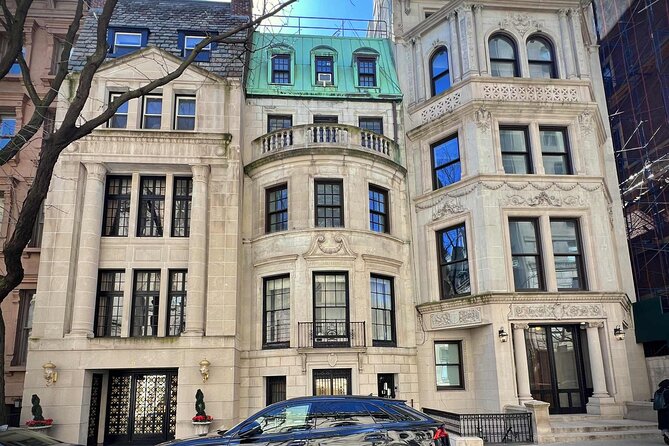
Near the end of the walk, the route transitions toward Madison Avenue, known for upscale shops and luxury boutiques. This change of street can feel like a modern echo of the same theme: wealth and consumer culture, updated for today.
You’ll also hear the legacy of Stuyvesant Fish, a prominent figure in New York social and political circles during the Gilded Age era. Then you’ll pass by the James B Duke House, tied to the tobacco tycoon and philanthropist, noted in the tour for its Beaux-Arts architecture.
This is a good stretch to keep in mind if you’re doing more than one NYC neighborhood that day. Madison can be visually intense. The audio helps you keep your mental thread: even when the storefronts steal your attention, the stories keep you anchored in the broader theme of power, status, and design.
Ending at The Metropolitan Museum of Art: turn the walk into a museum block
The tour ends at The Metropolitan Museum of Art on 1000 5th Ave. That’s a strategic finish. You’ve just spent 90 minutes learning how wealth and architectural ambition shaped the city. Ending at a world-class museum lets you keep exploring the cultural payoff of that same era of collecting and patronage.
Also, ending at The Met helps with logistics. You’re not trying to backtrack to a train station. You’re dropping right into one of the best-known transit-and-day-planning anchors in Manhattan.
Price and value: what you really get for $14.99
At $14.99 per person, this is priced like a modern budget-friendly sightseeing tool. The math gets better when you consider what’s included.
You get:
- directions to the starting point
- unlimited, lifetime use of the tour before your booking date and after it
- a virtual playback option (audio like an audiobook from anywhere)
- self-guided GPS freedom
- offline access to audio, maps, and geodata
That means the tour isn’t only a one-time afternoon activity. You can treat it like an investment in context. I’d especially consider it if you tend to forget or skim details during busy days. Being able to relisten later, or re-walk at a quieter time, is where value shows up.
One consideration: since smartphone and headphones aren’t included, your total cost may be higher if you don’t already travel with them. Plan for that upfront so the price feels honest.
The technical stuff that makes it easier than you think
The best part of an audio GPS tour is when it eliminates friction. This one is designed to reduce friction in a few key ways.
You’ll want to know this because it affects your day:
- the app tracks where you are and plays the correct audio for your location
- it gives cues for actions like crossing the street and looking left or right
- there’s no dead time between stops because you’re being narrated continuously
- you can pause, rewind, and resume at your own timing
- it can even warn you when you’ve walked off track
- it provides guidance about restroom stops along the way
That last detail is small but important. In Manhattan, the biggest “tour killer” isn’t boredom—it’s sudden logistics. This tour helps you prevent that.
One more thing that’s genuinely useful: you can answer a phone call or take breaks without losing your place. If you travel solo or you’re the kind of person who gets distracted easily, that flexibility helps.
Who this tour suits best (and who should skip it)
This tour is a strong match if you want:
- self-paced sightseeing without a human group controlling your timing
- a focused walk on Gilded Age wealth patterns along Fifth Avenue
- GPS narration that guides you so you don’t need constant map-checking
- an easy solo experience that still feels structured
It might be less ideal if you strongly prefer:
- a live guide who can answer questions in the moment
- a deeply interactive experience like a classroom discussion
- a tour that includes headphones or a specific device setup for you
Quick FAQ
FAQ
How long is the Millionaire Row audio tour?
It runs about 1 hour 20 minutes to 1 hour 40 minutes.
Where does the tour start and end?
It starts around East 60th Street (outside the Metropolitan Club area) and ends at The Metropolitan Museum of Art, 1000 5th Ave.
What language is the tour offered in?
The audio is offered in English.
Do I need to bring a smartphone and headphones?
Yes. Smartphone and headphones are not included.
Is it a live guided tour?
No. It’s a self-guided GPS audio tour, so you explore at your own pace.
Can I use the tour again after I book?
Yes. You get unlimited, lifetime use of this tour before your booking date and after it.
Can I download for offline use?
Yes. Offline access includes audio, maps, and geodata.
Should you book this Millionaire Row audio tour?
If you want a structured way to understand why Fifth Avenue looks the way it does—without being chained to a group schedule—I think this is a smart booking. The GPS guidance, offline download, and ability to pause and rewind make it feel smoother than many “grab your audio app and hope” options. If you’re already heading to The Met, the ending location is a helpful bonus.
Book it if you’re curious about the Gilded Age and want to see the evidence on the street. Skip it if you’d rather have a live guide explain everything on the spot and answer questions as you go.