REVIEW · NEW YORK CITY
Alexander Hamilton Musical Walking Tour
Book on Viator →Operated by New York Broadway Tours · Bookable on Viator
Lower Manhattan turns into a stage when you follow the Alexander Hamilton story on foot. What makes this tour fun is how it links big musical moments to real addresses and buildings—Hamilton in lyrics, Washington in stone, and Wall Street in real life. I like the way the guide builds story connections at each stop, and I also like that you’re out in the open where you can actually look up close at places like the Federal Reserve Bank exterior. One watch-out: the walk is fast and the audio can be an issue, so if you tend to struggle to hear, you’ll want to stay close to the guide and keep your phone volume handy.
If you go, look for the guide’s energy. In one experience, the guide named Michael kept things lively, even tossing in help for scoring Broadway tickets at better prices—useful if you plan to catch a show while you’re in town. Just know that if the group moves quickly, you might not linger as long at every listed landmark.
Hamilton fans and history-minded walkers are the perfect match here. It’s a tight, two-hour Lower Manhattan sweep that gives you context fast, and it’s easy to see why this sells out in advance.
In This Review
- Key things to know before you walk
- Entering the Hamilton story on foot in Lower Manhattan
- Price and time: is $50 worth it?
- Start point at Park Row: what the first 10 minutes should feel like
- Nassau Street’s New Theatre: where the story begins on stage
- Federal Reserve Bank of New York: banking as a plot point
- Seaport and hustling vendors: the human side of commerce
- Stone Street: where Hamilton and Eliza stories take shape
- Fraunces Tavern Museum: George Washington’s headquarters and the Hamilton-Burr meet-up
- Wall Street Bull photos and the pop-up art to guard the exchange
- Wall Street’s Dutch wall: where finance stands on older streets
- National Monument and the Bill of Rights: Washington’s inauguration and the dome
- Trinity Church NYC: oldest NYC church, and Hamilton closing moment
- Guide energy, sound issues, and the real-world listening test
- Who should book this Hamilton walking tour?
- Should you book it?
- FAQ
- How long is the Alexander Hamilton Musical Walking Tour?
- What is the price per person?
- Where does the tour start and end?
- What time does the tour begin?
- Is the tour offered in English?
- Do I need a ticket on my phone?
- How big is the group?
- What if the weather is bad?
- Can kids join?
Key things to know before you walk
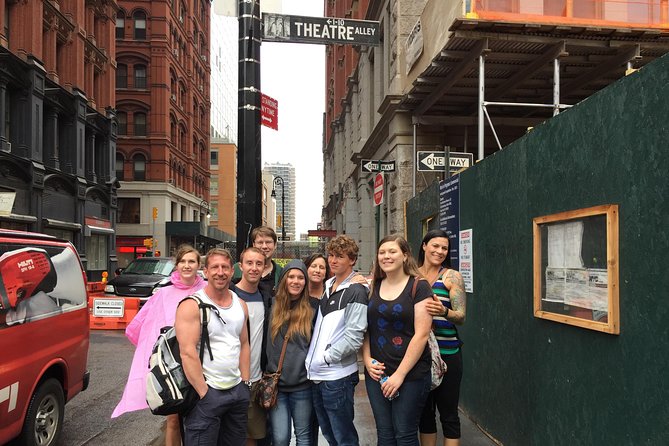
- Hamilton-to-address storytelling: expect stops tied to character moments and founding-era locations
- Lower Manhattan landmarks in one loop: you’ll cover several key areas without hopping between neighborhoods
- Free entry at multiple photo stops: several highlights are listed as admission-free
- A guide who can translate the musical: you’ll get explanations of the stories behind scenes
- Pace matters: you’re moving for about two hours, so hearing and comfort depend on where you stand
Entering the Hamilton story on foot in Lower Manhattan
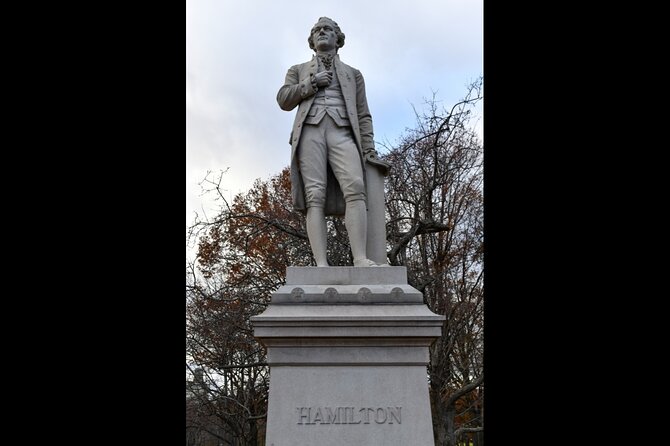
This tour works because it treats New York like a script. Instead of just pointing at famous sights, your guide connects what you know from Hamilton to the streets where the characters and ideas would have lived or been discussed. The result feels practical, not just theatrical: you get your bearings fast, then the city starts making sense.
It also helps that the tour is built for wandering. You’ll be walking from stop to stop in a compact area of Lower Manhattan, so you’re not spending your time on subways or big cross-town commutes. If you like to pair music with real-world context, you’ll enjoy how the route keeps snapping back to founding-era themes.
You can also read our reviews of more walking tours in New York City



Price and time: is $50 worth it?
At $50 per person for about 2 hours, this isn’t a free “see the sights” stroll. You’re paying for a professional local guide who links the musical storyline to specific locations and details you’d likely miss on your own.
Here’s the value angle I’d use to decide: the tour includes a guided narrative through multiple stops that are listed as free admission. That means you’re not buying tickets to buildings along the way. You’re buying time with a guide who can explain why each place matters to the Hamilton story and early American New York.
If you’re visiting for a short trip and want a concentrated “Lower Manhattan context” hit, this can be a smart use of time. If you’re already deep into NYC history and you prefer to explore at your own speed with no group timing, you may find the tour a bit structured.
Start point at Park Row: what the first 10 minutes should feel like

The tour starts at 41 Park Row, 38 Park Row, New York, NY 10038, with a 11:00 am start time, and it ends back at the meeting point. That matters because Park Row is a great launchpad for Lower Manhattan—close enough to walk to major landmarks without feeling like you’ll be stuck in traffic.
The tour uses a mobile ticket, which is a win if you don’t want to hunt for paper. Also, the group size is capped at 20 travelers, which is comfortably small for a walking show of this kind.
Bring the normal walking-tour essentials: comfy shoes, water, and a jacket if the weather turns. Since this is weather dependent, you’ll want a backup plan for rain and cold.
Nassau Street’s New Theatre: where the story begins on stage

One of the most intriguing early stops is around Theatre on Nassau Street, also described as The New Theatre. You’ll learn about a site tied to early Manhattan performance life—built as a theater purposefully for its role in the city. The details given include that it opened on December 11, 1732, with a performance of The Recruiting Officer.
You also get a very specific sense of place: the wooden two-story structure was located at 64–66 Nassau Street, between John Street and Maiden Lane, and was owned by Rip Van Dam, described as a merchant and former governor.
Why this stop works: it sets up Hamilton-era America by reminding you that public performance, commerce, and politics all shared the same streets. It’s not just trivia—it’s a reminder that the world Hamilton portrays was built on real civic spaces.
Federal Reserve Bank of New York: banking as a plot point

From Nassau Street, you move into a modern-but-tied-in moment: the Federal Reserve Bank of New York. The tour frames this stop as the kind of place where Alexander Hamilton’s banking vision links to a financial system that still shapes the country.
You’ll hear about a scheme Hamilton devised to bring banking to the newly formed United States, and you’ll get to view the awe-inspiring exterior of one of the Federal Reserve banks.
One practical thing: you don’t need to go inside for the stop to click. The tour is designed for exterior viewing and explanation, with time built in for photos. If you love seeing how history lives in today’s institutions, this is one of the stops you’ll likely remember.






Seaport and hustling vendors: the human side of commerce
Another stop shifts tone from institutions to people. You’ll learn about New York’s hustling vendors and trade at the Seaport. This is the kind of street-level detail that makes a historical narrative feel less like dates on a timeline and more like everyday life.
If your idea of history is just famous figures and speeches, this will gently correct it. Hamilton’s world was powered by trade, markets, and the fast-moving needs of ordinary people. A stop like this helps you understand why political debates and economic ideas mattered so much.
Stone Street: where Hamilton and Eliza stories take shape
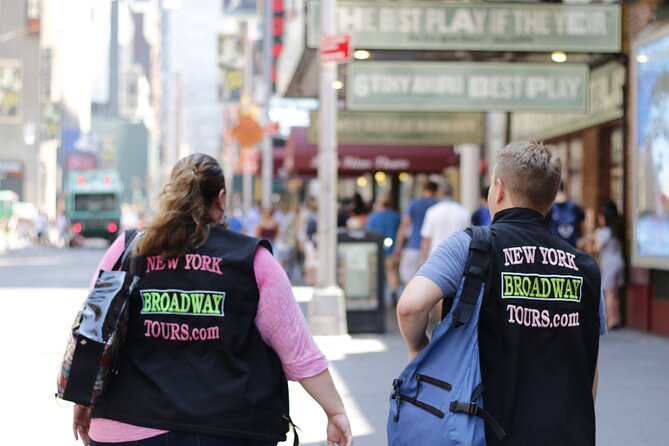
Next comes Stone Street, where the tour points out where Hamilton and Eliza lived. You also see where Burr worked next door with Hamilton.
The value here is that the tour gives you side-by-side context. You’re not just learning where one character stands; you’re seeing how the neighborhood ties them together. That kind of layout makes the Hamilton story feel logical instead of dramatic.
That said, this is also one of the places where a fast pace can hurt. If your group gets moving quickly or audio is hard to hear, you may feel rushed through the “character geography” moments.
Fraunces Tavern Museum: George Washington’s headquarters and the Hamilton-Burr meet-up
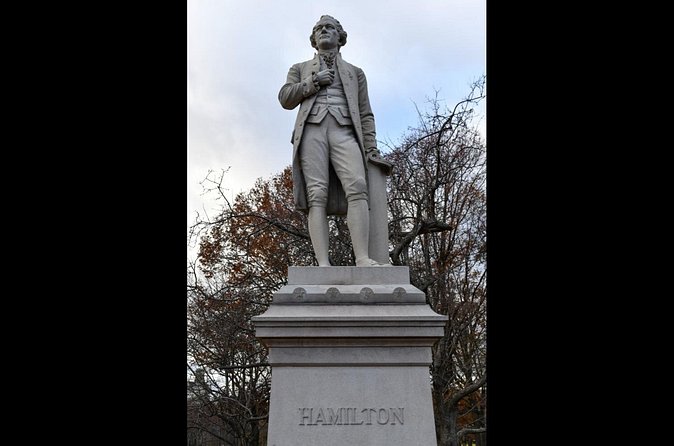
Then you hit Fraunces Tavern Museum—a stop the tour frames with a simple prompt: raise a glass. The focus here is preservation of George Washington’s 1st headquarters, and you’ll also learn that this is where Hamilton and Burr first met.
Why it’s a standout: it’s a narrative hinge. You’re not only learning a location—you’re connecting two major character arcs to a real meeting place. Taverns were social engines in their day, and the tour’s emphasis helps you see why that setting would matter for alliances and rivalry.
If you’re a Hamilton fan, this is one of the stops where the musical story likely hits hardest. It’s also a place where you might appreciate slowing down—so stay alert and keep your expectations realistic about time.
Wall Street Bull photos and the pop-up art to guard the exchange
No Lower Manhattan Hamilton walk is complete without Wall Street symbolism, and this one gives you an iconic photo moment with the BULL on Wall Street. The tour also notes that the bull was part of a pop-up art installation across from the Wall Street Bull, and now it stands guard looking over the New York Stock Exchange.
It sounds like a simple picture stop, but it carries meaning in the Hamilton setting. Hamilton’s era was the foundation for the modern financial world you see right here. Taking a moment by the bull is an easy way to anchor that idea visually.
Wall Street’s Dutch wall: where finance stands on older streets
After the bull, you learn the origins of the area under the modern skyline. The tour explains that the Dutch built a wall as part of their 1624 settlement, and it frames today’s Wall Street as marking where that wall stood.
This is the kind of detail that makes you look at familiar streets differently. You stop seeing Wall Street as just a brand and start seeing it as a layering of city planning, settlement, and commerce.
If you like connecting early America to today’s map, you’ll enjoy this segment.
National Monument and the Bill of Rights: Washington’s inauguration and the dome
Another major anchor point is the inauguration theme: George Washington was inaugurated here. The tour also connects this to the push for the Bill of Rights, showing how the founding fathers came to terms with writing them.
You’ll also see a beautifully domed National Monument that later served as a customs house and part of the Treasury Department in the 19th century.
Why this matters for a Hamilton-focused tour: it’s the political and legal backbone behind the musical’s personal and economic conflicts. If you’ve ever wondered how the “paperwork” of the early republic connects to the bigger drama, this stop helps make the bridge.
Trinity Church NYC: oldest NYC church, and Hamilton closing moment
The final major stop is Trinity Church NYC, described as the oldest church in New York City. You’ll see the magnificent exterior and hear about its history stretching from the 1690s to the present day.
Then you reach the end of the walk with a nod to Alexander Hamilton himself.
I like this closing because it gives you a sense of time depth. After walking past institutions, markets, and tavern stories, ending at a church that’s survived multiple eras brings the tour back to the scale of centuries. It’s a good “wrap-up” location for your brain to process everything you’ve learned.
Guide energy, sound issues, and the real-world listening test
This is where the tour can feel either excellent or frustrating, depending on setup and pacing.
The positive side is that the guide can make the musical material feel like a story you understand, not lines you only remember. In one experience with Michael, the guide stayed enthusiastic, and there was even a moment where singing songs from the musical came up. That kind of energy helps people pay attention and keeps the group engaged.
The drawback is simple: you need to be able to hear. One experience noted that the guide was hard to hear and that a listening device would have helped. If that’s a concern for you, position yourself closer to the guide from the start and be prepared to move with the group rather than stopping to check your phone.
Also, keep your expectations flexible about time. If you get slowed down or if the group has trouble sticking to pace, some stops can feel shortened. You should still plan for the major landmarks, but build in mental slack.
Who should book this Hamilton walking tour?
Book it if:
- you’re a Hamilton fan who wants real-world locations tied to scenes and characters
- you like Lower Manhattan and want to see several key spots in one two-hour walk
- you enjoy guides who explain context, not just point and photo
Consider skipping or pairing with independent time if:
- you prefer slow, sit-down museum pacing
- you don’t like walking tours where group timing controls how long you linger
- you know you have trouble hearing in moving outdoor groups
Also, if you’re planning Broadway while you’re in town, this is the kind of tour where your guide might share practical show-buying tips. One guide named Michael shared advice on getting Broadway tickets for cheaper, and that can be a real bonus if you’re juggling budget.
Should you book it?
I’d book this tour if you want a Hamilton-and-history combo that’s easy to fit into a day. $50 is reasonable for a 2-hour guided Lower Manhattan experience, especially since you’re getting a professional guide and multiple landmark moments that are listed as free admission.
Just go in with the right mindset: you’re walking, you’re outside, and you’ll get the most out of it if you stay close enough to hear clearly. If you can handle that, you’ll come away with a map in your head—built from stories you can revisit the next day while you wander the same streets on your own.
FAQ
How long is the Alexander Hamilton Musical Walking Tour?
It runs for about 2 hours (approx.).
What is the price per person?
The price is $50.00 per person.
Where does the tour start and end?
It starts at 41 Park Row, 38 Park Row, New York, NY 10038 and ends back at the meeting point.
What time does the tour begin?
The start time listed is 11:00 am.
Is the tour offered in English?
Yes, it’s offered in English.
Do I need a ticket on my phone?
Yes. You get a mobile ticket.
How big is the group?
The tour has a maximum of 20 travelers.
What if the weather is bad?
The experience requires good weather. If it’s canceled due to poor weather, you’ll be offered a different date or a full refund.
Can kids join?
Children must be accompanied by an adult.