REVIEW · NEW YORK CITY
Broadway the Tour- NYC Guided Immersive Historic Walking Tour
Book on Viator →Operated by Broadway the Tour · Bookable on Viator
Broadway clicks into focus fast on this walk. I love how music, theater names, and city growth stories all connect street by street. Two things I like a lot: the free audio headsets (you get live guide narration plus recordings), and the fact that you hear Broadway voices alongside the architecture and street history. One thing to consider: you’ll be walking and standing for about 2 hours plus, and the route is weather-dependent.
What really makes this tour work is the format. You’re not just looking at marquee photos—you’re following a guided narrative while you’re standing in the right spots, and the Ask the Guide text-a-guide option gives you a way to catch up if you miss something. Another plus for your schedule: morning departures leave the rest of the day open for whatever you want next, even if you’re saving your energy for another show or a museum.
The only drawback I’d flag upfront is that many stops are exterior photo moments with narration rather than indoor theater entry. If you’re hoping for lots of inside-theater time at every venue, you might want to pair this with a separate ticketed activity.
In This Review
- Key things I’d highlight before you go
- A theater-street lesson you can follow in real time
- Audio headsets and the Ask the Guide service (how it helps you)
- Museum of Broadway to Lyceum Theatre: where Broadway got its roots
- Longacre Square to 42nd Street: chasing the Great White Way
- New Amsterdam, New Victory, and Helen Hayes: architecture and changing audiences
- Imperial Theatre, St. James, and the Palace: glamor with a paper trail
- Shubert Theatre and Shubert Alley: Broadway’s business engine
- Photo stops plus included moments: Majestic, Schmackary’s, and theatre souvenirs
- From Moulin Rouge to Wicked: modern hits on top of older streets
- The music-business side: Brill Building and the Winter Garden Theatre
- George M. Cohan statue, Palace vaudeville legacy, and Theatre Circle
- Price and value: what you’re paying for (without guessing numbers)
- Who this tour is best for
- Should you book Broadway the Tour?
- FAQ
- How long is the Broadway the Tour walking experience?
- Where does the tour start and end?
- Is the tour offered in English?
- Are audio headsets included?
- Is ASL interpretation available?
- What if the weather is poor or I need to cancel?
Key things I’d highlight before you go
- Headsets with live guide + recordings keep the story moving without crowding your phone
- Broadway actor stories connect the buildings to real show life
- A focused 2+ hour route that’s built for making sense of Manhattan fast
- Photo-ready theater stops across Times Square and 42nd Street
- Included breaks like Schmackary’s and the George M. Cohan statue moment
- Small group size (max 20) helps the guide keep everyone oriented
A theater-street lesson you can follow in real time
Broadway can feel like a wall of neon if you show up cold. This tour is designed to fix that. You start with clear context—how the theater district formed and why these corners matter—and you keep moving while the audio explains what you’re seeing.
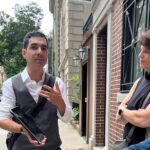
The handheld audio headset matters more than it sounds. With live in-person narration running through your headset, you don’t have to stop and stare at your guide for every sentence. You can keep your bearings, take photos, and still catch the story. It also helps when the street noise in Times Square gets loud. You also get recordings that let the “Broadway voices” part land in a way pure walking tours often skip.
Because the group is capped at 20, this doesn’t feel like a cattle-line history project. You should still expect a lively pace—this is a guided walk with multiple stops—but it’s the kind of pace that works well for people who want to understand the area quickly.
You can also read our reviews of more walking tours in New York City


Audio headsets and the Ask the Guide service (how it helps you)
This is the kind of tour where the tech actually improves the experience. You get personal headsets for live narration and audio tracks, so your ears get the guided story even when you’re turning for photos. That means less time losing the thread while you reposition your phone or deal with foot traffic.
Then there’s the “Ask the Guide” text-a-guide service. That’s useful when you think of a question after you’ve just walked past a detail, or when you want clarity without stopping the whole group. You’re not stuck waiting for a Q&A moment, and you can keep listening to the next section.
You also get access to exclusive discount offers for additional tours, attractions, and museums. Even if you don’t use them, it signals that the operator is thinking about your whole day, not just this walk.
Museum of Broadway to Lyceum Theatre: where Broadway got its roots
Your walk begins at the Museum of Broadway on West 45th Street. Even if you don’t purchase museum admission as part of the stop, you still get an expert orientation: the history of New York, early Broadway beginnings, and the overall layout so you understand where you are in the city grid.
Then you move to the Lyceum Theatre. It’s one of Broadway’s oldest continuously operated houses, and your guide frames it as a place with secrets that have built up over decades. The narration also ties the theater to current Broadway life—Cole Escola’s production Oh Mary! is referenced as part of why this stop starts with laughter. That mix of old-and-new is a good theme for the whole tour.
Practical tip: because this is mostly story plus street-level or exterior viewing, you’ll want to stay attentive even when you’re standing still. The best “aha” moments tend to come from the way your guide explains why a theater’s position, design, or era mattered.
Longacre Square to 42nd Street: chasing the Great White Way
After the Lyceum, the route shifts toward the crossroads era—how Longacre Square became the center of the Broadway world. This section is built around getting your mental map in place. You’ll get photo time at the One Times Square building, including the iconic New Year’s Eve ball drop reference.
Then comes 42nd Street, which is where the tour leans into origins. You hear how immigrant-inspired theater, vaudeville, operas, and early musicals helped shape Broadway. The narration also explains how “The Great White Way” nickname grew out of the lights—so you’re not just seeing famous street signage, you’re understanding the reason it got its name.
A nice feature here: multiple historic playhouses are pointed out along the way, including the current home of Aladdin. Even when you’re not going inside, you’re learning how the district’s lineup changed over time.
One consideration: 42nd Street is a photo magnet and can get crowded. Headsets help you stay on the story even if you briefly slow down for pictures. If you’re sensitive to noise, keep your volume at a comfortable level and give yourself a little extra space when stopping.
New Amsterdam, New Victory, and Helen Hayes: architecture and changing audiences
Next up is the New Amsterdam Theatre. Built in 1903, it’s presented as a cornerstone of Broadway history with Art Nouveau architecture and a strong connection to landmark productions like the Ziegfeld Follies era. You’ll also hear how the theater remains a key stage for large-scale musical hits today, with Aladdin currently associated with it on this route.
Then you head toward the New Victory Theatre. This stop adds variety because it’s not a classic Broadway house. Your guide traces how it evolved from the Republic Theatre to vaudeville and burlesque, then an adult film era, and finally a focus on children’s theater and international productions. It’s a reminder that Times Square entertainment has never been one thing—it keeps changing.
After that, you pass by the Helen Hayes Theatre, originally known as the Little Theatre. This is framed as a rebellion against larger-theater grandeur, with a more intimate design and an experimental spirit. It’s the kind of stop that’s easy to overlook if you only think about “big spectacle” Broadway. Here, you’re reminded that Broadway has always had room for smaller ideas that later grow into bigger movements.
You can also read our reviews of more guided tours in New York City






Imperial Theatre, St. James, and the Palace: glamor with a paper trail
One of the tour’s strongest moves is pairing “what you see” with “what you learn.” At the Imperial Theatre, the narration connects the venue to Les Misérables and also points out stories about productions that didn’t get the long life of that show. You get time to snap photos at the marquee while your guide explains the kind of fate Broadway theaters can have—some shows last, some don’t.
Then the tour hits the St. James Theatre. You’re told it opened in 1927 and became a stage for legendary musicals, including Oklahoma! and Hello, Dolly!. This stop reinforces a key point: Broadway’s glamour isn’t just a visual style—it’s tied to major productions that shaped the mainstream musical format.
After that, the Palace Theatre is framed as an early vaudeville powerhouse. There’s a clear sense here that Broadway’s status came from the stage culture before the modern musical boom. If you only associate Broadway with modern ticket lines and global tours, this stop helps you see the longer chain of performers and entertainment forms that led there.
Shubert Theatre and Shubert Alley: Broadway’s business engine
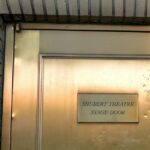
This part of the route leans into how Broadway worked as a system. At Shubert Theatre, you get stories about early theater movers and the underbelly of Broadway’s birth—names linked to Hammerstein and Cohan up through Ziegfeld and Fanny Brice. The guide also explains how facades along Eighth Avenue connect to the theater syndicate model and even the arts-union power that formed around it.
Then you get to Shubert Alley, a narrow passage between theaters created in 1912 for fire safety regulations. But your guide turns it into a window on behind-the-scenes ambition. It’s where aspiring actors lined up hope-full, trying to get noticed by casting directors, while producers and directors handled business around the nearby houses.
This is one of those stops where you can almost feel the “work” behind the glitter. If you’ve ever wondered how so many productions can keep moving through the same tight area, this is the answer: Broadway runs on people, deals, and logistics just as much as talent.
Photo stops plus included moments: Majestic, Schmackary’s, and theatre souvenirs
You move through the theater cluster around multiple iconic venues. Majestic Theatre is highlighted for the music of Rodgers and Hammerstein, and your guide gives photo opportunities in the wider area, including theaters such as Imperial, Booth, and Music Box, plus show references tied to each place’s reputation.
A practical highlight comes next at Schmackary’s, where your tour includes the stop. Schmackary’s is presented as a Broadway-connected bakery founded by an aspiring actor, with cookie creations often inspired by popular musicals. You get a real food break right in the middle of the walking rhythm, which is handy when you’ve planned this as part of a theater day.
After that, you hit the Hamilton street moment. The narration focuses on Hamilton’s mix of hip-hop, R&B, and pop with musical-theater storytelling, and how the show made American history feel more approachable to a newer generation. Even if you’ve already seen it, this stop helps you understand why its success changed the district’s energy and audience expectations.
Then you pass through Richard Rodgers Theatre (named for Rodgers) where the tour references iconic musicals connected to that stage, including Guys and Dolls and a link to Hamilton’s current presence. You also get to the Al Hirschfeld Theatre, tied to Moulin Rouge the musical in this route, with a focus on Al Hirschfeld’s caricature legacy and how his drawings became part of Broadway’s visual memory.
From Moulin Rouge to Wicked: modern hits on top of older streets
By this point, you’re not just learning dates—you’re learning patterns. The tour uses modern hits as anchors so the older buildings don’t feel like dusty “then and there” relics.
Wicked is one of the stops where the story becomes very thematic: your guide frames the show’s Broadway debut and how its score and themes (friendship, prejudice, and the moral tension of good vs. evil) helped reshape modern musical theater. It’s a straightforward way to understand why audiences keep returning for big modern musicals even in an area with so much history.
You also hear about another current blockbuster stop tied to Six. The guide explains a name change in this area and how theater renaming is part of the district’s redevelopment story. Alongside that, the route mentions the Gershwin Theatre, renamed in 1983 in honor of George Gershwin and connected to the redevelopment of Midtown Manhattan in the 1970s.
Even if you’re not a theater superfan, it’s hard not to notice the logic: Broadway stays alive by constantly updating its lineup while reusing the same street foundation.
The music-business side: Brill Building and the Winter Garden Theatre
Not every stop is about what happens inside a show. At the Brill Building, the narration focuses on the 1960s American music industry. It’s described as a songwriter’s factory where publishers, studios, and creative minds shaped pop hits, with names like Carole King and Gerry Goffin and Barry Mann and Cynthia Weil.
Then the tour includes the Winter Garden Theatre story. You hear it was originally built as a horse exchange for William Vanderbilt and later transformed into a theater in 1911. The route connects it to production legends like the Ziegfeld Follies, plus mentions the enduring popularity of Cats and Mamma Mia!—again reinforcing that these buildings have long “second lives.”
There’s also a diner stop described as a landmark since the late 1980s, known for classic American fare and musical performances by aspiring artists. That’s a good contrast to the theater storytelling. It reminds you Broadway is not only stages and seats—it’s also the everyday ecosystem that feeds the people who make shows happen.
George M. Cohan statue, Palace vaudeville legacy, and Theatre Circle
Near the end of the walk, you stop at the George M. Cohan Statue. Your guide frames Cohan as an early mover who helped revolutionize American musical theater, describing his role as songwriter, composer, playwright, producer, and performer. You also hear about patriotic songs like Over There and how his blending of music, dance, and drama helped shape what modern musicals became.
Then you return to the Palace Theatre area for more grounding in the vaudeville era and the prestige of playing the Palace. This is where the tour quietly ties “early entertainment culture” to “today’s Broadway brand” so you understand how the district became famous in the first place.
The experience wraps back around the theater district’s community space at Theatre Circle. The stop is described as a beloved shop for theater memorabilia—playbills, posters, autographed photos, rare books—and as a meeting point connecting theatergoers and industry professionals. This is a smart ending because it gives you a place to convert the stories you just heard into something you can take home.
Price and value: what you’re paying for (without guessing numbers)
Even without a price tag here, I can tell you what you’re getting value-wise. The tour includes live, in-person narration from historic-focused guides, plus personal audio headsets. That combo reduces the most common problems with walking tours: losing the thread in noise, and stopping constantly to find the guide.
You also get included access to the Ask the Guide text-a-guide service, and discount access to additional attractions and museums. On top of that, the route includes specific paid-with-the-tour moments: Schmackary’s (snack time) and entry-type moments tied to the George M. Cohan statue experience and Theatre Circle shop time. That means you’re not forced to spend extra money at every stop just to keep the day moving.
If you’re the kind of traveler who likes shows but also likes context, this is a strong use of a morning or early afternoon.
Who this tour is best for
This is a great fit if you:
- Want to understand Broadway fast without building a complicated plan yourself
- Like theater architecture, street history, and production culture
- Prefer a structured route with audio support instead of random wandering
- Have a day that needs a solid “anchor activity” in the morning, then flexibility after
It may be less ideal if you:
- Expect constant indoor theater entry at every stop
- Don’t do well with standing and walking for the duration
- Are planning around strict timing in very crowded Times Square segments
Should you book Broadway the Tour?
If you want Broadway to make sense beyond neon and show names, I’d book it. The headset setup does real work, the guide storytelling ties older theaters to newer productions, and the route is paced for people who want the district’s big picture without spending hours researching.
I’d especially book this if you’re going to see shows that day or soon, because the tour gives you extra context for what you’ll notice in the lobby, on the block, and in the theater culture around you. Just go in ready to walk, listen, and accept that many stops are exterior-and-audio moments designed to get you oriented quickly.
FAQ
How long is the Broadway the Tour walking experience?
It lasts about 2 hours 10 minutes.
Where does the tour start and end?
It starts at the Museum of Broadway, 145 W 45th St, New York, NY 10036, USA, and it ends back at the meeting point.
Is the tour offered in English?
Yes, it’s offered in English.
Are audio headsets included?
Yes. You get personal audio headsets that connect you to the live narration and recordings.
Is ASL interpretation available?
ASL interpretation is available with advance notice.
What if the weather is poor or I need to cancel?
The tour requires good weather. If it’s canceled due to poor weather, you’ll be offered a different date or a full refund. Free cancellation is available up to 24 hours before the experience start time.