REVIEW · BROOKLYN
Brooklyn: 2-Hour Brooklyn Navy Yard Walking Tour
Book on GetYourGuide →Operated by Turnstile Tours · Bookable on GetYourGuide
A working shipyard in walking distance. I love that you get close to the 1851 dry dock and I like how WWII audio stories give the Yard a human voice, not just a postcard view. The big drawback to consider is that this is mostly a walk-and-look experience, with plenty of stopping for angles and context, but no bus ride and no chance to board a ship.
In This Review
- Key Tour Takeaways
- Where You Start at Russ & Daughter’s Building 77
- The Yard’s Big Message: Past, Present, and What’s Next
- The 1851 Dry Dock: The Stop You Tell Friends About
- WWII Stories in Real Time Through Audio Clips
- Preserved Buildings That Still Show How the Yard Works
- Today’s Makers: Hundreds of Businesses at One Site
- What the Two Hours Really Feel Like
- Logistics That Can Make or Break Your Day
- Price and Value: Is $25 Worth Two Hours Here?
- Who Should Book This Walking Tour
- Final Decision: Should You Book?
- FAQ
- Where do I meet for the Brooklyn Navy Yard walking tour?
- How long is the tour?
- What’s included in the tour price?
- Is hotel pickup or drop-off provided?
- Is the tour wheelchair accessible?
- Are pets allowed on the tour?
Key Tour Takeaways
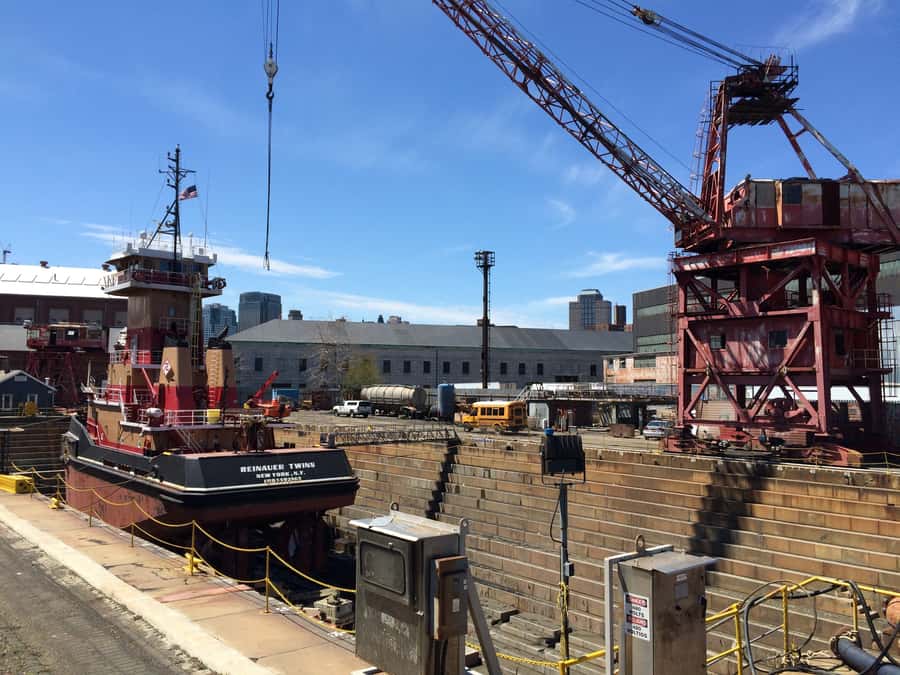
- 1851 dry dock still used for ship repair—rare to see a historic industrial space in active service
- WWII-era audio clips—worker stories bring the Yard’s wartime role into focus
- Three layers of time—past fighting ships, WWII industry, and today’s mixed creative + manufacturing businesses
- Lots of building and infrastructure context—you understand what keeps the city moving
- Small-access details matter—assistive listening devices are available with advance notice
- Wear comfortable shoes—the Yard is large, secure, and made for walking
Where You Start at Russ & Daughter’s Building 77
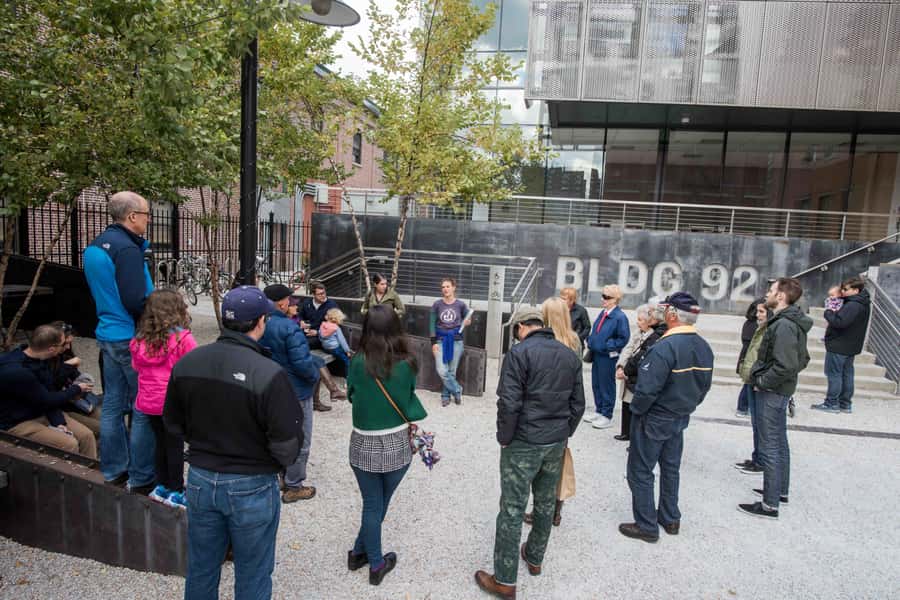
You meet at Russ & Daughter’s bakery, ground floor public space, in Building 77 at 141 Flushing Avenue. It’s right at the intersection of Flushing and Vanderbilt Avenues, and it’s also publicly accessible from Flushing Avenue and the Brooklyn Navy Yard NYC Ferry stop. That matters because the Brooklyn Navy Yard is not a casual park. It’s a massive secure industrial facility with more than 70 buildings.
I’d treat the address like your lifeline. Use it as given, because getting turned around inside the Yard can be easy. Also plan to respect the security setup: you won’t enter security gates during the tour, and if you try to go through them, you’ll be turned away. For this kind of tour, moving with your guide is part of the experience.
From the start, you’re set up for something different than the usual museum day. Instead of just learning from exhibits behind glass, you’re walking around the working spaces where ships were made, repaired, and launched—and where new kinds of companies operate today.
You can also read our reviews of more walking tours in Brooklyn



The Yard’s Big Message: Past, Present, and What’s Next
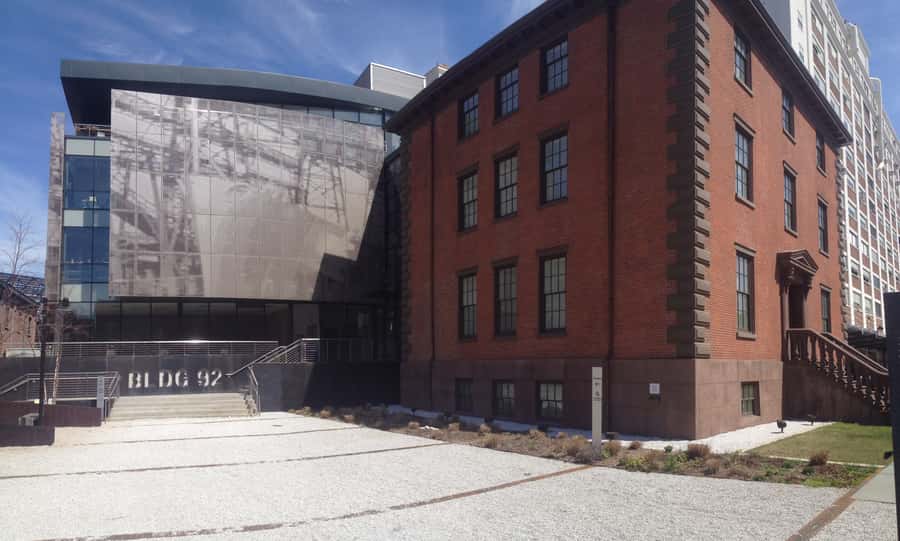
The Brooklyn Navy Yard covers about 300 acres (126 hectares), so even in two hours you don’t cover it all. What you do get is a clear storyline: how the Yard built America’s famous fighting ships (names like USS Maine and USS Missouri get attention), how it functioned during WWII, and how it continues in a modern mix of businesses.
Today, the Yard hosts hundreds of innovative creative and manufacturing businesses. That “past meets present” angle is more than marketing. When you see the historic infrastructure—dry docks, industrial buildings, and the layout designed for heavy work—it’s easier to understand why the Yard still attracts makers and builders. The site was built for industry, and industry has stayed in the DNA.
On this tour, you’ll learn about the workers who designed, repaired, and built ships at the Yard. That’s one reason the walk feels grounded: the guide doesn’t just point at buildings. They connect buildings to jobs, jobs to tools, and tools to outcomes.
If you like understanding how a place functions, not just what it looked like, you’ll get a lot from this. You’ll also see public art and exhibits along the way—useful when you want a quick reset from walking and want stories you can revisit later.
The 1851 Dry Dock: The Stop You Tell Friends About
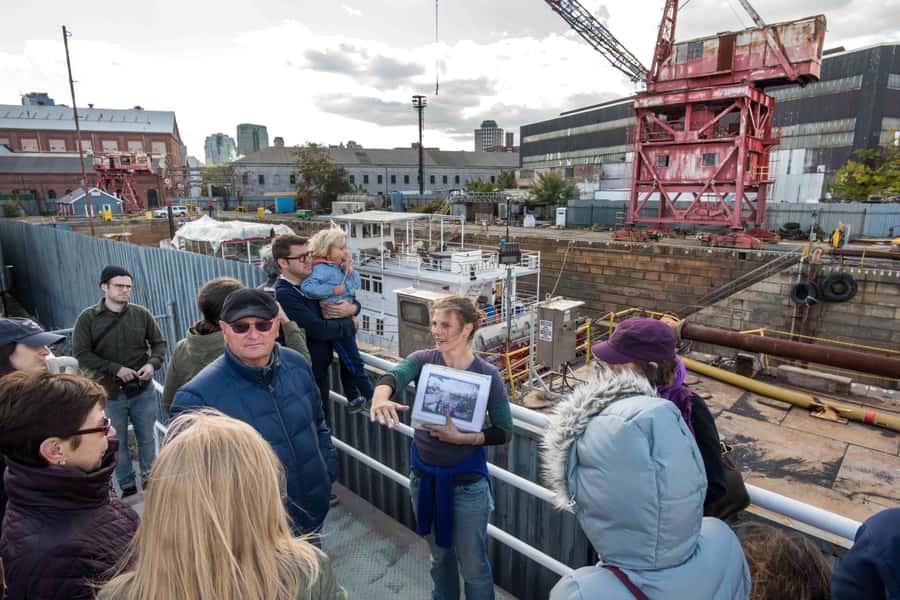
The star mechanical feature is the historic dry dock dating to 1851, and the key detail is that it’s still used today for ship repair. That combo—historic structure with modern activity—is why this tour works in a short time.
Dry docks aren’t decorative. They’re engineering. They’re about keeping ships accessible for repair work, and they’re part of a shipyard system that depends on cranes, yards, and timed movement. When you see the dry dock on foot, you start to grasp how much work went into building and maintaining naval power—and how carefully those industrial systems had to be laid out.
Even if you’re not a ship-history superfan, this stop lands because it makes history feel concrete. You can look at something and connect it to a purpose that continues. It’s a rare chance to see the past operating rather than being frozen behind rope barriers.
One practical note: because you’re walking around an industrial site, expect distances between viewpoints and plan for uneven outdoor surfaces. Comfortable shoes aren’t just suggested—they’ll help you enjoy the angles without worrying about your feet.
WWII Stories in Real Time Through Audio Clips
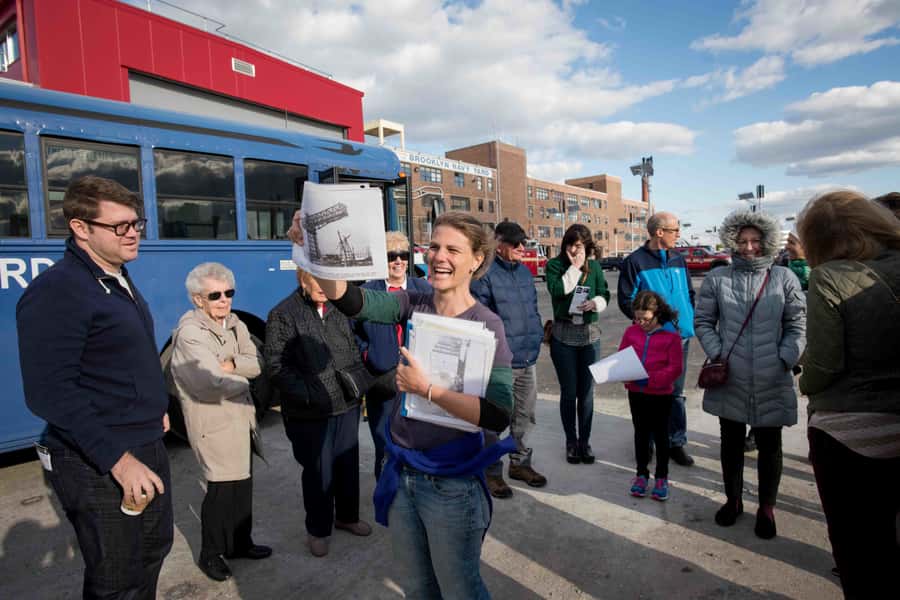
A major value-add here is the use of audio clips from WWII-era workers. Hearing stories tied to the Yard’s wartime work changes the tone of the tour. Instead of a list of dates, you get impressions of what it felt like to do industrial labor under pressure—and what kinds of tasks and roles people held.
You’ll also visit a food manufacturing space that acted as a nerve center of the site in WWII. That detail is easy to gloss over in a quick headline, but it matters when you’re standing where the work happened. Wartime logistics weren’t only about ships and guns. They included the supply chain that kept workers and crews going.
The food manufacturing stop is also a good reminder that shipyards are ecosystems. They require everything from heavy construction to daily production needs. When the tour highlights that range, the Yard stops being just a military story and becomes a full industrial story.
If you enjoy hearing local voices and worker-centered history, you’ll probably find this part especially memorable. And if you prefer a tour that mixes human stories with physical landmarks, the audio element is a real advantage.
Preserved Buildings That Still Show How the Yard Works
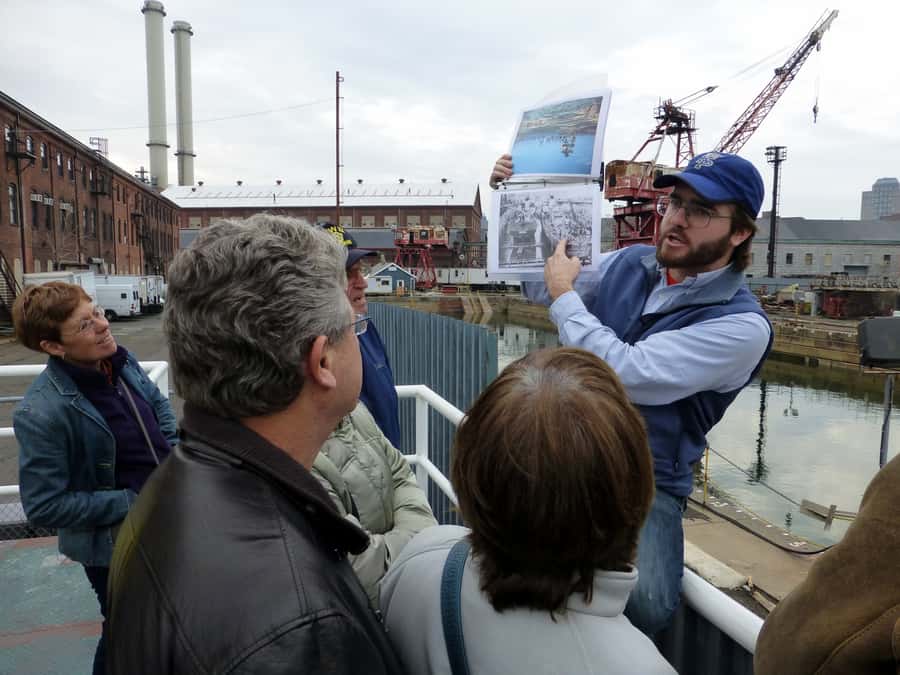
Another strong theme is historic buildings preserved and adapted for modern industry. You’re not just hearing that the Yard evolved—you’re walking through the evidence of change.
The buildings and spaces reveal how shipbuilding and repair used to work, but they also show what modern businesses are doing with those same structures. That’s where the tour feels more “alive” than a typical history walk. You get the sense that the site is being reused intelligently rather than abandoned.
This is also where you start noticing infrastructure and layout. The Yard isn’t random. Paths, open spaces, and building placement support heavy tasks. Even if you don’t know the technical terms, you can feel the logic: the site was engineered for moving materials and enabling repairs at scale.
I also appreciate that the tour doesn’t treat preservation like a vibe. It frames it as functional design and ongoing use—why these buildings survived and why they’re still useful. That’s the kind of interpretation that sticks.
You can also read our reviews of more tours and experiences in Brooklyn





Today’s Makers: Hundreds of Businesses at One Site
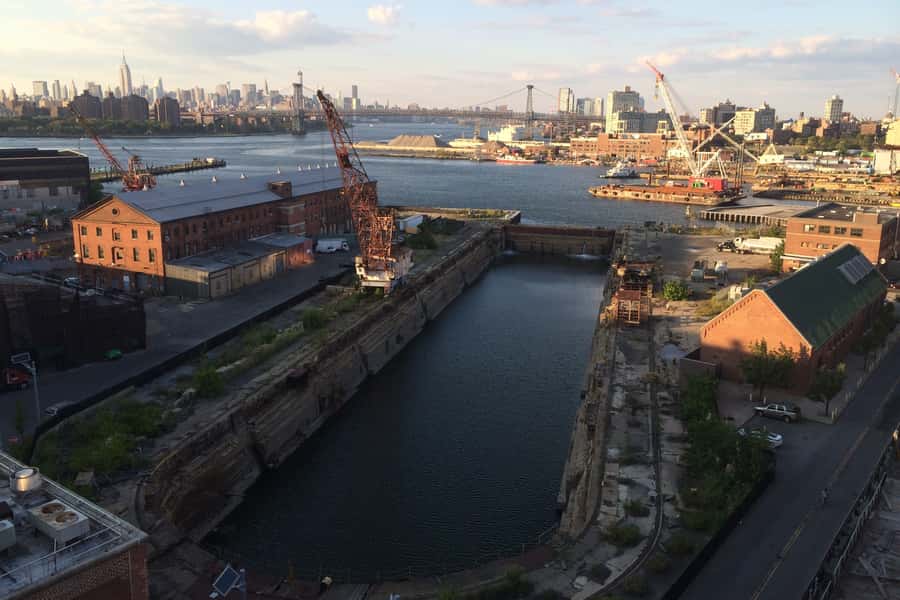
One of the most interesting things to learn is that the Yard is now home to hundreds of businesses, and they aren’t all the same type. The tour points out that you’ll see examples of designers, manufacturers, and makers working on the site today.
This matters for two reasons. First, it updates the story beyond naval history so you can connect the Yard to modern work. Second, it helps you understand why the Yard remains a destination: the physical infrastructure is useful, and the location and community support continued production.
The tour also highlights public art and exhibits, which can be a nice bridge between what’s still working and what’s being interpreted for visitors. Even in a two-hour format, you’ll get a sense of how the Yard shares its story while still functioning as an industrial campus.
If you’re the kind of traveler who likes creative-industrial places—places where things are actually made—this section is a good fit.
What the Two Hours Really Feel Like
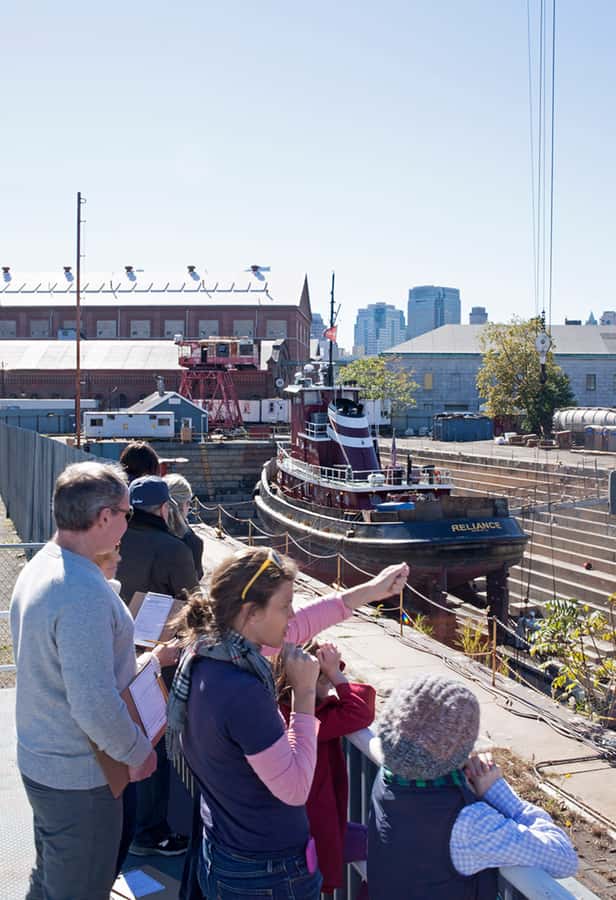
This tour is two hours, and it’s designed for walking across a secure industrial landscape. Expect lots of outdoor time, and plan your pacing around that. The Yard is huge, but the tour focuses on the most meaningful stops rather than trying to cover every corner.
One reason this format works is that it encourages you to see the Yard from different angles and to understand relationships between buildings and infrastructure. But here’s the trade-off: it’s not a relaxed stroll. You’re moving, stopping, listening, and moving again.
The walk-and-look nature also explains why reviews you might hear later can vary. If you want hands-on experiences like getting onto an old ship, this tour isn’t that. It’s about seeing the working environment and learning how it operates historically and today.
That’s not a flaw. It’s just a fit question. If you like on-foot interpretation and don’t mind that the experience is more observational than hands-on, you’re likely to be happy with the time and price.
Logistics That Can Make or Break Your Day
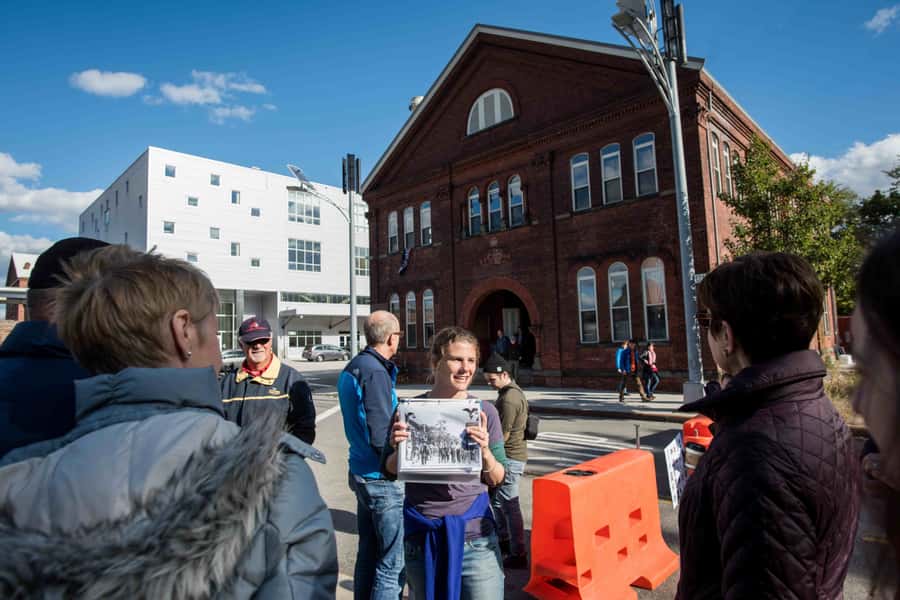
The tour starts in a public space, which helps. Still, you’ll be operating inside a secure facility, so keep it simple:
- Bring comfortable shoes.
- Don’t try to enter any security gates on your own.
- Leave pets behind (pets aren’t allowed).
- Skip expecting hotel pickup and drop-off—this is a meet-at-the-start kind of tour.
If you’re sensitive to sound or you want clearer audio, note that assistive listening devices are available with advance notice. That’s a practical inclusion that can make a big difference in an outdoor, industrial setting.
Also, the tour runs in English with a live guide. If you’re traveling with mixed language needs, it’s worth planning around that. And if your schedule is tight, the tour offers flexible cancellation and reserve-now options—so it can be easier to lock in a slot without feeling trapped.
Price and Value: Is $25 Worth Two Hours Here?
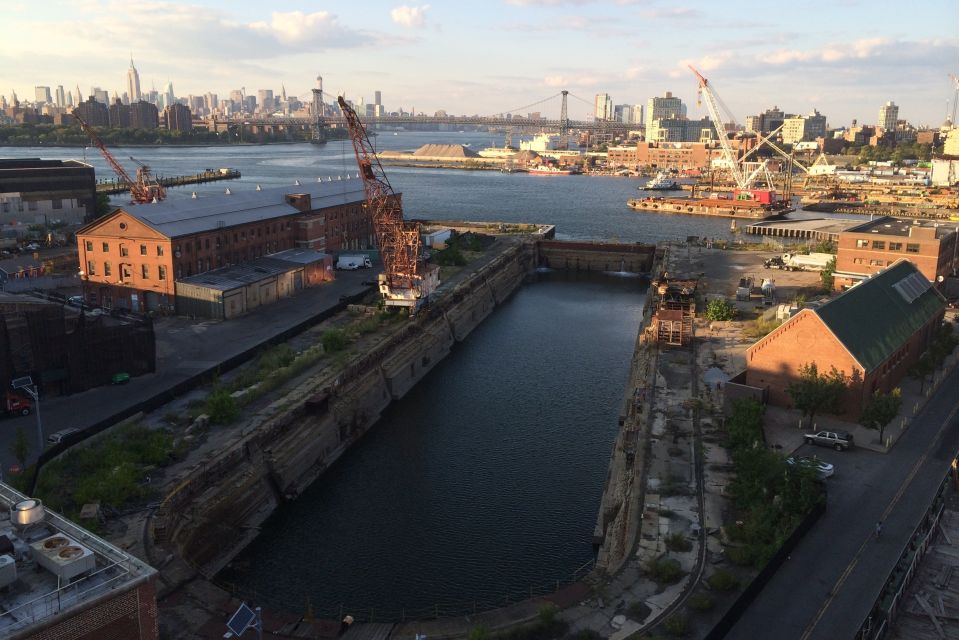
At $25 per person for two hours, this tour fits the category of “small cost, high learning.” You’re paying for a guide, guided access for walking the site, and audio-supported storytelling tied to real industrial landmarks.
In practical value terms, you’re getting:
- a historic infrastructure highlight (the 1851 dry dock) that’s still in use,
- WWII audio context and a WWII-era food manufacturing stop,
- and interpretation of how the Yard shifted from shipbuilding powerhouse to a mixed modern business site.
If your goal is to get the big picture fast—what the Yard did, how it worked, and why it matters—this price makes sense. If your goal is hands-on, inside-an-archival-ship excitement, then you may feel it’s too observational. But for a focused walk with meaningful stops, the cost-to-time ratio is solid.
Who Should Book This Walking Tour
This is a good match if you:
- like industrial design and infrastructure as much as buildings,
- enjoy worker-centered stories, not just big-name ships,
- want a two-hour plan that teaches you how a place functions,
- and prefer outdoor walking over museum-only days.
It may be less ideal if you:
- want to ride around in a vehicle or see the entire site without walking between stops,
- expect a bus tour experience,
- or are specifically hoping to board an old ship as part of the visit.
One subtle point: because the tour emphasizes access to interesting viewpoints on foot, it rewards curiosity. If you go in ready to look closely at what you’re seeing—pipes, structures, industrial layouts—you’ll likely leave with a stronger understanding than you expected.
Final Decision: Should You Book?
I’d book this tour if you want a compact way to understand the Brooklyn Navy Yard as both a historic ship-repair machine and a living industrial campus. The 1851 dry dock being still in use is the kind of detail that turns a regular outing into a standout experience. Add in the WWII audio clips and the WWII-era food manufacturing stop, and you’ve got more than sightseeing—you’ve got a story with context.
Skip it if you need a more hands-on or vehicle-based format. This one is for people who enjoy walking, stopping, listening, and learning what the Yard still does today.
If you can manage two hours of comfortable footwear and outdoor time, you’ll likely come away with the kind of real, grounded understanding that’s hard to get from a quick self-guided visit.
FAQ
Where do I meet for the Brooklyn Navy Yard walking tour?
Meet your guide in front of Russ & Daughter’s bakery in the ground floor public space at Building 77, 141 Flushing Avenue, at the intersection of Flushing and Vanderbilt Avenues.
How long is the tour?
The tour lasts 2 hours.
What’s included in the tour price?
The tour includes a live English-speaking guide and assistive listening devices are available with advance notice.
Is hotel pickup or drop-off provided?
No, hotel pickup and drop-off are not included.
Is the tour wheelchair accessible?
Yes, the tour is wheelchair accessible.
Are pets allowed on the tour?
No, pets are not allowed.