REVIEW · NEW YORK CITY
Central Park, NY: Nature, Architecture and Movie Scenes Tour
Book on GetYourGuide →Operated by Isle Of New York Tours llc · Bookable on GetYourGuide
Central Park can feel like a break from New York’s noise, especially once you’re walking paths that funnel you past ponds and birds. I like this tour because it pairs nature moments (herons, egrets, animals you can spot with patience) with architecture that ranges from Victorian details to modern apartment glamour. One thing to plan for: it’s a two-hour walk with stairs, so if your mobility or stamina is limited, this route may be tough.
You start at Grand Army Plaza near the Plaza Hotel area and step into a calmer rhythm fast, with stops that mix Hollywood references and real landmarks. I’m also glad the tour is guided by a human who keeps the stories clear and the pace fun—guides like Stan have been called out for being friendly and full of information, even when the group needs a little adapting. Still, keep expectations realistic: it’s not an all-day park crawl, so you’ll get the best highlights rather than every corner.
In This Review
- Key moments that make the walk worth it
- Leaving Midtown: Grand Army Plaza and the quiet-pond switch
- The Home Alone 2 pigeon lady arch and a stone-bridge reset
- Bethesda Fountain: the one straight path to the park’s centerpiece
- Across the lake: Victorian cast-iron bridges and celebrity reflections
- The Dakota, John Lennon’s story, and Strawberry Fields
- Movie scenes near the south end: Ghostbusters and Elf sightings
- Walk-through details: tunnels, Victorian tiles, elm plaques, and stonework
- Lake season notes and why the details matter
- Price and value: $40 for 2 hours of real sights
- What it’s like with a real guide (and why Stan gets praised)
- Who should book, and who might skip this one
- Should you book the Central Park Nature, Architecture and Movie Scenes Tour?
- FAQ
- How long is the Central Park Nature, Architecture and Movie Scenes Tour?
- Where do we meet for the tour?
- What does the tour cost?
- Is there an admission fee for any stops?
- What walking level should I expect?
- What items are not allowed on the tour?
Key moments that make the walk worth it
- Heron-and-egret pond time right after you leave Midtown’s roar
- Home Alone 2 and Elf filming spots you can recognize on the ground
- Bethesda Fountain to Bow Bridge for classic Central Park photo angles and real wedding energy
- Cast-iron bridges and apartment reflections across Central Park Lake
- Strawberry Fields and the peace garden tied to John Lennon and Yoko Ono
- A statue-lined Central Park path plus movie-haunted apartment sightings near the south end
Leaving Midtown: Grand Army Plaza and the quiet-pond switch
The tour starts at a glass cube with the Apple logo at Grand Army Plaza, near the Plaza Hotel. The smartest part of the timing here is psychological: you go from big-city commotion to pond-side calm quickly, and it makes the rest of the walk click. Central Park is so good at this contrast that even the first stop can feel like you’ve traveled somewhere else.
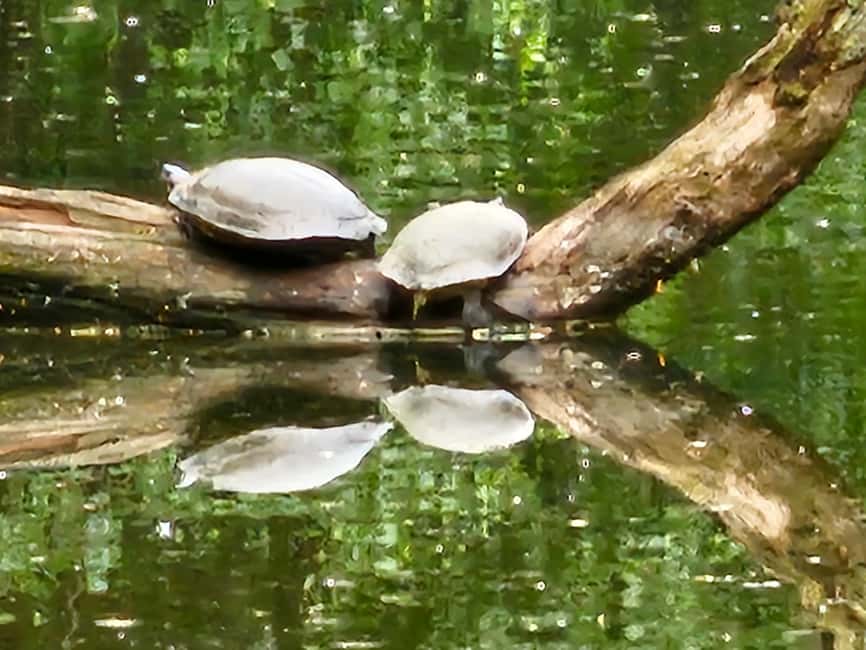
Before you settle into the park’s deeper spots, you’ll likely linger around a pond where birds show up. With a bit of luck, you’ll spot a heron or egret. That matters because Central Park isn’t just scenery—it’s living habitat. Even in a city, watching a bird pause on the edge of the water gives you that rare feeling of time slowing down.
Then the tour starts stacking surprises. One stop centers on the pigeon lady arch from Home Alone 2, an easy-to-spot film reference that also connects to real materials: Nova Scotia sandstone. If you’re the type who likes learning what you’re actually looking at (not just snapping a photo), these details are the kind that make the park feel newly built for you.
Practical note: wear shoes you trust. Even on a “flat” park walk, you’ll deal with steps and uneven sections.
You can also read our reviews of more tours and experiences in New York City.



The Home Alone 2 pigeon lady arch and a stone-bridge reset
Once you’ve had your first nature moment and your first pop-culture hit, the tour moves into a slower, more winding rhythm. You’ll walk up winding paths—Central Park has only one straight path, and you’ll get a chance to notice how the rest of the park is designed to curve and reveal things gradually.
That design shows up in small ways: you come around a turn and suddenly a stone bridge appears at the right angle for photos. The tour leans into these “wait for the view” beats. They’re not filler stops. They’re how you see Central Park as more than a background for people in wedding dresses and movie scenes.
The pigeon lady arch stop is a good example of what makes this tour different from the usual sightseeing walk. It’s not only about remembering a scene—it’s about recognizing the workmanship and materials that helped the set match the real park. You’ll also notice how the guide uses these references to point out architecture and textures you might otherwise speed past.
If you’re traveling with someone who likes movies, this part can be a fast bonding win. If you’re more into classic buildings, the same stop becomes a shortcut to understanding Victorian-era influence and how Central Park’s older design still feels relevant today.
Bethesda Fountain: the one straight path to the park’s centerpiece
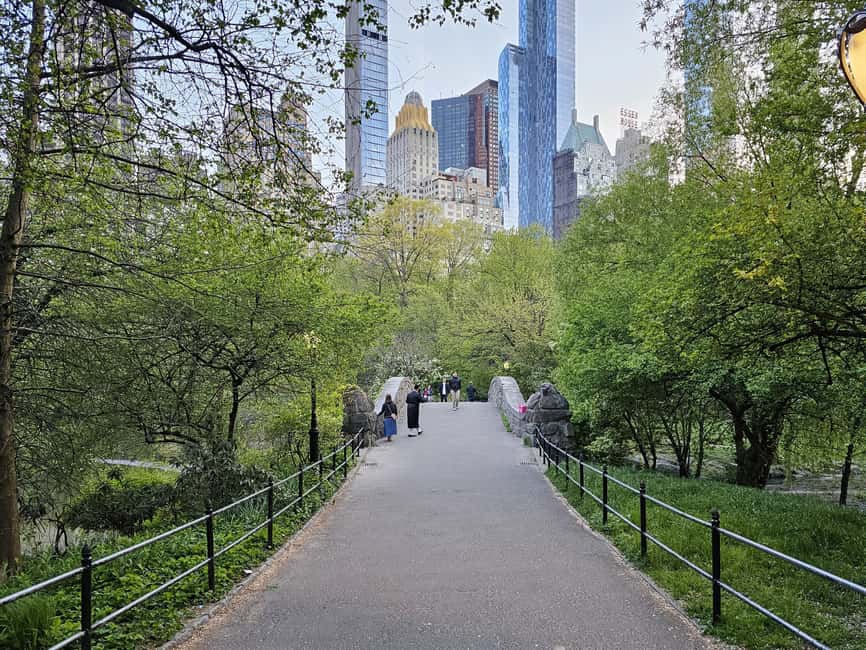
Eventually, you reach the park’s centerpiece: Bethesda Fountain. This stop is the “anchor” moment where the whole park starts to make sense visually. It’s also where you’ll see the park being used, not just admired—couples often take wedding photos here, and on Saturdays you might spot more than one wedding in action.
That’s part of why Bethesda is a great tour stop. Central Park landmarks are famous, but Bethesda also functions like a stage. The fountain sits in a spot that gives you both symmetry and foot traffic, which means you can photograph from multiple angles and still see the setting work for real life.
The guide typically uses this area to connect themes. You’ll hear about how Central Park was shaped so that architecture, sculpture, water, and paths work together. Even if you’ve visited before, this tour angle helps you look beyond the obvious and notice how the park funnels your movement.
One drawback to flag again: because it’s a two-hour tour, you won’t linger as long as you might want at every photo spot. Bethesda is a place where some people want extra time, so bring patience and plan to take your photos quickly and keep moving.
Across the lake: Victorian cast-iron bridges and celebrity reflections
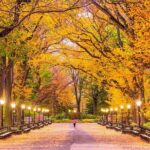
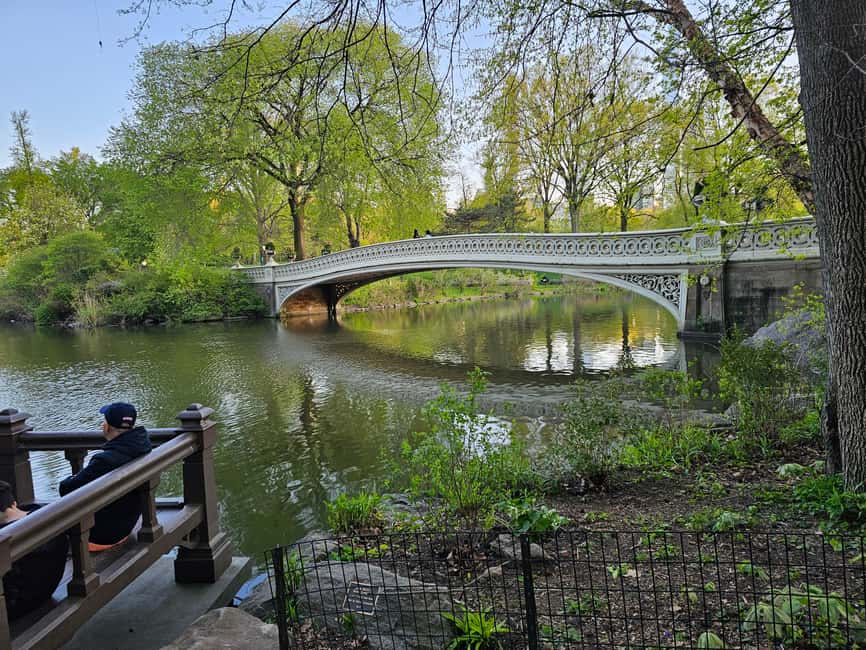
As you head west toward Central Park Lake, the scenery shifts into something that feels almost cinematic. You’ll cross a cast-iron Victorian bridge, and the view changes from land textures to water reflections. This is one of the best stretches for photography because you’re shooting both architecture and its mirror image.
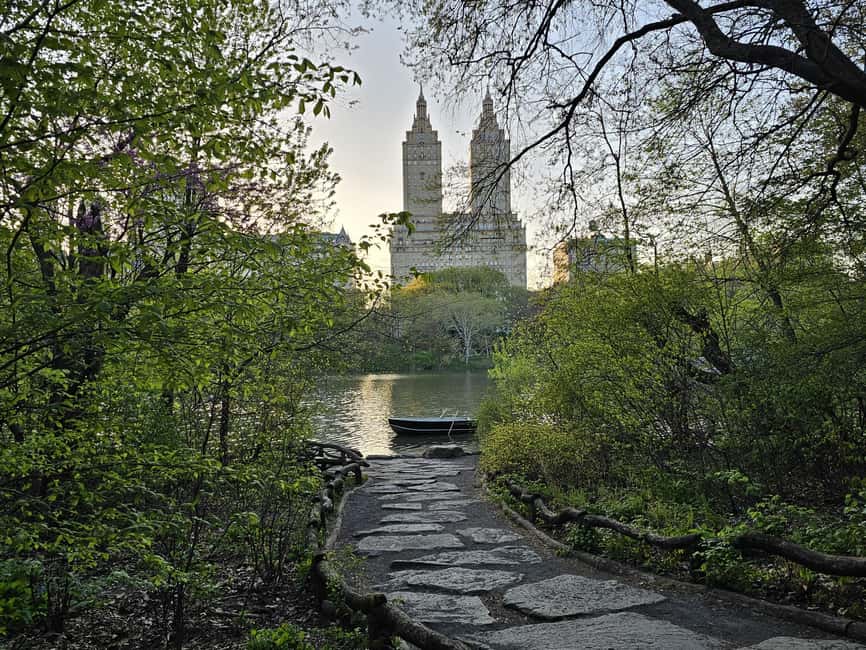
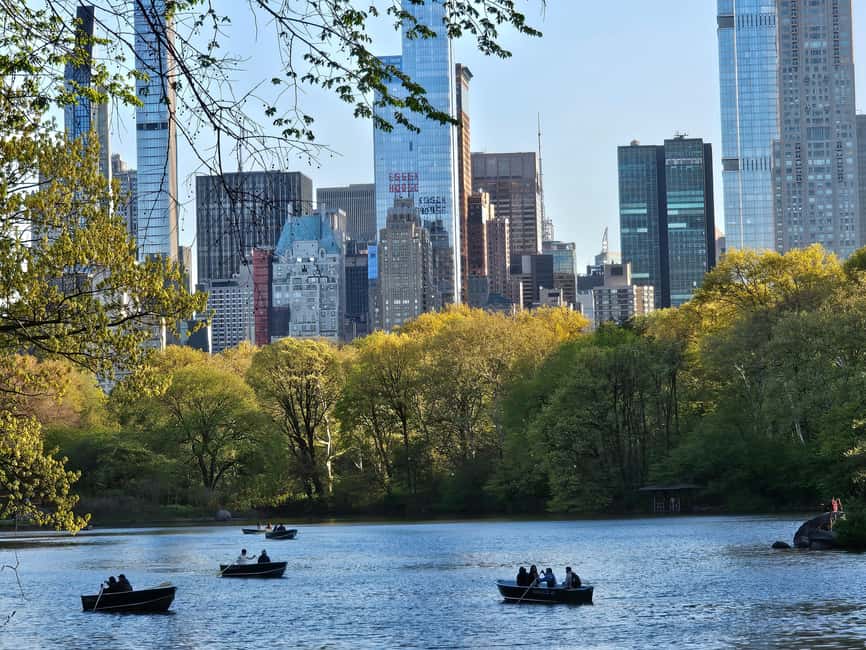
The guide will point you toward several classic apartment buildings around the lake, including The Dakota, the Langham, and the San Remo, among others. This is where Central Park’s exterior celebrity homes become more than names. Their lines and windows turn into reflections that shimmer on the water, especially when the light is decent.
You’ll also get a chance to climb up to a 19th-century carriage turn, where horses once rested. That moment helps you “feel” the park’s past without needing a museum ticket. It’s a built relic, and it’s placed in the landscape in a way that keeps the story tied to walking routes.
The tour’s strength here is how it layers information. Architecture stop, then water reflection, then a historical detail, then a pop-culture pivot. It keeps the walk from turning into a checklist.
The Dakota, John Lennon’s story, and Strawberry Fields
After you’ve seen the lake views and the famous buildings around it, the tour moves into a more emotional, historically grounded section. John Lennon and Yoko Ono lived across from the park for ten years before Lennon was murdered in front of The Dakota. Even if you don’t consider yourself a music-history person, this grounding adds weight to what you’re seeing.
Yoko Ono’s role is tied directly to something you can visit inside the park: she created a teardrop-shaped international peace garden within Central Park to honor Lennon of peace. The tour lingers in Strawberry Fields afterward, which is the memorial to John Lennon.
For me, the value of including Strawberry Fields in an architecture-and-nature walk is that it prevents the tour from staying shallow. It’s easy to treat Central Park like a postcard location. This section reminds you it’s also a living place with real memorials, real community investment, and real stories.
If you’re a photographer, Strawberry Fields is also practical: it gives you a strong visual focal point that doesn’t rely on crowds for energy. You can frame it with surrounding park views and get a clean image even when the park is busy.



Movie scenes near the south end: Ghostbusters and Elf sightings
As the tour heads south again toward Midtown, it turns into more of a scavenger hunt—without feeling like you’re being rushed. You’ll come across 19th-century statuary, including a US soldier and an Italian revolutionary, just before you reach Tavern On the Green.
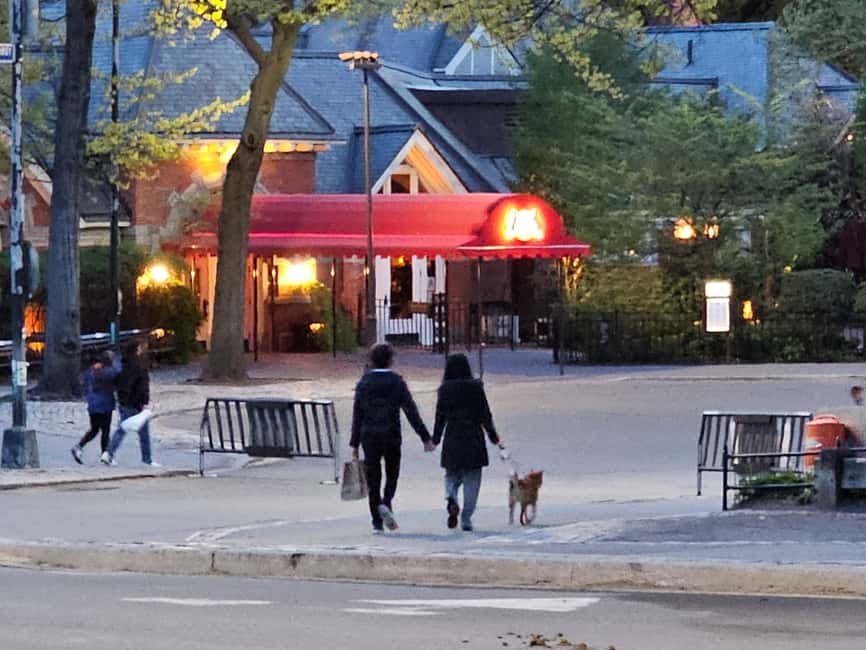
Tavern On the Green is one of the park’s big restaurant landmarks, and the walk uses it as a reference point to orient you again toward the city grid. That matters because Central Park can trick you into forgetting you’re in Manhattan. Here, you’re reminded you’re only steps from Midtown life.
Then the tour moves into two very recognizable pop-culture stops. You’ll spot the haunted apartment building from Ghostbusters, and you’ll also learn it connects to Buddy’s family home in Elf. A few minutes later, you may stand on the little snowball fight bridge from Elf.
This part is fun for obvious reasons, but it also does something useful: it trains your eyes. Once you learn how to spot these film-set angles, you’ll naturally notice building facades, staircases, and bridge shapes as design elements, not just background noise.
Walk-through details: tunnels, Victorian tiles, elm plaques, and stonework
This tour doesn’t only stop at the headline attractions. It also highlights smaller design features that most visitors miss because they’re moving too fast.
You’ll see up to 36 different styles of pedestrian tunnels, plus carved stone from the US and Canada. That gives you a sense of Central Park as a planned system, not a random green patch. It’s also a good reset for your brain: after a few big landmarks, tunnels and stone details bring you back to craft and materials.
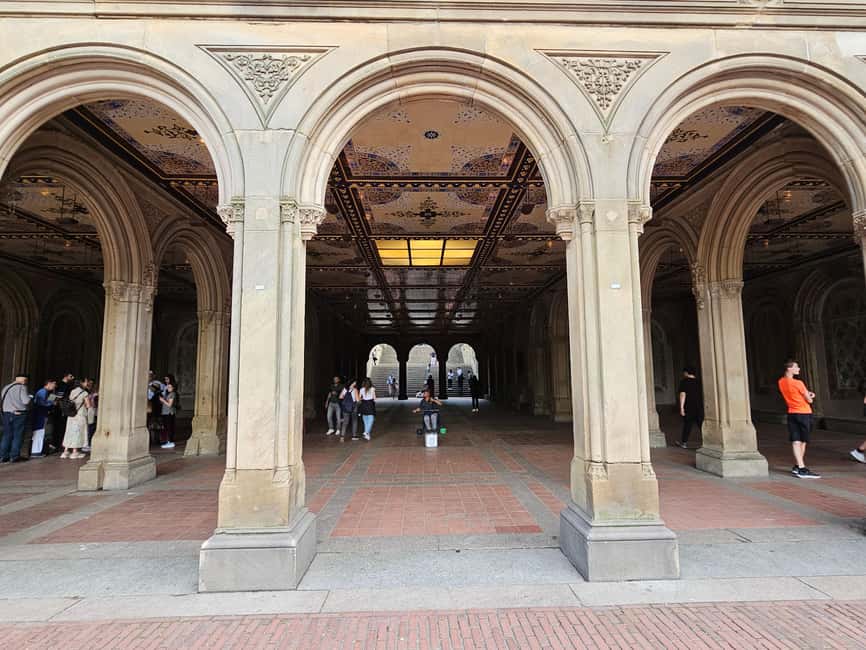
Another standout included element is an arcade ceiling lined with more than 7,000 Victorian tiles from Stoke-on-Trent, England. That’s the kind of detail that makes a walking tour feel like you have an insider’s lens. You don’t need to pause long to appreciate it; once you look up, you’ll understand why it’s there.
You’ll also learn about $10,000 memorial plaques donated by New York City families, created to preserve the park’s elm trees. That’s more than trivia. It’s the reminder that the park’s survival depends on ongoing stewardship, not just good scenery.
And yes, there’s a statue-lined path included too—about 1,500 feet—so there’s a long stretch where you can walk steadily and let the stories stack.
Lake season notes and why the details matter
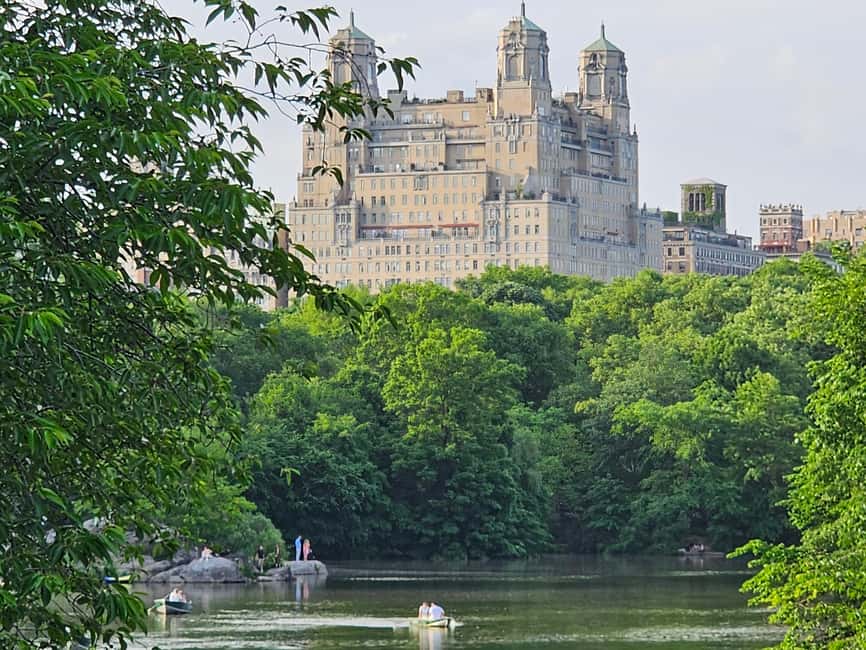
The tour includes a look at a lake area, and in season, you may see rowboats. That small detail matters for planning because it helps you picture how Central Park changes through the year. Even when you’re not there for boating, the lake view is valuable for reflections and bridge angles.
For planning your photos, think about timing more than you think you need to. When light hits the water, reflections can turn an ordinary view into a standout shot. That’s one reason this tour’s lake and bridge sequence works: it’s built to get you those visual returns.
Also, the tour includes Bow Bridge made of ornately styled iron. Bow Bridge is famous for wedding photos, and you’ll see why—nearly every day, couples use it as a backdrop. Even if you’re not there for weddings, it’s one of the park’s best “designed for photos” spots, and it’s great for pairing architecture with people in frame.
Price and value: $40 for 2 hours of real sights
At $40 per person for a 2-hour walk, this tour sits in the sweet spot between a self-guided stroll and a full-day sightseeing plan. You’re paying for three things you can’t easily replicate on your own:
1) A guide to connect landmarks with context—architecture, history, and pop-culture callouts.
2) A route that hits high-impact spots without turning into a marathon.
3) Access to specific reference points, like film locations, that you might not notice without help.
Importantly, the tour includes no admission fees and no extra entry charges. You don’t need tickets to enjoy the stops. You’re also walking toward practical transit at the end: Columbus Circle is near multiple subway options and is close to Times Square, which makes it easier to roll your day forward without complicated logistics.
The only costs you should anticipate are personal ones. A gift shop is part of the walk, and food like at Tavern On the Green is on you. That’s normal, but it’s helpful to plan ahead if you’re budgeting.
What it’s like with a real guide (and why Stan gets praised)
A key strength shows up in how guides run the tour. Stan has been praised for having a wealth of information and for keeping the experience fun the whole way through, and he also caters to the group. That combination matters more than you’d think.
You want a guide who can answer questions without turning the walk into a lecture. You also want someone who can adjust the pace if your group is slower or needs a bit more time at a photo stop. In a 2-hour format, that flexibility is part of the value.
Because the tour covers multiple themes—nature, architecture, and movie scenes—you need someone who can keep the connections clear. The best version of this tour feels like you’re watching Central Park through a smart lens, not flipping through trivia cards.
Who should book, and who might skip this one
This tour is best for people who like walking, looking up, and noticing details. If you’re the kind of traveler who enjoys architecture and also gets a kick out of movie locations, this format is a strong match.
You should also be comfortable with stairs. The tour includes stairs, and a moderate fitness level is required. It’s not suitable for wheelchair users or people with mobility impairments. It’s also not designed for children under 6, and it doesn’t allow baby carriages, electric wheelchairs, scooters, or mobility scooters. Bikes and red wine are also off the table, and unaccompanied minors aren’t allowed.
If you’re visiting with limited time and want a high-signal route through some of Central Park’s best-known (and most photogenic) areas, this fits well. If you want a slow, unstructured day to wander and linger for hours, you may prefer self-guided exploring.
Should you book the Central Park Nature, Architecture and Movie Scenes Tour?
If your goal is a focused Central Park experience with stories that help you see more than you would alone, I’d say book it. The mix of wildlife photo chances, iconic architectural landmarks, and recognizable movie scene locations gives you multiple reasons to pay attention—and multiple ways to enjoy the park, even if you’re not a hardcore history person.
Book it if:
- You want an organized 2-hour route that hits key areas efficiently.
- You like pop-culture callouts as a way to learn your way around.
- You want a guide-led walk with practical, real-world context.
Skip it if:
- You can’t handle stairs or longer walking on uneven park surfaces.
- You need wheelchair access or stroller access.
- You’re looking for a long, slow day rather than highlights.
FAQ
How long is the Central Park Nature, Architecture and Movie Scenes Tour?
It lasts 2 hours.
Where do we meet for the tour?
The meeting point is a glass cube bearing the Apple logo.
What does the tour cost?
The price is $40 per person.
Is there an admission fee for any stops?
No. The tour has no areas that require admission, and there are no additional entry fees.
What walking level should I expect?
It’s a two-hour walk that includes stairs and requires a moderate fitness level. Wear weather-appropriate clothing and bring rain gear if rain is likely.
What items are not allowed on the tour?
Mobility scooters, red wine, drinks, bikes, unaccompanied minors, baby carriages, electric wheelchairs, and scooters are not allowed.