REVIEW · NEW YORK CITY
Central Park Pedicab Tour with local Guide
Book on Viator →Operated by Central Park pedicab tours · Bookable on Viator
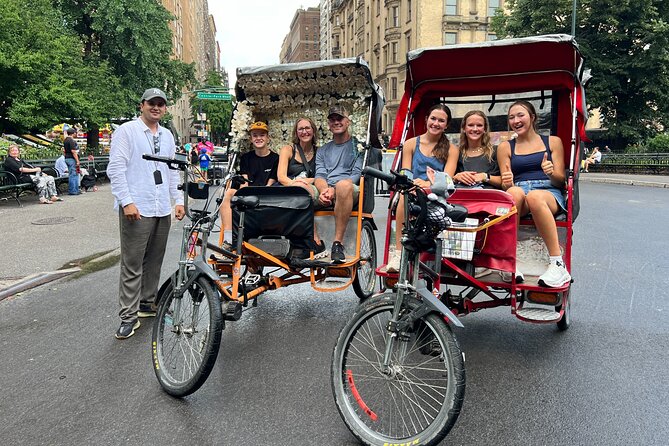
Central Park looks different from a pedicab. This private ride is a smart way to cover famous spots fast while your guide threads in movie locations and local stories, plus photo stops you don’t have to plan. You’ll also get a comfy, slower pace than walking, with a local guide who can steer you toward the parts of the park you care about most.
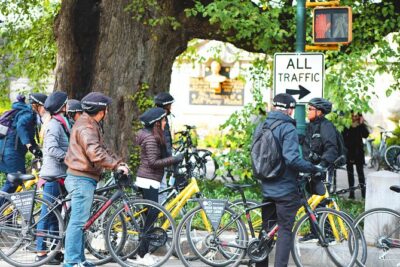
What I love most is how the ride turns into real sightseeing help, not just transportation. On past stops I’ve seen guides like Roman and MJ work hard on comfort and pictures, making sure everyone is warm (they provided blankets) and positioned for photos. I also like the way the tour keeps moving while still giving you time to stop, look, and shoot at major landmarks like Bethesda Terrace and Bow Bridge.
One consideration: the tour is weather dependent, and it’s built for seeing the park from the outside and from key viewpoints. If you’re hoping for lots of time inside buildings, plan to do that on your own—this is mainly a guided highlights tour.
In This Review
- Key things that make this Central Park pedicab tour worth it
- Why pedicabs make Central Park sightseeing feel easier
- Price and what you’re really buying for $55
- Starting at the Sherman Monument: getting oriented fast
- How long should you book: 1, 2, or 3 hours?
- Central Park highlights that land fast: carousel, chess, cottages, and the “old New York” vibe
- Umpire Rock: a quick climb with a payoff view
- Gapstow Bridge and Bow Bridge: when the skyline looks like it belongs in a movie
- Bethesda Terrace and Bethesda Fountain: the park’s cinematic centerpiece
- Sheep Meadow, Cherry Hill, and Strawberry Fields: the emotional and the scenic
- The Dakota and literary landmarks: New York romance with real stakes
- Comfort details that matter: blankets, covers, and photo support
- Longer versions add viewpoints and major architecture near the park edge
- Who this tour is best for (and who might prefer something else)
- Should you book the Central Park pedicab tour?
Key things that make this Central Park pedicab tour worth it
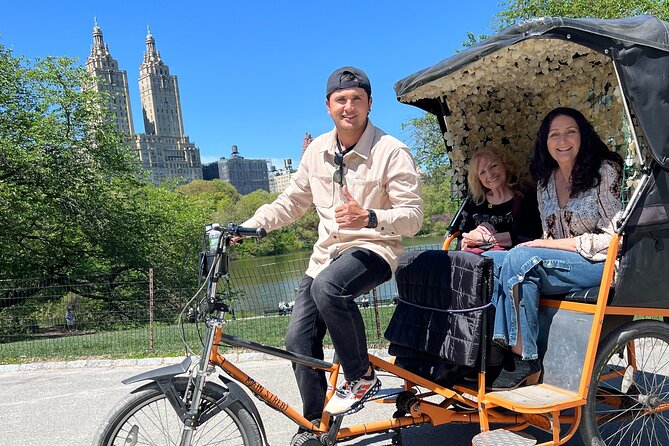
- Private pacing: only your group, with a guide who can slow down or refocus
- Photo guidance: help with angles and timing so you actually end up in the shot
- Comfort in real weather: blankets if it’s cold, cover if it rains
- Movie-location storytelling: iconic scenes and celebrity-home chatter, tied to park landmarks
- Efficient park coverage: tight route through Bethesda, bridges, memorials, and viewpoints
Why pedicabs make Central Park sightseeing feel easier
Central Park is famous, but it can also be a place where first-time visitors walk miles without getting the best “park-picture” angles. A pedicab tour fixes that. You sit back, roll between highlights, and still get frequent stops to look up close. It’s an efficient way to see more in less time, and it’s easy on your feet.
This is also genuinely eco-friendly in feel. You’re not adding traffic chaos, and you’re not burning energy just to cross the park. You’re using the vehicle as a tool for the best locations: fountains, bridges, overlook spots, memorials, and those classic bridges that always look like a movie set.
The private format matters too. When you’re with only your group, the guide can match your rhythm. If someone needs a rest or a photo redo, you don’t lose the whole tour to a slow-moving crowd. That’s a big quality-of-life upgrade compared with larger group tours.
You can also read our reviews of more guided tours in New York City


Price and what you’re really buying for $55
At $55 per person, this isn’t the cheapest way to do Central Park. But you’re paying for two things that are hard to replicate on your own: time-saving efficiency and human guidance.
If you walk the same loop, you’ll spend the entire day on logistics—how to get there, where to stop, how to frame photos, and which spots are worth the detour. With this tour, you get a local guide who already knows the good stops and the photo moments. You also get help staying comfortable in cold weather thanks to blankets, and you’re not stuck improvising rain gear if showers pop up.
Where the value really shows up: you’re paying to remove friction. You’re not juggling your phone/camera setup every time you hit a landmark. Guides help with photos, and that can make a day feel like a “win,” even if you’re only in the park for a short window.
Starting at the Sherman Monument: getting oriented fast
You meet at the General William Tecumseh Sherman Monument at 764 Doris C Freedman Pl, and the tour ends back at the same meeting point. That round-trip setup is practical. You don’t have to worry about where you’ll end up, and you can plan the rest of your day with less stress.
You’ll also be near public transportation, which matters if you’re building a tight NYC schedule. Central Park is big, but your start point and the guided route help you get bearings quickly—especially if this is your first time in Manhattan.
One small but meaningful detail: the tour uses a mobile ticket system, and you receive confirmation at booking. That reduces the “where do we go exactly?” panic factor.
How long should you book: 1, 2, or 3 hours?
The duration runs about 1 to 3 hours. You’ll want to match the length to your priorities:
- If you’re short on time, a shorter version helps you hit the core icons without turning it into an all-day mission.
- If you have a bit more space in your schedule, longer routing can add stops around major architecture and viewpoints—like the reservoir area, Belvedere Castle, and the Met area (the Met is noted as included on the longer tour version).
- If you’re traveling with kids, or anyone who hates long walks, the middle duration often hits the sweet spot: enough highlights plus enough breaks.
The private pacing helps here. Even if you book a standard time, you can usually get the guide to slow down for the spots you care about most.
Central Park highlights that land fast: carousel, chess, cottages, and the “old New York” vibe
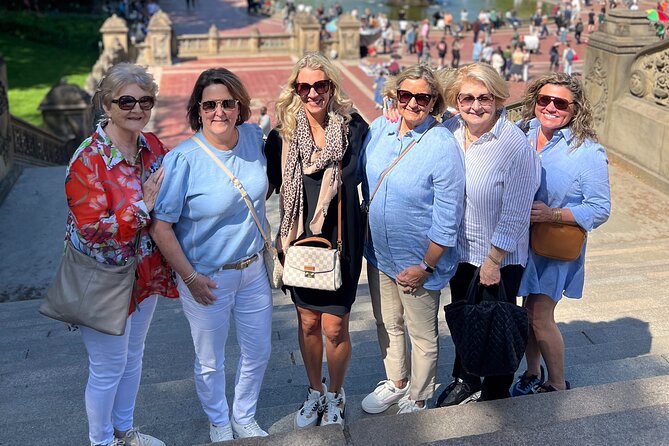
Your Central Park experience kicks off with a big-picture orientation, then gets very specific. You’ll learn the park’s story and see major landmarks tied to the design and history—created as a green retreat when the city was growing fast.
As you ride, you’ll pass by the kinds of places that instantly read as Central Park on camera: Bethesda Fountain, Strawberry Fields, The Mall, and Bow Bridge. That’s useful because it builds a mental map. Once you recognize these places visually, you can return later on your own and wander with more confidence.
The tour also includes a few charming, low-key stops that add character beyond the “big postcards”:
- The Central Park Carousel: a classic since 1871, with hand-carved horses in the current version installed in 1951. It’s also a known film location, so your guide can point out why it looks the way it does on screen. If you’re traveling with kids, this one usually clicks fast.
- A stone cottage for chess and checkers: a quiet pause where you can watch the park’s slower, locals-at-play side. It’s a peaceful stop that feels like a breath of fresh air.
- A Victorian-style cottage/visitor center: this is one of those architecture stops where you don’t need to do anything. The building itself is the attraction, plus it’s tied to the park’s 19th-century story.
A key benefit here: these stops break up the ride. They give you variety—big scenic points, plus small human-scale moments.




Umpire Rock: a quick climb with a payoff view
One standout moment is Umpire Rock. It’s a natural outcrop with sweeping views over Central Park South and is a favorite quick photo spot, especially for families.
The fun is that it’s short—so you don’t need to be a hiker to get the reward. You get that “I’m above the city” feeling without spending an hour climbing. Kids like it because it feels like play, and adults like it because the skyline-meets-park view is instant gratification.
If your group has anyone who doesn’t want to climb, you can still enjoy the viewpoint vibe from nearby, but the tour is set up to let you choose whether to do the quick climb or just enjoy the area.
Gapstow Bridge and Bow Bridge: when the skyline looks like it belongs in a movie
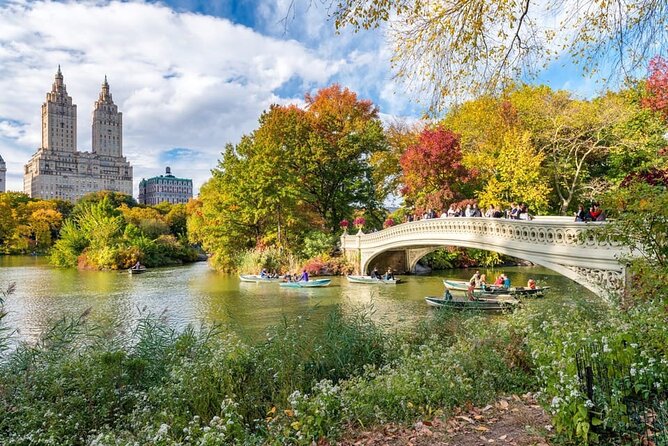
Two bridges anchor the romance of the route: Gapstow Bridge and Bow Bridge.
Gapstow Bridge is known for its photographed charm and skyline views. It’s especially magical in winter, but it works any season if the light is right. If you like movie spotting, this is a strong stop because it appears in well-known films. Your guide can connect those scenes to the angles you see from the bridge area.
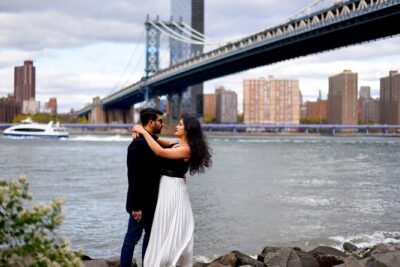
Then comes Bow Bridge, often called one of the most romantic spots in the park. It’s a cast-iron icon with a graceful arch and views over The Lake and the skyline. It’s also a frequent proposal and photo-shoot location, so you’ll see the park used the way New Yorkers romanticize it.
The practical value of these bridge stops: you’re stacking the best skyline views while spending minimal time moving between them. That’s a big win when your legs are tired but your camera roll needs results.
Bethesda Terrace and Bethesda Fountain: the park’s cinematic centerpiece
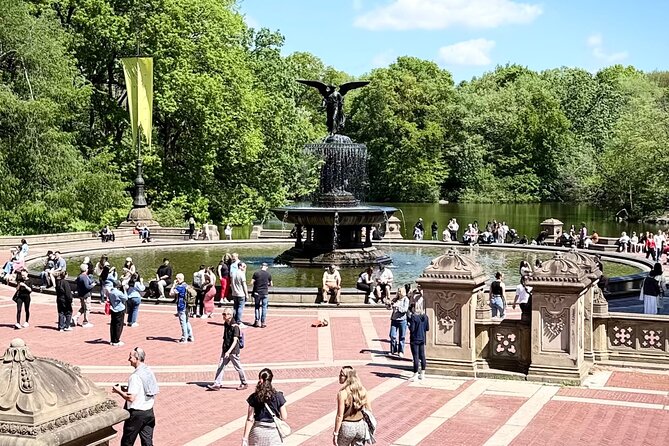
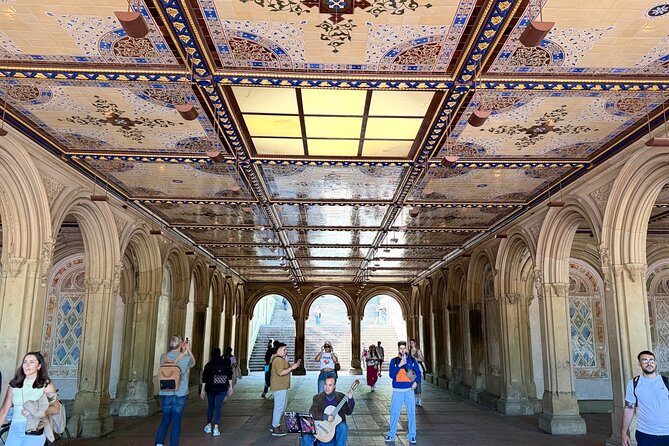
If Central Park has a “heart,” it’s Bethesda Terrace and the fountain area. You’ll see grand staircases, carved sandstone details, and the tiled arcade where musicians often add echoing sound.
Bethesda Fountain is famous for a reason—it’s not just pretty. It’s a major architectural anchor, and it looks great from multiple angles. The tour gives you time at the terraces so you can slow down and appreciate the design rather than just snapping one quick photo and rushing away.
This area is also loaded with cinematic ties. The guide can point out why it appears on screen so often and how the architecture frames the dramatic look. If you’re a film lover, this is the stop where the guide’s stories can make the park feel like it has extra layers.
One small drawback to plan around: this is popular space. Even on a guided ride, you might share the area with other visitors during peak times. Your best move is to let the guide handle timing and photo positioning.
Sheep Meadow, Cherry Hill, and Strawberry Fields: the emotional and the scenic
Central Park isn’t only fountains and bridges. Some of the most powerful moments are quieter and more reflective.
- Cherry Hill: a peaceful lake view, framed by cherry blossom trees in spring. It’s originally designed for carriage turnaround, so the spot has that natural “designed for romance” feeling. Your guide can help you find the angle that flatters the view, which matters here because the surrounding trees can either frame you nicely or block the background depending on where you stand.
- Strawberry Fields: this memorial to John Lennon sits steps from the Dakota. At the heart is the Imagine mosaic. Flowers and messages gather here, and the place has an emotional pull that goes beyond the famous name. If you like thoughtful stops, this is your moment to slow down and just be there.
- Sheep Meadow: a sprawling lawn that’s become the classic Central Park “hang out” space. You’ll see how it contrasts with the Manhattan skyline around it. It’s a great stop for families and anyone who likes the idea of NYC quiet time.
Also worth noting: the tour includes Bow Bridge and Strawberry Fields in the same overall story arc—so you get both romance and reflection in a single run. That kind of pacing feels intentional.
The Dakota and literary landmarks: New York romance with real stakes
The Dakota stop is big. This building is known worldwide as John Lennon’s home and as the site of his tragic death in 1980. Architecturally it’s stunning, but it’s also emotionally heavy, and your guide’s storytelling keeps it grounded rather than turning it into pure sightseeing.
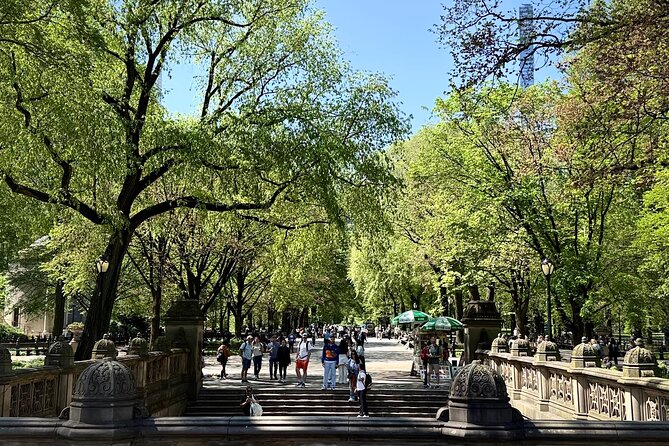
Then there’s the Literary Walk idea—your route includes the grand, tree-lined promenade that’s the only straight path in Central Park. Statues of literary giants are part of the experience, and it’s often used as a film location backdrop. The effect is that you’re seeing Central Park not just as nature but as a carefully arranged cultural stage.
If you’re a traveler who likes your sightseeing to connect place with story, these stops hit well.
Comfort details that matter: blankets, covers, and photo support
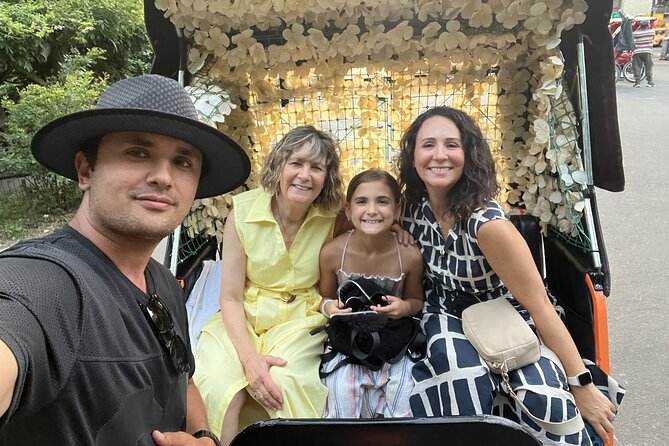
The best guide is the one who thinks ahead for your day. This tour includes comfort support: blankets in cold weather and a cover if it rains. That sounds basic, but in Central Park, it can be the difference between enjoying the day and just surviving it.
Then there’s the photo help. This comes up again and again in the strongest feedback. Guides do the work that most visitors struggle with: framing, timing, positioning, and keeping the group comfortable while you take photos. One guide you might remember from the experience is MJ, and another is Roman—both highlighted for being patient, funny, and invested in getting everyone warm and photographed right.
If you’re the person who usually ends up behind the camera, this tour is built for you. You’ll still end up in pictures.
Longer versions add viewpoints and major architecture near the park edge
On the longer tour version, you may include stops around major park-edge sights and iconic structures:
- Jacqueline Kennedy Onassis Reservoir: built in the 1858–1862 era to provide additional water capacity. It’s described as 106 acres and 40 feet deep, with more than one billion gallons of water. Even if you don’t care about engineering, it’s a scenic architectural water moment.
- Belvedere Castle: a whimsical castle-folly perched on Vista Rock, designed by Calvert Vaux and Jacob Wrey Mould in 1867. It includes exhibit rooms and an observation deck with panoramic views. It also has a history as Central Park’s official weather station location since 1919.
- Alice in Wonderland statue: a donated gift meant for children of New York City, placed as a meaningful memorial. If you’re traveling with families, this is one of those stops that becomes a quick favorite.
- Cleopatra’s Needle: the oldest outdoor monument in New York City, an obelisk with ancient hieroglyphs and a long journey from Egypt. It’s the kind of stop that gives you scale and perspective—ancient history in the middle of Manhattan.
- The Met area: on longer tours, you’ll get orientation and architectural context about the Metropolitan Museum of Art building and how it developed over time. The details provided focus on the museum’s origins and expansions, so if you want a museum ticket and deep indoor time, you may need to plan that separately.
Also, you’ll pass by the Central Park Zoo without entering, but you’ll hear about it, including its history dating back to the 1860s and its place in pop culture.
Who this tour is best for (and who might prefer something else)
This tour fits best when you want Central Park highlights without turning your vacation into an endurance test.
It’s a great match for:
- First-timers who want a fast, accurate orientation
- Families, because there are child-friendly moments like the carousel vibe and Umpire Rock
- Couples, because Bow Bridge and Gapstow Bridge are top-tier romance scenery
- Film lovers, because the guide ties locations to movie scenes and makes the park feel like a real-life set
You might prefer another style of Central Park tour if:
- You want to spend long hours inside museums or buildings rather than doing scenic stop-and-look moments
- Your group prefers long, slow walking routes with no vehicle and no quick photo stops
Should you book the Central Park pedicab tour?
I’d book it if your goal is simple: see the best Central Park moments, get great photos, and learn stories that make the park feel more alive. The price is reasonable for what you get—transport efficiency, private pacing, and real guide attention to comfort and photography.
I’d think twice only if you’re chasing a heavy indoor sightseeing day or if weather is highly uncertain in your travel window. The tour is designed to run when conditions are decent, and Central Park is at its best when you can stop, look, and enjoy the air.
If you want a day that feels lighter on your feet and stronger on memorable images, this is a very solid choice.