REVIEW · NEW YORK CITY
Central Park Pedicab Tours – History and Movie Locations
Book on Viator →Operated by CENTRAL PARK TRAVEL ™ · Bookable on Viator
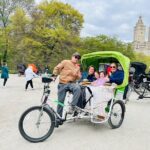
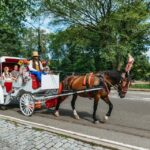
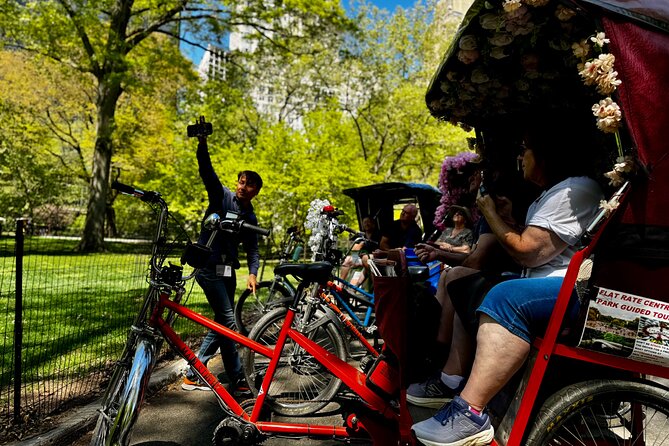
Central Park moves fast when you’re on foot, but not here. I like that this private pedicab tour strings together major sights and film locations without wasting time, and I really like the way the guide connects each stop to what you’re seeing. The route can include famous landmarks like Bethesda Fountain, Strawberry Fields, and photo-heavy bridges like Bow Bridge, plus stops with ticketed time such as the Central Park Carousel. One thing to consider: your experience depends on good weather, and the pedicab ride works best when you’re not trying to squeeze it into a cramped schedule.
I also appreciated the human touch from the guide Ricky, who made the stories feel practical instead of like trivia dumps. If you want movie scenes plus park design history in one sweep, this format saves you from bouncing between attractions on your own.
The main drawback is simple: you’re paying for convenience. If you love hours of walking and want to wander freely at your own pace, a pedicab can feel a bit structured. Still, for many visitors, that structure is exactly the point.
In This Review
- Key things I found most useful
- Price and what you’re really buying for $38.40
- Starting point: where your pedicab day begins
- Stop-by-stop: Central Park’s classic sights, film scenes, and the stories behind them
- Central Park core: Bethesda, the Mall, and the park’s big design ideas
- Central Park Carousel: vintage fun with real history
- Chess & Checkers House: when park leisure becomes movie-ready
- The Dairy: a Gothic Revival cottage and a surprisingly famous filming backdrop
- Wollman Rink: a skyline backdrop that changes with the season
- Gapstow Bridge and The Pond: romantic views and real wildlife moments
- Central Park Zoo and Balto: a mix of family time and New York legend
- Conservatory Water and Rumsey Playfield: small details with a big movie factor
- The Lake, Boathouse, and Bow Bridge: the postcard circuit
- Strawberry Fields and the Dakota: peace, memory, and the Lennon thread
- Sheep Meadow and the edges of Central Park character
- Alice in Wonderland, Cleopatra’s Needle, and The Met for the 2-hour route
- Jacqueline Kennedy Onassis Reservoir and Belvedere Castle: calmer views and a weather twist
- How to make the most of your pedicab time (without rushing)
- Who this tour fits best
- Should you book Central Park Pedicab Tours?
Key things I found most useful
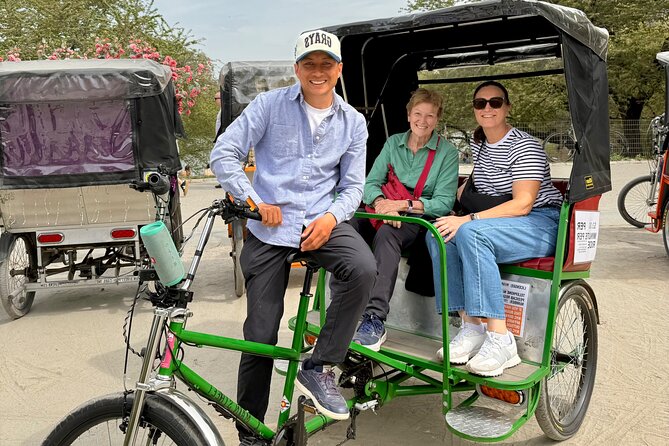
- Private group pace: you ride as a group only, so it feels less like a cattle call and more like your own Central Park mini-adventure.
- Movie locations mixed with real park facts: you’ll get context for what you recognize from films and what you might not notice on your own.
- You save your legs: the pedicab carries you between stops, which matters when the park is crowded or the sidewalks are slow.
- A guide who points out the details: with Ricky, the talk stayed tied to what you could actually see and photograph.
- Ticket stops are built in: the tour includes admission where indicated, so you’re not scrambling for timed-entry plans mid-day.
Price and what you’re really buying for $38.40
At $38.40 per person, this tour sits in the “worth it if you want time savings” category. The math is less about the pedicab itself and more about what it compresses: multiple iconic Central Park spots, plus interpretive stories, plus stops that would take time to find and match up on your own.
A key value point is how Central Park is laid out. It’s big, and many headline locations are spread out. On foot, you’ll burn time crossing the park, looping back to museums or entrances, and waiting your turn at popular photo spots. Here, you’re paying to remove friction—so you can spend your energy on the views and the photos, not on the transfer time.
It’s also offered in English, uses a mobile ticket, and runs about 1 to 3 hours depending on the route length you choose. For planning, there’s also steady demand—you’re likely to book at least a few weeks out.
You can also read our reviews of more historical tours in New York City

Starting point: where your pedicab day begins
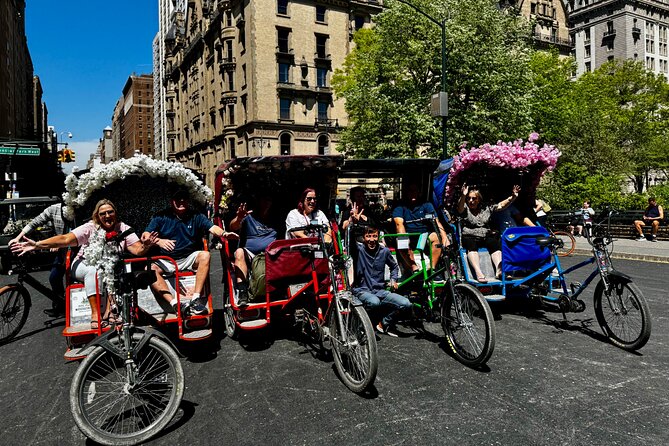
The tour starts at 1415 6th Ave, New York, NY 10019, and ends back at that meeting point. That matters because it keeps the day anchored. You can plan meals or museum time around a clear start/end location instead of guessing how you’ll navigate to and from the park’s inner streets.
It’s also described as near public transportation, so you’re not forced into a taxi-and-pray day if your hotel is across town.
Stop-by-stop: Central Park’s classic sights, film scenes, and the stories behind them
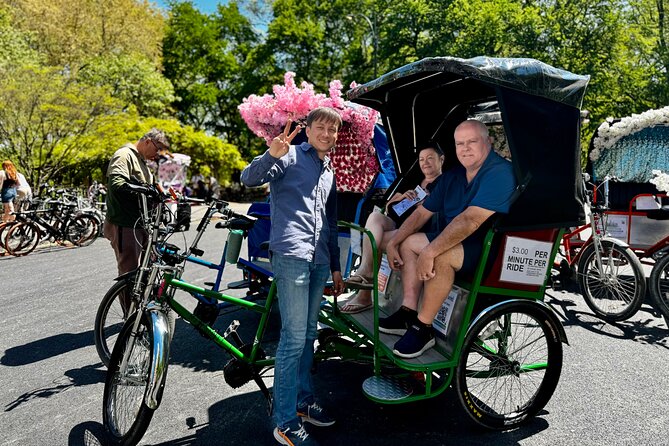
Central Park core: Bethesda, the Mall, and the park’s big design ideas
This is where the tour earns its keep: you cover multiple headline areas in one run, with photo stops and explanation along the way.
Central Park’s origin sets the tone. It was created in 1858 by Frederick Law Olmsted and Calvert Vaux, and the early engineering challenge wasn’t romantic at all—it was transforming more than 800 acres of swampy, rocky terrain into a landscaped refuge. When you hear that, the placement of paths, bridges, and viewpoints makes more sense. You’re not just seeing pretty spots; you’re seeing the logic of how a city park was built to feel like a break from city life.
You’ll often pass or stop near major highlights such as:
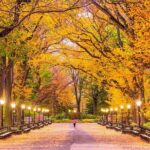
- The Mall (Literary Walk): a mostly straight promenade under towering American elms, known for statues honoring writers like Shakespeare, Robert Burns, and Sir Walter Scott. It’s one of the best stretches for a “Central Park photo” with a strong visual axis.
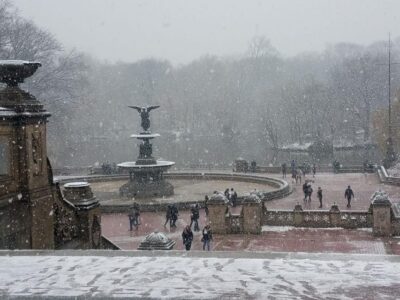
- Bethesda Terrace and Bethesda Fountain: one of the most recognizable corners of the park, where the architecture and the angel statue pull people in even if they’ve never read a park guide.
- The Lake area: a key visual center that connects multiple parts of the park.
One practical tip: keep your phone charged. A bunch of these stops are framed so well—especially bridges and terraces—that you’ll want multiple angles, not one quick shot.
Central Park Carousel: vintage fun with real history
If your group includes kids, or if you’re a grown-up who appreciates old-school details, the Central Park Carousel stop is a strong payoff.
The tour framing helps you see it as more than a children’s ride. The original carousel history goes back to the late 1800s with horse-powered motion, and the current version installed in 1951 is the park’s fourth carousel iteration. The horses you’ll see are hand-carved and part of a standout lineage: the carousel is tied to the Stein and Goldstein company, famous for carving wooden animals. The result feels like a working museum object—bright, old-fashioned, and still fun.
Ticketed time here means you don’t have to hunt for admission or worry about whether the ride is open. It’s also the kind of stop that gives your legs a break without making you feel stuck in one place.


Chess & Checkers House: when park leisure becomes movie-ready
Next up is the Chess & Checkers House, an octagonal brick building dating to 1952. The point isn’t just the structure—it’s the setting. You’ve got game tables around it, shaded by a wooden trellis, making it the kind of spot where people gather naturally.
What I like is the way this location ties to a specific kind of New York storytelling: it even appears in the 1993 film Searching for Bobby Fischer. So when you see it in real life, you can picture the chess-focused scenes instead of just thinking, “Oh, that’s a cool building.”
If you’re into pop culture and you want a stop that feels calm rather than rushed, this is one.
The Dairy: a Gothic Revival cottage and a surprisingly famous filming backdrop
The Dairy stop is one of those Central Park surprises. It’s a Gothic Revival cottage built in 1871 under Calvert Vaux’s park design. Originally it functioned as a refreshment place where families could get milk and snacks—fresh milk was a luxury in many urban areas back then.
This stop is especially interesting because it connects park design to daily life. Central Park wasn’t only for views; it offered amenities that made the park feel like a destination.
It also shows up in film, including The Fisher King (1991), which makes the Dairy feel like part of New York’s movie geography.
Wollman Rink: a skyline backdrop that changes with the season
At Wollman Rink, you’re trading story time for atmosphere. Opened in 1950, it’s named for Kate Wollman, who donated $600,000 for the rink. The rink sits with serious Manhattan skyline views, which is why it photographs so well.
The tour context matters here because it wasn’t only casual skating. It hosted figure skating competitions and events, and it went through a decline period before reopening after renovation.
If you’re visiting in winter, this is a strong add-on because it’s a completely different Central Park vibe. If you’re visiting in warmer months, you’ll still appreciate it as an icon, even if you aren’t skating.
Gapstow Bridge and The Pond: romantic views and real wildlife moments
Gapstow Bridge is one of the park’s most photographed bridges. The structure history matters: a bridge was first built in 1874, then replaced in 1896 with the current stone version. The ivy-covered exterior gives it that timeless look that film directors love.
The Pond nearby adds a different kind of energy—turtles, ducks, and the sense of a pause inside the city. It’s also known from Home Alone 2: Lost in New York (1992), in the famous pigeon-lady scene area.
If you’re trying to win at sightseeing, this pair works because you get both an architectural icon and a natural pause.
Central Park Zoo and Balto: a mix of family time and New York legend
The Central Park Zoo dates back to 1864 as a small menagerie and became the city’s first official zoo in 1934 with permanent enclosures built by the WPA. Later, it shifted toward habitats designed to mimic animals’ native environments, which is why today’s zoo feels more like viewing than like viewing-through-bars.
This tour stop is a good choice if your group includes mixed ages—zoo interest is easy to share across generations.
Then there’s the Balto statue, dedicated to the sled dog from the 1925 Serum Run to Nome. The statue’s story is pure New York mythology: the city raised funds, and the statue was unveiled in December 1925, just ten months after the mission. When you hear the distance and the conditions, the statue stops looking like a random sculpture and starts looking like a monument to survival.
Conservatory Water and Rumsey Playfield: small details with a big movie factor
Conservatory Water is a calm pond area where model boats have long been part of the tradition. The tour description also links it to filming, including Stuart Little, where a model boat race is part of the story.
Then you might stop near Rumsey Playfield, a spot with layered history: a former restaurant structure (named Casino, not gambling), then a nightclub era, then a playground, and later a sports field. Today it’s connected to SummerStage, with performances taking place there.
These stops are great if you like the park as a living community, not just a backdrop.
The Lake, Boathouse, and Bow Bridge: the postcard circuit
The Lake is one of the park’s defining spaces, roughly 20 acres, often described as the heart of Central Park. It’s where views feel like they’re designed. The shoreline variety also helps—there are spots for watching, photography, and relaxing.
Near it, the Central Park Boathouse adds a “NYC waterfront feeling” even though you’re deep in the park. The current boathouse was built in 1956 after the earlier one burned, and it offers dining year-round with heated outdoor seating.
Then comes Bow Bridge, a romantic cast-iron bridge completed in 1862. It was built by Janes, Kirtland & Co., and it connects you visually to big city landmarks like the Plaza Hotel views from the bridge area. It’s also noted as being temporarily closed for renovation in late 2023, so it’s worth keeping in mind that access can change with maintenance.
This set of stops is where you’ll feel the tour payoff. It’s a controlled route through the park’s strongest “wow” scenes.
Strawberry Fields and the Dakota: peace, memory, and the Lennon thread
For movie and music fans, Strawberry Fields is one of the most emotional stops. It’s dedicated to John Lennon, created as a living memorial after his death in 1980. The name comes from the song Strawberry Fields Forever, which was inspired by a children’s home in Liverpool.
At the center is the Imagine mosaic, tied to a peace message connected to Lennon’s vision. It’s surrounded by flowers and often becomes a place where visitors slow down.
A nearby stop you may see in the same general orbit is The Dakota, a landmark building completed in 1884. It’s famously associated with John Lennon and Yoko Ono, and Lennon was killed outside the building in 1980. The Dakota is also connected to Rosemary’s Baby (1968) as a filming location, so it carries both real-life history and cinematic mood.
Sheep Meadow and the edges of Central Park character
Sheep Meadow is a 15-acre lawn and one of the park’s most popular hangouts. Historically it was a grazing area for sheep, but now it’s for picnics, reading, and just watching the skyline sit behind green space.
It’s also a movie backdrop. You’ll hear about Ghostbusters (1984) and The Fisher King (1991) among other film references. When you stand there, the park suddenly feels like a stage—because the skyline actually makes it.
Other stops you might see depending on route length include areas like Pinebank Arch (a cast-iron bridge designed to blend into rocky outcrops) and Tavern on the Green (a building with origins tied to sheepfold uses and later restaurant history).
Alice in Wonderland, Cleopatra’s Needle, and The Met for the 2-hour route
If you take the shorter 2-hour style route, you’ll also be in range of some big outside-the-core icons.
Alice in Wonderland Statue (donated in 1959) is built for interaction—kids are encouraged to climb and touch the characters around Alice on the mushroom. Even adults usually get a kick out of it because it’s not just a statue; it’s a play-ready installation.
Then you may hit Cleopatra’s Needle, the oldest outdoor monument in New York City. It’s an obelisk carved in Egypt, moved across the Atlantic, and dedicated in Central Park in 1881. The hieroglyph-covered surface makes it feel like a portable ancient world.
From there, the Metropolitan Museum of Art enters the picture: founded in 1870, with its original building opening in 1880 along Central Park’s edge. If art is part of your trip plan, this is a quick route that points you toward a huge stop without forcing you into a full museum day.
Jacqueline Kennedy Onassis Reservoir and Belvedere Castle: calmer views and a weather twist
Two additional 2-hour route highlights can include:
- Jacqueline Kennedy Onassis Reservoir: built 1858–1862 with an irregular footprint to match the park, holding more than one billion gallons. It’s described as the world’s largest man-made water body at the time.
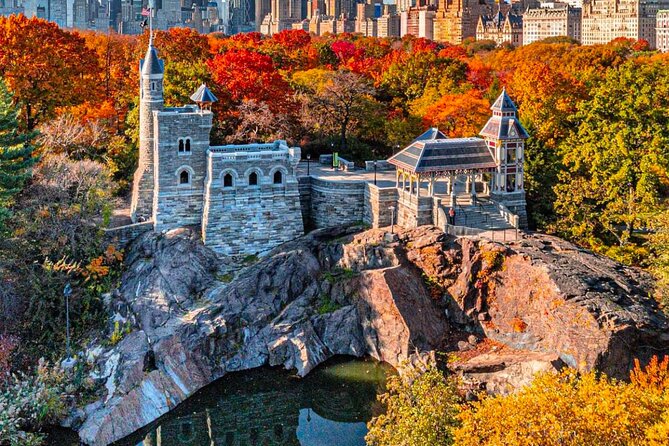
- Belvedere Castle: a decorative folly designed in 1867 by Calvert Vaux and Jacob Wrey Mould, with a Gothic/Romanesque style and “beautiful view” purpose. It also serves as Central Park’s official weather station since 1919, with an observation deck overlooking areas like Turtle Pond, the Great Lawn, and the Ramble.
Belvedere Castle is one of those stops where the building looks whimsical, but the view is serious. It’s a good end-of-tour moment because it gives you a bigger perspective after all the close-up statue and bridge photo spots.
How to make the most of your pedicab time (without rushing)
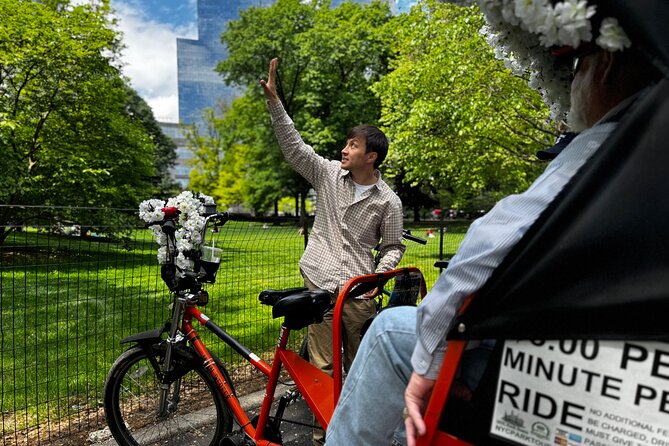
A pedicab tour is easiest when you treat it like a guided route, not like a race. I recommend you:
- Bring a phone strap or secure case. With repeated photo stops, you’ll be taking pictures constantly.
- Wear shoes you’re comfortable in anyway. Even with pedicabs, you’ll still walk a bit for carousel, castle stairs/areas, and viewpoint access.
- Time your day with crowd levels in mind. The park can get packed fast around major landmarks.
- If you’re a movie fan, point out what you recognize. The guide Ricky style—sharing movie locations and linking them to the actual setting—works best when you engage.
Also, because service animals are allowed, this tour can be a workable option for small family setups that need a calmer pace than lots of walking.
Who this tour fits best
This experience is a strong match for:
- Families who want Central Park without turning the day into a marathon.
- Movie and pop-culture fans who like a mix of film references and real park facts.
- Anyone who wants a high-value overview of the park in a short time window.
- Groups that prefer a private feel and a guide who keeps the pace organized.
If you’re the kind of traveler who loves spontaneous detours and long wandering, you might feel restrained. But if you want structure that still feels fun and you care about photo-ready stops, it delivers.
Should you book Central Park Pedicab Tours?
Yes—if your goal is to see a lot of Central Park icons and movie-adjacent spots without spending half your day walking between them. The $38.40 price feels more reasonable when you weigh the guidance, the planned stop order, and the time you save by using a pedicab.
Book with this in mind: bring your patience for weather-dependent plans, and keep expectations clear that this is a guided route, not free roaming. If you’re okay with that trade, you’ll get a well-connected Central Park day that covers bridges, fountains, statues, and the film backdrops people come to New York for.