REVIEW · NEW YORK CITY
Chelsea Architecture and Art Tour with Award Winning NYC Guide
Book on Viator →Operated by New York Art Tours · Bookable on Viator
Chelsea changes fast, and this tour keeps up. You’ll stitch together Meatpacking, Chelsea, and the High Line through the lens of contemporary architecture and current art, with named references to Frank Gehry and Zaha Hadid style design. It’s a great way to connect what you see on the street with why these buildings and artworks matter in New York right now.
I especially like the two-part mix: major public stops outdoors (the kind you can see clearly) plus a museum moment at the Whitney that anchors the whole walk. Second, the guide brings an art-critic framework—helpful when you’re looking at modern forms that can feel abstract until someone points out the cues. One consideration: the tour is almost entirely outside and runs rain or shine, so you’ll want comfortable shoes and weather-proof layers.
In This Review
- Key takeaways before you go
- Chelsea architecture and art: why this area works
- Price and logistics: what your $49 gets you
- Pacing your morning: the 2-hour walking rhythm
- Stop 1: Whitney Museum and Meatpacking’s contemporary-building context
- Stop 2: The High Line sculpture program and old-meets-new streets
- Stop 3: Chelsea’s gallery district and possible exhibition visits
- The guide factor: art critics, DCA licensing, and Q&A that actually lands
- What to expect in the photos you’ll take
- Should you book this tour? Who it fits best
- Quick FAQ
- FAQ
- What is the duration of the Chelsea Architecture and Art Tour?
- How much does the tour cost?
- What time does the tour start?
- Where does the tour start and end?
- Is the tour offered in English?
- Is there a limit on group size?
- Does the tour run in bad weather?
- Are admissions included for the stops mentioned?
- What’s the cancellation window?
- Should you book this Chelsea architecture and art tour?
Key takeaways before you go
- 2 hours, max 10 people means the pace stays friendly and questions actually get answered
- Whitney Museum + High Line + Chelsea galleries in one continuous walk gives you strong orientation
- Starchitect name-checks (Gehry, Zaha Hadid, Jean Nouvel, and more) help you spot patterns quickly
- High Line public sculpture program adds more than just pretty views
- Seasonal gallery visits (Sept–June) can add one or two top exhibitions in adapted or new spaces
Chelsea architecture and art: why this area works
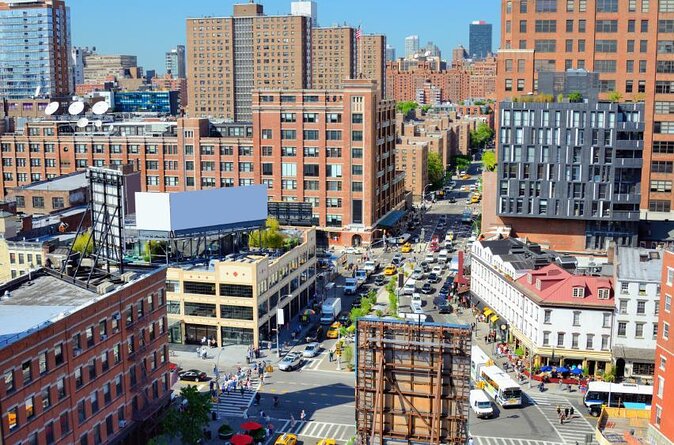
Chelsea is where New York turns art into real estate and then lets the street explain the deal. You get the push-pull between old blocks and new design: factory-era structures and older residences sitting next to sleek, bold contemporary forms. That contrast is the whole point of the tour.
The Meatpacking and Chelsea corridor is also perfect for a walking format. Short segments put you close to facades, building scale, and street-level details that you’d miss if you only rode the subway or viewed things from far away. And because the tour includes the Whitney and the High Line, you’re not just talking theory—you’re seeing how art and architecture shape the public experience.
You can also read our reviews of more guided tours in New York City



Price and logistics: what your $49 gets you
At $49 per person for about 2 hours, this is good value if you like structure but hate spending half a day “getting around.” You’re paying mainly for the guide’s expertise and the tight route. The info also lists taxes and fees as included, which saves you from last-minute math.
A big practical plus: the itinerary includes stops with free admission listed (the Whitney Museum stop is marked free), and the High Line is a public park experience. That keeps the budget lighter than many museum-heavy tours. Still, do plan on walking—this isn’t a drive-and-look tour.
The group size is small, with a maximum of 10 people, and the tour is offered in English with a mobile ticket. Start time is 11:00 am, and the tour runs rain or shine. The guide is licensed by New York City’s Department of Consumer Affairs as a tour guide, and is a member of AICA USA (International Association of Art Critics). That background matters because it changes the tone—from facts to interpretation—without turning into a lecture you can’t use.
Pacing your morning: the 2-hour walking rhythm
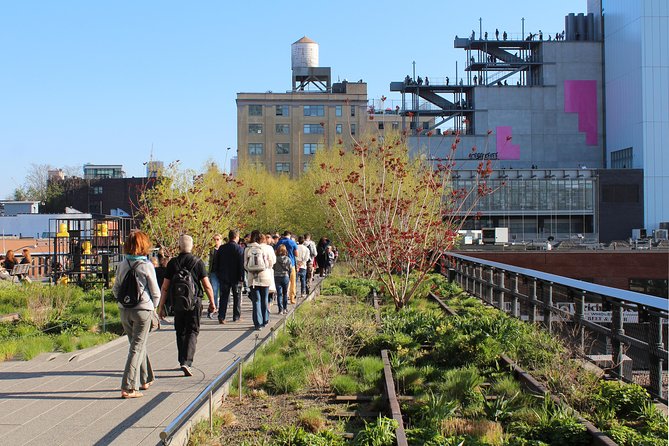
This is a focused walking route that moves through Lower Manhattan, then up into Chelsea and toward the High Line. It starts in Lower Manhattan, New York, NY 10014 and ends near 10th Avenue in the mid-20s. The exact end location is confirmed by email about a week before, so you’ll get a precise finish point rather than guessing.
The best way to enjoy this kind of tour is to treat it like a sprint with breaks. You’ll be outside most of the time, and you’ll want to keep your attention sharp for visual clues: materials, angles, and how buildings relate to the sidewalk and the park. Wear shoes you’d actually choose for a long walk, not the ones you wear once a year for “nice dinners.”
Also, think about arrival timing. Since the tour starts at 11:00 am and the meeting point is in Lower Manhattan, get there a few minutes early so you’re not stressing while everyone else is already grouping up. Small groups move efficiently, and you’ll feel the momentum.
Stop 1: Whitney Museum and Meatpacking’s contemporary-building context
The tour’s first major anchor is the Whitney Museum of American Art, with a walk through Meatpacking and Chelsea leading you into what you’re about to see. Even before you reach the High Line, you’re primed to look at architecture as something that frames how art lives in public.
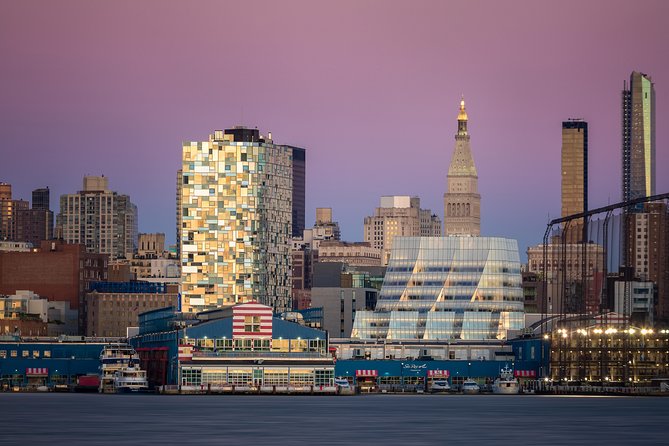
What I like about this stop is that it sets a reference point. The Whitney gives you a sense of American art culture, while the surrounding blocks let you compare that cultural role with the role architecture plays—how it signals attention, identity, and modern ambition. The tour also points to contemporary buildings tied to big-name international architects, including Frank Gehry, Jean Nouvel, Zaha Hadid, and others. You don’t need to memorize anything, but having names in mind helps you notice recurring design strategies.
The info lists admission for this stop as free, which makes this part feel like a win rather than an extra cost. Keep in mind: you’ll still want to plan for your personal museum pace, especially if you like reading labels slowly. This is a tour, so you’ll move with the group, but the Whitney setting gives you a real “place to land” before you head outside again.
Stop 2: The High Line sculpture program and old-meets-new streets
Next comes the High Line, and this is where the tour turns from buildings to how New York uses public space. The High Line is elevated, and your walk there comes with a specific focus: its history as an elevated park and its public sculpture program.
That sculpture program detail is more than trivia. It changes how you experience the walk. Instead of treating the High Line as a pretty promenade, you start noticing how art gets installed in a moving environment—how sculpture reads from different angles and how the park turns into an outdoor gallery without needing a museum ticket.
The tour also looks at Chelsea’s evolving story through the lens of the surrounding built environment. You’ll consider the area’s shifts over time and see handsome 19th-century residences and buildings that add to the neighborhood’s character. That matters because Chelsea isn’t only about the newest designs. The area works as a layered timeline, and the contrast helps you understand why modern architecture feels so striking here: it’s literally in conversation with what came before.
The one drawback: because it’s a park experience above street level, your comfort depends on weather. Rain can make surfaces slippery and wind can feel sharper up there. The tour runs rain or shine, so bring a light rain layer if the forecast looks uncertain, and stay mindful on steps and turns.



Stop 3: Chelsea’s gallery district and possible exhibition visits
Chelsea is New York’s biggest art-gallery district, and the final stop leans into that reality. During the art season (Sept–June), your tour may include a visit to one or two important exhibitions of the moment in repurposed or newly created spaces.
I like this structure because it keeps the day from becoming only an architecture walk. You’re not just learning how buildings form; you’re also connecting that to what’s happening in the art world right now. If you’re the type who likes to see contemporary art without spending hours figuring out what’s worth your time, that seasonal add-on can be a big payoff.
A practical note: since the gallery-exhibition part is described as “may include,” you shouldn’t expect the exact same experience every time. But even if an exhibition visit is scaled differently, you still get the key idea—Chelsea’s art district is not an abstract concept. It’s right there on the blocks.
The guide factor: art critics, DCA licensing, and Q&A that actually lands
This tour’s quality isn’t only about where you go. It’s about how you see what’s there. The guide is licensed by New York City’s Department of Consumer Affairs and is a member of AICA USA, which signals a real commitment to art criticism rather than just repeating museum brochure text.
In one standout detail from the guide experience, Merrily is described as both excellent and comfortable, with a professional approach to questions. That matches the best kind of architecture tour: you’re not just hearing facts—you’re getting answers that help you read buildings and artwork faster.
Here’s how that shows up in practice: when you’re standing in front of contemporary architecture, it can be hard to tell what you’re supposed to notice. A strong guide helps you look at scale, geometry, material choices, and the relationship to the street. Then, when you move to the High Line or a gallery doorway, you already have the habit of noticing.
Small group size (max 10) also helps. You’re less likely to feel like a spectator in a line. Instead, you can ask a question when the moment is fresh.
What to expect in the photos you’ll take
You’ll leave with plenty of visual material, but the smartest photo strategy is to capture the “why,” not just the “wow.” Try to get:
- one wide shot that shows how a building sits in the block
- one detail shot that catches material or form
- one High Line view that includes the sculpture area (even if the figure isn’t the main focus)
This tour encourages you to connect the street to the bigger story. That means your photos won’t just look pretty later. They’ll remind you of the design cues you learned on the walk.
Should you book this tour? Who it fits best
This experience suits you if you want a tight, well-guided introduction to Chelsea as an art-and-architecture zone. It’s a strong choice if you like modern design and you also want to feel grounded—museum plus outdoor public space—without overplanning.
It’s also a good option for first-timers who want orientation. You’ll hit the Whitney, then the High Line, then the gallery district in a way that teaches you the neighborhood’s logic. And with a small maximum group size, it’s friendly for people who don’t want to shout over a crowd.
You might want to skip or reconsider if you hate walking in weather. Since it’s almost entirely outside and runs rain or shine, you’ll feel that more than you would on a museum-only tour. The route also benefits people who are comfortable standing for stretches and moving at a steady pace.
Quick FAQ
FAQ
What is the duration of the Chelsea Architecture and Art Tour?
It runs for about 2 hours.
How much does the tour cost?
The price is $49.00 per person.
What time does the tour start?
The start time is 11:00 am.
Where does the tour start and end?
It starts in Lower Manhattan at New York, NY 10014, and ends near 10th Avenue in the mid-20s. The exact end location is confirmed one week prior via email.
Is the tour offered in English?
Yes, it’s offered in English.
Is there a limit on group size?
Yes, the tour has a maximum of 10 travelers.
Does the tour run in bad weather?
Yes. Tours take place rain or shine and are almost entirely outside.
Are admissions included for the stops mentioned?
The Whitney Museum of American Art stop is listed with admission ticket free, and the High Line and gallery-season visit are part of the tour experience as described.
What’s the cancellation window?
You can cancel for a full refund up to 24 hours before the experience starts.
Should you book this Chelsea architecture and art tour?
If you’re excited by modern architecture and you like art that’s happening right on the streets, this is an easy yes. The route hits three high-impact areas—Whitney, the High Line, and Chelsea’s gallery district—in a compact 2-hour format, and the guide’s credentials add real weight to the explanations.
Book it when you want an efficient morning walk that turns the neighborhood into something you can read. Just make sure you’re ready for mostly-outdoor weather and bring comfy shoes.