REVIEW · NEW YORK CITY
Chelsea Galleries and High Line; Art, Architecture and History
Book on Viator →Operated by Chelsea Gallery Tour · Bookable on Viator
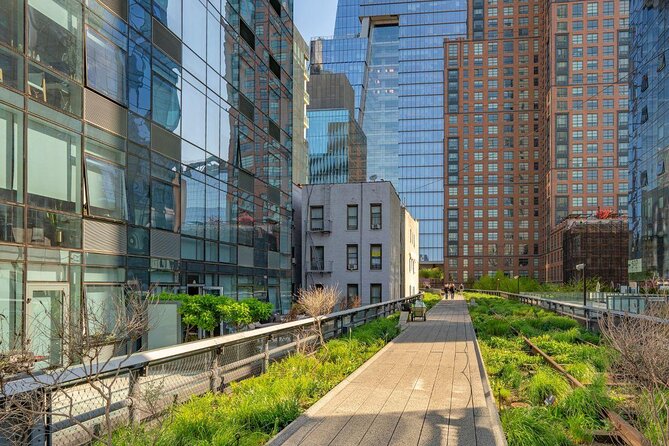
The High Line tells two stories at once. You start with public art on the elevated promenade, then you move into Chelsea’s gallery world where the art, the buildings, and the rail-park history all connect. I especially love how the guide turns what looks like a pretty walk into something you can actually read.
Next, I love the mix: you get two Chelsea exhibitions picked for variety, not just whatever is open that day. Guides like Maya Yadid, Shahar, or Daniel are known for keeping a friendly, question-friendly tone while they point out what to notice beyond the obvious.
One consideration: the High Line can get crowded, and galleries can be tight. If your group is large, hearing can be harder, and pacing can feel slower around the narrowest stretch.
In This Review
- Key things to know before you go
- Getting Oriented at Washington Street and the High Line Entrance
- Art Stop: Seeing the High Line as a Public Gallery
- Architecture Stop: Contemporary Buildings and the Smart Design of the Rails
- History Stop: The Early-2000s Fight to Save an Abandoned Railroad
- Galleries Under the High Line: Two Chelsea Exhibitions With Real Context
- Finishing at 10th Avenue: The Northern Overlook and Sculptural Views
- Price, Value, and What You Get for Two Hours
- Who This Tour Fits Best (and When to Skip It)
- Should You Book Chelsea Galleries and High Line?
- FAQ
- How long is the tour?
- Is this tour private?
- Where does the tour start and end?
- What language is it offered in?
- What if the weather is bad?
- Are service animals allowed, and who can participate?
Key things to know before you go
- Private group, ask anything: it’s just your group, with time for questions.
- Art, architecture, history in one route: you’re not stuck in one theme.
- Two gallery stops in Chelsea: you’ll see selected exhibitions underneath the High Line.
- Start south, end north: the flow matters for views and photo angles.
- Finish at a 10th Avenue overlook: you end with a sculptural view from the northern stretch.
Getting Oriented at Washington Street and the High Line Entrance
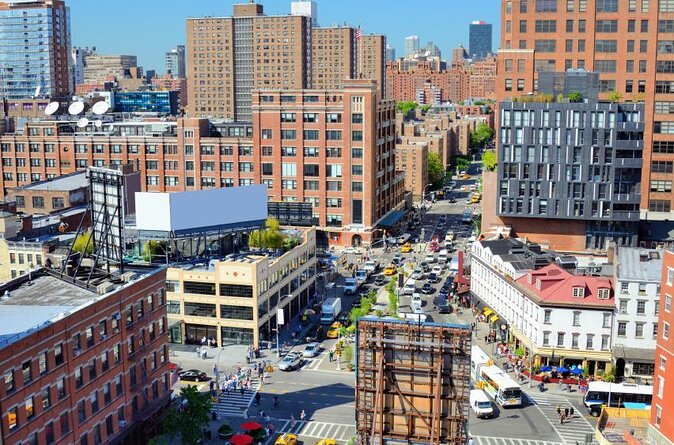
I like that this tour is straightforward to find. You meet at 812 Washington St (near the Mercado Little Spain entrance), then you head into the High Line area to start your walk.
You’ll get a mobile ticket, and the tour is offered in English. It runs for about 2 hours—enough time to feel like you’ve done more than “just walk around,” without turning the day into a marathon.
This is also a private tour, meaning only your group participates. That matters on a site like the High Line, where group size can make a big difference in how enjoyable the stroll feels. Also, service animals are allowed, and the experience notes that most travelers can participate.
Finally, keep an eye on timing. The High Line experience is weather-dependent, so plan for a day when you’re not rushing through rain.
You can also read our reviews of more walking tours in New York City



Art Stop: Seeing the High Line as a Public Gallery
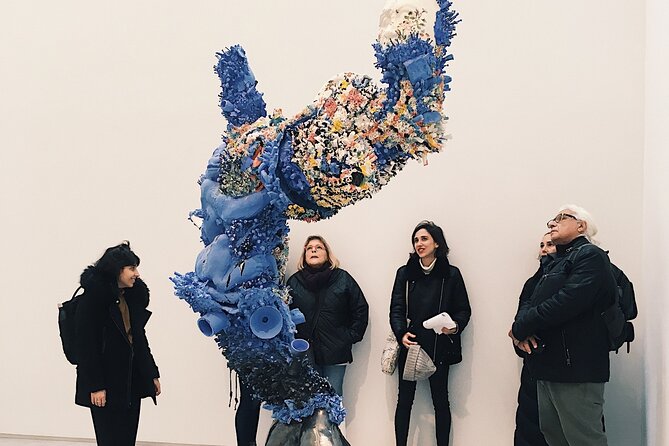
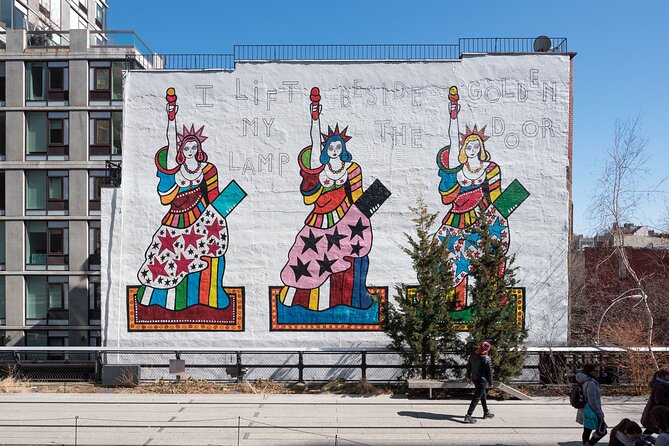
The first stretch focuses on art along the promenade—starting at the southern point and moving north. You’re not just passing sculptures and installations. The guide stops you at specific pieces and explains the artist, plus how the work gets made and why it’s placed where it is.
This is where the tour feels most like a “theater with good seats.” Without commentary, a lot of High Line art blends into the background of city noise and walkway views. With a professional art guide, you start noticing the small decisions: scale, materials, sightlines, and the way the art sits in a moving public space.
And because this is a walk with frequent pauses, it’s also a practical photography setup. You’ll have chances to grab epic shots of art and sculpture without feeling like you’re sprinting from one spot to the next.
If you’re the type who loves to ask questions—why this piece was placed here, what a particular style is referencing, how the process changes the final object—this stop is built for that.
Architecture Stop: Contemporary Buildings and the Smart Design of the Rails
Next you shift from art object to architecture and design. As you walk, the guide points out contemporary buildings that act like modern benchmarks—current architecture you can compare to the High Line’s engineering.
The most useful part here is how the tour explains the High Line itself: it’s not only an idea, it’s a construction and planning story. You’ll hear about the design choices that make an old rail line feel intentional as a modern public walkway, plus the way the planting and circulation work together.
I like this stop because it teaches you how to “read” the built environment. You stop treating the High Line as a scenic park and start seeing it as a designed system: where people can pause, where sightlines open up, and how the structure holds up while staying accessible.
One note: if it’s busy, architecture stops can be slower because you need room to stand and look. That’s normal here. The best move is patience—this is a place where the crowd changes minute to minute.
History Stop: The Early-2000s Fight to Save an Abandoned Railroad
After the art and design, the tour zooms out to the big picture. You’ll hear the High Line story: in the early 2000s, the tracks were slated for demolition, and a couple of young men pushed back—turning opposition into a plan for a public park instead.
This is more than trivia. Knowing the history changes the way you feel walking above the city. You start to notice the layers: infrastructure that once served trains, then sat unused, then got reinvented through activism and public vision.
I also like that the guide keeps it human. It’s not just a timeline—it’s the cause-and-effect of people deciding the future. Once you understand that, the High Line stops feeling like something that simply appeared. It feels like a choice that took work.
And yes, it connects back to the art and architecture: public art needs public space, and modern design needed a site worth protecting.
Galleries Under the High Line: Two Chelsea Exhibitions With Real Context
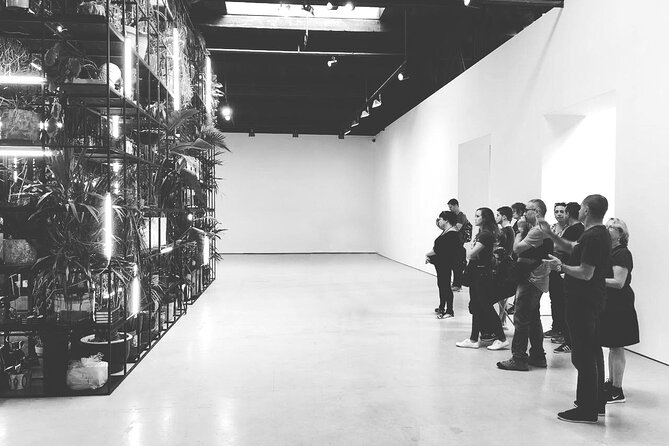
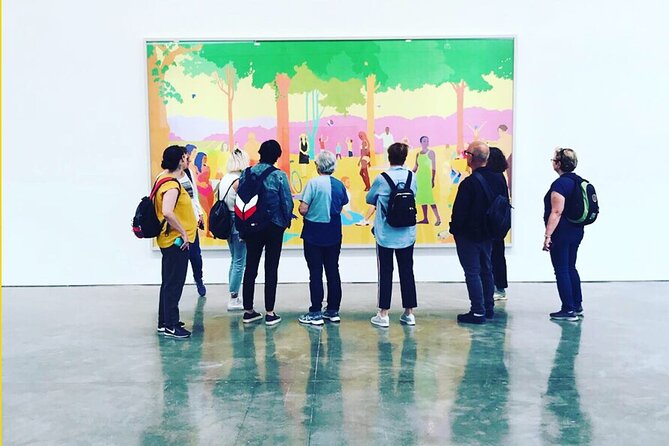
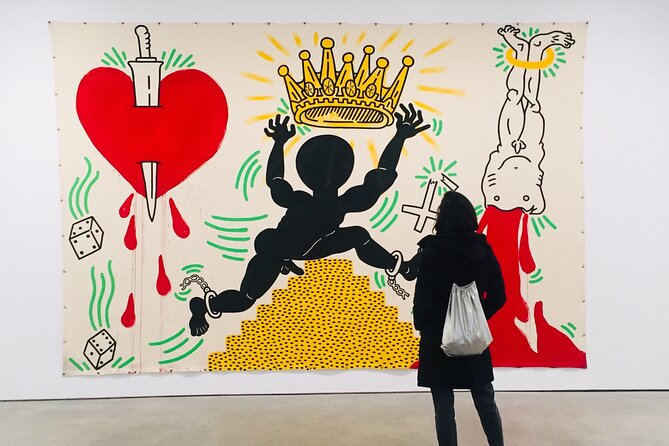
Here’s the part I’d call the “NYC art night out,” minus the late hours. You’ll head into the Chelsea galleries district located underneath the High Line, and you’ll visit two selected exhibitions.
The big value is context. A gallery visit can be hit-or-miss if you’re going in cold—no orientation, no sense of what matters most, and no help connecting styles to the artist’s intent. On this tour, the guide sets you up to look for specific things, then gives you time to keep looking after the explanation.
I’ve found Chelsea can overwhelm people with scale. This tour solves that by narrowing your attention to two shows and giving you a reason to care about both. The result is that you leave feeling like you understood the exhibitions, not just that you saw them.
This is also where you’ll likely get recommendations for what to do next in Chelsea—because a strong guide doesn’t end the conversation when the tour ends. Guides such as Shahar and Daniel have been singled out for mixing art selection with practical pointers on what to focus on while you’re there.
One practical caution: galleries can have tricky acoustics and tight aisles. If you’re in a larger group, it can be harder to hear explanations for everyone at once. On a busy day, plan for slower moments and standing closer if you really want the details.
You can also read our reviews of more historical tours in New York City





Finishing at 10th Avenue: The Northern Overlook and Sculptural Views
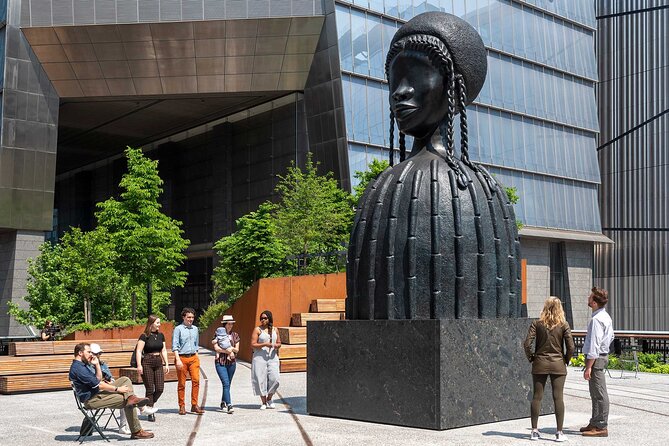
You end at one of the High Line’s northern points. The final move is a vantage point looking over 10th Avenue, where you can see an impressive sculptural project along the High Line.
This ending works because it ties the tour together. You’ve walked through art, you’ve interpreted architecture, you’ve learned the history. Then you finish with a view that gives you a clear “you are here” moment—like the whole system snaps into focus.
For photo lovers, this last section is especially useful. Northern stretches often give you different angles than the more common southern-to-middle viewpoints. You’ll likely leave with shots that show the High Line as both structure and stage—city below, designed walkway above.
It also gives you a clean stopping point. Once you’re done, you’re positioned in a spot where it’s easy to continue your day in Manhattan.
Price, Value, and What You Get for Two Hours
The data you shared doesn’t list a single price, but one piece of feedback did mention about $50 per person. If that number matches what you see, here’s the value logic I’d use to decide.
You’re paying for three things that are hard to DIY:
- A structured route across art, architecture, and history (instead of random strolling).
- Professional guidance inside galleries where context can make or break the experience.
- Two exhibition stops in Chelsea, plus help noticing what matters.
The private format is also part of the value. When your group is smaller, the tour can move at your pace, and questions actually get answered instead of waved off due to crowd logistics.
Balanced note: one critique called out that a guide should be prepared, and that a tech issue (an iPad being misplaced) hurt the flow. That’s not something you can control as a visitor. Still, it’s a good reminder: when you’re paying for interpretation, you want the session to feel smoothly handled from start to finish.
Overall, with the high recommendation rate and a strong rating score, this tour seems best when the guide energy stays high and the pacing stays thoughtful—especially around the most crowded parts of the High Line.
Who This Tour Fits Best (and When to Skip It)
This works great if you:
- want art + architecture + history in one single, walkable session
- like guided looking, not just sightseeing
- plan to do more than one Chelsea gallery day and want a head start on how to interpret what you see
- enjoy asking questions and getting answers on the spot
It can also be a good “first taste” of NYC art culture. You’ll see how the High Line’s public art conversation connects to what’s happening in Chelsea indoor spaces.
When might you skip it?
- If you hate crowds or dislike slowdowns caused by narrow pathways, go in a calmer time window when possible.
- If you’re expecting a long, in-depth deep dive into one specific artist, this is more of a broad, well-paced tour across multiple themes—still meaningful, but it’s not only one subject.
One more fit detail: the tour is offered in English, though one participant did note it worked well for Hebrew speakers. I’d treat that as a helpful sign, not a guarantee of language options beyond English.
Should You Book Chelsea Galleries and High Line?
I’d book this if you want a guided way to understand why the High Line is more than pretty views and why Chelsea’s gallery scene feels like it belongs right next to it.
Choose it when you:
- like the idea of two gallery stops rather than wandering exhibitions on your own
- want a guide who can connect art choices to design and to the rail line’s history
- want a private setup where questions are welcome
If weather is questionable, keep flexibility in mind since the experience requires good weather. When the day works out, you get a smart mix: outdoor art, design thinking, a real origin story, then two exhibitions—ending with a standout overlook over 10th Avenue.
FAQ
How long is the tour?
It runs for about 2 hours.
Is this tour private?
Yes. It’s a private tour/activity, and only your group will participate.
Where does the tour start and end?
You start at 812 Washington St, New York, NY 10014, near the Mercado Little Spain entrance. You finish at 10th Avenue & West 30th Street (10th Ave & W 30th St), near the next High Line northern point.
What language is it offered in?
The tour is offered in English.
What if the weather is bad?
The experience requires good weather. If it’s canceled due to poor weather, you’ll be offered a different date or a full refund.
Are service animals allowed, and who can participate?
Service animals are allowed, and the experience notes that most travelers can participate. It’s also near public transportation.