REVIEW · NEW YORK CITY
Contrasts of New York Tour: Harlem, The Bronx, Queens, and Brooklyn
Book on Viator →Operated by Vacaciones Nueva York · Bookable on Viator
Borough hopping beats taxi math. In just about four hours, you’ll move from Harlem to the Bronx, then Queens, then Brooklyn, using an air-conditioned van with WiFi while your guide threads together the city’s contrasts.
What I like most is how you get quick, high-impact looks at distinct neighborhood identities, from Harlem’s brownstone blocks to Brooklyn’s big Manhattan skyline moments. You also get a street-level mix of architecture, public art, and famous landmarks, with most stops designed for photos and orientation rather than museum-style time sinks.
One thing to consider: you’re trading pace for coverage. Between boroughs, you’ll spend time riding in the van, and the tour ends in a different area than it starts—so plan your afternoon transit with a little slack.
In This Review
- Key Things You’ll Notice on This Contrasts Tour
- Why This Borough-By-Borough Tour Works for First-Time NYC Planning
- Price and What $41 Buys You in About Four Hours
- Harlem Brownstones: Where NYC Looks Like It’s Still Writing the Past
- Yankee Stadium Photo Stop: Quick Outside Views, Not a Full Ticketed Visit
- The Bronx Courts and the City’s Legal Machinery
- I Love The Bronx and Tats Cru: Street Art as Neighborhood Language
- Mansion Contrasts in the Bronx: Seeing Wealth and Everyday Life Side by Side
- Flushing Meadows Corona Park: US Open Grounds and the Unisphere
- Domino Park in Brooklyn: Manhattan Skyline, Photo-Friendly Timing
- Williamsburg and DUMBO: Pass-Through Culture and Bridge Foundations
- Little Italy Finish: A Clean Landing for the Rest of Your Afternoon
- When This Tour Feels Like Great Value (and When It Doesn’t)
- Should You Book This Contrasts Tour?
- FAQ
- How long is the tour?
- Is the tour in English?
- What’s included in the price?
- What isn’t included?
- Where does the tour start, and what time?
- Can I get a full refund if I cancel?
Key Things You’ll Notice on This Contrasts Tour
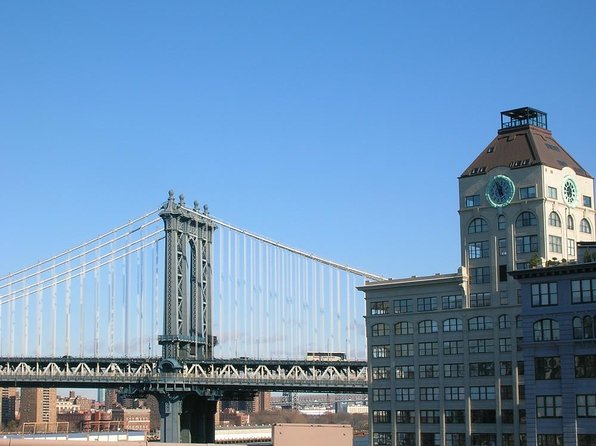
- Brownstone streets in Harlem: townhouses tied to the look of “brownstone” material
- Fast photo stops that still feel purposeful (Yankee Stadium, Domino Park)
- Bronx identity in public art at I Love The Bronx / Tats Cru
- Queens landmark energy at Flushing Meadows Corona Park, with Arthur Ashe Stadium and the Unisphere
- Brooklyn skyline viewpoints before you head into DUMBO and Little Italy
Why This Borough-By-Borough Tour Works for First-Time NYC Planning
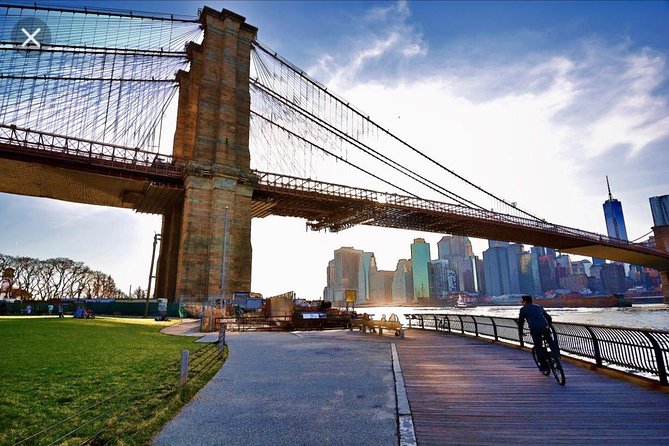
This is the kind of New York tour that helps you get your bearings fast. Instead of spending half a day in one neighborhood, you skim the surface in a smart way—enough to spot patterns. You’ll see how the city’s “same distance, different world” feeling shows up street by street.
I also like that it’s built for real life. You’re in an air-conditioned vehicle with WiFi onboard, and the tour time is tight enough to fit into an active first week. Most stops are short—think 5 to 20 minutes—so you don’t get stuck waiting around when you’d rather be walking.
This format is especially good if you’re the kind of traveler who wants context. You’ll get guided explanations as you pass through areas of Harlem, the Bronx, Queens, and Brooklyn, which makes the names you’ve heard—brownstones, the Unisphere, Domino Park—feel less random.
The tradeoff is obvious: you can’t truly “linger” like you would on a neighborhood walking day. If you love slow wandering and deep museum time, you might find the van rides a bit long.
You can also read our reviews of more tours and experiences in New York City.



Price and What $41 Buys You in About Four Hours
At $41 per person for about 4 hours, the value comes from two places: transport + guided routing across multiple boroughs. You’re not just paying for a driver—you’re paying for a tour that strings together Harlem, the Bronx, Queens, and Brooklyn in one go.
Most of the sights you’ll stop for are free (Harlem brownstones, the Bronx murals, Flushing Meadows highlights, Domino Park, and the Brooklyn/ending neighborhoods). The only notable exception mentioned is Yankee Stadium, where you’re stopping to walk around and take photos, and admission isn’t included. That means you’re not being sold a ticketed stadium visit; you’re getting the outside experience and time for pictures.
If you’re planning a tight itinerary, the lack of lunch/snacks matters. You’ll want to eat before you go—or plan to grab food after the tour. This is one reason the short stop lengths feel realistic: the tour doesn’t try to replace your day’s meals.
Group size is capped at 50, which is a solid middle ground. It’s not tiny, but it’s also not so big that you’re constantly fighting for attention.
Harlem Brownstones: Where NYC Looks Like It’s Still Writing the Past
The tour starts with Harlem, and the first “wow” is the brownstone streets—especially the townhouses from the 19th and 20th centuries. You’re not just seeing pretty facades; you’re learning what “brownstone” actually refers to.
Here’s the neat detail your guide will likely frame: the term comes from the material (described as red arsenic) that gave the buildings a characteristic brown tone. That small bit of material science turns a common word into something you can picture.
Practically, this stop is short—about 10 minutes—so don’t treat it like a photo session that requires a wardrobe change. Wear comfortable shoes, keep your camera ready, and use this time to notice the street scale: the rowhouse rhythm, the stoops, and how the blocks feel built for pedestrians.
If you’re someone who likes architecture, this is the part that gives you a “mental map” for what you’ll see later. Harlem’s brownstone look becomes a reference point for the contrasts that follow in the Bronx and Brooklyn.
Yankee Stadium Photo Stop: Quick Outside Views, Not a Full Ticketed Visit
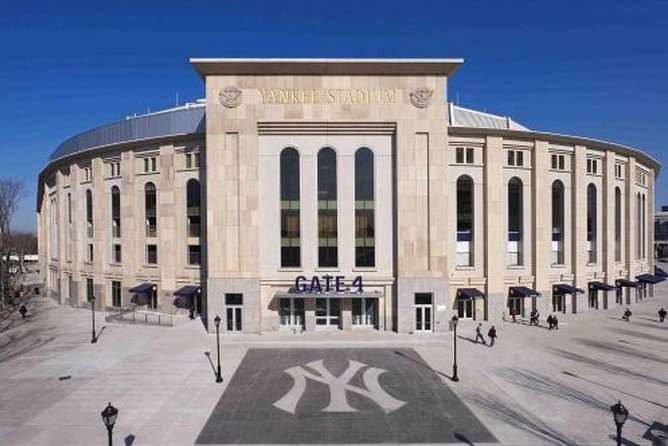
Next comes Yankee Stadium. You’ll have about 20 minutes to walk around and take photos.
The key practical point: admission isn’t included. So your time here is best for street photography, perimeter views, and getting a feel for the stadium’s place in the neighborhood. If you were hoping for an inside tour, you’ll need to plan that separately.
This stop also helps you understand the scale of sports in the city. Yankee Stadium isn’t just a landmark—it’s a magnet that reshapes how people move and gather in the area. Even from the outside, you’ll feel how New York treats big-time venues as city anchors.
The Bronx Courts and the City’s Legal Machinery
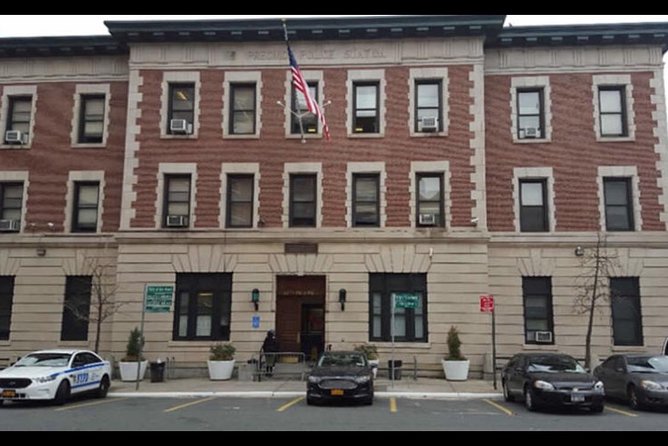
The tour then moves through areas associated with the criminal and civil courts in the Bronx, where well-known cases have been carried out.
Even though you’re not described as entering a courtroom, passing through this kind of civic space gives you something most “hit the highlights” itineraries miss: the structure behind news headlines. It’s one of those places where the city’s systems feel physical rather than abstract.
This is also a moment for your guide’s narrative skill—good guides can connect the building blocks of daily life (courts, policing, public policy) to the way neighborhoods change. Names like Harold and Guillermo have been praised for clear, interesting explanations, so if your guide has that same style, this stop will land better than you’d expect.
Because the tour is time-boxed, keep your expectations realistic. This isn’t a legal documentary. It’s a brief, guided way to see where “the city’s big decisions” get processed.




I Love The Bronx and Tats Cru: Street Art as Neighborhood Language
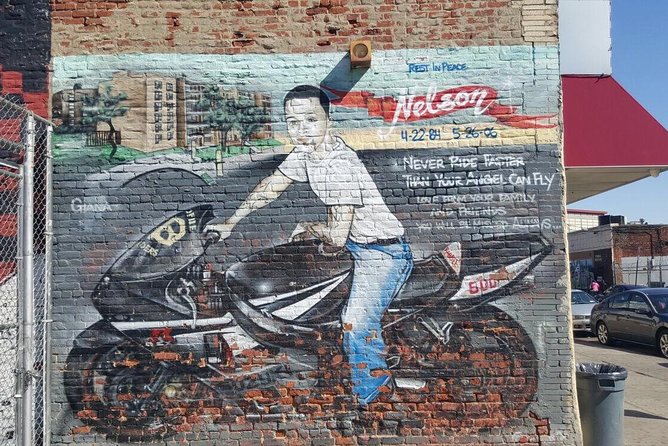
Now we get to the fun visuals: the I Love The Bronx mural and Tats Cru graffiti art.
You’ll have about 10 minutes for a few stops to see the artwork. Short time, yes—but that can be a plus. Street art changes, and you often only get a brief window to capture it and read the message in context.
What matters here isn’t just the art itself; it’s the idea that neighborhoods brand themselves with symbols and voices. The Bronx mural scene is a way of saying: this is what we represent, this is what we protect, and this is how we want to be seen.
I’d recommend you take 60 seconds to look beyond the main image. Often there are smaller details—tags, layers of color, and adjacent pieces—that help you understand the larger visual story.
Mansion Contrasts in the Bronx: Seeing Wealth and Everyday Life Side by Side
After the mural stop, you enter another neighborhood area to appreciate the contrast of impressive houses—described as mansions.
This is where the tour earns its name. You’re seeing how New York can shift its architecture and perceived wealth quickly, even within the same borough. When a guide points out these contrasts, it stops being a “shock value” moment and becomes a real observation: the city’s geography is mixed, not sorted.
Don’t expect a long walking loop here. It’s more about noticing: fence lines, driveway space, facade styles, and the general scale of buildings compared with the surrounding streets.
If you care about social geography—how people, money, and history shape what you see—this part is a useful reality check. It’s also a reminder to keep your lens broad. NYC isn’t one story. It’s many, sometimes within a few blocks.
Flushing Meadows Corona Park: US Open Grounds and the Unisphere
Next stop: Flushing Meadows Corona Park, with a few standout anchors.
You’ll go in around Arthur Ashe Stadium, the venue for the US Open. Even if you don’t have tickets, the stadium setting alone feels like a big national event zone. Expect a chance to look, photograph, and get oriented to one of Queens’ best-known parks.
You’ll also see the Unisphere, famous from the movie Men in Black. This is the kind of landmark that turns a park walk into a pop-culture waypoint you can recognize in a second.
The stop time is about 20 minutes, so it works best if you use that window for:
- one “wide” photo (stadium/park context)
- one “close” shot (Unisphere details)
- a quick scan for where you’ll want to walk if you return later
You’ll also cross an important, commercial Queens avenue as the tour moves along. That’s a quiet but valuable part of the experience: you get a sense of everyday foot traffic and the mix of cultures that live and shop there.
This section is where the tour is most rewarding for “first-time Queens” visitors. It shows you why Flushing Meadows is more than scenery—it’s a stage.
Domino Park in Brooklyn: Manhattan Skyline, Photo-Friendly Timing
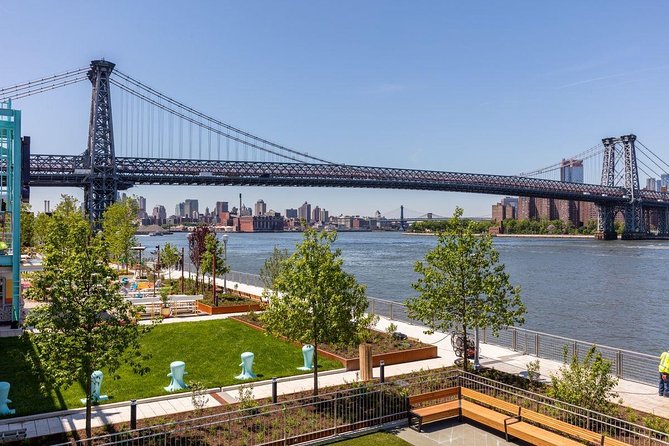
Then you head to Domino Park, with around 15 minutes to enjoy the views and take pictures.
This is one of the tour’s most straightforward payoff stops: you get skyline views that many people come to Brooklyn specifically to photograph. The timing matters too—15 minutes is enough to stand, frame, and shoot without making you feel like you’re stuck for hours.
If you’re traveling with a camera, this is the moment to slow down. Look for the angle that matches what you’ll use later—social media, a memory album, or a “NYC map” photo.
Domino Park also helps connect Brooklyn’s identity to Manhattan. You’re seeing the city’s center in a way that feels close, but not the same as a Midtown street corner. It’s that in-between perspective that makes this tour worth doing.
Williamsburg and DUMBO: Pass-Through Culture and Bridge Foundations
Next, the tour moves through Williamsburg, described as home to the largest Jewish community outside of Israel. The stop here is brief—around 10 minutes—and it’s more about getting a feel for the neighborhood than learning it block by block.
If Williamsburg is new to you, this quick pass can give you a starting point. You’ll see why people associate it with shopping, food, and a strong community identity. But you won’t be doing deep sampling on this schedule.
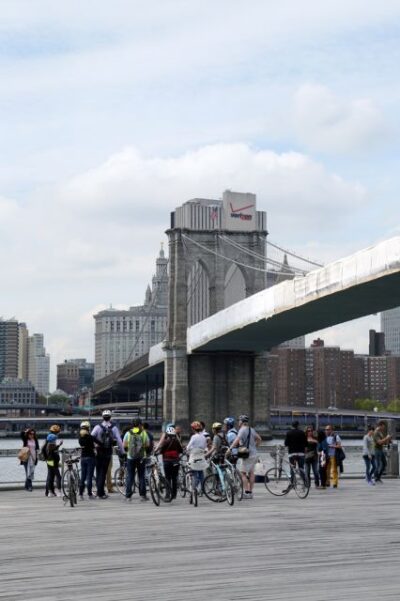
Then comes DUMBO. If you want to end there and linger, the tour description notes you can walk through the foundations of the Brooklyn Bridge and then walk over the bridge.
Here’s the practical mindset: DUMBO is short on tour time, but it’s long on “I might want to stay” energy. If you’re the type who likes stretching legs and getting one last big view, this is where you can turn your quick stop into a mini-adventure.
Just remember: the bridge walk is optional and depends on what you choose at that point.
Little Italy Finish: A Clean Landing for the Rest of Your Afternoon
The tour ends in Little Italy, with about 5 minutes noted for the final leg. From here, you can take advantage of the rest of your afternoon to walk through China Town and Little Italy, and if you dare, head toward the center of Manhattan.
This is a smart end point. It gives you a neighborhood with plenty to do on your own, without forcing you to immediately sit on a bus again. It’s also a good moment to reset: grab a snack (since none are included), cool down, and plan your next subway hop.
Because the tour ends in a different location from where it starts, I’d treat this finish as a “start your independent exploration” moment—not a “go directly somewhere time-sensitive” moment.
When This Tour Feels Like Great Value (and When It Doesn’t)
Book this tour if:
- you’re short on time and want multiple boroughs in one morning/half-day
- you like guided context more than slow wandering
- you want photo-friendly stops at landmarks like Domino Park and the Unisphere
- you prefer a structured route (short stops, clear stops, minimal guesswork)
Consider a different option if:
- you hate van rides and want mostly walking
- you’re hoping for a full inside experience at major sites (like stadium tours)
- you want long stays in any one neighborhood
Also, keep your expectations realistic about the schedule. Some people have shared frustrations about timing and booking availability. That doesn’t mean the experience is always chaotic, but it does mean you should double-check that you’re confirmed for the exact date/time and keep your booking details handy.
Should You Book This Contrasts Tour?
If you’re trying to understand New York beyond Midtown, I’d say yes—this tour is built for orientation and contrasts. It’s not an all-day deep-study of one borough. It’s a fast, guided cross-section that helps you see what makes each area distinct.
For me, the best reason to book is the mix: Harlem’s architectural cues, Bronx public art and civic landmarks, Queens’ major park anchors, and Brooklyn’s skyline payoff. At $41, you’re paying a reasonable price for movement and interpretation, with most stops free and only one major “not included” item flagged.
Just go in knowing it’s a half-day route with van time. If you accept that trade, you’ll likely feel like you used your time well.
FAQ
How long is the tour?
It’s about 4 hours (approx.).
Is the tour in English?
Yes. The tour is offered in English.
What’s included in the price?
The tour includes an air-conditioned vehicle and WiFi on board.
What isn’t included?
Lunch and snacks are not included. Also, Yankee Stadium admission isn’t included.
Where does the tour start, and what time?
It starts at the Manhattan at Times Square Hotel, 790 7th Ave, New York, NY 10019, with a start time of 9:00 am.
Can I get a full refund if I cancel?
Yes, you can cancel for a full refund if you cancel at least 24 hours before the experience’s start time.