REVIEW · NEW YORK CITY
Death in New York: Extended Daylight Tour (Lower Manhattan)
Book on Viator →Operated by Purefinder New York · Bookable on Viator
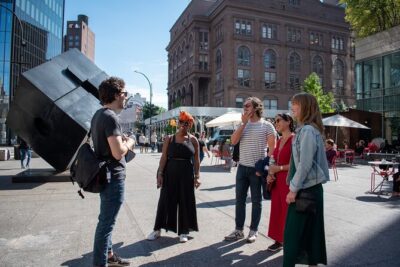
New York has a darker “side.” This Death in New York extended daylight tour runs on city sidewalks with author K. Krombie, linking burials, undertakers, and executions to real places you can see from street level.
What I like most is the way the tour turns famous Lower Manhattan landmarks into a clear story about how the city handles death, memory, and who gets recorded in the record. I also love the small group size, capped at 15 people, which makes it easier to ask questions as you walk.
One possible drawback: it is a walking tour with lots of stops in a dense area. If you prefer to sit down a lot, or you get uncomfortable with heavy topics, you’ll want to decide if this theme fits your mood.
In This Review
- Key things to know before you go
- Why this Lower Manhattan walking tour feels different in daylight
- Meeting at Whitehall Terminal 4 and getting oriented fast
- Battery Park start: Liberty viewpoint and the edge of the story
- Financial District chapter: churches, memorials, and a cemetery corner
- Civic Center and African Burial Ground: where paperwork meets memory
- Chinatown Funeral Row on Mulberry Street: a street you can read
- Ending in Chatham Square and Two Bridges: closing the story in a lively corner
- Price and time: what $44 buys for 2h45 of walking focus
- Who should book this, and who might want to think twice
- Quick practical notes before you go
- FAQ
- FAQ
- How long is the Death in New York extended daylight tour?
- Where does the tour start?
- Where does the tour end?
- What time does it start?
- What is the price per person?
- Is the tour offered in English?
- Do I need to print a ticket?
- How big is the group?
- Is it mostly walking?
- Is cancellation free?
- Are any stops free to enter?
- Should you book this death-themed Lower Manhattan walk?
Key things to know before you go

- Author-led storytelling: you’ll follow the thread with K. Krombie, not a script reading from a headset
- Small group pace: up to 15 people helps keep the experience personal
- Iconic stops with an angle: churches, memorials, and civic buildings used to tell a death-and-remembrance story
- Lots of free-admission locations: several key sites listed on the route are ticket-free
- Good “daylight” visibility: the route is scheduled for daytime walking, so you can actually study the details
Why this Lower Manhattan walking tour feels different in daylight
Most NYC walks are about skyline views or quick hits of famous streets. This one is different because it uses the city’s ground truth: cemeteries, memorials, churches, and civic buildings that hold stories you usually gloss over.
And yes, the topic is heavy. The tour focuses on history and culture around city burials, undertakers, and executions. But it doesn’t come across as grim-for-grim’s-sake. It’s more like a guided lesson in how a city processes the end of life—through places, paperwork, institutions, and public memory.
Daylight matters here. You can see facades, stonework, plaques, and the street layout that makes each site make sense. In the Financial District and Civic Center especially, the details help you understand why these places were built where they were. You’re not just looking at a name on a map; you’re standing in the neighborhood logic that created that name.
You can also read our reviews of more tours and experiences in New York City.



Meeting at Whitehall Terminal 4 and getting oriented fast
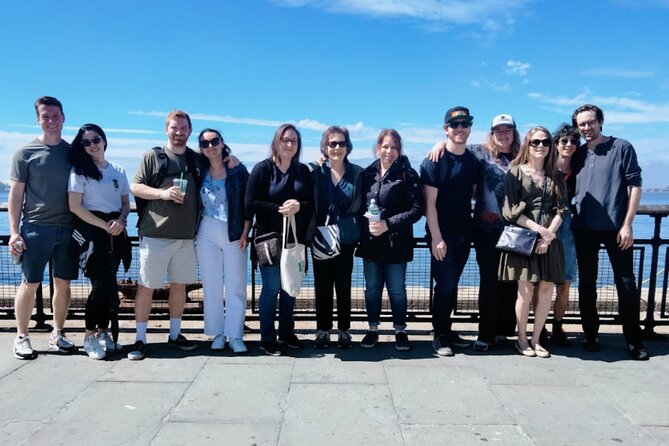
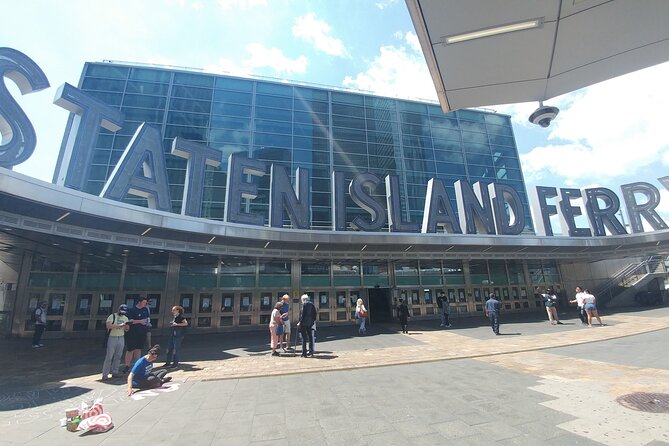
The tour meets near Whitehall Terminal 4 on Whitehall St (near the South Ferry/Whitehall Street Station area) and starts at 11:00 am. It ends in Chatham Square in Chinatown.
That beginning matters. South Ferry/Whitehall is a natural starting point because it anchors you at the edge of Manhattan’s old waterfront, where the city has long been a crossroads for ships, work, and people arriving or leaving. From there, you move inland and up into the parts of Lower Manhattan that became the city’s formal centers—religious, civic, and memorial.
The tour is designed for walking through close-up streets. Expect to move from stop to stop and let the guide stitch the theme together: what happened here, who handled it, and how the city kept the record.
Battery Park start: Liberty viewpoint and the edge of the story
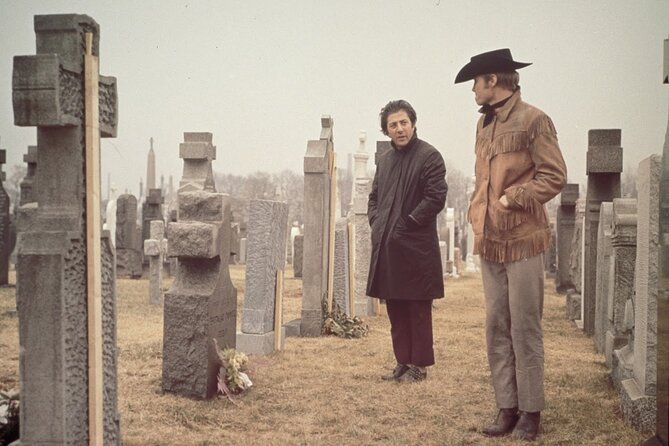
Your first stop is Battery Park, with the tour starting at the South Ferry/Whitehall Street Station area and then heading toward a Statue of Liberty viewpoint. The time here is listed as 30 minutes, and the admission is free.
This is a smart warm-up. You’re at the water, then you’re quickly in the business of history. Even if you’ve seen Lady Liberty from other angles, the viewpoint at this end of Manhattan helps you reset your visual map. You start to see Lower Manhattan as a connected system: waterfront to streets to civic institutions.
Also, it sets expectations for the tone. Battery Park and the Liberty area can feel like sightseeing territory, but in the context of this tour, it becomes a threshold—where the city’s flows of people and the city’s handling of death-related history are framed by geography.
Financial District chapter: churches, memorials, and a cemetery corner
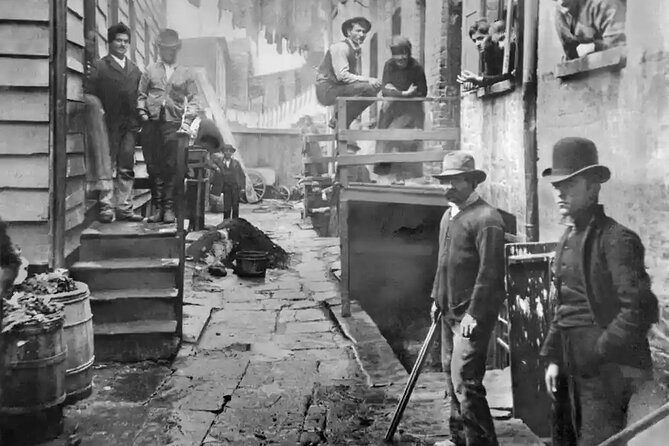
After Battery Park, you work your way through the Financial District, and this is where the tour’s theme really starts clicking. The route includes a string of religious sites, memorials, and museums, plus one crucial reminder that this neighborhood wasn’t always built the way it is today.
Here are the standout stops you pass, in the order listed:
- Shrine of St. Elizabeth Ann Bayley Seton (7 State Street)
This gives you a church-centered lens. It’s part of how the city’s religious institutions often acted as caretakers of the living and the dead—through rites, records, and community memory.
- Wireless Operators Memorial
A memorial is a kind of record too. It’s the city marking service and loss in a way that’s meant to last.
- National Museum of the American Indian
You’re not just walking past a museum; you’re walking past a place tied to identity and history. It works well in a tour that’s already about how societies preserve meaning.
- Broadway and Morris Street (site of the old city cemetery)
This is the moment that grounds the death theme in literal ground. When you stand near where a cemetery used to be, you feel the shift: the city layers time on top of time.
- Trinity Church
Big, historic, and institution-driven. Churches here aren’t just pretty stops—they’re part of how the city’s major systems operated.
- St. Paul’s Chapel
Another point where architecture and history blend, and the guide can connect how these spaces relate to public memory.
- 9/11 Memorial North Pool
The tour includes a moment of contemporary remembrance. Even if you’ve visited the memorial before, the theme forces you to think about how remembrance functions as a civic ritual, not only an emotional one.
- St. Peter’s Roman Catholic Church
More church context, which helps reinforce the broader idea that death and burial history in NYC isn’t one single storyline. It’s multiple communities, multiple institutions, multiple traditions.
This segment is also where you’ll likely appreciate the guide’s style. The author, K. Krombie, is described as friendly and funny, and she brings lots of fun facts that sometimes go a bit beyond the strict stop list. That matters on tours like this. When the guide can explain why a detail matters, the stops don’t feel like names you walk past. They start to feel like pages in a single chapter.
Civic Center and African Burial Ground: where paperwork meets memory
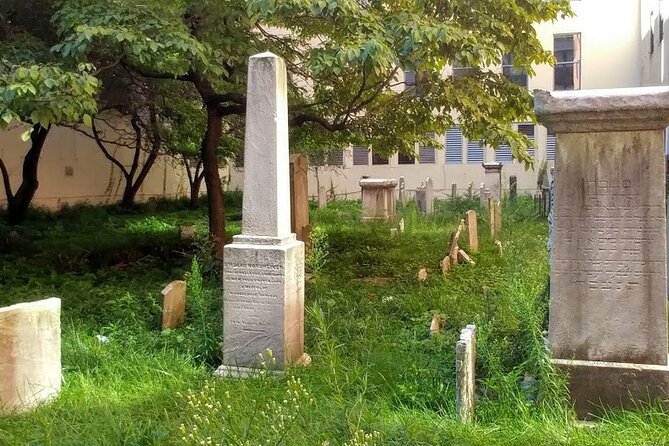
Next comes the Civic Center stretch, and it’s a powerful change of pace. You’re moving through civic spaces—courthouses, correctional facilities, municipal buildings—so the tour’s theme shifts from religious and memorial to how systems run around death.
This section includes:
- City Hall Park
A public “front yard” for civic power. It’s the kind of place where the city shows its face.
- Surrogate’s Courthouse
A key clue: the city’s legal system touches death through inheritance, estates, and official handling. You’re seeing how death can become paperwork.
- Corner of Elk Street and Chambers Street
Street corners are often where the story of a city reveals itself. Standing on a specific corner helps the guide anchor what happened around it.
- African Burial Ground National Monument
This is one of the most important stops on the whole route. It reframes the topic: burial history isn’t abstract. It’s tied to real people, real communities, and how the nation and city chose to acknowledge (or ignore) that history.
- David N. Dinkins Manhattan Municipal Building (1 Center Street)
Another layer: the municipal world that governs daily life also governs how records are kept, how public history is shaped, and how institutions define legitimacy.
- Metropolitan Correctional Center (150 Park Row)
Correctional institutions connect to death history through custody and consequence. Even when the tour doesn’t go into graphic detail, the location itself brings the theme into a modern civic context.
This segment can feel dense because you’re surrounded by institutions. That’s not a bad thing. It’s how you learn the real pattern: NYC’s death-related history is held in different places depending on who held power at the time—religious, legal, municipal.
If you want a practical tip: keep your attention flexible. Some stops here may feel more like “place-based context” than “one big landmark.” When you let the guide connect the dots, the civic buildings start telling a story instead of being just scenery.




Chinatown Funeral Row on Mulberry Street: a street you can read
Then you slide into Chinatown, with a stop at Funeral Row on Mulberry Street. This segment is listed as 30 minutes, with admission free.
This is where the tour’s title starts to feel literal. Funeral-related businesses and specialized trades belong to a city’s economy and infrastructure. In a place like this, you can sense how death work created neighborhoods, not just services.
Walking Mulberry Street with a death-history frame is a neat mental trick. You begin to read the street as an ecosystem: who came here, what was sold, what was needed, and how daily life shaped the way a city handled death.
If you’re someone who likes local texture, this is the stop that rewards it. You’re not only looking at a historic name; you’re walking through a living neighborhood while the guide explains why this kind of street specialization mattered.
Ending in Chatham Square and Two Bridges: closing the story in a lively corner
The final area is labeled Two Bridges, with a stop at Chatham Square. This is also listed as 30 minutes, and admission is free.
Chatham Square is a good finish because it’s open and social in feel compared to the more institutional blocks earlier in the tour. It gives you a place to mentally reset. You’ve spent hours with sites of remembrance, civic systems, and burial history. Ending here lets the story land without dragging you into yet another heavy architectural moment.
Also, the end point is useful for practical planning. From Chatham Square, you’re positioned to continue exploring Chinatown or link into other Lower Manhattan neighborhoods without needing to retrace your steps.
Price and time: what $44 buys for 2h45 of walking focus
At $44 per person for about 2 hours 45 minutes, this isn’t a budget-buster, especially because the stops listed in the route include multiple admission ticket-free locations. You’re paying for guided interpretation: the connecting thread and the time-saving benefit of not guessing what each site means.
The group size helps the value too. With a maximum of 15 people, you’re less likely to feel like you’re being rushed through a list. That pace matters for a tour where context is the whole point.
One more value factor: the tour uses an itinerary that covers multiple Lower Manhattan zones—Battery Park, the Financial District, Civic Center, Chinatown, and Two Bridges—in one structured walk. If you’re short on time and want something more meaningful than a random sightseeing loop, this format makes sense.
Who should book this, and who might want to think twice
This tour is a great fit if you:
- like guided walking tours with a clear theme
- enjoy history that connects to institutions, not only monuments
- want to see Lower Manhattan as a single story across neighborhoods
- appreciate a guide who can mix facts with humor, like K. Krombie
It might be less ideal if you:
- don’t like tours with death-related subjects as a central focus
- need a lot of seated breaks (the route is built for walking and multiple stops)
- prefer purely scenic viewpoints with minimal context
If you’re visiting NYC for a first time and you already plan to do classic sites, this is a strong second layer. It changes your lens. You’ll go home seeing places differently than you expected.
Quick practical notes before you go
- You’ll receive confirmation at booking time, and you’ll use a mobile ticket.
- It’s offered in English.
- Service animals are allowed.
- It’s near public transportation, which helps if you need to adjust your start or finish plans.
- Booking demand is fairly common; the tour is often booked around 5 days in advance on average.
FAQ
FAQ
How long is the Death in New York extended daylight tour?
It runs for approximately 2 hours 45 minutes.
Where does the tour start?
The start is listed at Whitehall Terminal 4, Whitehall St, New York, NY 10004, near South Ferry/Whitehall Street Station.
Where does the tour end?
It ends at Chatham Square in Chinatown.
What time does it start?
The start time is 11:00 am.
What is the price per person?
The price is $44.00 per person.
Is the tour offered in English?
Yes, it’s offered in English.
Do I need to print a ticket?
No. The tour uses a mobile ticket.
How big is the group?
The tour has a maximum of 15 people.
Is it mostly walking?
Yes. It’s described as a walking tour that lets you see NYC up close from the street.
Is cancellation free?
Cancellation is free if you cancel up to 24 hours in advance for a full refund.
Are any stops free to enter?
Several stops listed in the route are marked as admission ticket free.
Should you book this death-themed Lower Manhattan walk?
If you like NYC history that uses real places instead of vague facts, this is a smart pick. The value is the guided connections: burial and death-related culture tied to churches, courts, memorials, and even the site of an old city cemetery. Plus, with K. Krombie leading and a small group of up to 15, the storytelling has room to breathe.
Book it if you want a different side of Lower Manhattan on a proper daytime route. Skip it only if you know you want light, purely scenic content today.