REVIEW · NEW YORK CITY
Financial District NYC Architecture Walking Tour
Book on Viator →Operated by Build Tours · Bookable on Viator
Lower Manhattan can feel like a blur of glass. This 2-hour architecture walk slows it down with smart stops and big sights. You start near Battery Park and work your way through landmark buildings, plus a meaningful stop at the National 9/11 Memorial & Museum and time to look closely, not just rush past.
I especially like the way the tour mixes iconic architecture with real-world stories you can actually use to read the skyline. Another favorite is the included professional individual photo so you leave with a souvenir that looks like you planned it.
One consideration: this is not for slow or limited walking. If you know you struggle with distance or uneven sidewalks, you may want to choose a different format.
In This Review
- Key Highlights You’ll Feel in the Moment
- A 2-Hour Architecture Walk That Actually Helps You Read NYC
- Where It Starts: Castle Clinton and Battery Park’s First Big Views
- Trinity Church NYC: Stop for 1846, Then Look Up
- Federal Hall and the Gold-Storage Stop: Finance Buildings With a Purpose
- Woolworth to Chase: The Vertical Push of the Financial District
- Fulton Center and the Gehry Connection: Transit Meets Architecture
- The National 9/11 Memorial & Museum Stop: Meaningful, Not Just Scenic
- St. Nicholas Greek Orthodox Church and the New Arts Signal
- Liberty Park and the World Trade Center Towers: A Skyline Lesson in Setbacks and Progress
- End at the Oculus Path Station: The Final Photo Moment
- Price and Value: Why $59 Works Here
- Who This Tour Fits Best (And Who Might Want Another Option)
- Quick Tips to Make Your Walk Smoother
- Should You Book This Financial District Architecture Walking Tour?
- FAQ
- How long is the Financial District NYC Architecture Walking Tour?
- Where does the tour start and end?
- What is the price per person?
- How many people are in each group?
- Is a mobile ticket used?
- What’s included in the price?
- Are admission tickets included?
- Does the tour include a visit to Ground Zero?
- Is the tour suitable for people who have trouble walking?
- What happens with cancellation if the weather is bad?
Key Highlights You’ll Feel in the Moment
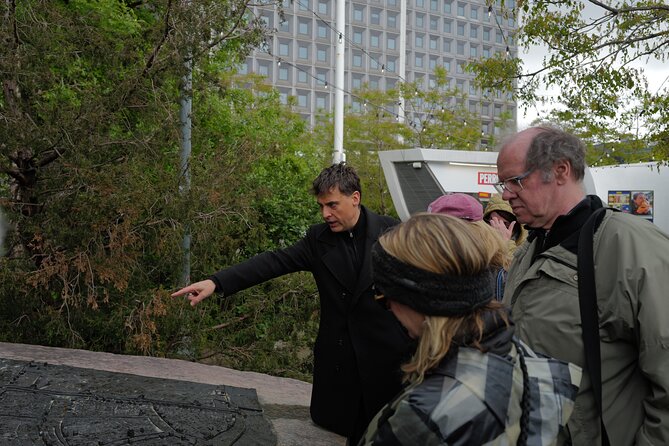
- Maximum 15 travelers keeps the pace human and your questions from getting lost
- Professional individual headsets help you hear the guide on busy sidewalks
- Ground Zero included, not as an afterthought but as a real part of the route
- Landmark lineup from Trinity Church to the Oculus Path Station
- Federal Reserve gold tour-stop context helps you understand why finance buildings look the way they do
- Central “ending payoff” at the Oculus, where the last views and photos land well
A 2-Hour Architecture Walk That Actually Helps You Read NYC
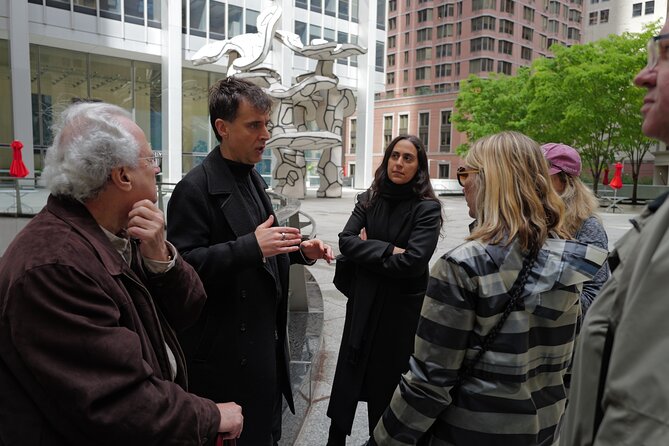
This tour is built for people who want more than postcard photos. You get the chance to see major Financial District landmarks close-up, then learn what you’re looking at and why it matters. The “about two hours” format is key: you get depth without draining your whole day.
And because it caps at 15 travelers, it tends to feel like a shared conversation rather than a lecture you have to sprint to keep up with. You also get professional individual headsets, which sounds small until you’re standing on a noisy street corner with wind, cars, and a guide’s voice carrying clearly.
The route is also very practical. You start on the Battery Park side, then move inward toward the World Trade Center area and finish at the Oculus. That end point is a big deal in real life: it puts you right back in the flow of subway connections and quick meal options.
You can also read our reviews of more walking tours in New York City



Where It Starts: Castle Clinton and Battery Park’s First Big Views
Your tour meeting point is at the Castle Clinton National Monument area in Battery Park, and the first guided start is at the Glass Carousel location. From the start, you’re in the right mindset: you’re looking across water and toward the older edges of Lower Manhattan.
Battery Park works well as a warm-up. The ground is flatter than most city streets nearby, and it gives you an easy way to get oriented. You’re also positioned near the areas that set the stage for a lot of the Financial District’s development—both physically and historically.
A detail I’d pay attention to: arrival time. If you show up a few minutes early, you’ll get a calmer start and a better first look before the group moves. This matters more on tours that run close to the time window.
Trinity Church NYC: Stop for 1846, Then Look Up
Next comes Trinity Church NYC, tied to the 1846 period. Trinity Church is one of those places where your eyes think they know what they’re seeing, then your brain catches up once someone explains the context.
This stop is short, so the goal isn’t a long sit-down. It’s more like a focused “read the building” moment. Expect to notice how the church’s presence anchors the surrounding street grid and how institutions from different eras coexist in Lower Manhattan. You’ll also get a sense of why this neighborhood developed into the finance-heavy, landmark-dense area it is today.
Practical tip: wear shoes with good grip. That area can get busy, and you’ll be stopping, starting, and repositioning for sightlines.
Federal Hall and the Gold-Storage Stop: Finance Buildings With a Purpose
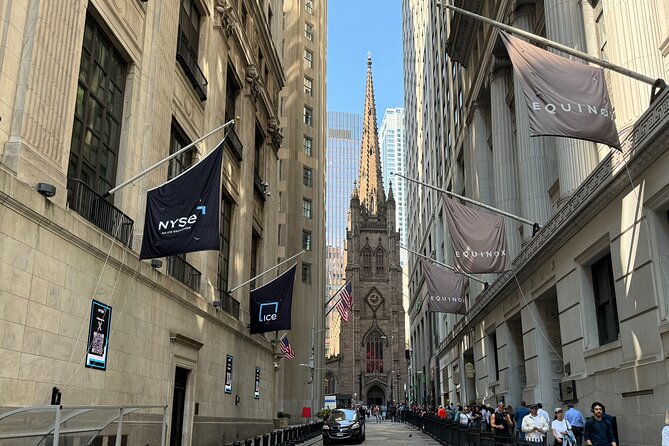
After the church, you move into the Federal Hall area. You’ll see Federal Hall linked to the 1842 design era, and then you’ll also get a visit connected to the Federal Reserve building work attributed to York & Sawyer (1924).
The Federal Reserve-related stop is a real attention-grabber because of the mission-focused message: this is where gold storage context enters the conversation, described as the place that stores most of the gold in the world. Even if you’re not obsessed with economics, this is useful. It explains why certain buildings don’t just look “impressive”—they’re designed around the seriousness of their function.
This is also where the tour’s format pays off. A guide can connect architecture to behavior: who moved through these corridors, how institutions protected space, and how financial power shaped the streetscape. With a headset on, you can actually follow the explanation while looking at details.
Possible drawback here: if you’re the type who wants lots of museum time or long interior access, the tour’s structure is more exterior-focused and story-led. You’ll get context and short looks rather than deep exploration inside every site.
Woolworth to Chase: The Vertical Push of the Financial District
Two classic “look up” landmarks follow in quick succession.
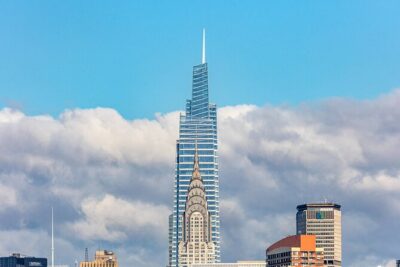
First is the Woolworth Building by Cass Gilbert (1912). This building is famous for a reason: it’s part of what taught the Financial District how to climb. When you see it as part of a walking sequence, it doesn’t feel random. You can start noticing how each era’s architectural priorities change the skyline’s mood.
Then you head to One Chase Manhattan Plaza, tied to Gordon Bunshaft (SOM) from 1960. This stop adds a different flavor. You’re no longer only dealing with early 20th-century ambition. You’re looking at mid-century corporate scale and the way public-facing art can sit inside an architecture project.
And yes, there’s time to see the public art and architecture here. That matters. A lot of tours throw art in as a background detail. This one treats it as part of the city’s design language.




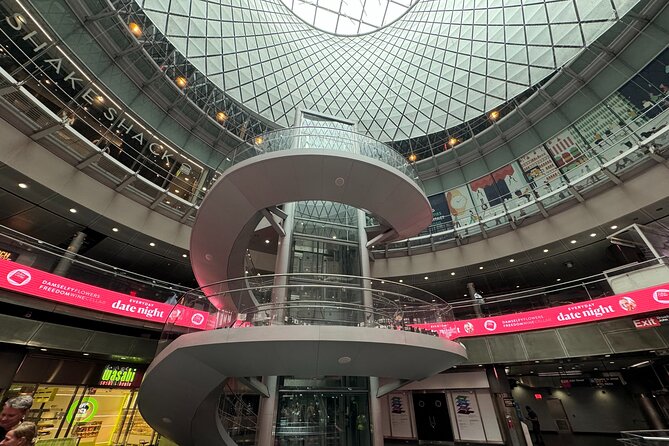
Fulton Center and the Gehry Connection: Transit Meets Architecture
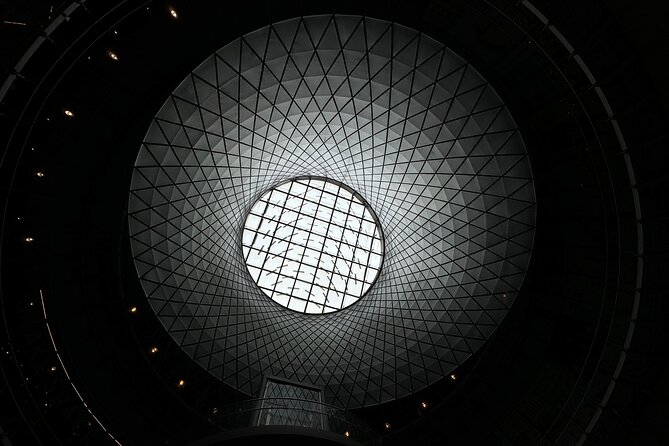
Next, you get a transit-and-design moment at Fulton Center by Grimshaw (2015). Even if you’re not riding the subway at that exact stop, the point is that this area shows how modern infrastructure becomes part of the skyline conversation.
It’s not just about trains. It’s also about light, movement, and how commuters interact with architecture every day. That’s the sort of thing you can’t fully grasp from photos unless someone points out how the building’s form guides you.
Right after that is the chance to see 8 Spruce Street connected to Frank Gehry (2010). This is one of those “wow” buildings where the shape can look like it’s doing something playful—yet it’s still part of a serious cluster of finance real estate. Watching it in the context of nearby institutional buildings helps you understand why Lower Manhattan can feel both traditional and experimental at the same time.
The National 9/11 Memorial & Museum Stop: Meaningful, Not Just Scenic
Then you reach the moment everyone remembers: the National 9/11 Memorial & Museum, created by Snohetta, Michael Arad, and Peter Walker (2011).
Even with a short time window (about 10 minutes), this stop is handled as more than a photo op. The architecture and layout of the memorial are designed to make you slow down. The museum portion gives you a short, guided way to connect the space to the bigger story of what happened here.
If you’re someone who prefers quiet and reflection over commentary, this is still a good fit. The headset helps you choose how much you want to follow, and the group pacing gives you room to look without feeling shoved forward like cattle.
Good to know: this is a heavy stop. If you’re traveling with kids or teens, it can still work—one group experience included teens enjoying the tour, largely because the guide explained things in a way that felt relevant instead of overwhelming.
St. Nicholas Greek Orthodox Church and the New Arts Signal
After the memorial area, you shift into a more modern, cultural block with major architecture.
You’ll visit Saint Nicholas Greek Orthodox Church and National Shrine, tied to Santiago Calatrava (2020). Calatrava’s work is often dramatic in form, and this stop gives you another way to interpret Lower Manhattan: not every landmark here is about finance. Some of it is about faith, national identity, and bold contemporary design.
Next comes the Perelman Performing Arts Center credited to REX (2023). This is the sort of stop that helps you broaden your understanding of the district. A walking tour like this keeps you from reducing the Financial District to just banks and stock tickers. Performing arts also shape how a neighborhood lives.
Practical tip: these stops can involve small positioning changes for angles. Keep an eye on where you stand so your view isn’t blocked when the group gathers.
Liberty Park and the World Trade Center Towers: A Skyline Lesson in Setbacks and Progress
Your route then moves through World Trade Center’s Liberty Park, giving you views of major towers, including:
- WTC1 by David Childs (SOM) (2015)
- WTC2 listed as in-process
- WTC3 by Richard Rogers (2018)
- WTC4 by Fumihiko Maki (2015)
- WTC5 listed as in-process
- WTC7 by David Childs (SOM) (2015)
You’ll also have time (about 10 minutes) to take in the composition as a set, not as separate buildings you saw at different times on your phone.
I like this part because it turns the skyline into a timeline. You’re not only looking at architecture—you’re looking at how long big cities take to rebuild, correct, and finish projects. Even hearing that some towers were listed as still in process helps you understand why the skyline can look like it’s changing mid-story.
End at the Oculus Path Station: The Final Photo Moment
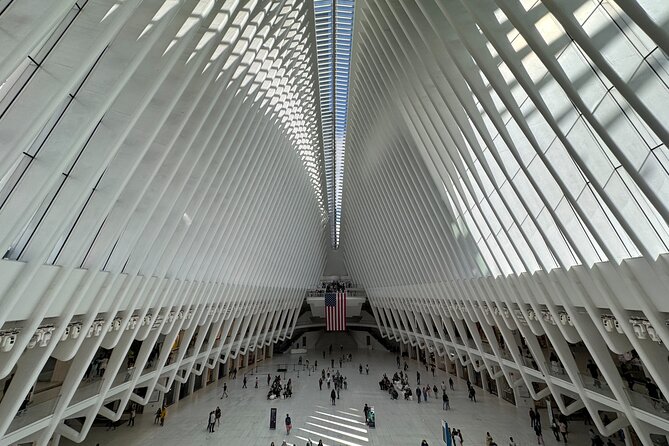
The last stop is the Oculus Path Station by Santiago Calatrava (2015). The tour ends here, and it’s easy to see why. The Oculus is built to feel like a whole event space wrapped into transit.
You’ll spend about 10 minutes here at the end—exactly when you’ll want it. By this point, you’ve seen a full run of architectural styles, and now you get one big “wrap the day” building where movement, light, and form are all working at once.
And since the tour includes a professional individual photo, the timing makes sense. You’re ending at a landmark with strong lines, so your photo looks like you were in the right place for the right reason.
Price and Value: Why $59 Works Here
At $59 per person for about two hours, you’re paying for more than a walk. You’re paying for a structured route, an expert guide, and gear that makes the experience practical: admission tickets are marked free on the tour stops, and you get professional individual headsets.
Add in the group cap of 15 travelers, the included professional photo, and the fact that you’re hitting multiple major landmarks that would take longer to coordinate on your own. If you’re short on time (or you just don’t want to guess your way through Lower Manhattan), the value is solid.
One more real-world detail: this tour averages being booked about 27 days in advance. That’s a sign of demand and usually means you’ll want to reserve sooner rather than last-minute.
Tips aren’t included, so if you like rewarding a guide for strong communication and pacing, plan for that.
Who This Tour Fits Best (And Who Might Want Another Option)
This tour is a great match if you:
- Want architecture plus stories instead of a silent photo stroll
- Like asking questions and hearing explanations as you walk
- Want a tight route that covers major Lower Manhattan highlights in about two hours
- Prefer smaller groups and clearer audio via headsets
It might not be the best match if:
- You have problems walking or can’t manage uneven sidewalks and repeated short stops
- You want long interior time at museums and churches rather than quick guided viewing
For families, it can work because the pace is guided and fast enough to keep attention. One example experience included teens enjoying the tour and a guide helping a family get to their lunch reservation right after.
Quick Tips to Make Your Walk Smoother
A few small choices can make the experience feel effortless:
- Wear comfortable shoes. You’ll be on your feet for the whole two hours.
- Bring a light layer. The Financial District can feel windy near water and open edges.
- Plan your lunch after you finish at the Oculus. Ending there makes it easier to continue your day.
- Come ready to look up. A lot of the best moments here are vertical—especially around historic and early skyline icons.
Also, don’t forget your mobile ticket. You’ll start with it and move through stops with less hassle than carrying paper.
Should You Book This Financial District Architecture Walking Tour?
Yes, I’d book it if you want a high-value, time-efficient way to understand Lower Manhattan architecture in one focused morning or afternoon. The combination of major landmarks, included headsets, a professional photo, and the inclusion of Ground Zero makes it feel like more than a sightseeing checklist.
Skip it only if mobility is an issue for you or if you’re hoping for long, slow museum time. For everyone else, this is one of those “good use of city time” walks—structured enough to be easy, and varied enough to keep you paying attention from Battery Park all the way to the Oculus.
FAQ
How long is the Financial District NYC Architecture Walking Tour?
It lasts about 2 hours.
Where does the tour start and end?
The tour starts at Castle Clinton National Monument in Battery Park (Glass Carousel area) and ends at the Oculus World Trade Center Path Station at 185 Greenwich St LL3110.
What is the price per person?
The price is $59.00 per person.
How many people are in each group?
The tour has a maximum of 15 travelers.
Is a mobile ticket used?
Yes, the tour uses a mobile ticket.
What’s included in the price?
The price includes all fees and taxes, plus professional individual headsets for each guest.
Are admission tickets included?
Admission is listed as free for the stops included in the tour schedule.
Does the tour include a visit to Ground Zero?
Yes, the route includes the National 9/11 Memorial & Museum stop.
Is the tour suitable for people who have trouble walking?
It is not recommended for people who have problems walking.
What happens with cancellation if the weather is bad?
The tour requires good weather. If it’s canceled due to poor weather, you’ll be offered a different date or a full refund. You can also cancel for a full refund up to 24 hours in advance. Service animals are allowed.