REVIEW · NEW YORK CITY
Greenwich Village Historic Walking Tour
Book on Viator →Operated by Epic Walking Tours · Bookable on Viator
Greenwich Village history hits your feet. This guided walk runs about 2 to 3 hours and threads major moments—from the 1600s to 1969—right as you pass landmarks on foot, with historical photos at key corners.
I also like that the guide, Andrew Kirschner, brings real energy and can tailor the depth when the group is small. Just note this is an outdoor walk that depends on good weather, so plan for a change if conditions are bad.
In This Review
- Key things that make this tour worth your time
- A 2–3 hour walk that covers centuries in Greenwich Village
- Washington Square Park: the gateway to activism (and earlier than you think)
- Edward Hopper’s former home and why the Village shows up in his art
- Jefferson Market Library: a Victorian Gothic courthouse with a jail past
- Emma Lazarus House: the poet behind the Statue of Liberty connection
- Stonewall Inn: 1969 raids, resistance, and the spark of change
- Cherry Lane Theatre: old off-Broadway roots in a quiet corner
- Northern Dispensary: a landmark court case tied to care starting in 1827
- Marie’s Crisis Café and Thomas Paine: politics in a piano bar
- Society Cafe: the first racially integrated night club doorstep
- Triangle Shirtwaist Factory: ending where the tragedy reshaped labor laws
- Optional pizza add-on: what the $19 segment really buys you
- How to make the most of this walking style
- Who should book this Greenwich Village tour
- Should you book it?
- FAQ
- How long is the Greenwich Village Historic Walking Tour?
- What does the tour cost?
- Where does the tour start, and when?
- Is the tour in English, and do I need a printed ticket?
- Are admissions included to the stops?
- Is there an optional pizza add-on?
Key things that make this tour worth your time
- Photo-led storytelling that adds context at Washington Square Park and beyond
- Andrew Kirschner’s style: enthusiastic, friendly, and adaptable to what your group wants
- Big-name stops without museum fatigue, including Stonewall Inn and the Triangle site
- Justice-and-culture themes that connect trials, rights movements, theater, and art
- English narration with a mobile ticket for easy entry
- Optional pizza segment that adds about an extra hour for the $19 add-on
A 2–3 hour walk that covers centuries in Greenwich Village
This is a classic neighborhood walking tour: you start at Washington Square Park and finish back near the same spot. The time moves fast in a good way, with brief, focused moments at each location so you can see a lot without feeling trapped in one museum room.
At $39 per person, you’re paying for a guided experience plus admission where it’s offered at the locations along the route. The group is capped at 20 travelers, which helps keep the story flow from getting lost in the crowd.
It’s also meant for ordinary walkers. Most people can handle it, but you’re still on foot for the full stretch, so wear shoes you’d happily wear for a long city stroll. And remember: the operator says the experience requires good weather, which matters in a city that loves a surprise drizzle.
You can also read our reviews of more walking tours in New York City



Washington Square Park: the gateway to activism (and earlier than you think)
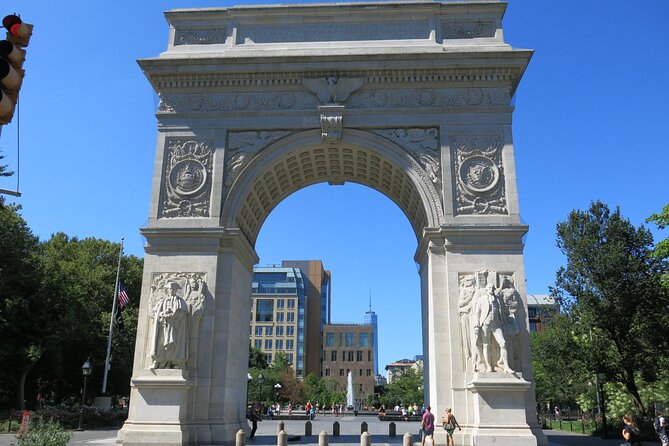
Washington Square Park is where the tour earns its reputation. You start here and get the story from the ground up, with details that reach back to the 1600s—far earlier than most people expect when they think of this place as a modern Village postcard.
You’ll hear how the park shifted roles over time: used as a potter’s field, later turned into a parade ground, and eventually becoming a symbol and stage for activism, art, and rebellion. You’re not just reading about it—you’re standing in the exact space where those layers took shape, with historical photos helping you picture what came before.
One practical tip: this is also a smart place to get your bearings fast. If you want the rest of the walk to make sense, take a minute here to look around before the guide starts connecting dots across the neighborhood.
Edward Hopper’s former home and why the Village shows up in his art
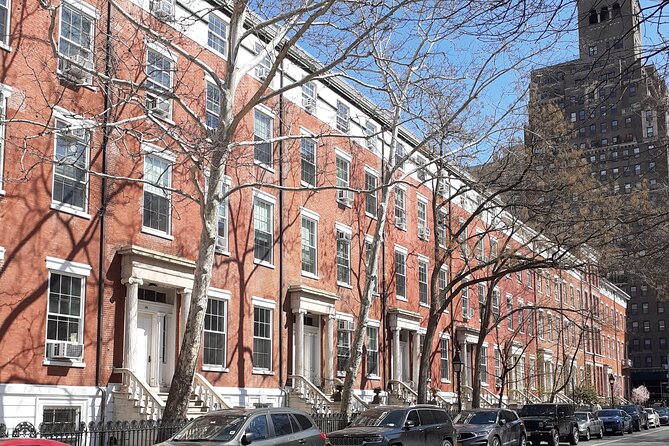
Right after the big park story, the tour points you toward the former home of American artist Edward Hopper. The idea isn’t to turn you into an art critic; it’s to show how the neighborhood’s feel helped shape Hopper’s stark, contemplative style.
It’s a quick stop, but it changes how you see the Village. Suddenly you notice things like mood, emptiness, and the quiet tension that can live in a street scene. If you like art that looks simple but hits hard, you’ll enjoy this turn in the route.
You’ll also appreciate the pacing: the tour doesn’t linger so long that you start tuning out. It keeps you moving while still giving you a reason to care about what you’re looking at.
Jefferson Market Library: a Victorian Gothic courthouse with a jail past
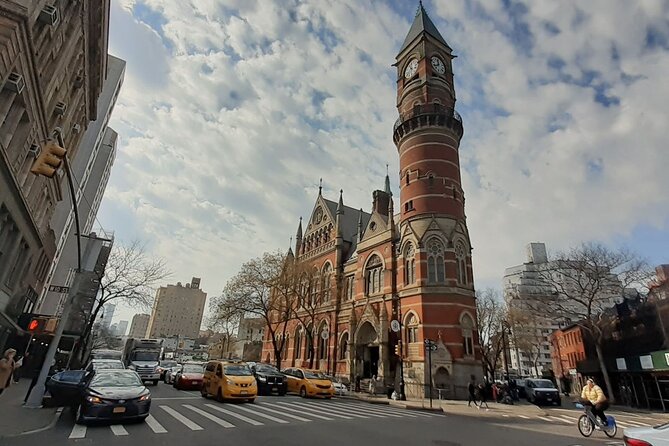
The walk’s most dramatic building stop is Jefferson Market Library, tied to the old Jefferson Market Courthouse. You’ll step into the story of a Victorian Gothic structure that once housed a working jail in the 1870s—and you’ll hear how it also served as a women’s court.
This is where the tour’s justice theme gets real. The building is beautiful, but the point is that the law and the people inside it weren’t abstract. You’ll learn how this site handled notorious criminals and played a surprising role in New York’s fight for justice and women’s rights.
If you’re the type who likes history that doesn’t hide the messy parts, this stop will likely be a highlight. Just know it’s one of the places you’ll want to listen carefully, because the tour is packing a lot into the time you have inside.
Emma Lazarus House: the poet behind the Statue of Liberty connection
Next comes Emma Lazarus House, a stop built around one of America’s best-known poets and her ties to the Statue of Liberty. This is the tour going from courts and crime to language, compassion, and the ideas that travel far beyond the neighborhood.
You’ll hear how Lazarus’s work connects to the Statue of Liberty story—helping you see why the monument matters to more than just skyline views. Instead of treating the Liberty image like a symbol you’ve already “seen,” the tour frames it as something with human writing at the center.
It’s a shorter stop, but it lands well if you’re into the way art and activism can share the same streets.
You can also read our reviews of more historical tours in New York City






Stonewall Inn: 1969 raids, resistance, and the spark of change
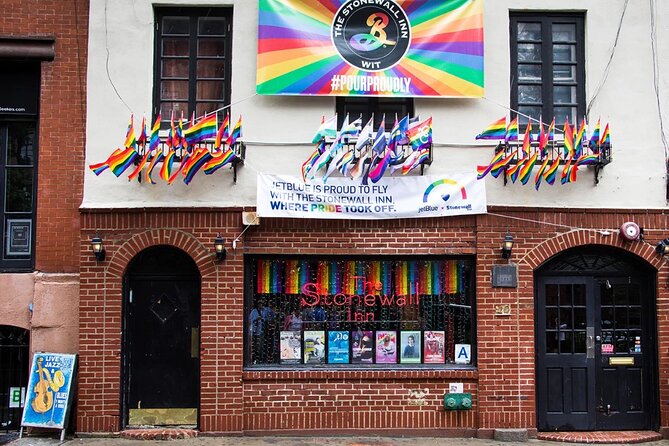
The tour’s LGBTQ+ history stop is outside Stonewall Inn. You’ll go back to the summer of 1969 and talk through the tensions, raids, and acts of resistance that led to the Stonewall Uprising.
This is one of those places where the guide’s tone matters. The tour focuses on what people did, not just what happened. You’ll hear stories of brave individuals who pushed back against oppression—stories that helped turn local conflict into a global movement for equality and visibility.
It’s short in time, but heavy in meaning. If you’re sensitive to emotional history, you might appreciate this stop most when you give yourself a moment afterward to reset before moving on.
Cherry Lane Theatre: old off-Broadway roots in a quiet corner
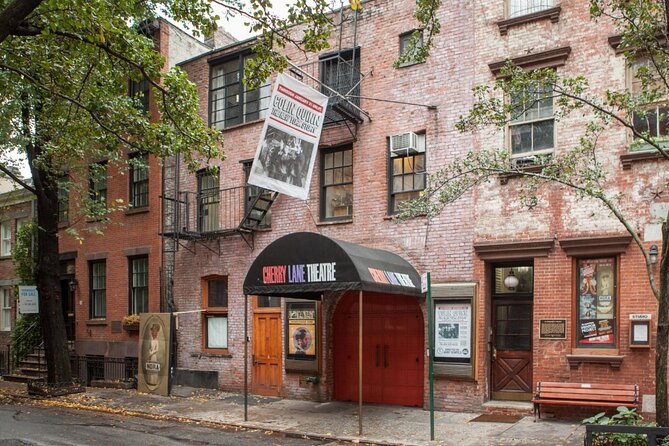
Not every history stop is about trials or politics. Cherry Lane Theatre brings you into culture.
You’ll learn that it’s the oldest continuously operating off-Broadway theater in New York City. The tour also explains how this intimate Village venue has launched careers over the years and why this kind of room matters for bold work—because smaller stages can take bigger risks.
If you’re into theater, you’ll likely leave with a stronger sense of what “off-Broadway” actually means on the ground: not lesser, just closer, and more willing to try things before they’re famous.
Northern Dispensary: a landmark court case tied to care starting in 1827
The Northern Dispensary stop connects a medical center to a landmark court case that helped ignite a social justice movement. The date you’re given—1827—is a reminder that fights for fair access weren’t invented in modern times.
This stop works especially well if you like history that links everyday services (like care) to legal battles. It’s not just a story about an institution; it’s about how systems get challenged and changed.
It’s a quick stop, but it adds an important angle to the tour’s mix of politics, rights, and community action.
Marie’s Crisis Café and Thomas Paine: politics in a piano bar
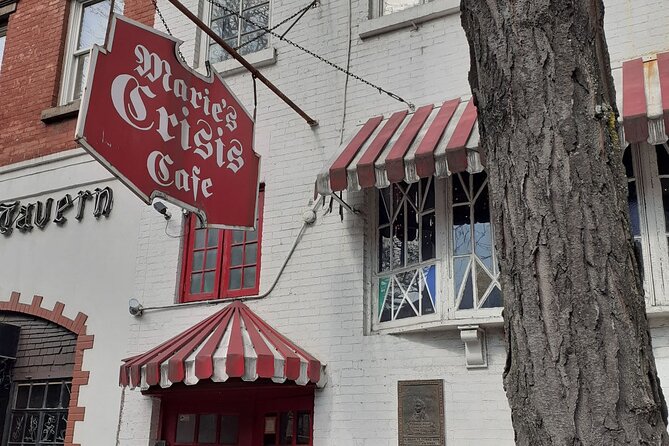
At Marie’s Crisis Café, the tour turns a corner of the Village that many people may walk past without realizing the significance. You’ll hear that long before it became a beloved piano bar, the site was the final home of Thomas Paine, writer of Common Sense and a founding voice of American democracy.
This is one of those moments where the neighborhood feels like a living scrapbook. The building holds layers: after the street-level music vibe, you’re suddenly reminded that revolutionary ideas had a place here too.
If you enjoy history that’s not always obvious from the sidewalk, this is the kind of stop that keeps the tour feeling fresh instead of repetitive.
Society Cafe: the first racially integrated night club doorstep
Next is Society Cafe, tied to the story of the first racially integrated night club in New York. You’ll stand at the doorstep and hear about the trailblazers who performed there, turning the building into more than a backdrop.
This stop is a quiet but important reminder: night life wasn’t just entertainment. It could be a venue for social change, where people tested new norms in public.
It’s also brief, so if you care about this topic, take a second to slow your brain down as the guide is talking. This is the kind of story that pays off when you give it full attention for the few minutes you have.
Triangle Shirtwaist Factory: ending where the tragedy reshaped labor laws
The walk finishes back in Washington Square Park, at the site connected to the Triangle Shirtwaist Factory fire, now a National Historic Landmark. Here the tour pauses on the human cost: 146 lives lost in 1911.
But the tour doesn’t stop at tragedy. You’ll also learn how activism and bravery from the women affected sparked lasting reforms in labor laws and helped fuel the women’s suffrage movement.
This ending is one of the reasons the tour feels more than like a list of landmarks. It ties the Village’s identity to real change that reached far beyond the neighborhood borders.
Optional pizza add-on: what the $19 segment really buys you
After the main walk, there’s an optional pizza add-on for $19 per person. The pizza portion adds about one extra hour, and it includes slices from three top pizzerias.
One key detail to plan around: the info provided says the $19 price covers admission only, while food and drinks are purchased separately. So budget for actual pizza and beverages on top of the add-on fee.
If you like the idea of stretching the day a bit longer without jumping into another appointment, the pizza segment is a fun way to keep your momentum. If you’re short on time or prefer your own food plan, you can skip it and still get a full, satisfying walking experience.
How to make the most of this walking style
This tour’s biggest advantage is how it treats the neighborhood like a storybook you read with your feet. The stops are short, but the guide uses context so you don’t feel like you’re just ticking off famous names.
A few practical moves help a lot:
- Wear shoes with real grip and plan for uneven sidewalks.
- If you’re the type who takes photos, save your camera for the historical photo moments the guide points out.
- Since the schedule is built around multiple quick site visits, bring your questions and let the guide answer them as you walk.
Also, this is offered in English with a mobile ticket, so you can keep your day simple. Confirmation happens at booking, and the operator notes it’s near public transportation, which is helpful if you want to pair it with other nearby Village plans.
Who should book this Greenwich Village tour
I’d point you here if you want a neighborhood walk that mixes art, crime-and-courts history, theater, and movements for rights. It’s especially attractive if you like stories that connect people and places—why a building matters, why a street matters, and how those meanings changed over time.
It also fits well if you enjoy guided attention. The reviews and guide responses mention personalized attention on small days, with the guide adjusting depth and pacing. That kind of flexibility can turn a standard walk into something more like a conversation with a city expert.
If your idea of history tourism means long museum time indoors, this may feel too outdoors. But if you like walking and learning as you go, it’s a strong match.
Should you book it?
If you’re visiting Greenwich Village and want more than photos and coffee stops, this tour is a solid choice. The value comes from packing major themes—justice, art, theater, and rights movements—into a route that keeps moving and uses helpful context like historical photos.
Book it if you’re comfortable walking for a few hours and you can work with weather-based changes. Skip the pizza add-on if you already have a food plan, but consider it if you like turning the last hour into something casual and local.
Bottom line: for $39 with admission included at many stops and a guide who clearly cares about the details, it’s a strong way to get beneath the surface of the Village without wasting your day.
FAQ
How long is the Greenwich Village Historic Walking Tour?
The tour lasts about 2 to 3 hours.
What does the tour cost?
The price is $39.00 per person for the walking tour.
Where does the tour start, and when?
The tour starts at Washington Square Park, New York, NY 10012 at 10:00 am. It ends back at the meeting point.
Is the tour in English, and do I need a printed ticket?
The tour is offered in English and uses a mobile ticket.
Are admissions included to the stops?
The information provided says admission tickets are included at the listed locations throughout the walk (with at least one stop marked as free).
Is there an optional pizza add-on?
Yes. A pizza option is available for $19.00 per person and adds about one hour after the walking tour ends. The information also notes food and drinks are purchased separately.