REVIEW · NEW YORK CITY
Greenwich Village NYC Pizza Walking Tour
Book on GetYourGuide →Operated by Scott's Pizza Tours · Bookable on GetYourGuide
Three slices, one walking story of pizza. This Greenwich Village tour turns ordinary eating into a street-level lesson on how pizza changed from southern Italy to America’s industrial cities, and it’s built around three different pizzerias. I especially like the way the guide connects what you taste to the stages of dough, sauce, and baking so you can actually see pizza evolving as you walk.
I also love the human part: you spend time with owners and pizzaioli (pizza makers), so the tour is more than facts on a map. You’ll even get a Pocket Pizza Journal to track what you’re tasting. One possible drawback: if you came for lots of extra neighborhood storytelling, the focus can skew strongly toward pizza technique and history.
In This Review
- Key things to know before you go
- Why Greenwich Village is a pizza classroom
- The 150-minute walking route and the energy level
- Stop 1: Pizza’s southern Italy roots on a hot slice
- Stop 2: When American cities changed what pizza became
- Stop 3: New York oven rhythm and slice shop culture
- Meeting owners and pizzaioli: the part that makes it real
- The Pocket Pizza Journal: small tool, big payoff
- Price and value: is $65 fair for three slices and a lesson?
- What to eat (and what not to) before you start
- Which guide style will you get?
- Who this tour is perfect for
- Should you book it?
- FAQ
- How many pizza stops are included?
- How long is the Greenwich Village pizza walking tour?
- Where do I meet the tour?
- Does the tour run in bad weather?
- What’s included in the price?
- Are beverages included?
- Is the tour wheelchair accessible?
Key things to know before you go
- Three pizzeria stops that correspond to different stages of pizza development, not just random sampling.
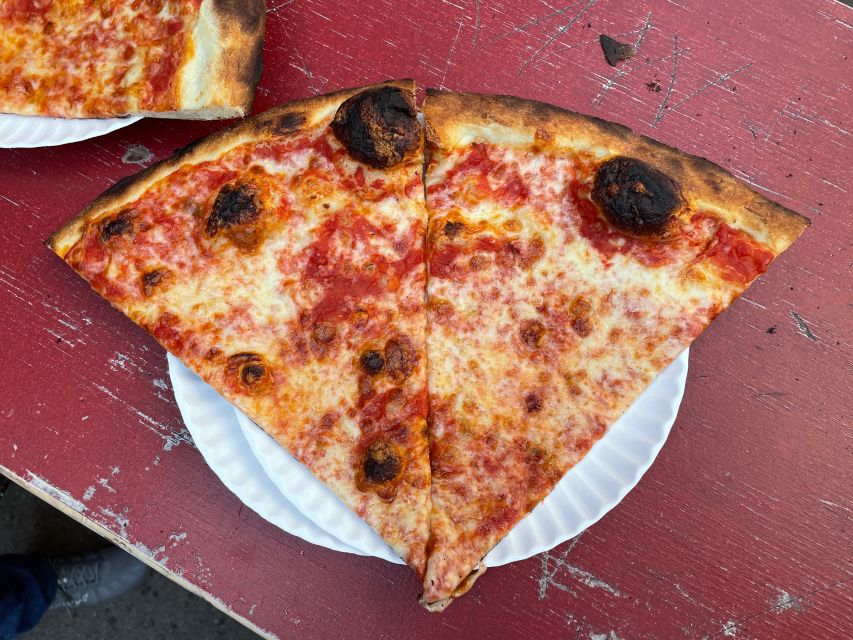
- Oven-to-oven comparisons including how heat and baking patterns affect the crust.
- Time with owners and pizzaioli, with talk of dough stretching and cooking tricks.
- Pocket Pizza Journal so you leave remembering styles, textures, and what you liked.
- A guided walk through Greenwich Village and SoHo that keeps you moving at a comfortable pace.
Why Greenwich Village is a pizza classroom
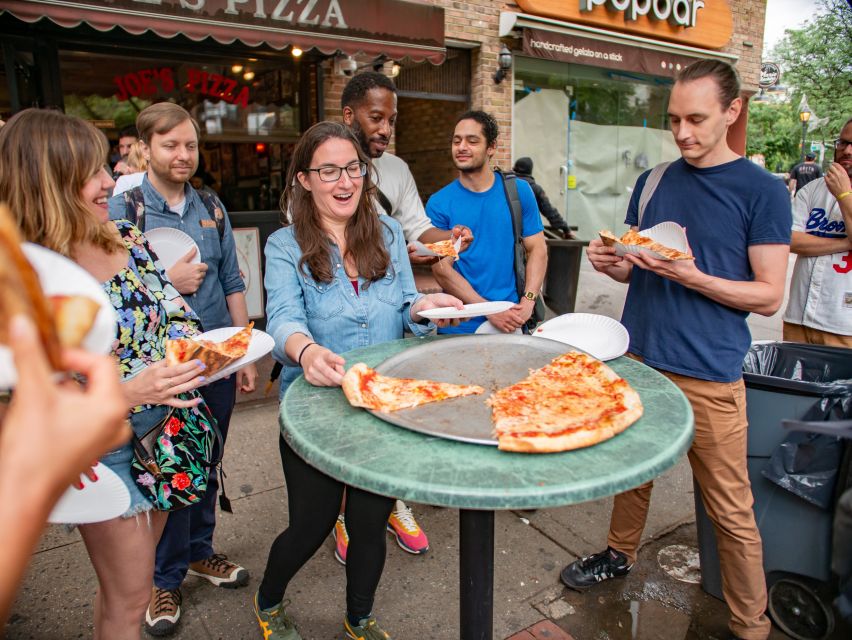
Greenwich Village is one of New York’s easiest neighborhoods to study pizza in real life. You’re walking through streets where old-school pizzerias rub shoulders with newer slice culture, and that mix matters because pizza in New York didn’t happen in a vacuum. It absorbed immigrants, equipment, and working-class schedules—then kept changing.
This tour leans into that reality. You start with the humble origins of America’s favorite food and connect them to what’s happening right now in the window: coal-fired brick ovens, corner slice shops, and the way industrial cities shaped what people wanted for quick, hot meals.
If you’re the kind of person who notices the difference between a chewy fold and a crackly edge, this will feel satisfying. The tour doesn’t treat pizza like a single dish; it treats it like a moving target.
You can also read our reviews of more walking tours in New York City



The 150-minute walking route and the energy level
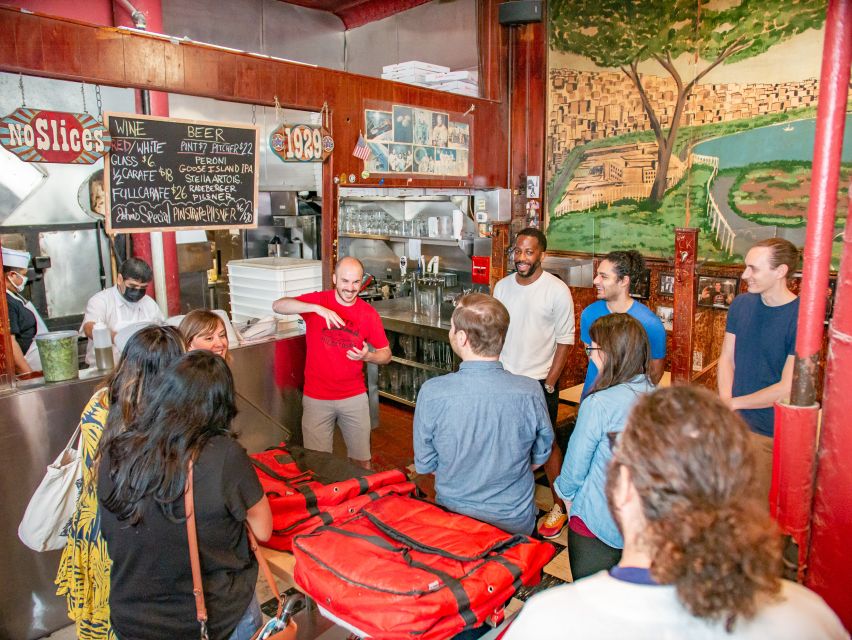
You’re out for about 150 minutes, which is long enough to feel like more than a quick bite, but not so long that you’re rushing. The format is simple: you walk through Greenwich Village and nearby SoHo, stop at three pizzerias, and you get pizza slices at each one.
The tour runs rain or shine. If weather gets dangerous, you’ll get an update by 10:00 on the day of the tour. That matters because it’s a walking experience, not a sit-down class.
Meeting point is John’s of Bleecker Street, 278 Bleecker Street, New York, NY 10014. You check in about 15 minutes before the start, then the guide begins. Wear comfortable shoes. You’ll be on foot, and the route is designed to keep you close enough to other stops without turning it into a long slog.
Wheelchair accessibility is listed, which is a big plus if you need a route that works for mobility needs.
Stop 1: Pizza’s southern Italy roots on a hot slice
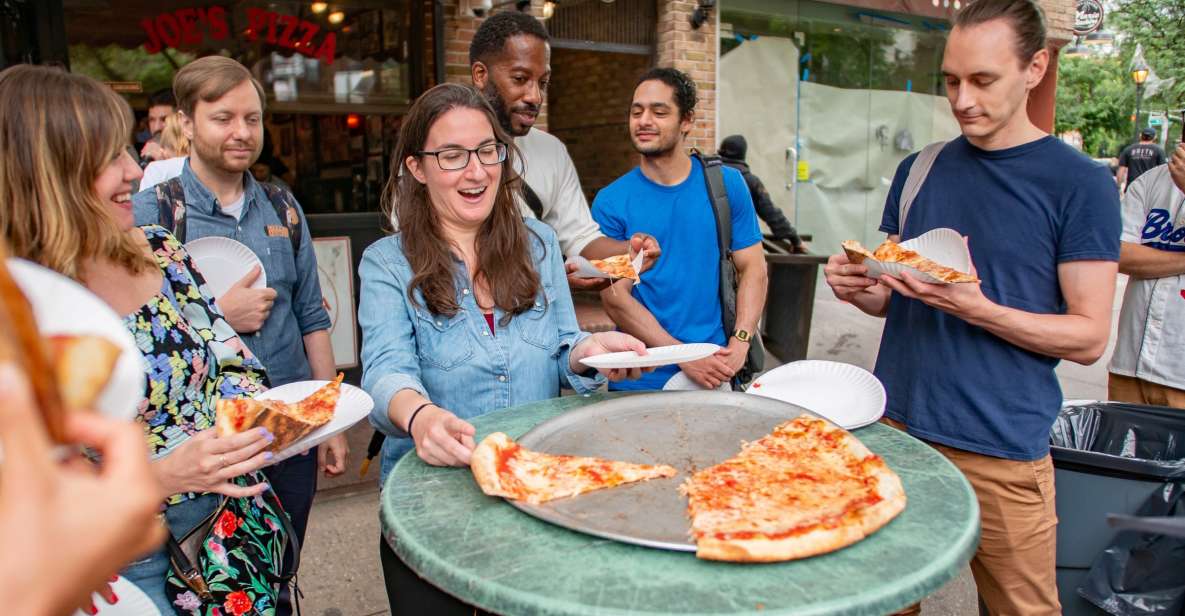
The first tasting is about beginnings—where pizza starts as a tomato-based flatbread tradition and how that influences dough and topping choices. Even before you get to the details of the recipe, you get the framework: different stages of pizza development produce different results in the crust, the sauce, and the balance of chew versus crisp.
What to watch for at this early stop:
- How the dough looks and feels after baking—especially the edges.
- How the tomato-sauce style comes through and whether it stays bright or cooks down.
- Whether the slice is built for folding, eating slowly, or grabbing on the move.
This is where the guide’s job really kicks in. The tour is structured so you don’t just taste; you learn what to pay attention to next. If you’ve ever wondered why one slice tastes deeper while another tastes more straightforward, this is where you start getting answers tied to oven style and dough handling.
Stop 2: When American cities changed what pizza became
The middle stop is where pizza starts acting like it’s in America—shaped by industrial cities, pace, and the reality of feeding lots of people fast. The tour frames this as a transformation phase: pizza becomes more standardized in how it’s cooked, portioned, and served, while still keeping a strong link to its Italian base.
This stop is especially good if you’re curious about how technique turns into a signature style. You’ll get talk about things like dough stretching—what the maker does before the oven changes the final texture—and you’ll hear about baking patterns and heat behavior across different ovens.
What to compare here:
- Does the crust puff differently?
- Does the sauce feel thicker, sweeter, or more cooked down?
- Do you notice a shift in the balance between char spots and softer sections?
The tour’s big value is that it gives you a lens. By now you’re not just rating slices; you’re connecting cause and effect.
Stop 3: New York oven rhythm and slice shop culture
The last stop is where the lesson lands in modern New York. You’ll see how pizza culture in the city developed into something recognizable: the quick rhythm of slice shops, the repeatable baking style that creates consistent crust results, and the way different ovens create different browning and blister patterns.
At this stage, the tour’s oven comparison really matters. You aren’t just learning that ovens are different; you learn what that difference means when you take a bite. Coal-fired brick ovens can give a particular kind of heat behavior. Different oven temperatures and baking patterns can produce distinct crust character—crisping, softening, or blistering in a way you can literally see.
In the group, this is often the moment people start arguing (politely) about their favorite style. That’s not a bad sign. It means the tour is giving you enough structure to make your own pizza judgment instead of letting your opinion float in the dark.





Meeting owners and pizzaioli: the part that makes it real
Plenty of food tours give you a talking guide and call it a day. This one gives you something more grounded: time with owners and pizzaioli.
That access changes the tone. When the pizza maker talks through dough stretching and cooking tricks, you get the details behind the flavor. It also helps you understand that pizza isn’t just one recipe. It’s a set of choices made repeatedly—how long dough rests, how toppings are handled, how the oven is loaded, and what heat does over time.
The guides listed by recent participants—names like David and Assad show up—tend to bring real enthusiasm. One guide stood out for humor and serious pizza passion, and that kind of energy helps you stay engaged for the full 150 minutes without feeling like you’re sitting through a lecture.
You’ll leave this tour with the feeling that you can talk pizza without sounding like you memorized facts.
The Pocket Pizza Journal: small tool, big payoff
The tour includes a Pocket Pizza Journal, and that’s more useful than it sounds. When you taste three different styles close together, everything can blur: crispness, chew, sauce intensity, char level, even the way the slice folds.
The journal gives you a simple way to keep track in real time. You can jot down:
- What you liked most about each crust.
- The sauce vibe (more cooked down, more bright, more structured).
- What the oven seems to do to texture.
It also makes the tour more satisfying after you’re done. Instead of remembering one overall impression, you remember a trio—so you can choose future pizza places with more confidence.
Price and value: is $65 fair for three slices and a lesson?
At $65 per person for about 150 minutes, you’re paying for more than pizza. You’re paying for:
- Three pizza tastings at separate pizzerias.
- A licensed tour guide focused on pizza history and technique.
- Walking time through Greenwich Village and SoHo with built-in context.
- Direct conversation time with owners and pizzaioli.
- A Pocket Pizza Journal.
If you compare it to buying three slices on your own, the cost looks higher—because you’re not just purchasing food, you’re purchasing structure, access, and education. In practical terms, this is the kind of tour that can save you money later because it teaches you what to look for. You’ll make better choices when you’re choosing your own pizza without a guide.
It’s also a good deal if you’re going with someone who wants a fun activity but also cares about food quality and technique. Two pizzas plus an evening of wandering might cost similar money in New York; here you’re getting both food and a clear theme.
What to eat (and what not to) before you start
Since the tour includes pizza slices at three stops and doesn’t include beverages, plan to be hungry but not stuffed. If you eat a big meal right before, you’ll miss the point of comparing crust and sauce differences.
A few practical tips:
- Bring water on your own since beverages aren’t included.
- Wear shoes that handle uneven sidewalks.
- Dress for the weather; you’re walking rain or shine.
If you have dietary restrictions, the tour data doesn’t list special accommodations. It’s worth checking directly with the operator before you book.
Which guide style will you get?
Scott’s Pizza Tours runs this experience, and the guides can bring different personalities. Recent departures show guides like David and Assad have been praised for enthusiasm and knowledge, while other guide names mentioned include Laura and Scott.
What you can count on is the theme: pizza history, dough and cooking technique, and comparisons across different ovens. The guide’s job is to translate what you’re seeing and tasting into something you can repeat in your own pizza choices.
If you like food facts that actually connect to flavor, you’ll probably enjoy the energy.
Who this tour is perfect for
This works best if you’re one of these:
- A pizza fan who notices texture differences and wants reasons behind them.
- A first-time New Yorker who wants a neighborhood walk that’s tied to food culture.
- A group of friends who can appreciate both talk and tastings.
It’s also a smart pick for foodies traveling with mixed tastes. The walk is in a classic part of NYC, and the pizza theme gives everyone a shared story even if you don’t agree on the best slice.
Should you book it?
If your idea of a great time includes both wandering and tasting with a real food brain behind the counter, I think this tour is worth booking. It’s not a random sampling. It’s built like a pizza timeline, and the access to owners and pizzaioli makes it feel connected to real craft, not just marketing.
Skip it if you’re primarily looking for long neighborhood storytelling with minimal pizza focus. The tour’s weight is clearly on pizza technique and history, and that’s the whole point.
If you do book, come prepared to walk, come hungry enough to taste three places, and use the Pocket Pizza Journal. You’ll get more out of the tour that way—and you’ll leave with a better eye for what you’re actually eating.
FAQ
How many pizza stops are included?
The tour includes pizza slices at three Greenwich Village pizzerias.
How long is the Greenwich Village pizza walking tour?
It runs for 150 minutes.
Where do I meet the tour?
Meet at John’s of Bleecker Street, 278 Bleecker Street, New York, NY 10014. The guide begins check-in about 15 minutes before the tour starts.
Does the tour run in bad weather?
Tours run rain or shine, but if conditions become dangerous, the operator will contact you by 10:00 on the day of the tour with updates.
What’s included in the price?
Pizza slices at three pizzerias, a guided walk through Greenwich Village and SoHo, historic sights, a Pocket Pizza Journal, and guidance by a licensed tour guide.
Are beverages included?
No. Beverages are not included.
Is the tour wheelchair accessible?
Yes, the tour is listed as wheelchair accessible.