REVIEW · NEW YORK CITY
Greenwich Village Soho Little Italy/Paris Chinatown Walking Tour
Book on Viator →Operated by Kaissa Tours · Bookable on Viator
New York changes block by block, and this route teaches you how. I love the way it stitches together neighborhood history with what you can actually see on the sidewalk, and I also love how quickly it gives you real city bearings. One thing to consider: it moves at a steady pace, so if you want long lingering stops, this won’t be the tour for that.
You’ll start in the Village’s music-and-art orbit, then hit Stonewall, SoHo cast-iron blocks, a Little Paris sign moment, the leftover feel of Little Italy, and then land in Chinatown at full sensory volume. The guide’s approach is narrative, not just sightseeing—so you finish with context, not a photo dump.
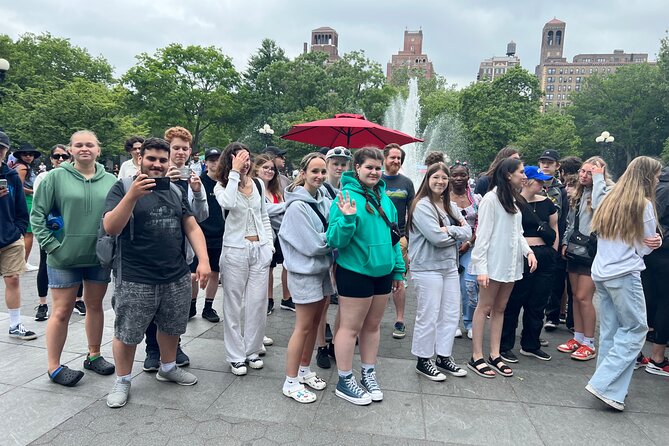
This is a small-group walk (up to 25 people) with a guide from Kaissa Tours, and it runs about 2 to 3 hours. It’s offered in English, with a mobile ticket and a speaker used for the guided narration at stops.
In This Review
- Key things you’ll feel right away
- Why this Greenwich Village to Chinatown walk is such a smart use of time
- Washington Square Arch and the Village’s rock-and-arts origin story
- Stonewall Inn: LGBTQA+ history, before and after the uprising
- SoHo: cast-iron architecture you can actually spot
- The Little Paris sign between Soho and Little Italy
- Little Italy: what’s left, and the mafia-era context
- Chinatown: a city within a city, ending near Doyers St
- Price and value: what $56 buys you on this route
- Who should book this walking tour
- Should you book it? My practical take
- FAQ
- How long is the walking tour?
- Where does the tour start and end?
- What is the price?
- Is the tour offered in English?
- What’s included in the tour?
- What are the tour’s group limits?
- Can I bring a service animal?
- Do I need to tip?
- What if I cancel?
Key things you’ll feel right away
- A tight route across six stops that covers major “who lived here” chapters of NYC
- Stonewall Inn storytelling that includes pre-uprising context and what changed right after
- SoHo’s cast-iron blocks explained so you know what you’re looking at (not just what to buy)
- Little Paris and the “between-neighborhoods” vibe—a quick look at how areas reinvent themselves
- Little Italy then Chinatown as a contrast: atmosphere and migration in two different tempos
Why this Greenwich Village to Chinatown walk is such a smart use of time
A good NYC walking tour does two things. It shows you interesting places, and it teaches you how to read the city—why these streets look the way they do, and why people moved the way they did. This one is built for that. You cover several distinct areas in a short window, which is perfect when you only have a day or two and want your brain to feel organized afterward.
I also like the balance here: it’s not just “and then we walked to a landmark.” The guide uses a historical lens, including a critical look at how forces like colonialism and capitalism shaped NYC over time. That makes the tour feel less like a script and more like a conversation with the past.
The neighborhoods on this route aren’t random. They connect the Village’s creative scenes, Stonewall’s civil-rights turning point, SoHo’s design-and-commerce story, and the waves of immigrant community life you see from Little Italy to Chinatown. If you like understanding why a neighborhood matters, not just that it exists, you’ll get a lot out of it.
You can also read our reviews of more walking tours in New York City



Washington Square Arch and the Village’s rock-and-arts origin story
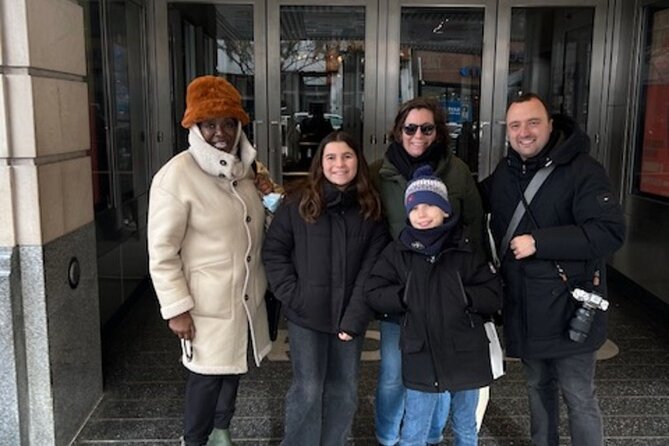
You start at the Washington Square Arch, and the first stop is Washington Square Park with an audio segment. This is a great warm-up because the park is one of those NYC places that feels timeless, even though it’s been through multiple eras. It’s also a natural place for a “how the Village became the Village” talk.
Expect the guide to focus on the Village’s bohemia-era energy and artist culture, plus the more specific attitudes that grew from it—there’s a nod to the Village’s bitnik culture as part of the story. The practical value: once you understand that the Village has been a magnet for artists, activists, and outsiders, the rest of the walk clicks into place.
One small reality check: since the first stop is audio-based, you’ll want to keep your device/ear situation ready—especially if it’s loud outside or you’re sharing attention with your group. If you’re the type who likes to take photos while listening, aim to pause and switch modes so you don’t miss the key story beats.
Stonewall Inn: LGBTQA+ history, before and after the uprising
Next is the Stonewall Inn, and this is where the tour turns from neighborhood charm to real civic history. The narration covers the account of NYC’s LGBTQA+ community before the uprising, then moves through the Stonewall Uprising itself, and finally explains the immediate aftermath and how Pride gained momentum.
I like this stop because it doesn’t treat Stonewall as a single icon. It frames it as a turning point that grew out of earlier community life and activism. That matters, because it helps you connect what you’re seeing now—people’s memorials, the holiday energy, the cultural references—to the deeper story beneath it.
Also, your guide is likely to bring a human tone to it, not just a textbook one. In a prior stop on the route, you learn how scenes form; here, you learn how change happens when people refuse to stay invisible. If you care about history that connects directly to rights and communities, this is the emotional anchor of the walking tour.
SoHo: cast-iron architecture you can actually spot
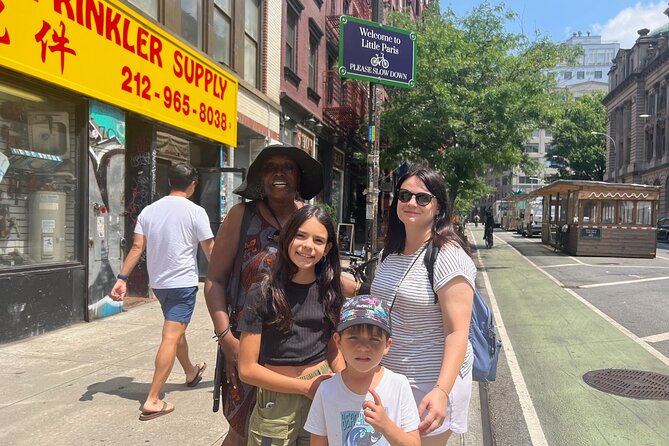
After Stonewall, you move into SoHo. The tour spotlights cast-iron buildings—specifically the cast-iron structures that now house luxury boutiques. That may sound like fashion talk, but the value is architectural literacy.
SoHo can be visually overwhelming if you just wander. But once someone points out what you’re seeing—those cast-iron facades, the way the buildings read as a design choice rather than an accident—you start noticing details. It changes your walk from shopping-adjacent to architecture-adjacent, even if you don’t buy anything.
This stop is also a reminder of how neighborhoods shift economically. The guide’s broader historical lens (including critiques of capitalism) helps you see the transition: how an area’s built form and location can outlast its original use, then get reinterpreted for new markets.
Practical note: SoHo streets can feel crowded. Wear comfortable shoes and keep an eye on your footing. Short stops are great, but the sidewalks here can still be busy enough to make it feel like you’re walking through both art and logistics at the same time.
The Little Paris sign between Soho and Little Italy
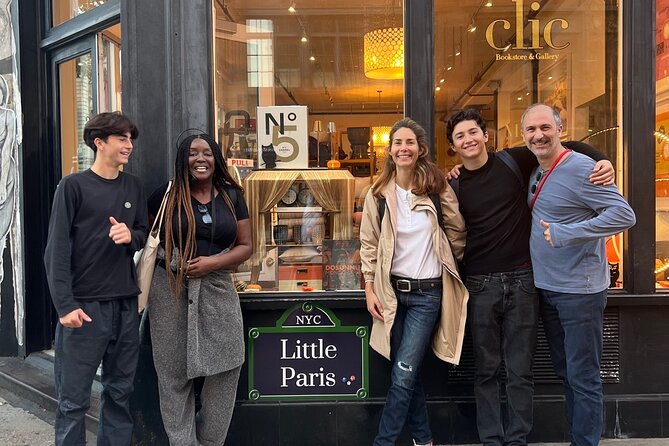
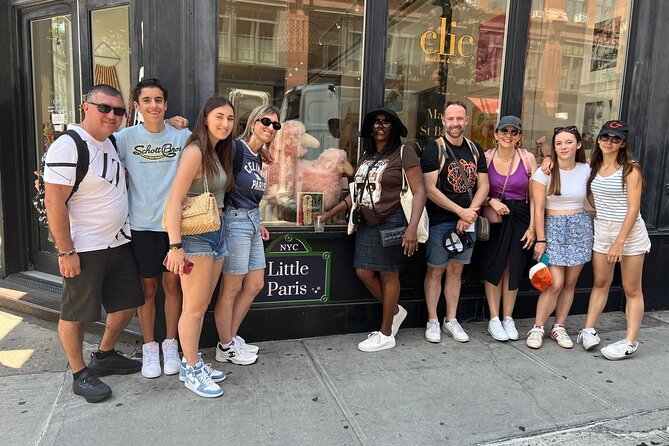
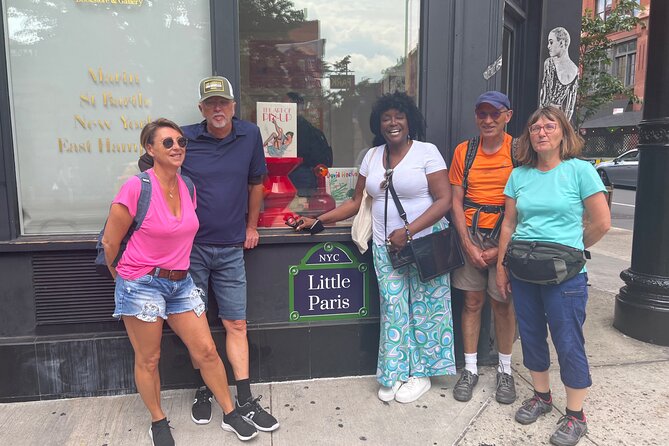
Then you’ll get a quick, interesting “in-between” moment: a Little Paris sign. The tour explains this as an area that’s soon to be officialized as a French enclave between Soho and Little Italy.
This stop is not about checking a box. It’s about noticing NYC’s habit of re-labeling spaces. Neighborhood identities shift, slogans appear, and business clusters follow culture and customers. You’ll come away with a better eye for how “themed” areas form, and what that might mean for real communities over time.
If you enjoy street-level cultural geography—how languages, storefronts, and signage reflect migration patterns and changing economies—this little detour is worth it. If you’re hoping for a long, sit-down cultural experience, keep your expectations modest: this is a short narrative stop, designed to give context before you move on.






Little Italy: what’s left, and the mafia-era context
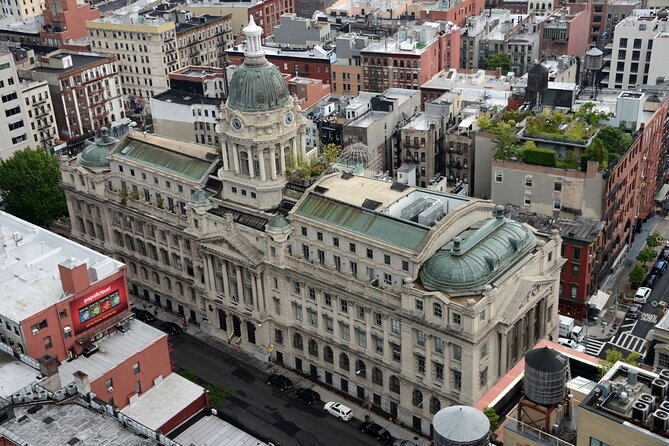
Next is Little Italy, framed as the remains of the neighborhood rather than a fully frozen time capsule. The guide walks you through what’s still there in terms of atmosphere, and also brings up the mafia that reigned supreme there.
I find this kind of storytelling useful because it prevents the “theme neighborhood” trap. It acknowledges that neighborhoods aren’t static. They change. And in NYC, when power dynamics and crime history intersect with immigration, the visible streets can carry echoes long after the era itself is gone.
This stop can be emotionally heavy in tone depending on how the guide sets it up, but it stays grounded in what you can see and the cultural memory that clings to street corners. If you’re the type who likes learning the less-polished side of a famous area, you’ll likely appreciate this part.
One consideration: if you’re expecting a shopping-focused Little Italy experience, this won’t be that. It’s more about context than wandering for cannoli. You can still eat afterward—but the tour is steering your attention toward meaning first.
Chinatown: a city within a city, ending near Doyers St
You finish in Chinatown, which the tour describes as a return trip to Shanghai, a city within a city. That’s a fun way to say what Chinatown feels like when you step in: different rhythms, different sounds, and a whole set of cues that make it feel separate from the rest of Manhattan.
The tour is designed to wake up your senses—sights, smells, and the general energy of the neighborhood—while still keeping it guided and structured. Expect the guide to connect the area to community life and cultural identity, not just the postcard view.
You’ll end at Apotheke Chinatown, at 9 Doyers St, which is a practical finish point. From there, you can keep walking, snack, or plan your next subway hop without feeling like you’re stuck at the start of a dead-end.
If you’re sensitive to noise or crowds, Chinatown can be intense. It’s not “bad intense,” just high stimulation. If that’s your thing, carry water, go slow during the denser blocks, and use the guide’s narrative moments to anchor yourself.
Price and value: what $56 buys you on this route
The price is $56 per person for roughly 2 to 3 hours. For NYC, that’s a reasonable rate for a guided walk that hits multiple major neighborhoods, includes a mobile ticket, and uses a speaker for narration.
Where the value really shows up is in compression. Instead of spending half a day figuring out what to see and where to start, this tour gives you a curated path with historical context attached to each place. That’s especially helpful if you’re not trying to tour every museum on your trip.
Small group size (up to 25) also matters. Larger groups can turn into a shuffle. A group this size is more likely to stay cohesive, keep questions possible, and make the guide’s storytelling land.
One last value tip: treat this tour like your orientation layer. After you finish, use what you learned to pick where to eat and shop for real. You’ll know which streets feel important, which themes are just signage, and where the story behind the neighborhood might match what you want to do next.
Who should book this walking tour
This works best for you if you want NYC context without spending hours in a classroom-style format. It’s a good fit if you’re visiting for the first time, returning for a second look, or trying to connect famous landmarks—like Stonewall—to the surrounding neighborhood web.
It’s also a solid pick if you like walking tours with a point of view. The guide approach includes a critical look at larger forces that shaped the city, and the narration focuses on community stories alongside architecture and commerce.
It may not be ideal if you hate walking, want maximum free time at each stop, or prefer purely scenic experiences with minimal discussion. The route is designed to move. Bring that mindset and you’ll have a much better time.
Should you book it? My practical take
If your goal is to understand Greenwich Village, SoHo, Little Italy, and Chinatown as connected chapters of one city, I’d book this. You get a structured route, a guide-led narrative with a strong focus on Stonewall and community history, and an efficient way to spend a morning or afternoon.
If you’re chasing only photo spots or only shopping stops, you might feel the pacing is too story-first. But if you like your sightseeing with context—and you want a finish in the middle of Chinatown where you can keep going—this is a well-priced way to turn several neighborhoods into one coherent NYC experience.
FAQ
How long is the walking tour?
It runs about 2 to 3 hours (approx.), with each major stop designed for short guided narration and quick context.
Where does the tour start and end?
The tour starts at Washington Square Arch, Washington Square N, New York, NY 10012. It ends in Chinatown at Apotheke Chinatown, 9 Doyers St, New York, NY 10013.
What is the price?
The price is $56.00 per person.
Is the tour offered in English?
Yes, it’s offered in English.
What’s included in the tour?
A speaker is included as part of the guided experience.
What are the tour’s group limits?
The tour has a maximum of 25 travelers.
Can I bring a service animal?
Yes, service animals are allowed.
Do I need to tip?
Tips are not included.
What if I cancel?
You can cancel for a full refund if you cancel up to 24 hours before the experience starts. If you cancel less than 24 hours before, the amount paid is not refunded.