REVIEW · NEW YORK CITY
Harlem & The Rise Of Gospel Music Walking Tour
Book on Viator →Operated by Kaissa Tours · Bookable on Viator
Early Harlem gospel hits hard.
This walking tour ties together church music, neighborhood history, and street-level storytelling. You’ll spend part of the morning in worship with a live gospel choir, then move from landmark blocks to places that shaped Black music in New York.
I especially like two things about it. First, the tour is led by a licensed NYC guide, using a portable video-and-audio system so you can actually follow the story without craning your neck. Second, you’re not just looking at buildings. You get a real church service feel—the kind of atmosphere that makes the gospel music history make sense.
One practical consideration: it starts early at 7:30 am and is built on walking plus short stops. Also, the Apollo Theater stop is brief and admission there isn’t included, so you may want to plan any inside visit on your own.
In This Review
- Key things I’d watch for
- Beginning at Mt. Olivet Baptist Church on Malcolm X Boulevard
- Malcolm X Boulevard street stops: how Harlem’s story shows up in the blocks
- Apollo Theater: a quick, iconic stop with smart expectations
- Mother African Methodist Episcopal Zion Church: the Freedom Church story
- Abyssinian Baptist Church: the walk’s finish with worship and activism
- The gospel service and choir moment: why it changes the whole day
- Price and value: what $57 covers, and what you still need to plan
- Language options and the Kaissa Tours approach
- Walking time, pace, and who this suits best
- Should you book this Harlem gospel walking tour?
- FAQ
- How long is the Harlem & The Rise Of Gospel Music Walking Tour?
- What time does the tour start?
- Where does the tour start and end?
- What languages are available?
- Is the Apollo Theater ticket included?
- Do the church stops have admission fees?
- Who leads the tour?
- Is this a small group tour?
- Is hotel pickup included?
- What if I need to cancel?
- Is there a ticket you’ll show on your phone?
Key things I’d watch for

- A live gospel choir during an actual service, not a staged performance
- Small group size (max 25), which helps the guide keep everyone together
- Church stops with free admission (Apollo isn’t included)
- Two language options (English or French) with native speakers
- Street-corner history, including Malcolm X Boulevard and major Harlem thoroughfares
Beginning at Mt. Olivet Baptist Church on Malcolm X Boulevard
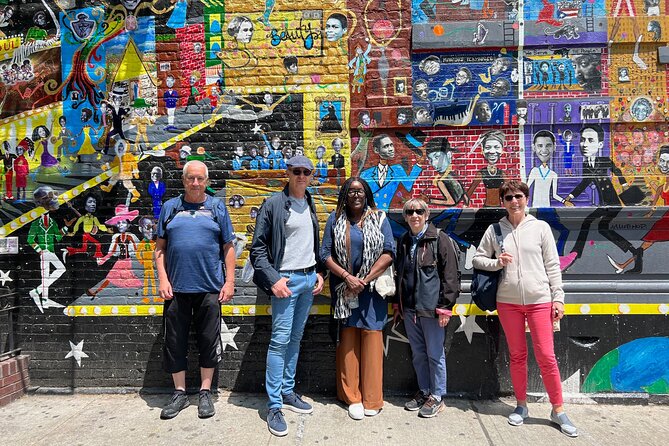
You start at Mt. Olivet Baptist Church, 201 Malcolm X Blvd (near 120th–120th area), and the vibe from the first minutes matters. This isn’t a museum tour with quick photos and then off to the next place. It’s structured to lead you into Harlem’s gospel story through a working church community.
The stop is about 15 minutes, and admission is listed as free. That “free” detail isn’t small. It means your money goes into the guide, the route, and the service moment, not into stacking paid entrances before you even hear music.
From there, the tour transitions to the streets—Harlem’s geography as a living map. You’ll walk with purpose, with the guide pointing out what you’d easily miss if you were just passing by.
You can also read our reviews of more walking tours in New York City



Malcolm X Boulevard street stops: how Harlem’s story shows up in the blocks
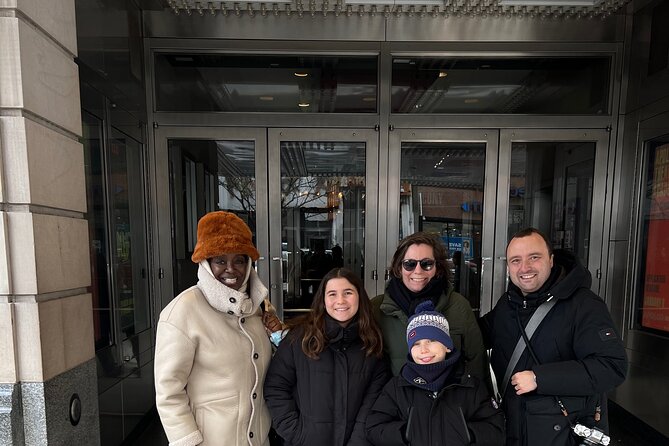
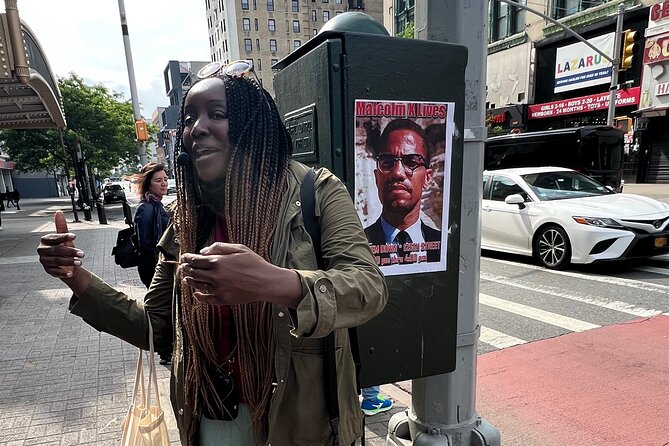
A big reason this tour works is that it connects addresses to meaning. You’ll make a couple of short stops along Malcolm X Boulevard (formerly Lenox Avenue) in the heart of Harlem, including the stretch around 118 W 120th St and then Malcolm X Blvd & W 124th St.
These stops are only about 15 minutes each, and they’re free. Think of them as “pause and understand” moments. On the map, they look like just street corners. On the ground, they become anchors for the guide’s explanation of Harlem’s evolution and why churches were central to community life.
If you like history that’s tied to where people actually lived and moved, these blocks will feel rewarding. If you prefer only indoor stops, you might wish for more time inside the buildings—but the design here is to keep the story grounded in the neighborhood you’re seeing.
Apollo Theater: a quick, iconic stop with smart expectations
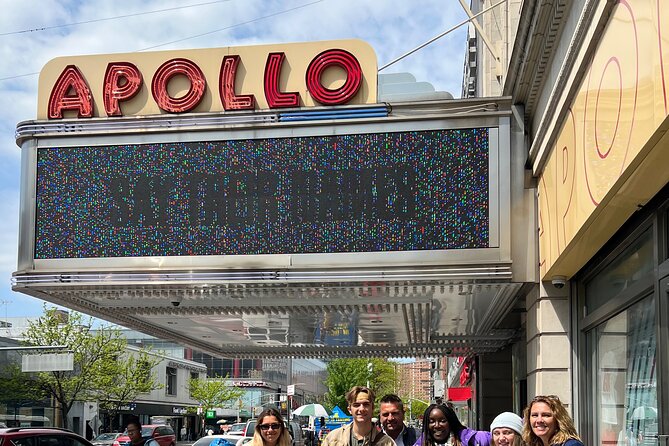
Next comes the Apollo Theater stop. It’s about 5 minutes, and admission isn’t included. So plan for this as a photo-and-context stop, not a full theater visit unless you buy a ticket separately.
This matters because the Apollo is not just famous for a name on the marquee. It’s a symbol of how performance culture grew in Harlem—music and comedy drawing huge audiences and launching careers. Since the tour places this stop right in the middle of your walk, it helps you connect the gospel energy you’ll experience later (and now, through stories) to the larger Harlem tradition of stage performance.
Practical tip: bring a camera or phone charged and ready. With only a few minutes, you won’t have time to hunt around for the best angle.
Mother African Methodist Episcopal Zion Church: the Freedom Church story
One of the tour’s most meaningful stops is Mother African Methodist Episcopal Zion Church, often framed in the story of the church movement around abolition and freedom-era activism. The stop is about 20 minutes and admission is free.
Here’s the kind of context the guide shares: the church traces to 1796, when African-American members formed a new congregation from the predominantly white John Street Methodist Church. Even when the earlier group had an abolitionist orientation, segregation still shaped daily life—down to access for holy communion. The stop’s value is that you get more than dates. You learn how faith communities navigated exclusion and still built something that could serve as a platform for change.
The guide also connects major leadership to the broader abolition movement, including the Rev. Peter Williams, Jr., who served as rector from 1826 to 1840 and is described as a leading abolitionist and a pioneering African-American Episcopal priest in New York. You’ll also hear how this leadership tied into national organizing through the American Anti-Slavery Society’s early work.
If you care about how religion intersects with civil rights and community support, this is the moment where the tour’s title really shows its purpose: gospel music isn’t just sound. It’s linked to struggle, survival, and organizing.
Abyssinian Baptist Church: the walk’s finish with worship and activism
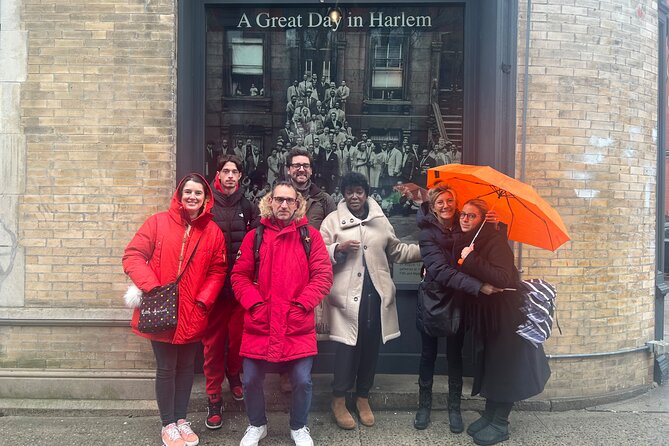
The tour ends at Abyssinian Baptist Church, 132 W 138th St, and again the admission is listed as free. This is the last stop, about 20 minutes, and it leaves you with the strongest possible connection between the route you walked and the service you’re building toward.
Abyssinian is described as one of the oldest African-American Baptist churches in the United States, founded in 1808. The church building itself is noted for its landmark Gothic- and Tudor-style look, and the guide will focus on worship, spiritual leadership, and social activism plus community service.
Ending here works because the tour has been moving from:
- street and neighborhood context,
- to church formation and abolition roots,
- to worship and leadership that shaped Harlem life.
By the time you reach the finish, you’re not just memorizing stops. You’re seeing how one community’s institutions connect to gospel music culture.





The gospel service and choir moment: why it changes the whole day
The headline promise is simple: you listen to a live gospel choir during a real church service. That’s the emotional centerpiece of the experience.
Even if you already like gospel music, this part tends to land differently when it’s tied to a local congregation and not a concert setting. Gospel is built for call-and-response energy, and the choir’s sound is shaped by the room, the people, and the tradition. A guided walk helps you catch what’s behind the music as you’re hearing it.
The tour also includes a licensed guide with portable video and audio equipment. That detail is practical: explanations land more clearly when you can hear the guide over street noise and across distances, especially on a morning walk.
One note for your expectations: the tour is designed around church time and brief stops. So don’t plan to treat this like a long sit-down cultural lecture. You’re getting a story with a soundtrack.
Price and value: what $57 covers, and what you still need to plan
At $57 per person, this is priced for a guided morning that includes a licensed NYC guide plus the route that reaches multiple landmarks and two major churches. For a walking tour, that’s not bargain-bin cheap. But the value comes from what’s built into that price.
What’s included:
- a licensed New York City born tour guide
- a portable video and audio system
- the walking route and guided context
- church access is listed as free at the stops where admission tickets show free
What’s not included:
- hotel pickup
- Apollo Theater admission (the stop is quick and theater entry isn’t included)
So the financial equation is usually: if you’re the type who likes paid guides but hates shelling out entrance fees back-to-back, this tour makes sense. You’re paying for interpretation and for being present at a service. The biggest extra cost you might face is anything you choose to do at or inside the Apollo Theater.
Also, it’s listed as having an average booking window of 33 days in advance. That hints at steady demand for this morning slot—so if your schedule is tight, don’t wait until the last minute.
Language options and the Kaissa Tours approach
The tour offers English or French, with native speakers for each language option. That’s a big deal for a story-heavy experience. Gospel history and Harlem activism are detailed topics, and it’s easier to connect when your guide is fluent in the language you’re thinking in.
The provider is Kaissa Tours, and the guide’s name shows up in the experience info as Kaïssa. In French-language planning, the operator has also shown flexibility in keeping the tour going rather than simply canceling when a specific guide wasn’t available for that day. Translation: you should expect the company to protect your experience as much as possible.
Bottom line: if language matters for your enjoyment, pick the option that lets you follow both history and choir mood without relying on guesswork.
Walking time, pace, and who this suits best
This experience runs about 3 to 4 hours and is rated as requiring moderate physical fitness. It’s also near public transportation, which helps if you’re staying in Manhattan and want an easy start.
The route includes multiple short stops (many around 15 minutes) plus two longer church stops. That means you should expect:
- some walking between locations,
- time to stand and listen,
- and then at least one moment where you’re sitting or standing for worship.
This tour is a strong match if you:
- want gospel music in a community setting,
- like Harlem’s story through religion and social activism,
- enjoy hearing history explained clearly while you walk.
You might hesitate if you:
- dislike early mornings,
- need long sit-down breaks,
- or strongly prefer paid museum-style attractions over churches and street corners.
Should you book this Harlem gospel walking tour?
I think it’s an excellent booking if your top goal is to understand Harlem gospel through lived context—churches, activism, music, and performance culture tied together in one morning.
Book it if:
- you want the live choir/service piece, and you’re comfortable with a guided walk,
- you value a small group experience (max 25),
- you want a guide like Kaïssa who can connect the dots between streets and worship.
Skip it if:
- you won’t enjoy an early start,
- you’re only interested in indoor sights and don’t want street-corner history,
- you hate any chance of extra spending (Apollo entry isn’t included, even though the photo stop is).
If you want Harlem gospel in a way that feels like it belongs to the neighborhood, this is one of the more direct paths you can take.
FAQ
How long is the Harlem & The Rise Of Gospel Music Walking Tour?
The tour lasts about 3 to 4 hours.
What time does the tour start?
The start time is 7:30 am.
Where does the tour start and end?
It starts at Mt. Olivet Baptist Church, 201 Malcolm X Blvd, New York, NY 10027 and ends at Abyssinian Baptist Church, 132 W 138th St, New York, NY 10030.
What languages are available?
The tour is offered in English or French, with native speakers for each language option.
Is the Apollo Theater ticket included?
No. The Apollo Theater stop is listed as Admission Ticket Not Included.
Do the church stops have admission fees?
The church stops listed (including Mt. Olivet, Mother AME Zion, and Abyssinian Baptist) show Admission Ticket Free. Apollo is the one marked not included.
Who leads the tour?
A licensed New York City born tour guide leads the tour, and they use a portable video and audio system.
Is this a small group tour?
Yes. The maximum group size is 25 travelers.
Is hotel pickup included?
No. There is no hotel pick up.
What if I need to cancel?
You can cancel for free up to 24 hours in advance of the experience start time for a full refund.
Is there a ticket you’ll show on your phone?
Yes. The tour includes a mobile ticket.