REVIEW · NEW YORK CITY
Holdouts: A NYC Architecture Walking Tour
Book on Viator →Operated by Manhattan Unlocked Historical and Architectural Walking Tours · Bookable on Viator
Midtown has hidden holdouts. This walking tour follows the architecture scars left behind when ownership, negotiation, and stubbornness won out over grand plans. I especially like how the guide turns the skyline into a story you can walk through, and how you get to see famous landmarks through the lens of holdouts, air rights, and privately owned public spaces.
The main downside is pacing: it can feel a little rushed early on, so you should be ready for quick stops and fewer deep photo/question moments if you’re the slow-and-steady type.
In This Review
- Key highlights you’ll care about
- Why This Midtown Architecture Tour Starts With Holdouts
- The Small-Group Advantage (Up to 5) and the Guide’s Teaching Style
- Stop-by-Stop: From TPR Holdings to Papillon Bistro
- Stop 1: TPR Holdings and the ego-building foundation
- Stop 2: Wollensky’s Grill and the buggy whip past
- Stop 3: Amster Yard as a time capsule pause
- Stop 4: Sparks Steak House, mob history, and holdout adjacency
- Stop 5: 42nd Street and the single holdout survival
- Stop 6: Grand Central Terminal and the mini-tour option
- Stop 7: Brooks Brothers, Terminal City remnants, and the diamond market block
- Stop 8: Rockefeller Center and holdouts baked into the famous complex
- Stop 9: Papillon Bistro & Bar, the hold-in ending you can step into
- What I’d Actually Watch For While You Walk
- Price and Value: $59 for a Guide Who Connects Buildings to Power
- When This Walking Style Will Feel Great (and When It Won’t)
- Should You Book Holdouts: A NYC Architecture Walking Tour?
- FAQ
- How long is the Holdouts: A NYC Architecture Walking Tour?
- What is the price per person?
- Where does the tour start and end?
- What language is the tour offered in?
- How large is the group?
- Is there a mobile ticket?
- Are there admission fees at the stops?
- What should I wear?
- Is the meeting point near public transportation?
- What happens if weather is poor?
- Can I cancel for a full refund?
Key highlights you’ll care about
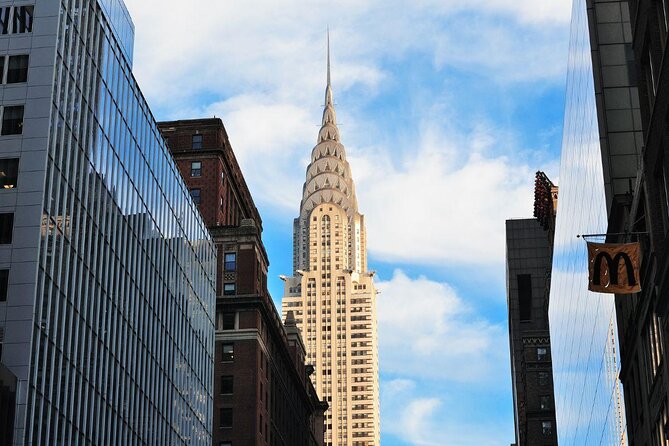
- Holdouts as the main character: You’ll connect street-level oddities to real building decisions that still shape Midtown today.
- A small group (max 5): More Q&A per person, not a lecture with a crowd.
- Quick hits at landmark sites: From a mob-history stop to Grand Central, you see more in 2 to 3 hours than most slow tours.
- Frequent “look closer” moments: You’ll learn how to spot features you’d normally walk past.
- A hold-in ending at Papillon: You finish inside the story, not just outside it.
- Free entry at stops: The tour price is mostly paying for the guide and the route, not separate admission fees.
Why This Midtown Architecture Tour Starts With Holdouts
This is not the usual Midtown sightseeing march. The theme is simple and sneaky: look for the places where a plan did not fully win. Those holdouts are leftover property claims, boundary battles, or deals that forced builders to adjust. The result is a city that feels a little less perfect, and a lot more human.
What you get from the tour is a way of reading Manhattan. When you learn how skyscrapers land, shift, or take unexpected shapes because someone refused to sell, you start noticing the logic behind odd angles, unusual setbacks, and buildings that look like they had to fit around something. That’s why the walk feels more satisfying than ticking off a list.
You also get helpful context that shows up in multiple stops: air rights (and how they can change what gets built), privately owned public places (spaces open to the public because someone negotiated for it), and even the idea of properties being kept in place until a better moment for redevelopment. Once you know to look for those forces, Midtown changes from a background to a living negotiation.
You can also read our reviews of more walking tours in New York City



The Small-Group Advantage (Up to 5) and the Guide’s Teaching Style
The tour runs about 2 to 3 hours and is capped at 5 people. That matters in Midtown. When you’re only a handful of feet from the guide, you can actually ask why a building looks the way it does, and you’ll usually get a full answer instead of a quick nod.
Many reviews call out the guide’s depth and energy, with one frequent name coming up: Rob. The pattern is consistent: Rob doesn’t just read facts. He ties architecture to decision-making and local impact, and he’s willing to follow the conversation if you steer toward something you care about, like urban planning or why certain neighborhoods changed when they did.
The route is also built around momentum. Stops are often brief, so the best way to get your money’s worth is to come ready with curiosity. If you’re the kind of person who likes to look up and ask one good question at the right time, this tour rewards you.
Stop-by-Stop: From TPR Holdings to Papillon Bistro
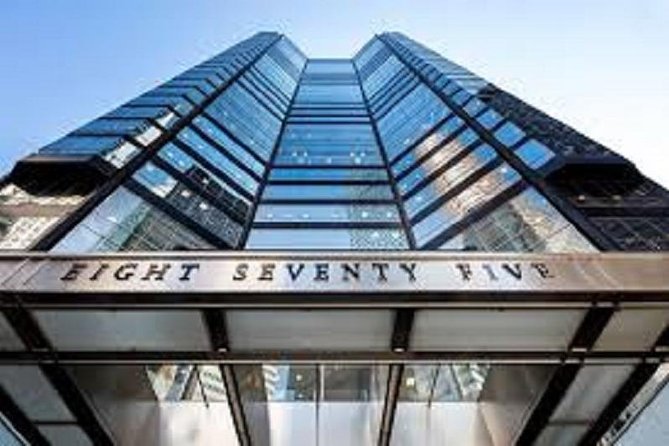
The walk starts at 875 3rd Ave and ends around 22 E 54th St at Papillon Restaurant. Along the way, you’ll bounce across Midtown like you’re tracing invisible property lines.
Stop 1: TPR Holdings and the ego-building foundation
You begin in the lower lobby of TPR Holdings, a distinctive building tied directly to holdout outcomes. The key detail here is visual and structural: the main pillar supports aren’t in the corners but in the middle of the side. It’s the kind of oddity that makes you realize the building’s design had to respond to constraints, not just style.
Why it matters: this is where you learn the tour’s core habit—spot what looks wrong to the casual eye, then ask what forced it.
Stop 2: Wollensky’s Grill and the buggy whip past
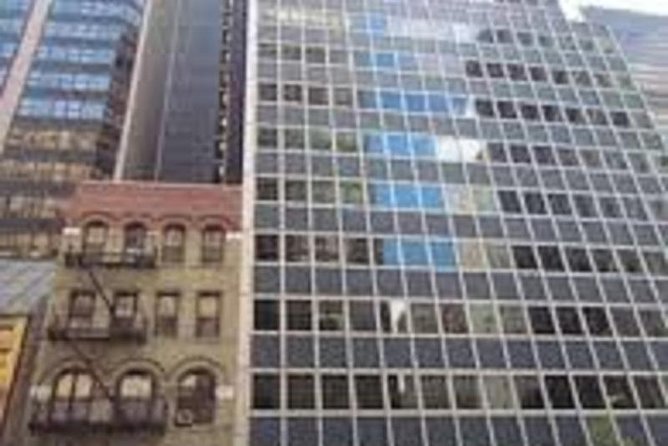
Next is Wollensky’s Grill, described as an old buggy whip factory that also functioned as a holdout. This stop is short, but the payoff is big: it reminds you that Midtown buildings often layered new uses on old industry.
Practical tip: keep your eyes on building massing and entrances. Even when you only get a moment, you’ll start noticing how commercial history hides inside architectural form.





Stop 3: Amster Yard as a time capsule pause
If Amster Yard is open during the tour, you’ll stop briefly. Think of it as an oasis-like pocket where histories clash and where the city meets the suburbs in an earlier, smaller-scale way.
Why it’s worth it: in a walking tour full of stone and steel, this kind of space helps you understand privately negotiated outcomes. You can feel the difference between space designed for profit and space designed for people.
Stop 4: Sparks Steak House, mob history, and holdout adjacency
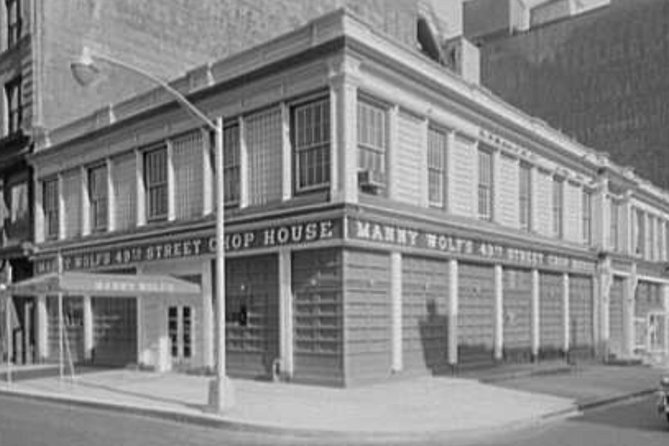
At Sparks Steak House, you’re near a notorious mob hit site, and the holdout story is right next door. The tour also notes that you’ll get stunning views of the landmark as you move through this area.
How to use this moment: if you’re hoping for photos, this is a good time to do it. The visuals here help your brain connect story and form.
Stop 5: 42nd Street and the single holdout survival
The downtown portion ends at 42nd Street, where a single holdout survived history. It’s a satisfying closing note for the first stretch, because it shows you the long-game outcome. Not every holdout gets erased, and not every negotiation ends with a clean removal.
Stop 6: Grand Central Terminal and the mini-tour option
You then work your way toward the west side and the uptown portion, passing through Grand Central Terminal. This stop isn’t tied to holdouts, but it’s timed so you can still enjoy a quick mini-tour of the terminal itself.
One detail to note: the tour description says Grand Central was still under construction at the time of writing. So you might see active work or temporary-looking areas, which can affect what’s accessible to look at.
Stop 7: Brooks Brothers, Terminal City remnants, and the diamond market block
At Brooks Brothers, you’re in the orbit of a historic NYC institution, with a holdout as a neighbor. The tour then points out a “crystal shard-iceberg” style building from the side as you continue.
Another highlight here is the reference to Terminal City: the walk passes the sole survivor of Terminal City, from a time before air travel when Grand Central linked to three hotels for cross-country travelers. Even if you don’t know the old story, you’ll leave with a clearer sense of why that area once worked like a hub.
Then there’s a very specific, very New York detail: on the block where $440 million in diamonds are traded daily, the entrance a block north of the crossing is flanked by 12-foot diamond sculptures. It’s a reminder that Midtown’s past isn’t only old. It’s also still money, still trade, still power.
Stop 8: Rockefeller Center and holdouts baked into the famous complex
At Rockefeller Center, you’ll hear how the area’s history includes interesting holdouts. The key is that even famous developments weren’t built on perfect unity. The skyline you recognize came with real negotiation behind it.
If you like architectural ensembles, this stop helps you see that the “whole” complex still has friction inside it.
Stop 9: Papillon Bistro & Bar, the hold-in ending you can step into
The tour ends at Papillon Bistro & Bar, called out as one of the most compelling examples of a hold-in. Here, the story is not just a leftover building problem. It’s an active negotiation: the restaurant proprietor negotiated additional square footage to expand into what became the future skyscraper.
The best part is access: you can enter the skyscraper today and stand within the walls of a 19th-century brownstone. That’s the kind of ending that makes the whole walking route click. You don’t just talk about the past—you step inside it.
What I’d Actually Watch For While You Walk
Because many stops are brief, your success on this tour comes down to attention. Here’s how to get more out of the time you’ll have.
First, train your eyes to look for structural oddities: pillars placed oddly, corners that don’t quite behave like you expect, and side elevations that look like someone forced them to compromise. The tour’s starting stop at TPR Holdings sets you up for this habit.
Second, listen for the “why now” behind the architecture. Holdouts aren’t random. They exist because someone had leverage, because negotiations took longer than builders wanted, or because decisions were shaped by property rights and timing. Once you learn to connect cause to design, you can walk through Midtown and feel like you’re decoding a message.
Third, use the pacing to your advantage. If the guide is moving quickly, it’s often to keep you from missing the next visible story. So don’t spend all your energy trying to take every photo. Instead, capture one or two anchors that help you remember what you learned.
Price and Value: $59 for a Guide Who Connects Buildings to Power
At $59 per person, this feels like a good deal for Midtown architecture because you’re paying for a route plus interpretation, not just walking past famous facades.
Here’s why the math works:
- The group is small, so guide time is spread across fewer people.
- The tour covers multiple heavyweight areas: Grand Central, Rockefeller Center, and the Midtown blocks that define the skyline.
- Stops include the stated note that admission tickets are free at the sites where tickets apply, so you’re not stacking extra costs on top of the base price.
Also, booking demand is real. The experience is described as being booked about 10 days in advance on average. If you wait too long, you risk losing the slot you wanted. Midtown is busy, and this kind of small-group theme tour fills faster than generic tours.
When This Walking Style Will Feel Great (and When It Won’t)
This tour is best for people who enjoy architecture with a human angle. If you like asking questions like: Why did this building end up here? How did someone’s property rights shape the design? How do city planning decisions show up on the street?—you’ll feel in your element.
You’ll also likely enjoy it if you like urban history that isn’t locked in museums. Midtown holdouts are visible every day. Once you learn what to look for, you’ll spot new stories on your own after the walk ends.
The possible mismatch is pace. One review notes it can be rushed early, with less time for photos and questions, especially at the beginning where context is set. So if your ideal tour is slow, photo-heavy, and question-heavy with lots of waiting around, you might feel pressured.
The fix is simple: come with a short list of questions you genuinely care about, and ask them at the most visual stops, not when the group is settling in.
Should You Book Holdouts: A NYC Architecture Walking Tour?
Yes, if you want Midtown to make sense. This tour gives you a practical lens for how Manhattan got shaped by property power, negotiation, and the stubborn bits that didn’t disappear. It’s also a smart choice if you like short, high-impact stops and you enjoy learning while walking.
I’d book it if you:
- like city planning and how it shows up in real buildings
- enjoy seeing familiar landmarks with an unexpected theme
- want a small-group guide experience rather than a big group shuffle
I’d think twice if you need lots of quiet time for photos and slow pacing, because the stops are often quick and the route keeps moving.
If you go in with comfortable shoes, an eye for details, and the mindset of spotting the odd parts on purpose, you’ll leave Midtown noticing holdouts everywhere.
FAQ
How long is the Holdouts: A NYC Architecture Walking Tour?
It runs about 2 to 3 hours.
What is the price per person?
It costs $59.00 per person.
Where does the tour start and end?
It starts at 875 3rd Ave, New York, NY 10022 and ends at 22 E 54th St, New York, NY 10022 at Papillon Restaurant.
What language is the tour offered in?
The tour is offered in English.
How large is the group?
The tour has a maximum of 5 travelers.
Is there a mobile ticket?
Yes, you receive a mobile ticket.
Are there admission fees at the stops?
The tour lists admission ticket free for the stops included.
What should I wear?
Wear comfortable shoes, since it is a walking tour.
Is the meeting point near public transportation?
Yes, it is near public transportation.
What happens if weather is poor?
This experience requires good weather. If it is canceled due to poor weather, you’ll be offered a different date or a full refund.
Can I cancel for a full refund?
Free cancellation is available. You can cancel up to 24 hours in advance for a full refund. If you cancel less than 24 hours before the start time, the amount paid will not be refunded.