REVIEW · NEW YORK CITY
Mafia Gangster History Walking Tour in Little Italy, New York
Book on Viator →Operated by Tourizee · Bookable on Viator
Little Italy gets criminally interesting. This 2-hour walk connects Prohibition-era liquor battles to the rise of the Mafia, then layers in pop-culture hits like The Godfather and Gangs of New York without turning it into trivia. I love the binder-style storytelling with photos and newspaper clippings that make the streets feel real, and I also like how the route sticks to street-level spots tied to specific figures. One thing to consider: you’re covering multiple blocks on public sidewalks, so comfy shoes matter.
I’m also a fan of the small-group setup (a maximum of 10 travelers) and the easy-to-handle logistics. You’ll use a mobile ticket, you’ll hear the tour in English, and you’ll be near public transportation—so it’s practical even if you’re juggling a packed day. The one catch is that the tour requires good weather, so plan to dress for the forecast.
In This Review
- Key Things That Make This Mafia History Walk Worth It
- Why Little Italy Works So Well for a Mafia Walking Tour
- Price, Timing, and Group Size: What $40 Gets You
- Meet at 44 Spring St and Expect a Smooth, Street-Level Experience
- Stop 1: Little Italy and the Rise From Black Hand to Mafia
- Stop 2: Mulberry Street and Where John Gotti Held Court
- Stop 3: Lt. Petrosino Square and an Early Fight Against the Black Hand
- Stop 4: The Police Building and Frank Serpico vs Corruption
- Stop 5: Umberto’s Clam House and Crazy Joey Gallo’s End
- Movie Fan Bonus: The Godfather and Gangs of New York Locations
- The Guide Touch: Why the Photos and Paper Clippings Matter
- Who Should Book This Tour (and Who Might Want to Skip)
- Booking Tips: Weather, Shoes, and Getting There on Time
- Should You Book This Mafia Gangster History Walking Tour in Little Italy?
- FAQ
- How long is the Mafia Gangster History Walking Tour?
- What does the tour cost?
- Is the tour in English?
- Where does the tour start and end?
- How many people are on the tour?
- Does the tour include any paid admissions?
- What if the weather is bad?
- Can I cancel if my plans change?
Key Things That Make This Mafia History Walk Worth It
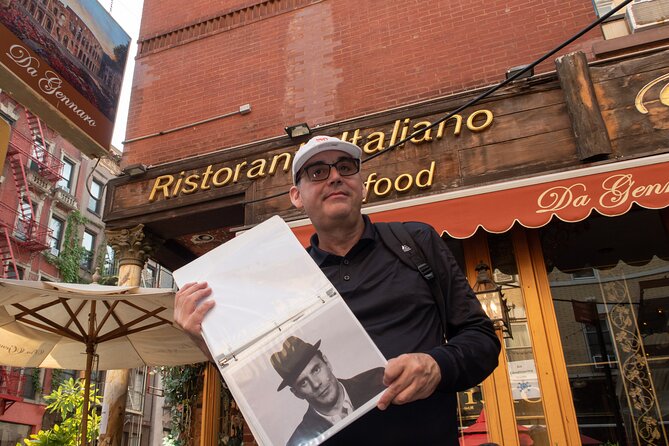
- Little Italy’s Prohibition-to-Mafia storyline at the heart of the tour, with Lucky Luciano and the Commission of the Five Families mentioned along the way
- A focused route through Mulberry Street, Petrosino Square, and the Police Building instead of random wandering
- Movie-recognition value for The Godfather and Gangs of New York fans, linked to real locations
- Crime-fighter contrast with Lt. Petrosino and Frank Serpico showing how law enforcement pushed back
- Umberto’s Clam House as a key stop, tied to Crazy Joey Gallo’s end, for a strong final beat
Why Little Italy Works So Well for a Mafia Walking Tour
Little Italy is one of those NYC neighborhoods where the streets look ordinary—until a guide points out what happened there. This tour leans hard into that payoff. You’re not just learning names. You’re getting a sense of how power was negotiated on sidewalks, in storefront-adjacent corners, and around key gathering points.
The angle is also smart. It starts with the evolution from early Black Hand gangs into the Mafia during Prohibition, then threads that story through later crime figures. That lets you see the neighborhood as part of a bigger system, not just a set of movie backdrops.
And it stays surprisingly family-friendly in tone. The tour is described as entertaining for families with older children, which usually means the pacing isn’t wall-to-wall gloom. You still get the sharp edges of organized crime, but it’s framed as a city-history walk you can actually follow.
You can also read our reviews of more walking tours in New York City



Price, Timing, and Group Size: What $40 Gets You
The price is $40 per person for about 2 hours, and that’s the kind of cost where you want substance—not just a casual stroll. Here, the structure helps. You get a route with five real stops and specific themes at each one, so your time doesn’t feel like it’s getting spent “just walking.”
The tour also keeps the group small: up to 10 travelers. In a small group, the guide can slow down when questions pop up, and you’re more likely to hear the details clearly without shouting over other people. That matters for a history-and-movie walk where context is half the fun.
Timing is tight enough to fit into a day, but long enough to build momentum. The longest stop is 40 minutes in Little Italy, then the tour settles into shorter, sharper beats at each location.
Meet at 44 Spring St and Expect a Smooth, Street-Level Experience
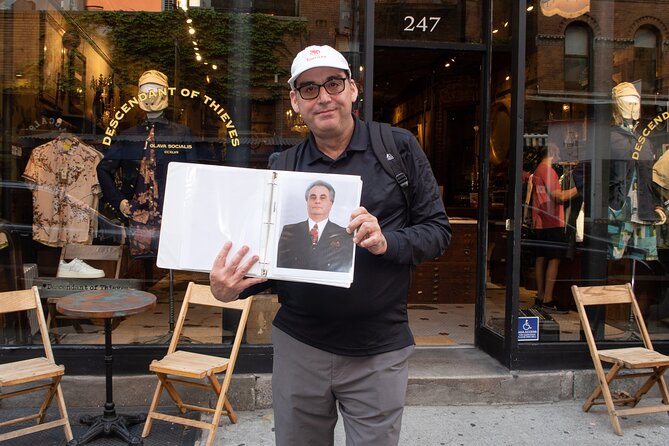
You’ll start at 44 Spring St, New York, NY 10012 and finish back at the meeting point. That simple loop is helpful when you’re mapping out the rest of your plans.
A few practical notes that make this easier:
- Bring a jacket or layer—this is an outdoor walk and it needs good weather.
- Wear shoes for uneven sidewalks and normal city crowding.
- Since it’s near public transportation, you can slot it into a neighborhood day without committing to a long commute.
You’ll also receive a confirmation at booking time and use a mobile ticket. That cuts down on paper hassles—always a win in NYC.
Stop 1: Little Italy and the Rise From Black Hand to Mafia
This is the big foundation stop, about 40 minutes. You’ll learn how early Black Hand gangs evolved into the Mafia during Prohibition, when battles over the liquor trade reshaped the area.
What I like about this approach is that it gives you a timeline anchor. Rather than treating organized crime as a set of isolated legends, it explains how one phase grows into the next. The Prohibition angle matters because it explains why the neighborhood’s criminal ecosystem had the leverage to spread—liquor was money, and money attracts structure.
The guide also connects this to Lucky Luciano and the Commission of the Five Families. That’s a key concept in how Mafia power centralized. Even if you’re not a deep crime-history reader, you’ll come away with a clearer picture of how rival groups were handled through a formal system rather than constant chaos.
If you’re coming with movie knowledge, this is where the tour helps you translate what you’ve seen onscreen into what the streets were doing in real life.
Stop 2: Mulberry Street and Where John Gotti Held Court
Next up is Mulberry Street for about 15 minutes. This stop centers on Dapper Don John Gotti and where he held court.
This is the “personality” chapter of the walk—how recognizable names connected to specific locations. For me, that’s where gangster history turns from dates and concepts into something you can picture. You’re not trying to imagine events from scratch; you’re standing near the type of place where influence would have been displayed and discussed.
A practical consideration: this stop is shorter, so pay attention to the guide’s framing. The real value here is connecting a public figure to the street context, and that kind of link tends to go missing if you’re half-listening while checking your phone.
You can also read our reviews of more historical tours in New York City






Stop 3: Lt. Petrosino Square and an Early Fight Against the Black Hand
At Lt. Petrosino Square, you get about 15 minutes focused on an early crime fighter against the Black Hand gangs.
This matters because it balances the story. Organized crime is only one side of the city’s equation. When you hear about Petrosino, you get a sense that there was pressure and enforcement—at least from officials who were trying to interrupt criminal networks.
It also helps you understand the setting’s tension. The neighborhood wasn’t just a stage for criminals. It was where law enforcement and criminal power collided, block by block.
If you’re going with kids or teens, this stop can be a good mental reset: the story turns from kingpins back to people tasked with stopping them.
Stop 4: The Police Building and Frank Serpico vs Corruption
The tour then moves to the Police Building, also around 15 minutes. Here, you’ll learn about Frank Serpico, a cop who fought against corruption.
I like this inclusion because it keeps the history from becoming a pure gangster highlight reel. Serpico’s story shifts the tone toward internal policing—what happens when the problem isn’t only out on the street, but inside the system.
This stop can also make the earlier stops land harder. When you understand there are different kinds of “crime fighters,” you see how the city’s response had layers. It isn’t just a single timeline of heroes; it’s an ongoing struggle to make enforcement credible.
Stop 5: Umberto’s Clam House and Crazy Joey Gallo’s End
The final major stop is Umberto’s Clam House, again about 15 minutes. This is where the tour points to the restaurant connected to Crazy Joey Gallo and his bloody end.
This stop works well as a dramatic close because it anchors the story in a place people can recognize in the present day. A restaurant is also an easy way to imagine how neighborhood life overlaps with crime history—daytime crowds and nighttime power dynamics aren’t as separate as we like to think.
One note: this stop is short. If you want extra time around food or just to soak in the atmosphere, plan it before or after the tour rather than expecting the guide to give you a long dining moment.
Movie Fan Bonus: The Godfather and Gangs of New York Locations
If you’re the kind of person who watches crime movies and then wonders what’s real, this tour has built-in hooks. The walk specifically highlights locations tied to The Godfather and Gangs of New York.
What you get isn’t just name-dropping. The value is that the guide ties movie-ready visuals to real street-level context—so scenes you’ve seen can start to make spatial sense. It’s also why this works for families with older children: you can combine recognition with explanation.
If you’re not a movie person, you’ll still be fine. The tour’s core is the evolution of organized crime, the street-specific figures, and the counterpoint of early crime fighters.
The Guide Touch: Why the Photos and Paper Clippings Matter
A standout detail in the tour’s storytelling is the use of a binder filled with photos and newspaper clippings. That turns the experience from “listen and forget” into “look and connect.”
When you’re walking in a neighborhood that keeps changing, photos and clippings do something powerful: they help you compare then vs now. You might be standing outside a modern storefront, but the guide can show you what the area looked like when these events unfolded.
In the same spirit, the guide’s reported attention to exact spots helps the walk feel precise. Instead of broad gestures—this is where this person was around—you’re getting the sense that the tour is trying to match the story to the place.
Who Should Book This Tour (and Who Might Want to Skip)
This experience is a strong fit if you:
- like Mafia and Prohibition-era stories with a clear timeline
- enjoy pop-culture connections to real NYC streets
- want a guided walk that stays entertaining rather than lecture-heavy
- are traveling with older kids who can handle darker themes in context
You might want to skip it if:
- you dislike walking for about 2 hours on busy sidewalks
- you’re coming on a day where the weather looks unreliable—since the tour requires good weather
- you’re expecting a full deep-dive into every family member mentioned; this tour keeps momentum with five focused stops
Booking Tips: Weather, Shoes, and Getting There on Time
This tour is offered in English and reaches capacity quickly, with an average booking lead time of about 25 days. If you’re traveling in a busy season or on a weekend, don’t wait until the last minute.
A few simple planning steps:
- Aim to arrive at 44 Spring St early enough to settle before the walk starts.
- Wear shoes you can tolerate for repeated city blocks.
- Check the forecast. If the tour is canceled due to poor weather, you’ll be offered a different date or a full refund.
- If you’re flexible, you can book with confidence: cancellation is free up to 24 hours in advance for a full refund.
Should You Book This Mafia Gangster History Walking Tour in Little Italy?
If you want a walk that mixes real neighborhood geography with story-driven crime history, this one is a solid pick. The structure is tight: you get five distinct stops, each tied to a recognizable figure or theme, plus a strong movie-recognition angle for The Godfather and Gangs of New York fans.
For $40, the small group size and the visual storytelling (photos and newspaper clippings in a binder) make it feel like more than a basic overview. Just go in with the right expectation: it’s a street walk with specific stops, not a museum day.
If you’re in Little Italy anyway, this is one of the more practical ways to turn those familiar blocks into a story you can remember.
FAQ
How long is the Mafia Gangster History Walking Tour?
It lasts about 2 hours (approx.), with multiple stops along the way.
What does the tour cost?
The price is $40.00 per person.
Is the tour in English?
Yes, the tour is offered in English.
Where does the tour start and end?
The meeting point is 44 Spring St, New York, NY 10012, USA, and the tour ends back at the meeting point.
How many people are on the tour?
The tour has a maximum of 10 travelers.
Does the tour include any paid admissions?
Admission tickets are listed as free for the stops on the itinerary.
What if the weather is bad?
The tour requires good weather. If it’s canceled due to poor weather, you’ll be offered a different date or a full refund.
Can I cancel if my plans change?
Yes. You can cancel up to 24 hours in advance for a full refund. If you cancel less than 24 hours before the start time, the amount paid is not refunded.