REVIEW · NEW YORK CITY
New York Central Park Guided Electric Scooter Tour
Book on Viator →Operated by Central Park Attractions · Bookable on Viator
Central Park can feel like a whole day. This guided electric scooter tour lets you cover major sights in about 2 hours, with stops that come with real park context. You glide, you pause, you look up, and you learn what you’re actually seeing.
I love the way the electric scooter makes the park feel doable. You get movement and momentum without the legs turning into jelly, and the pace still lets you stop for photos and questions. I also like that this is a private tour for your group only, so your guide can slow down when something catches your eye.
One drawback to consider: this experience needs good weather. If conditions are cold or rough, you may need an alternative plan, and you should be ready for the park to run a little differently day-to-day.
In This Review
- Key things I’d bet on before you book
- Why a guided electric scooter tour works in Central Park
- Price, time, and what you get for $99
- Meet-up at 1794 Broadway and how the scooter changes your day
- The route highlights: Columbus Circle to Pinebank Arch
- Columbus figure to carousel vibes
- Chess & Checkers House and the Central Park Conservancy connection
- Umpire Rock and the Wollman Rink view
- The Plaza: movie-famous and powerfully New York
- Gapstow Bridge: pond-neck bridge and photo angles
- The Zoo by the sea lion pool (visible from outside)
- Balto’s monument and the story of urgency
- SummerStage at Rumsey Playfield
- Jacqueline Kennedy Onassis Reservoir: running track plus skyline views
- Belvedere Castle: Vista Rock and a higher viewpoint
- Harlem Meer: benches, lawns, and the Fort Landscape
- The Met stop: Museum Mile energy without overcommitting
- Bethesda Fountain: Angel of the Waters
- The Mall and Literary Walk: elm-lined straight path and writer statues
- Cherry Hill: Yoshino blooms and lake overlooks
- Bow Bridge: curve, lake views, and proposal spot
- Strawberry Fields: John Lennon memorial and Imagine mosaic
- The Dakota: Central Park West prestige factor
- Tavern on the Green and Pinebank Arch finishes
- What your guide adds (and why Daryl and Barry get named)
- Balancing expectations: quick stops, big sights, good pacing
- Who this tour suits best
- Should you book this Central Park electric scooter tour?
- FAQ
- How long is the Central Park guided electric scooter tour?
- How much does the tour cost?
- Is this tour private or group-based?
- What’s included in the price?
- Where do I meet for the tour?
- What language is the tour offered in?
- What fitness level do I need?
- Can I cancel, and what if the weather is bad?
Key things I’d bet on before you book
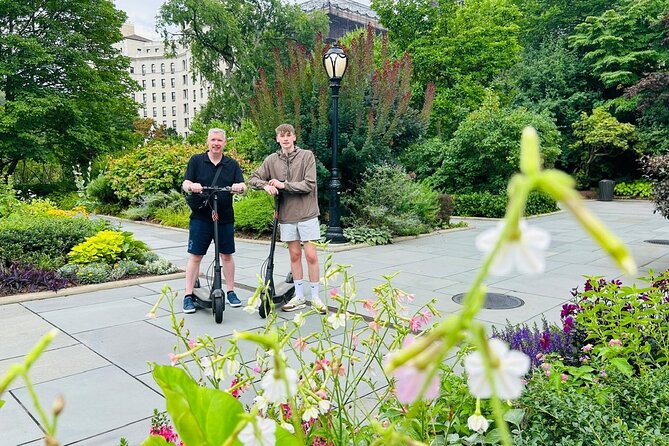
- A private guide keeps your questions in the moment, not at the end of a group lecture
- Electric scooters help you see more of Central Park without burning your whole day on walking
- Photo-ready stops at famous bridges, fountains, and memorials make your camera time feel purposeful
- Short “on-and-off” viewing windows (some stops are just a couple minutes) keep the route moving
- Central Park Conservancy connections show up at the Dairy gift shop, with purchases supporting care for the park
Why a guided electric scooter tour works in Central Park
Central Park is huge, and it’s easy to underestimate how much time the wrong route can steal from your day. On a guided scooter tour, you’re not trying to solve the park by yourself first. You’re given a logical path and a rhythm that helps you actually enjoy the scenery instead of just covering ground.
The best part is that you still get the human side of sightseeing. A good guide turns famous landmarks into clear stories, like why Umpire Rock has that name or what sits inside the Dairy and why it matters. And if you’re traveling with kids, you’ll appreciate how guides can keep things lively while you move at your own pace.
You can also read our reviews of more guided tours in New York City


Price, time, and what you get for $99
At $99 per person for about 2 hours, this is positioned as a value play: you’re paying for transportation help (the scooter) plus a guide to connect the dots. If you were doing the same route on foot, you’d likely spend far longer just getting between sights, and you’d miss out on the context you get from the guide.
You’ll also feel the “this is built for scheduling” factor. Multiple departure times make it easier to fit into a busy NYC itinerary, and booking is often done about 30 days in advance. Since it uses a mobile ticket and the meeting point is near public transportation, it’s designed to be low-friction once you’re in the right area.
The tradeoff is time. Many stops are quick hits, so if your goal is to linger deeply at one place or go inside major attractions, you may want to pair this with a second visit later.
Meet-up at 1794 Broadway and how the scooter changes your day
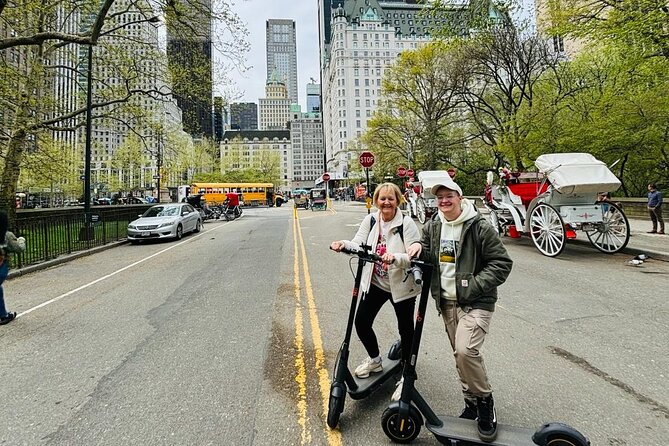
You’ll start at 1794 Broadway and end back there. That puts you close to the park’s western edge of action, which matters because you can begin with an iconic focal point and then roll forward across the park.
Scooters change the math. You’re not stuck doing the park as a long walk, then getting tired before the best views. Instead, you can plan your day around two hours of momentum, then keep your legs for the rest of the city—whether that’s another museum, dinner, or simply wandering streets nearby.
A practical note: the tour expects moderate physical fitness. That doesn’t mean you need to be a runner, but you do need to be comfortable riding and moving through park paths as you stop and start.
The route highlights: Columbus Circle to Pinebank Arch

This is a stop-heavy route, with a nice mix of landmarks, viewpoints, and story-driven stops. Think of it like a guided Greatest Hits album of Central Park—just with wheels.
Columbus figure to carousel vibes
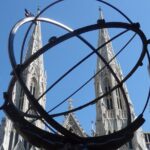
You start near the colossal Columbus figure: a standing figure on top of a column pierced by three boats—the Niña, the Pinta, and the Santa María—over a pedestal with commemorative inscriptions and a winged figure examining a globe. It’s the kind of detail you’d miss if you were just passing through, and your guide can point out what to notice as you roll by.
Next up is a Central Park classic: the carousel. The park’s carousel has long been a crowd magnet, with 250,000 riders every year. Even if you don’t ride, the guide’s framing helps you see it as more than a photo background.
You can also read our reviews of more tours and experiences in New York City


Chess & Checkers House and the Central Park Conservancy connection
You’ll make a stop at the Chess & Checkers House, which currently houses one of Central Park’s five visitor centers run by the Central Park Conservancy. The octagonal brick structure is surrounded by 24 game tables shaded by a wooden trellis, so it’s both a visual moment and a hint of how the park supports daily play.
Then you’ll head to The Dairy, Central Park’s largest gift shop near 65th Street. What makes this stop useful is the practical angle: it’s a good place to pick up park-friendly souvenirs, and every purchase supports the Central Park Conservancy, so your spending ties back to maintenance and care.
Umpire Rock and the Wollman Rink view
In the southwest corner, you’ll reach Umpire Rock, named for its place in Central Park’s first playground—an open meadow where children played games. From the same area, you can see Wollman Rink, which is one of those seasonal landmarks that changes the feel of the park depending on the time of year.
This stop is short, but it gives you an important perspective: Central Park wasn’t just designed for viewing. It was built for play too.
The Plaza: movie-famous and powerfully New York
You’ll also roll by The Plaza, the New York hotel that’s long been part of the city’s spotlight. Kings, presidents, and stars of stage and screen have all gathered here, and it’s also known for being used in a famous 1990s movie.
Even if you’re not staying at the hotel, it’s a strong “you’re really in NYC” moment. The guide’s commentary helps you connect Central Park’s celebrity status with the buildings and streets around it.
Gapstow Bridge: pond-neck bridge and photo angles
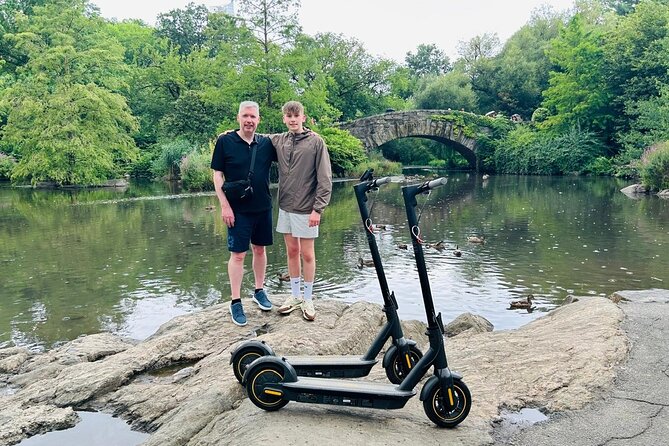
Gapstow Bridge crosses the narrow neck of the Pond. It’s a popular spot for wide scenic views and photos, and it’s the kind of stop that’s easy to understand even without a long lesson. Still, the guide helps you know where to stand for the best perspective.
The Zoo by the sea lion pool (visible from outside)
You’ll stop near the Central Park Zoo, which has animals from tropical, temperate, and polar regions. A standout detail is the sea lion pool and tank in the center courtyard, which is visible from outside the Zoo. That means this stop works even if you’re not planning an indoor visit.
You’ll also learn about exhibits like snow leopards, grizzly bears, and penguins—enough to make the Zoo feel real rather than just a name.
Balto’s monument and the story of urgency
One of the most beloved monuments you’ll reach is Balto. The story is dramatic: in January 1925, an outbreak of diphtheria threatened the town of Nome, Alaska, and weather blocked a vaccine transport flight. A relay of dog-sled teams and mushers became the only alternative, and Balto’s journey is how people remember that emergency.
This stop tends to land well because it adds stakes. You’re not just seeing a statue; you’re learning why it exists.
SummerStage at Rumsey Playfield
Next comes SummerStage, an outdoor concert and performance series organized by the City Parks Foundation. It’s held at an open sports field called Rumsey Playfield.
It’s a good reminder that Central Park isn’t only old architecture and quiet corners. It’s also a place where New Yorkers gather for performances.
Jacqueline Kennedy Onassis Reservoir: running track plus skyline views
You’ll reach the Jacqueline Kennedy Onassis Reservoir, the park’s largest water body and one of its most popular destinations. A 1.58-mile track surrounds it, often filled with runners and walkers, and the views can stretch toward the skyline in multiple directions.
The guide will also connect it to birdwatching. The reservoir attracts lots of aquatic birds, so this stop works for different interests beyond exercise.
Belvedere Castle: Vista Rock and a higher viewpoint
Belvedere Castle sits atop Vista Rock, the second highest natural point in Central Park. It’s described as one of the park’s iconic features, and being at that elevated spot helps explain why people want to see it in person.
If you like viewpoints, this is a stop where you’ll feel the payoff quickly.
Harlem Meer: benches, lawns, and the Fort Landscape
In the northeast corner, you’ll visit Harlem Meer. This is the kind of place that’s easy to romanticize, but the tour keeps it practical: there are paths lined with benches and lawns for relaxing, picnicking, and sunbathing, plus views toward rocky bluffs to the south called the Fort Landscape.
Even with a short stop time, the setting helps you understand why people slow down here.
The Met stop: Museum Mile energy without overcommitting
You’ll also pass through the area near Museum Mile on 5th Avenue, where institutions like the Metropolitan Museum of Art (the Met) and others pull crowds. The Met is described as the largest art museum in the Americas and the fourth-largest in the world.
Your scooter tour stop is quick, so consider it an orientation moment. If you want galleries and exhibits, you’ll need a separate museum plan.
Bethesda Fountain: Angel of the Waters
You’ll stop at Bethesda Fountain, also known as the Angel of the Waters. It’s a large plaza made of two levels, plus an Arcade and a fountain, and people come to relax and people-watch on the terrace.
This is one of those places where your guide’s framing makes the architecture feel purposeful rather than decorative.
The Mall and Literary Walk: elm-lined straight path and writer statues
You’ll reach the Mall, known for its wide straight path lined by two rows of American elm trees. The southern section is called Literary Walk, with statues of writers added in the 19th century.
If you like symmetry and “big park geometry,” this is a satisfying stop. It also helps you see how Central Park was designed to guide movement and views.
Cherry Hill: Yoshino blooms and lake overlooks
Cherry Hill is named for cherry trees that bloom in spring. The sloping lawn overlooks the lake, which makes it a natural picnic and relaxing zone, with views of rowboats on the water. In spring, visitors flock here for pink and white Yoshino cherry blooms.
Even outside cherry season, the viewpoint angle makes this a solid stop for photos.
Bow Bridge: curve, lake views, and proposal spot
Bow Bridge gets its name from its graceful curve that resembles a bow. It’s a major photo stop and also a romantic spot where wedding proposals have taken place.
It’s a short stop, but it’s one of those “I get it instantly” moments—your guide just helps you find the best angles.
Strawberry Fields: John Lennon memorial and Imagine mosaic
You’ll visit Strawberry Fields, a memorial to John Lennon. It includes the Imagine mosaic, where people come to pay tribute. The memorial name links back to Lennon’s 1967 song Strawberry Fields Forever.
This is one of the most emotionally direct stops on the route. If you want more than a quick look, plan extra time later.
The Dakota: Central Park West prestige factor
On the western side between 72nd and 73rd streets, you’ll reach the Dakota. It’s a square building around an H-shaped courtyard, and it’s linked to Central Park West’s reputation and prestige. The description notes a 1996 New York magazine piece that ranked the Dakota among the top-tier buildings on the street based on scale, residents, and historical prestige.
This is a fun contrast stop. You’re used to the park’s greenery, and then suddenly you’re back to the city’s power block.
Tavern on the Green and Pinebank Arch finishes
Near the end, you’ll pass Tavern on the Green, the restaurant in the historic building once known as the Sheepfold, serving Central Park dining since the 1930s. It reopened in 2014 after a renovation that removed many additions to reveal original structure and add variety.
Your final stop is Pinebank Arch, an elegant cast-iron bridge spanning the bridle path. The design is meant to blend with rock outcrops, and the lacy ironwork almost merges into the foliage. It’s frequently photographed, and it’s a great place to get one last wide park snapshot before you ride back.
What your guide adds (and why Daryl and Barry get named)
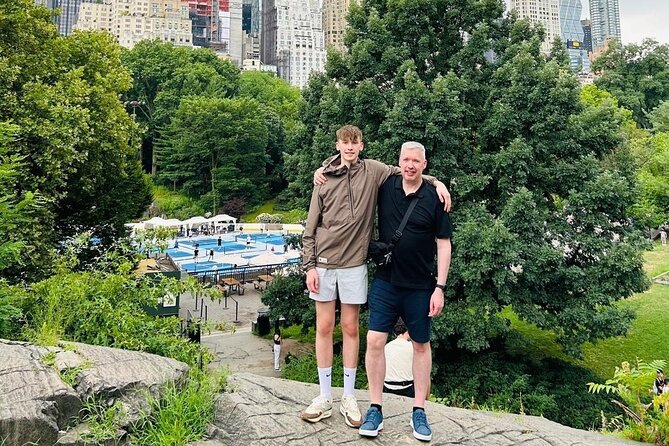
What makes this tour feel worth the price isn’t just the scooter. It’s how the guide connects details across the park so they feel like one story instead of 15 random stops.
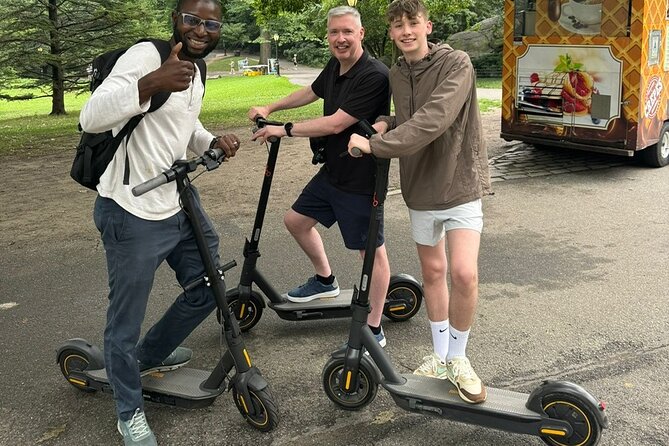
In particular, guides such as Daryl are praised for being interesting and great with kids, which matters if you need everyone to stay engaged. Another guide, Barry, is noted for strong photo skills, plus lots of Central Park trivia that makes the scenery feel less like generic pretty and more like specific.
You’ll also benefit from the do-it-your-way feel. The tour is structured, but it still gives you control over pace, questions, and stops for pictures.
Balancing expectations: quick stops, big sights, good pacing
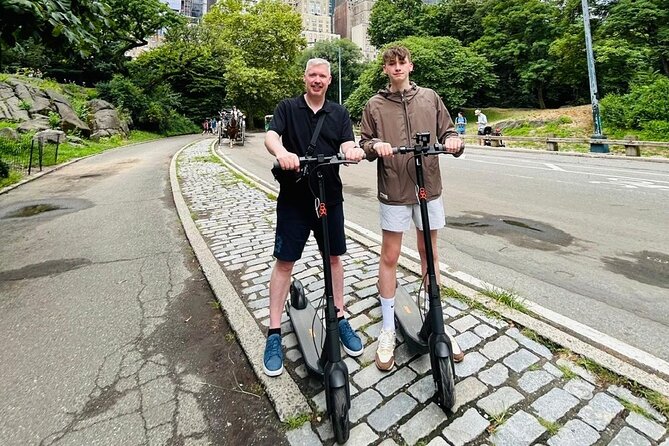
This is a 2-hour route, so each stop is a “see it, learn it, move on” moment. That’s great if you want an efficient hit of Central Park highlights and don’t want to spend hours walking from landmark to landmark.
The scooter also helps you handle the practical realities of NYC sightseeing: time windows, fatigue, and the constant temptation to stop randomly for photos. A guided route keeps you from missing key sights, while your guide’s context makes your photos feel like proof you understood the place.
If you’re the type who loves long museum time or wants to linger inside buildings, treat this as the preview that sets you up for deeper exploration later.
Who this tour suits best
You’ll enjoy this most if you:
- want a high-efficiency way to see Central Park without turning your day into a walking marathon
- like history and stories but don’t want a lecture-only format
- want strong photo stops, especially around bridges, fountains, and memorials
- travel with family and need a guide who can keep kids engaged
You might think twice if:
- you want to spend lots of time indoors at major attractions like the Met
- you’re expecting a slow, unhurried wander with long breaks at just one spot
- you’re booking during a period where weather might be unpredictable
Should you book this Central Park electric scooter tour?
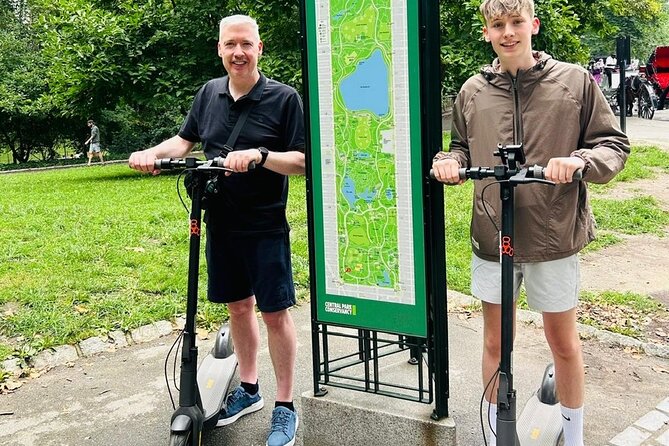
If your goal is to see a lot of Central Park highlights in a short, fun, guided session, I’d say yes. The combination of electric scooter, private guide attention, and a route packed with recognizable landmarks makes it a smart choice for first-timers and busy schedules.
Book it if you want context for what you’re seeing—Columbus Circle’s symbolism, Umpire Rock’s playground origins, Balto’s emergency story, Lennon’s Strawberry Fields memorial, and the iconic bridge-and-fountain sequence that makes Central Park feel like a movie set. The tour is also a good value at $99 because scooter time and expert narration are included.
Just keep one thing in mind: this tour depends on good weather, and some stops are brief. If you go in expecting a guided highlights circuit, not an all-day roaming expedition, you’ll likely be happy you booked.
FAQ
How long is the Central Park guided electric scooter tour?
It runs for about 2 hours.
How much does the tour cost?
The price is $99.00 per person.
Is this tour private or group-based?
It’s a private tour/activity, meaning only your group participates.
What’s included in the price?
The tour includes use of an e-scooter and a private guide.
Where do I meet for the tour?
The starting point is 1794 Broadway, New York, NY 10019, USA, and the tour ends back at the meeting point.
What language is the tour offered in?
It’s offered in English.
What fitness level do I need?
The tour notes that travelers should have a moderate physical fitness level.
Can I cancel, and what if the weather is bad?
You can cancel for a full refund up to 24 hours in advance. The experience requires good weather, and if it’s canceled due to poor weather, you’ll be offered a different date or a full refund.